
Recent Robot News
Stay up to date with robotics, AI breakthroughs, and product launches.
543 news found • Page 5 of 12
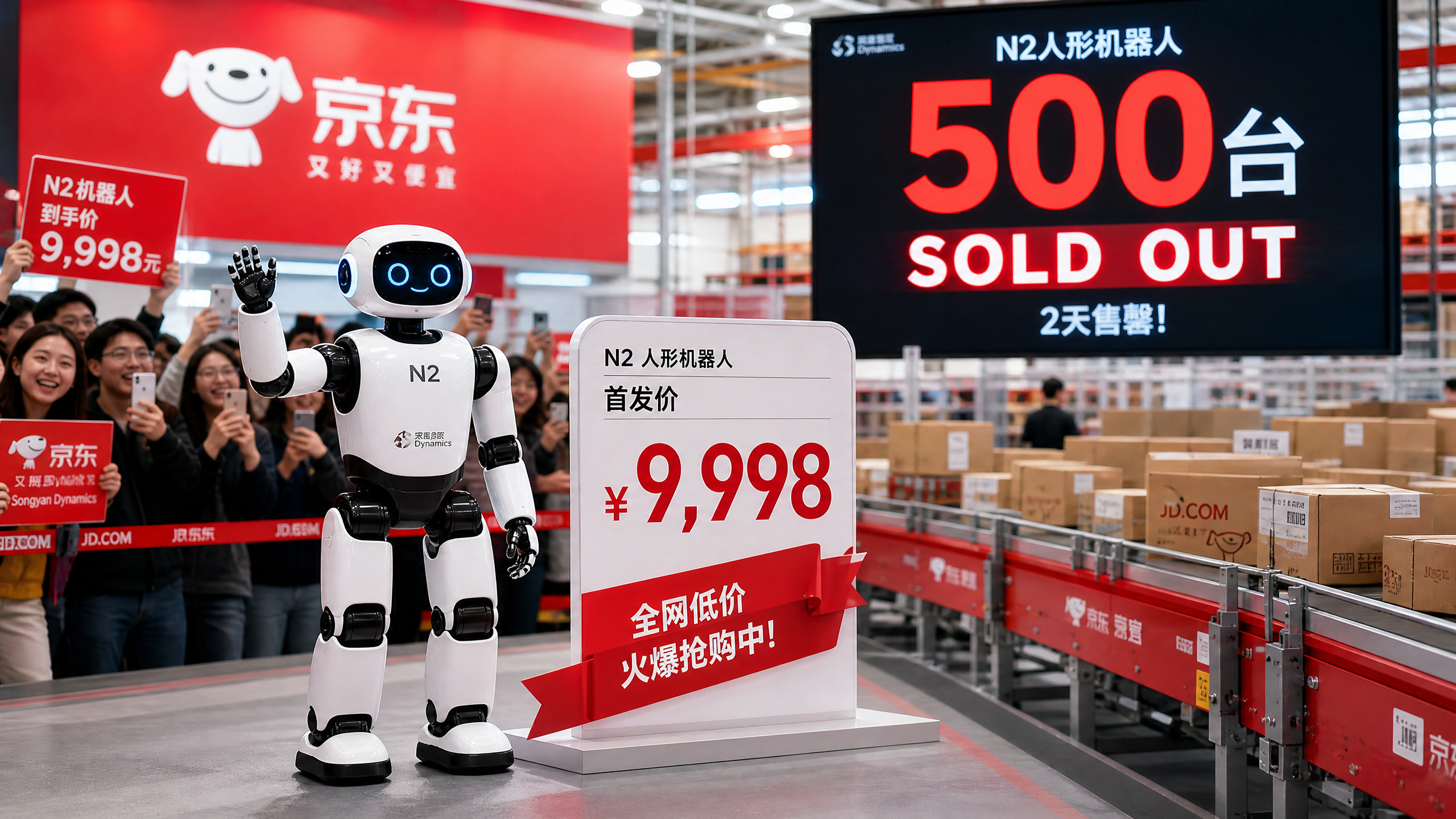
Songyan Dynamics sells out 500 N2 humanoids at RMB 9,998 (approximately US$1,380) in two days
Songyan Dynamics launched the N2 humanoid at RMB 9,998 and sold 500 units in two days on JD.com. Backed by RMB 1 billion in new funding and fresh retail partnerships, the company is pushing a price war that targets broad consumer and store adoption.
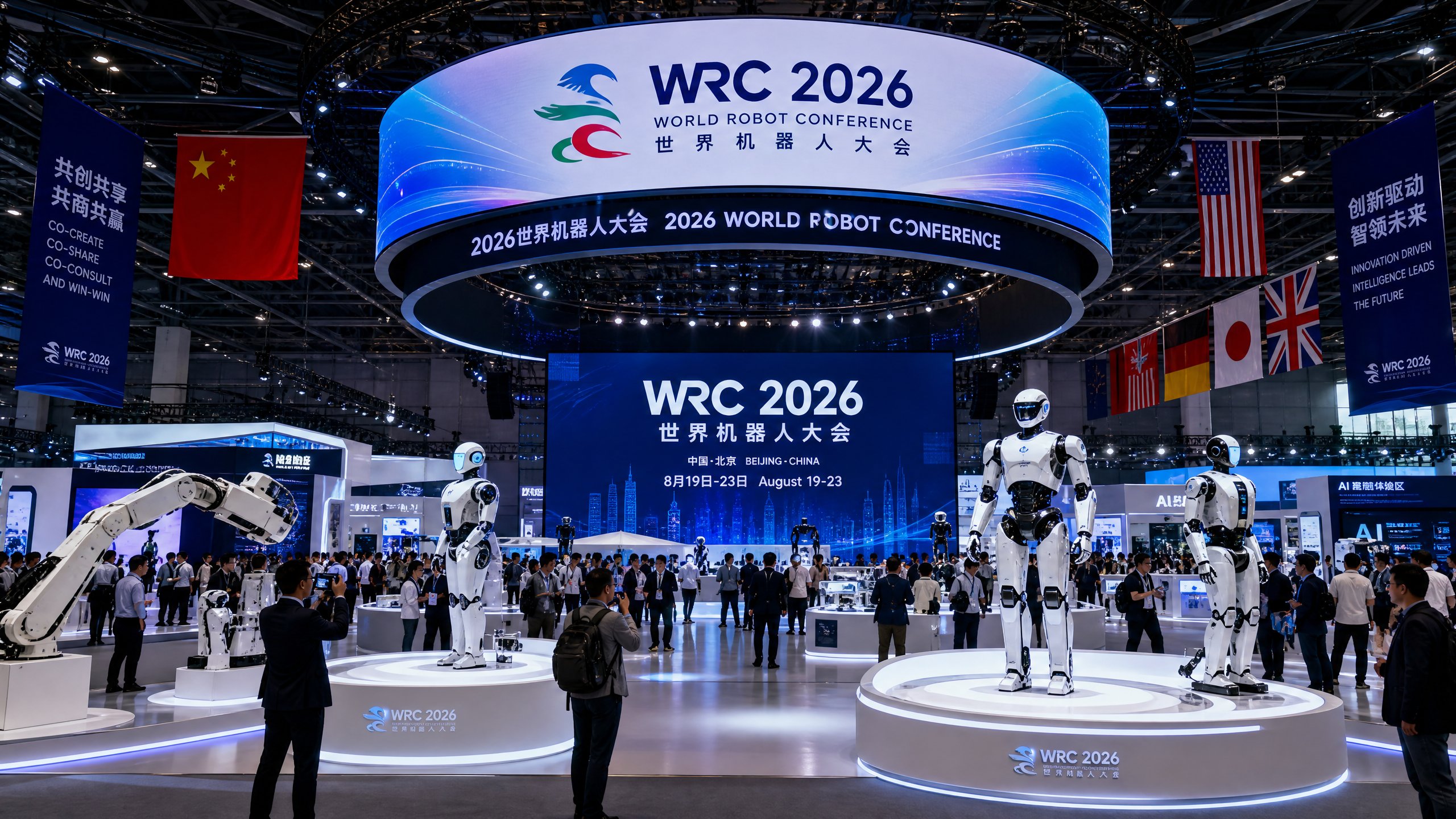
WRC 2026 opens in Beijing with 300 exhibitors and 150 product debuts
The 2026 World Robot Conference will run August 19 to 23 in Beijing with more than 300 exhibitors, over 2,000 exhibits, and at least 150 product debuts. A new application program will place mass produced humanoids and dexterous hands with external teams for real world trials.
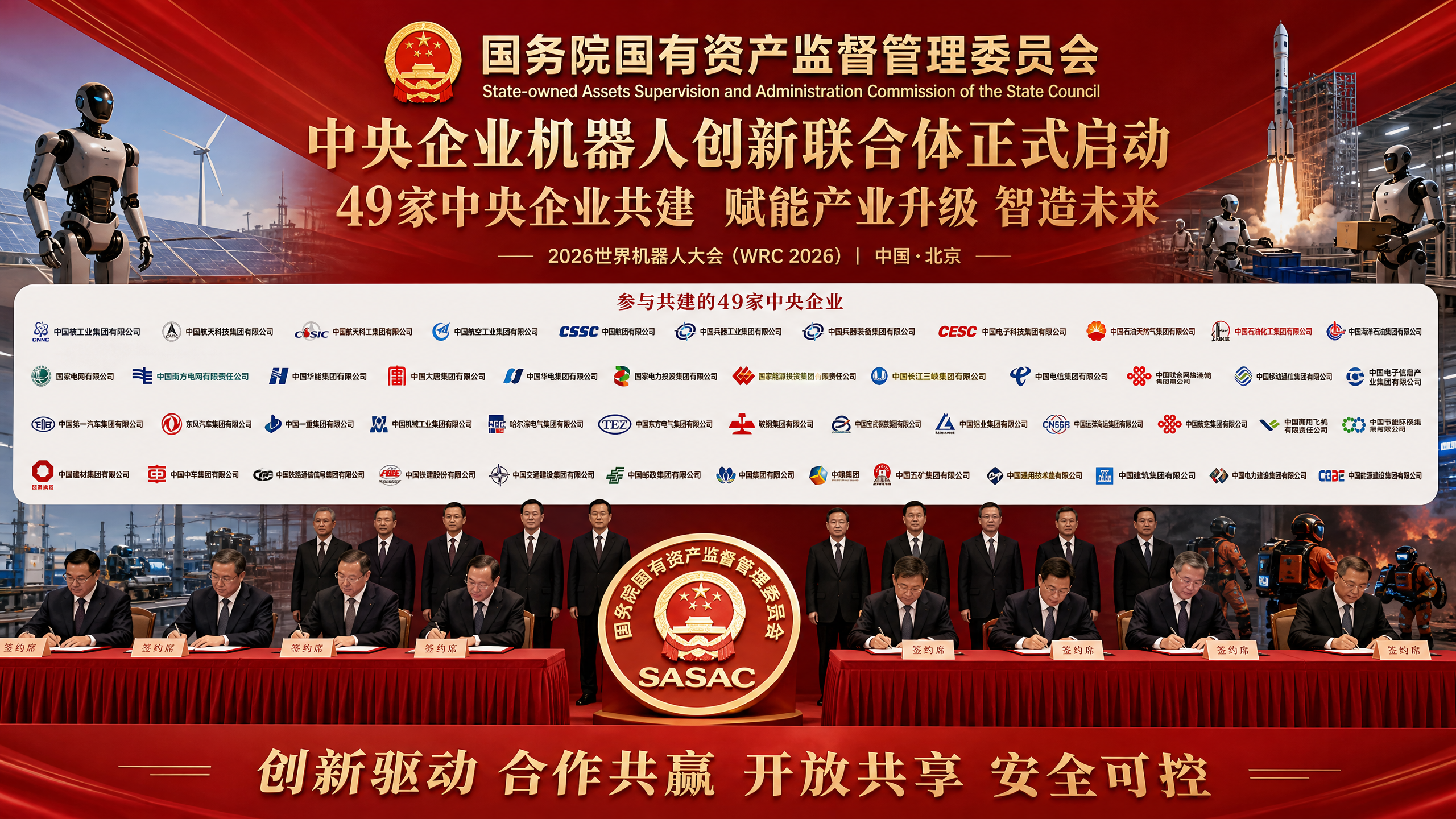
SASAC unveils central enterprise robotics consortium at WRC 2026 for embodied AI
China’s state assets regulator will launch a Central Enterprise Robotics Innovation Consortium at WRC 2026 and debut a dedicated SOE pavilion. Forty nine central SOEs will present twelve scenarios across heavy industries, signaling direct state backed deployment of humanoid robots as a national testing ground.

China opens first humanoid robot training school in Hangzhou
The Hangzhou Robot School at Zhejiang University's Robot Research Institute has enrolled an initial cohort of 30 humanoid robots for structured training across industrial, service, security, entertainment, medicine, and arts sectors. The facility uses physical assessments, specialized coursework, and skills certification to standardize humanoid readiness, with a parallel center in Hefei targeting 1,000 robots by 2027.

Tianjin robotics output hits RMB 6.85 billion in first half 2026
Tianjin's smart robotics sector posted RMB 6.849 billion (US$1.02 billion) in industrial output for the first half of 2026, a 15.2 percent year-on-year increase. The Tianjin Robot Industry Technology Alliance counts more than 200 member entities, with applications spanning automobiles, port operations, and machine-building.

Weekly Robotics Funding Wrap-Up: The Public Market Pricing Event
The first week of August 2026 transformed the financial landscape of embodied artificial intelligence from private speculation to public valuation. With Unitree pricing a nine billion dollar initial public offering in Shanghai and AgiBot targeting a six billion dollar listing in Hong Kong, the market is finally establishing hard benchmarks for hardware production and software reasoning.

Weekly Exhibitions Wrap-Up: The Global Stress Test
The first week of August 2026 served as a synchronized global stress test for embodied artificial intelligence, with major convenings in Las Vegas, Beijing, Tsukuba, and Malmo evaluating different layers of the technology stack. The simultaneous focus on enterprise deployment, autonomous competition, data collection, and algorithmic efficiency indicates that the ecosystem has moved beyond localized research into coordinated global commercialization.
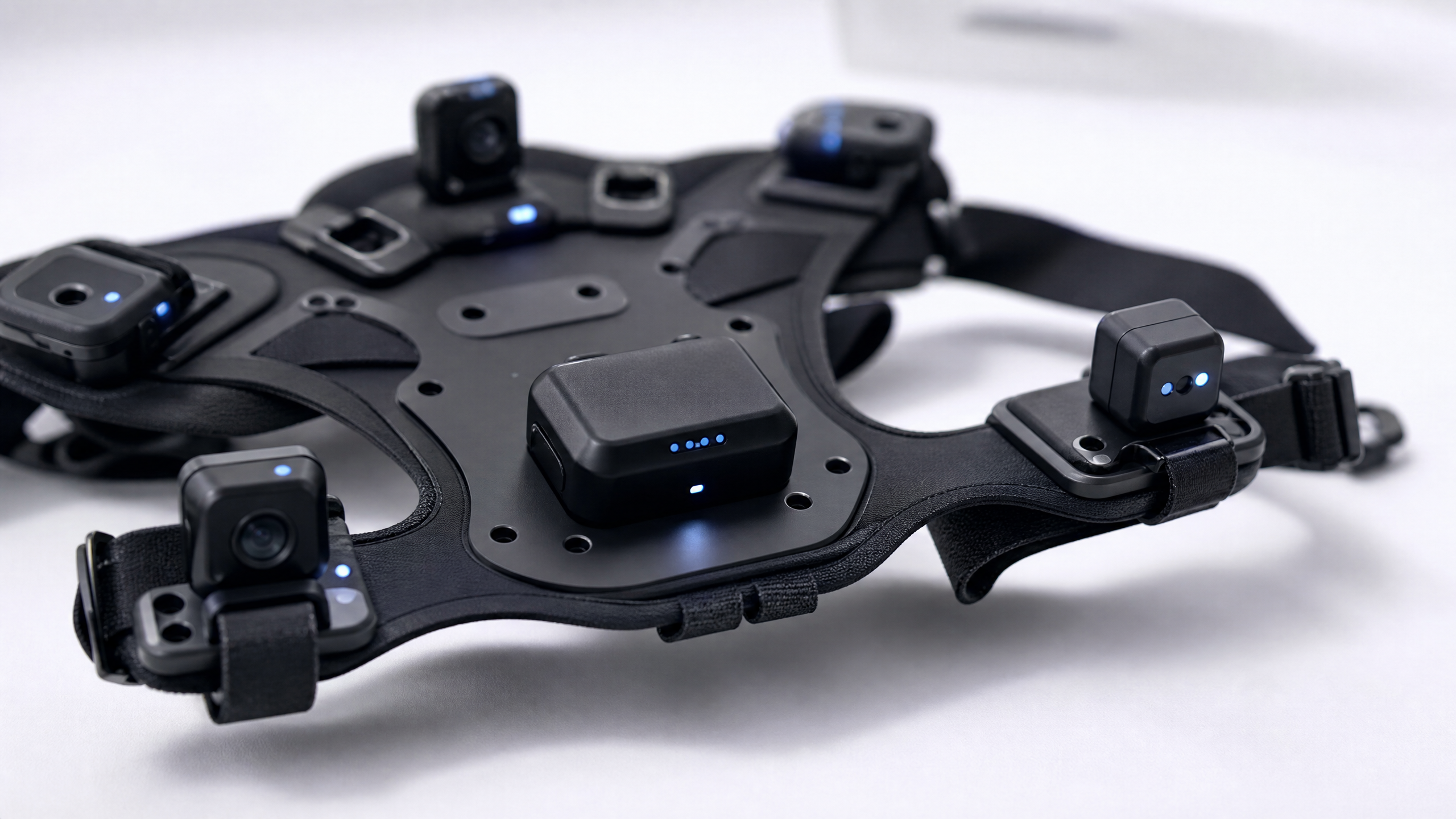
Weekly Technology Wrap-Up: The Data Collection Bottleneck
The technological focus of the robotics industry has pivoted from hardware design to data acquisition. With the emergence of dedicated physical artificial intelligence data service platforms like Maniformer and new embodied integrated development environments, the sector is acknowledging that high-quality, real-world human demonstration data is the ultimate constraint on autonomous capability.

Weekly Robot Economics Wrap-Up: The Geopolitics of Supply
The commercial tension in the robotics market is no longer just between the cost of human labor and the cost of automation; it is between the demand for hardware and the geopolitical restrictions on its supply. With the US Federal Communications Commission banning Chinese robots, the global supply chain is fracturing, creating massive pricing disparities and forcing rapid industrial pivots in allied nations.
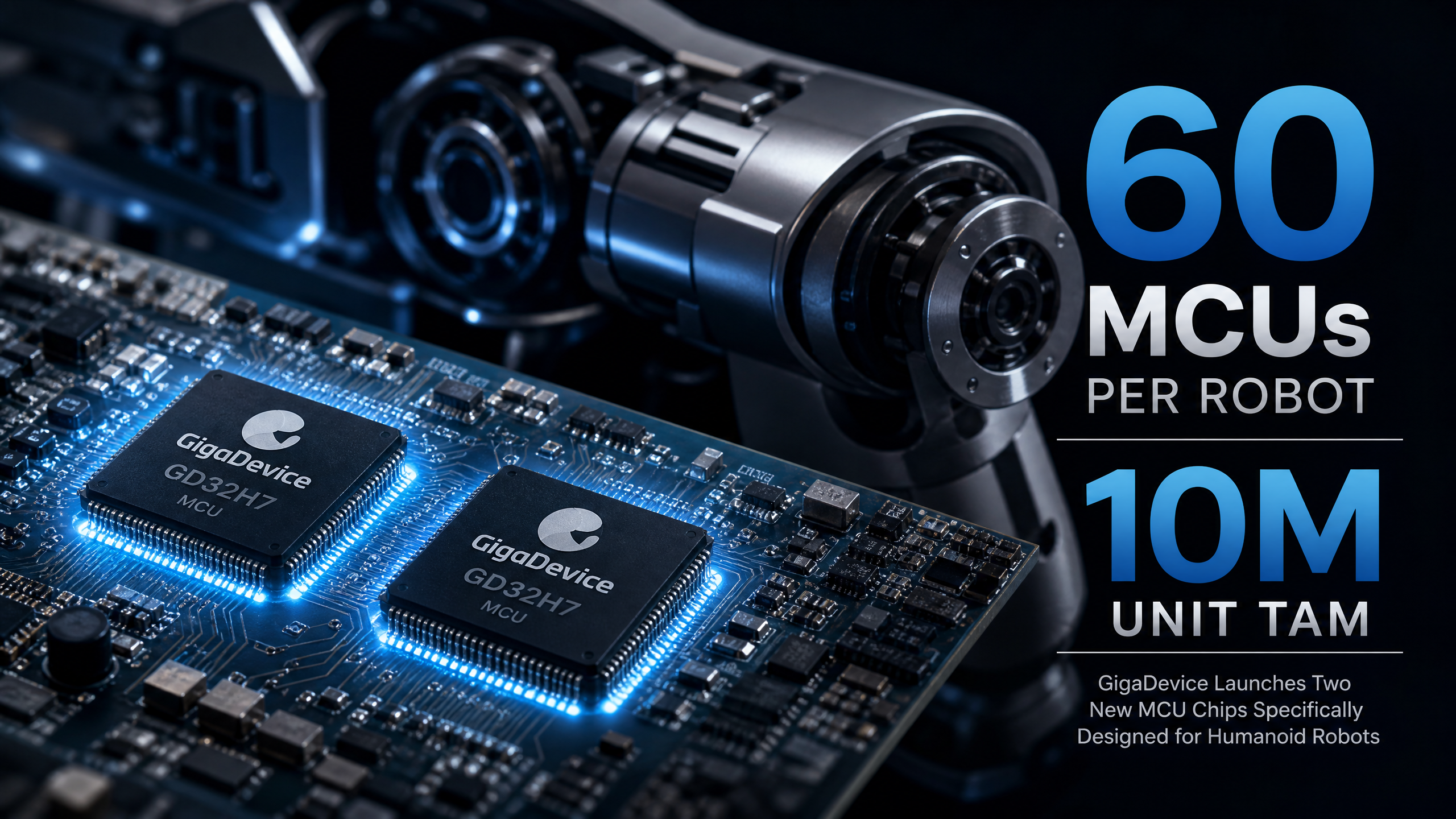
GigaDevice launches humanoid MCUs as 2026 MCU demand tops 10 million
GigaDevice introduced two microcontrollers tailored for humanoids and robot dogs with claims of industrial safety, low power, and EtherCAT timing. The company projects a 2026 global market of more than 10 million MCU units for these robots, with around 60 chips needed per humanoid.
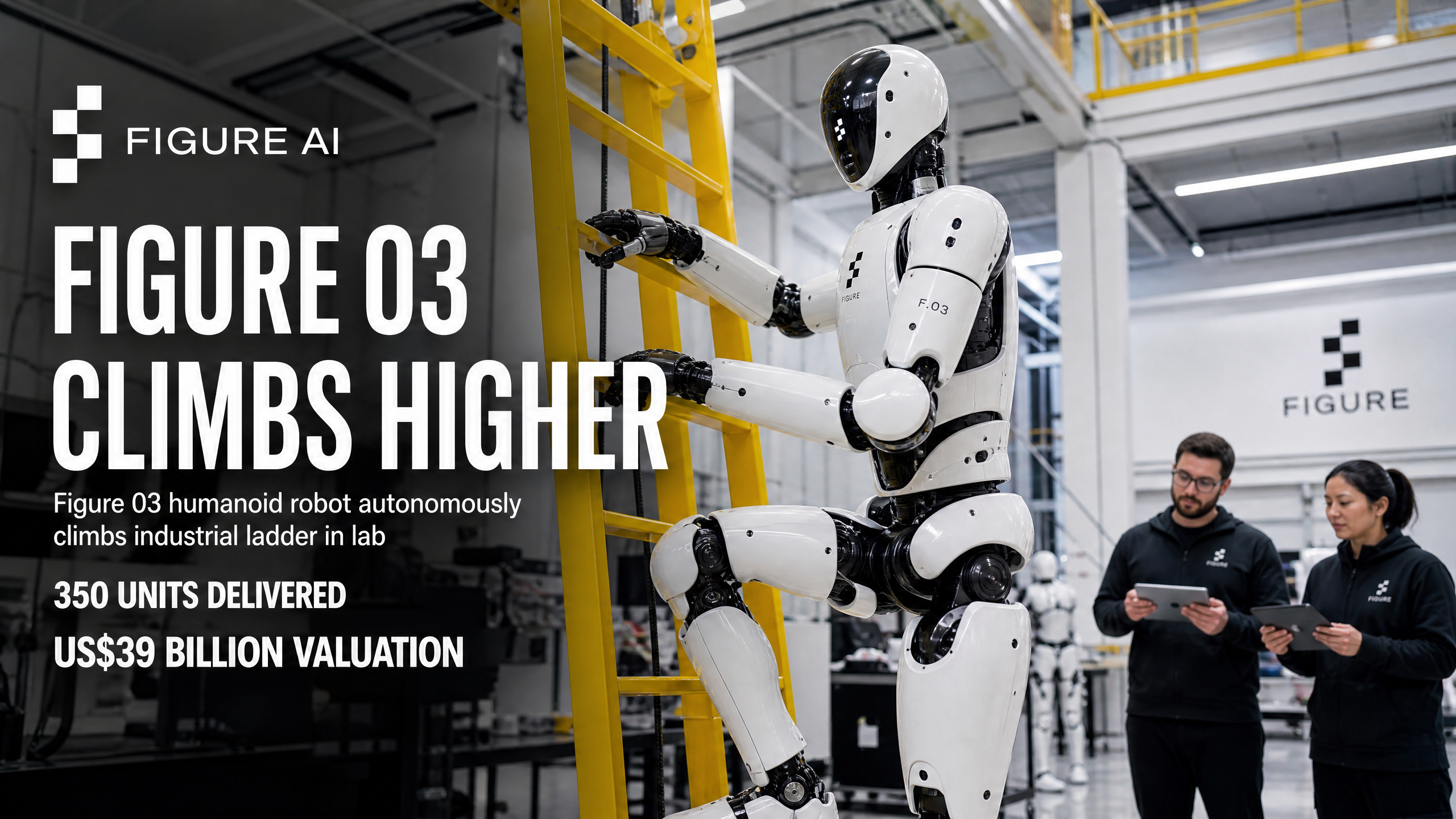
Figure AI ships 350 humanoids as Figure 03 climbs ladder and valuation hits US$39B
Figure AI shared a lab video of its Figure 03 robot autonomously climbing an industrial ladder and reported more than 350 units delivered as production scaled to one per hour. The Series C valuation stands near US$39 billion, signaling investor conviction in humanoid robotics as the company moves from demos to low volume production.
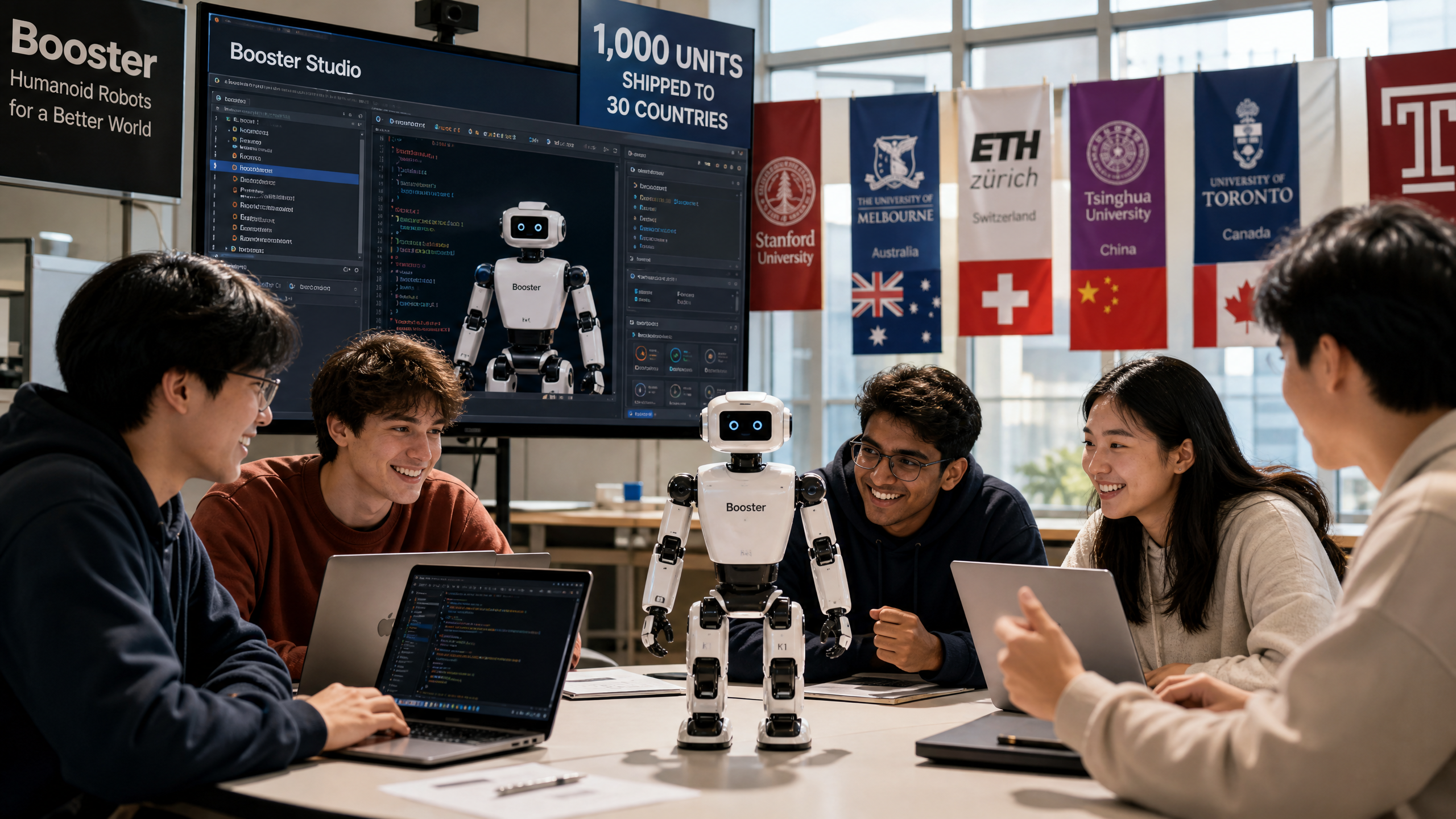
Booster ships 1,000 plus K1 humanoids and launches embodied AI IDE
Beijing based Acceleration Evolution known as Booster is pushing its K1 humanoid into university campuses and releasing Booster Studio, an all in one IDE for embodied AI. The company reports more than 1,000 K1 units shipped and rapid early sales growth.
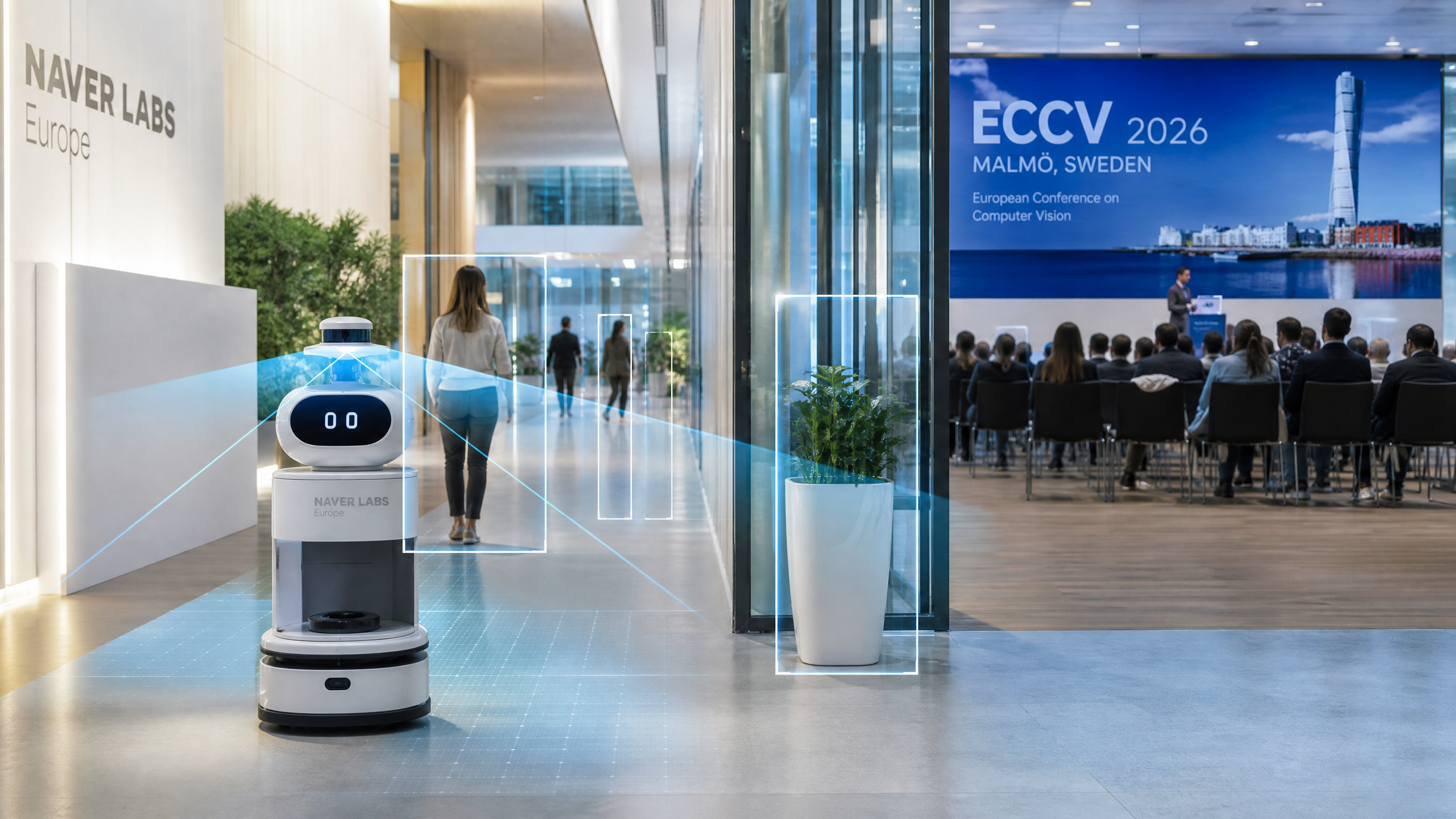
NAVER Labs Europe pushes no retrain robot navigation at ECCV 2026
NAVER Labs Europe will present ten papers at ECCV 2026 in Malmo. A headline result shows high speed robot navigation using a single scalar extracted from a frozen pre trained Vision Transformer, removing retraining costs and promising faster deployments across NAVER sites in Korea and Japan.
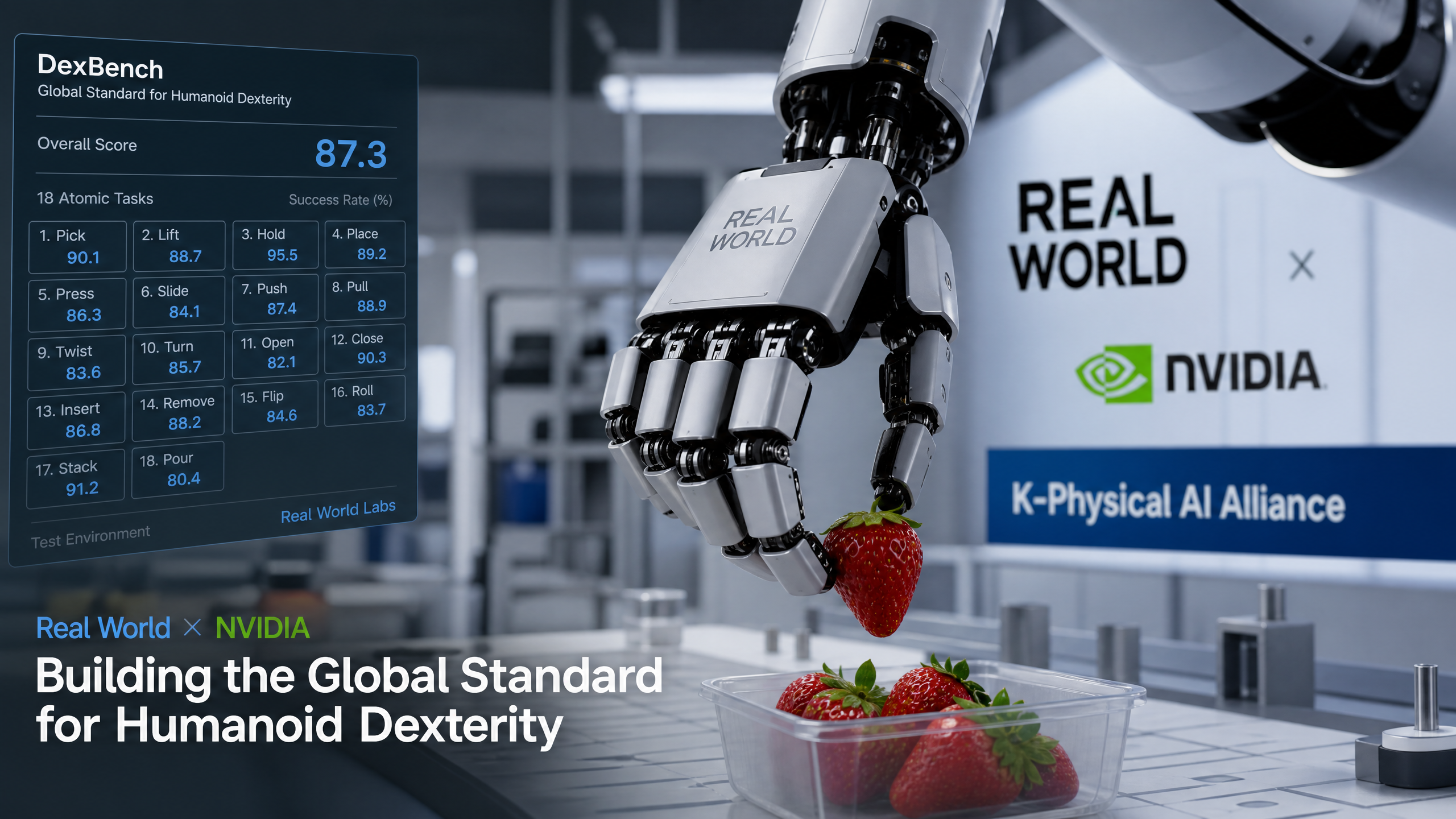
Real World leads K-Physical AI Alliance and advances DexBench
Korean physical AI startup Real World formed a K-Physical AI Alliance with PhysicsSim Lab, Space AI, and Endright to set global dexterity standards. The group will expand DexBench with NVIDIA and work with Lotte, SK Telecom, CJ Logistics, Hyosung, HL Mando, Fuji, ANA, and Mitsui Chemicals.
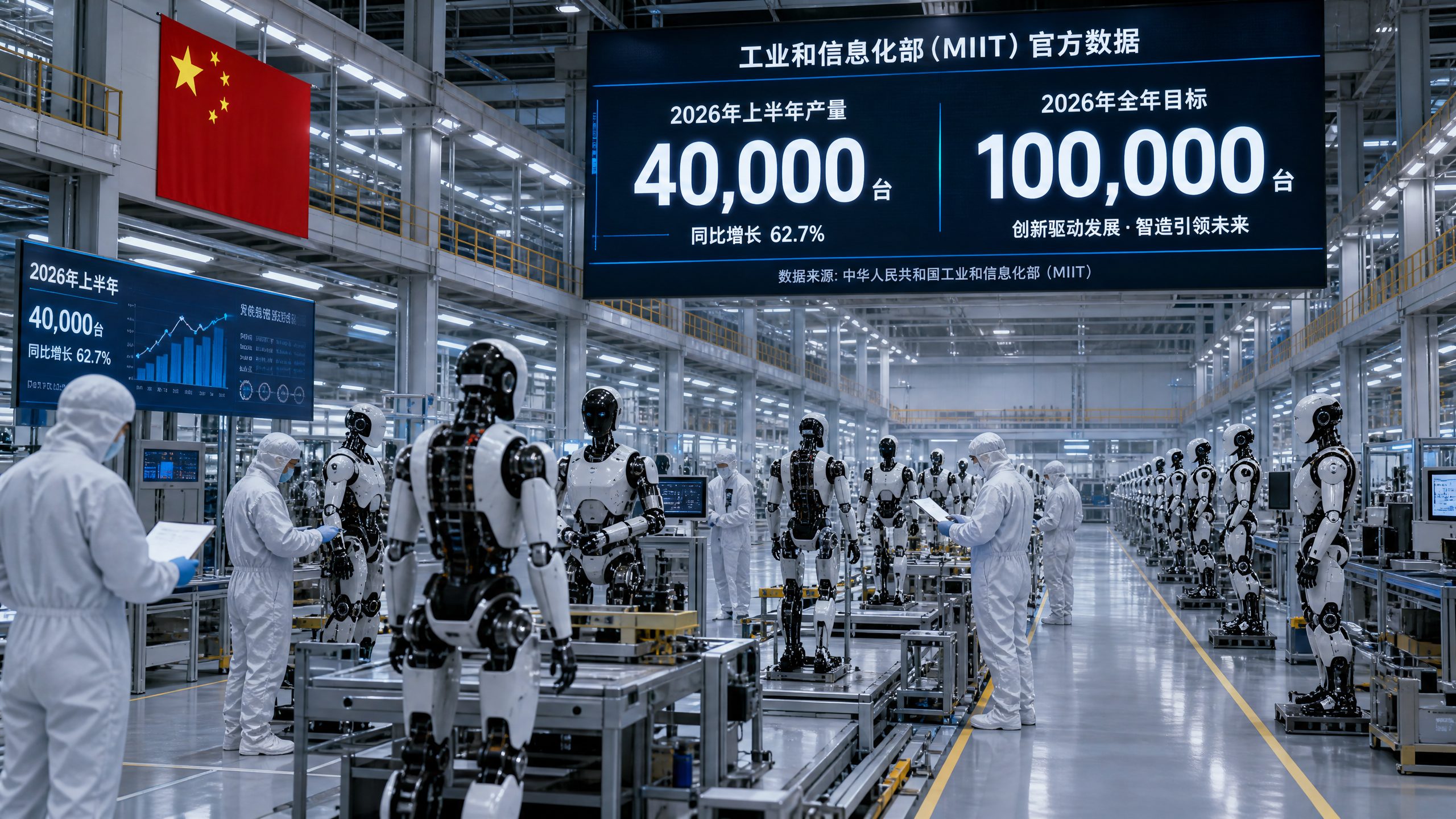
China produced 40,000 humanoid robots in H1 2026 as 100,000 nears
China’s MIIT disclosed that domestic output of humanoid robots topped 40,000 in the first half of 2026, on track to exceed 100,000 for the year. The figures confirm a shift from prototypes to early scale and explain the surge in demand for key precision components across China’s supply chain.
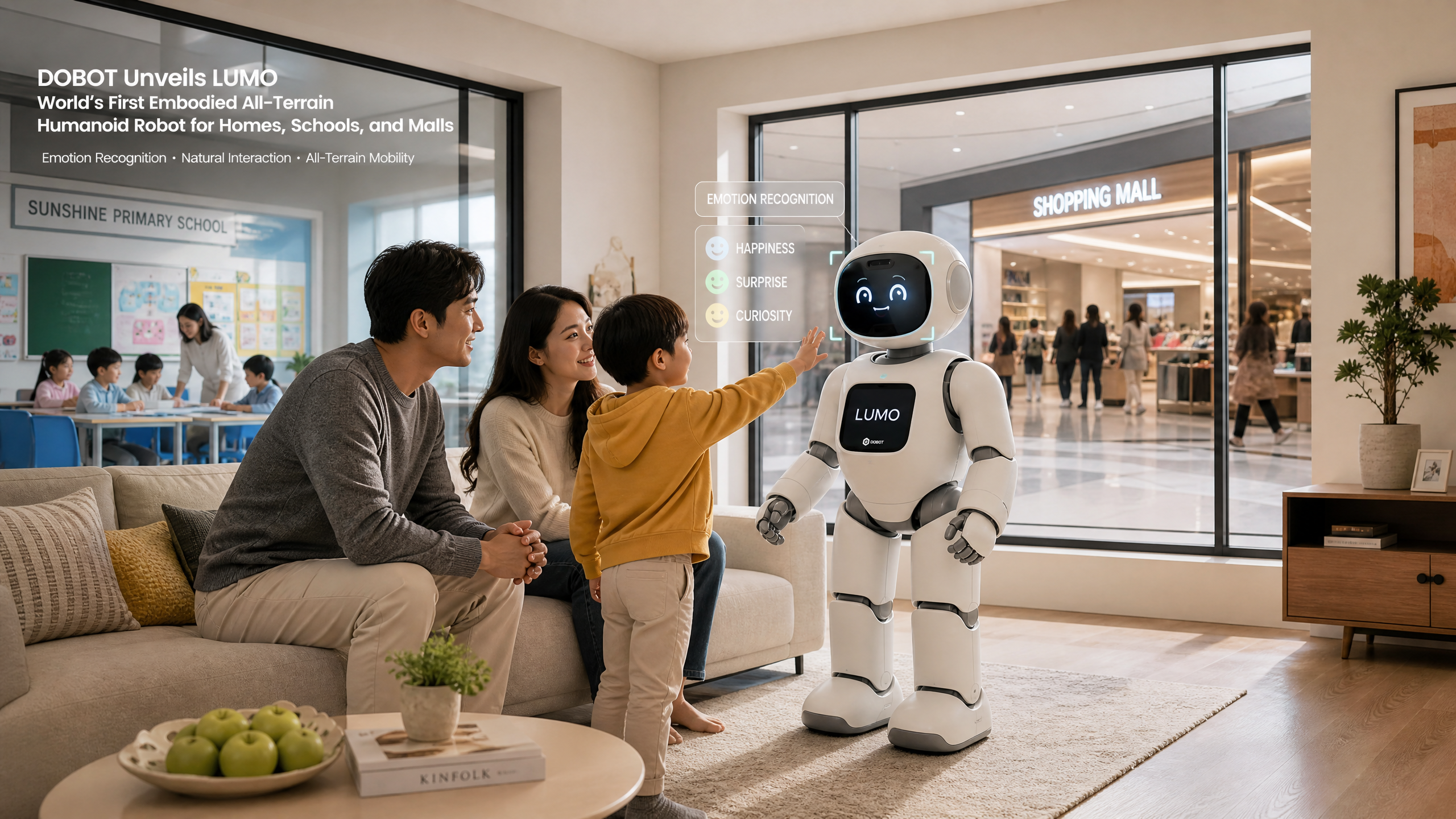
DOBOT unveils LUMO all terrain humanoid for real world settings
DOBOT introduced LUMO in China, presenting a 1.3 meter embodied humanoid for homes, schools, and malls with all terrain mobility and multimodal learning. The company framed LUMO as a shift from scripted automation to safe general purpose assistance near people.
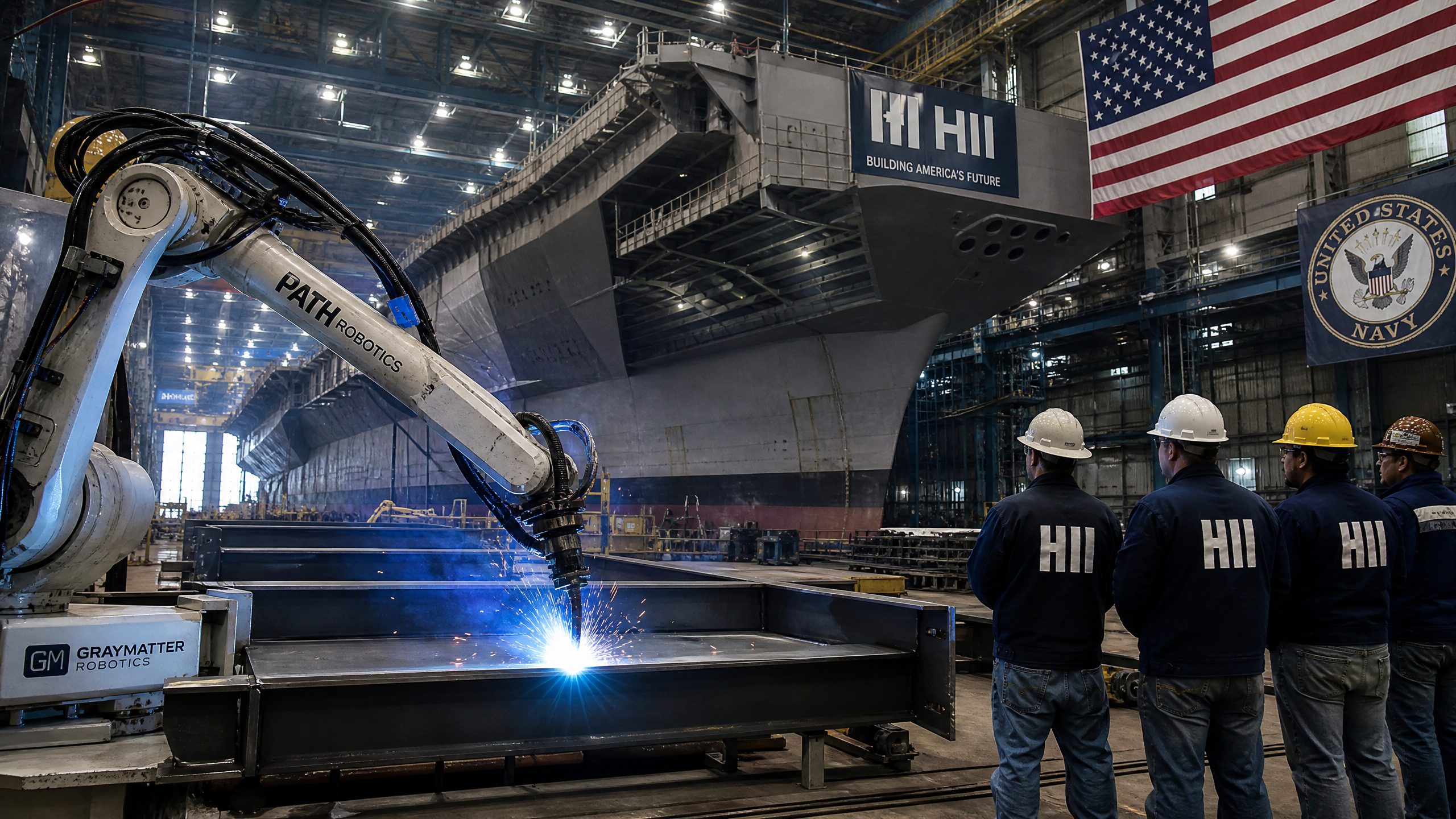
HII signs US$900 million agreement with Path Robotics and GrayMatter for Navy shipbuilding automation
HII signed multi-year performance-based production agreements worth up to US$900 million with Path Robotics and GrayMatter Robotics to accelerate physical AI automation across US Navy shipbuilding. The HYPR initiative targets autonomous welding, surface prep, coating, assembly, and inspection with a new sourcing line and a 2026 outsourced hours ramp.

Physical AI data in retail Maniformer trains robots in Shanghai
Shanghai is seeing embodied robots trained on live shop floors by Maniformer, a physical artificial intelligence data service platform focused on retail. Reported on August 5 to 6, 2026, the company operates staffed data operations inside convenience stores and supermarkets, capturing time-synced multi modal data and human demonstrations for stocking, facing, scanning, recovery, and customer handoffs. The core story is not new hardware. The bottleneck has moved to high quality, permissioned, real world interaction data that can drive learning in messy environments at a commercial pace. Simulated data tops out for retail. Dedicated physical artificial intelligence data service providers are emerging as a new layer in the robotics supply chain. The strategic advantage now accrues to whoever controls the most useful real world data loops.
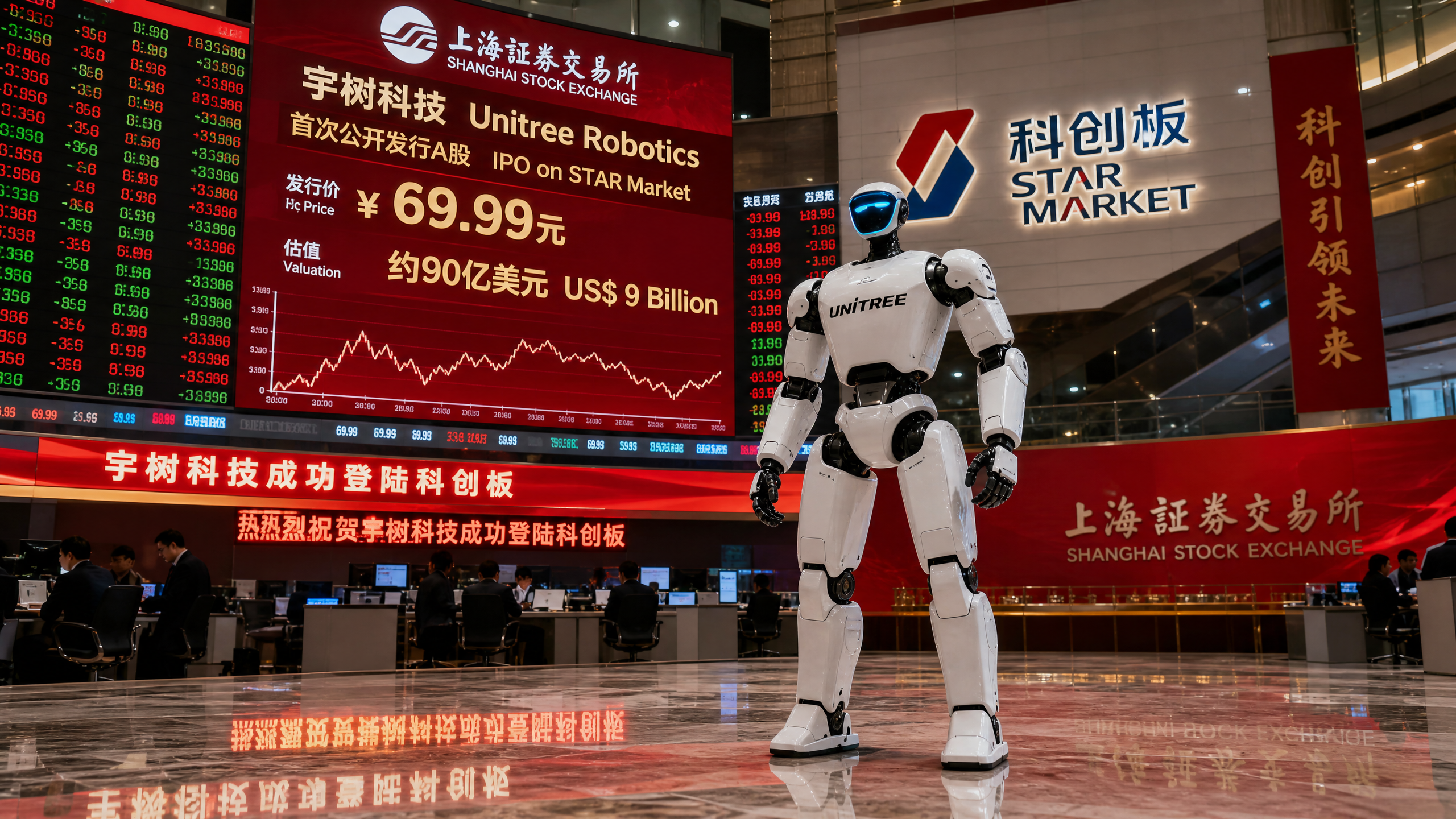
Unitree sets US$9 billion Shanghai IPO as DeepSeek backs robotics expansion
Unitree priced its STAR Market listing at RMB 150.8 per share, valuing the company at RMB 61 billion and targeting RMB 6.1 billion in proceeds, with subscriptions opening August 10. DeepSeek is a strategic investor as Unitree pivots from quadrupeds to humanoids and invests heavily in growth.
 jamie 15 min read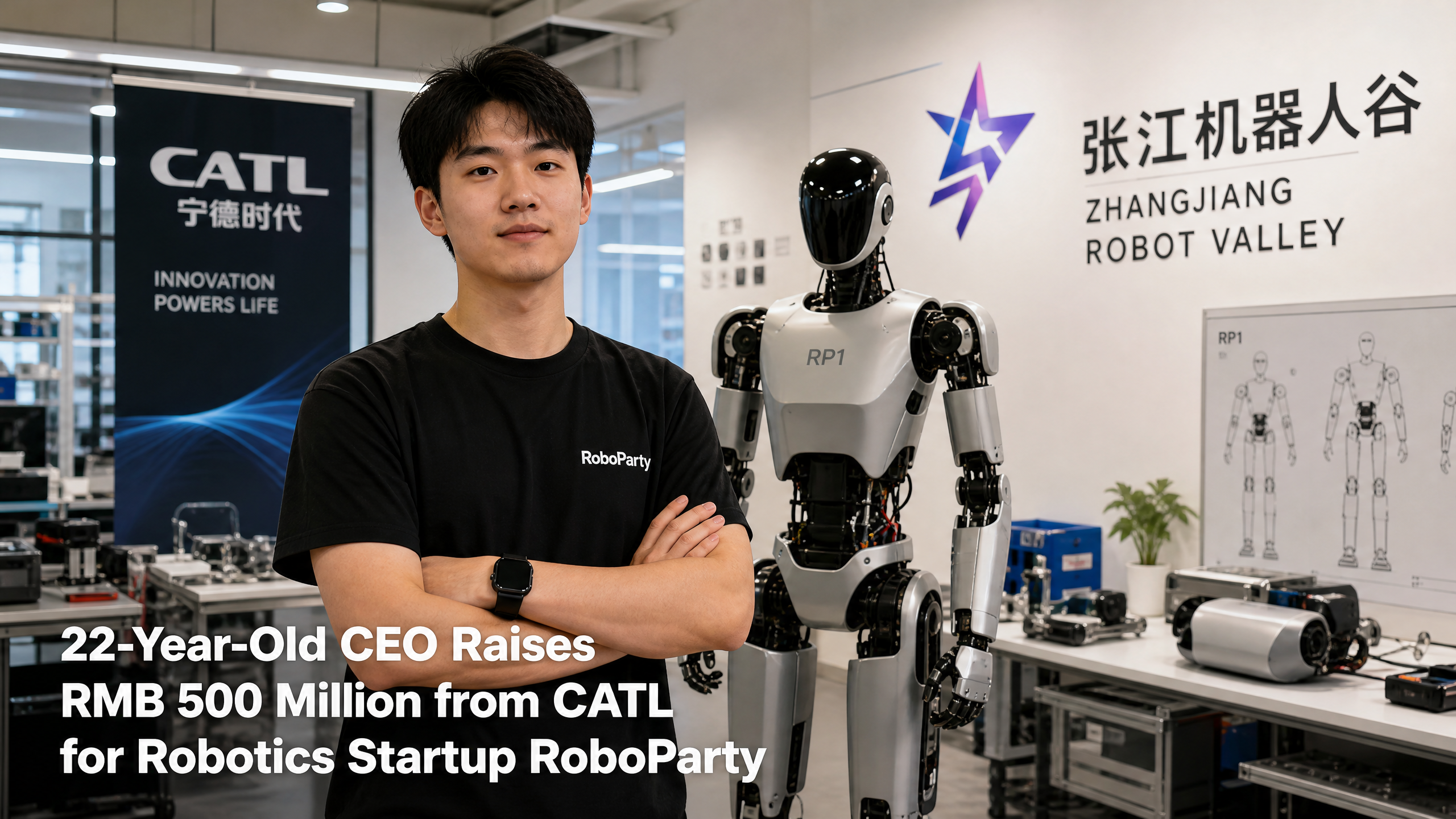
CATL backs RoboParty with near RMB 500 million in exclusive pre A
RoboParty closed Angel plus plus and pre A rounds totaling nearly RMB 500 million, with CATL exclusively investing in the latest round. The 22 year old founder targets a first robot launch in late 2026 as the startup moves its team to Shanghai’s Zhangjiang Robot Valley.
jamie 15 min read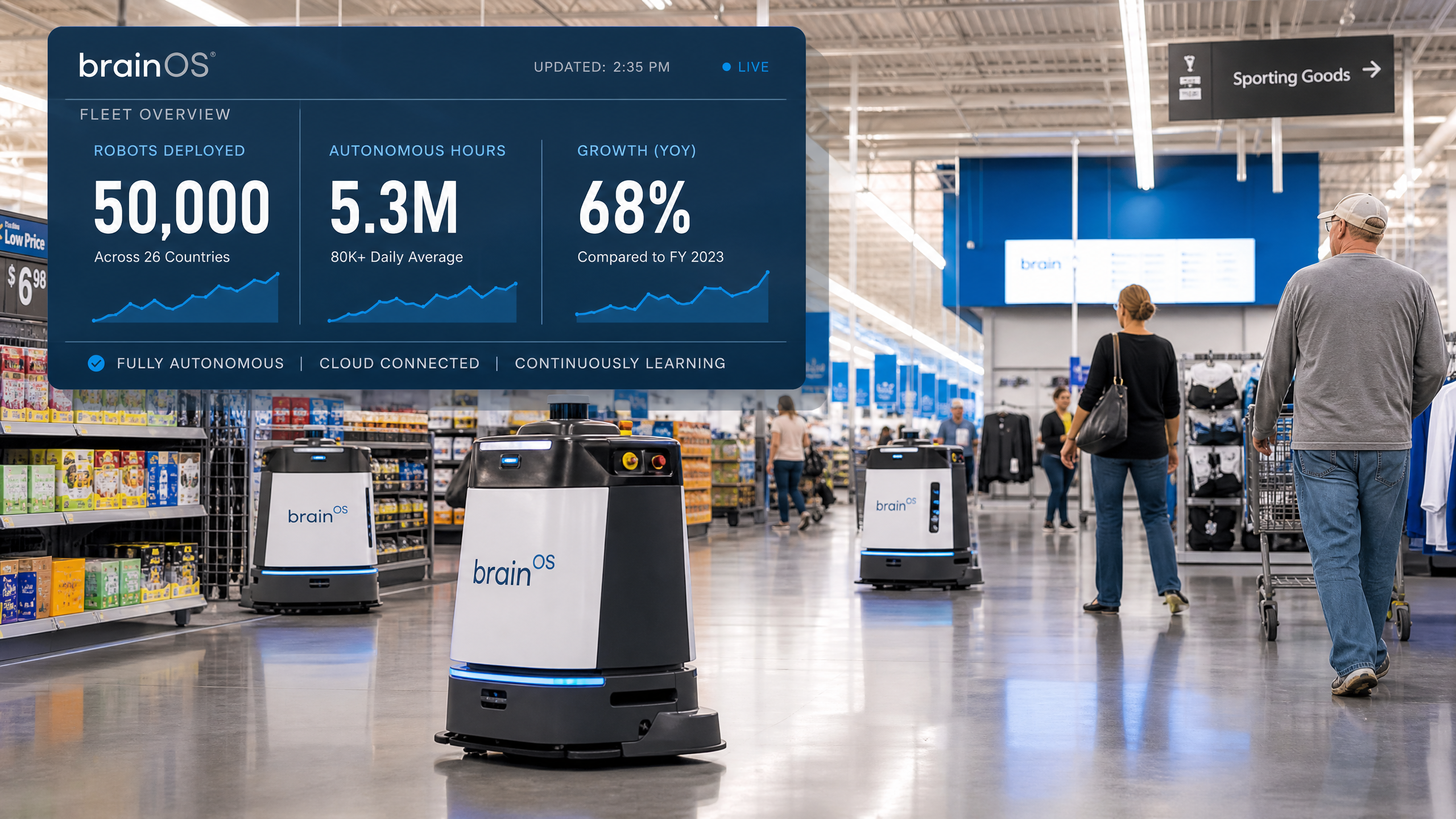
Brain Corp tops 50,000 robots as H1 2026 deployments jump 68 percent
Brain Corp surpassed 50,000 BrainOS powered robots worldwide as first half 2026 deployments rose 68 percent year over year. New alliances with ShelfOptix and Tennant, along with SOC 2 Type II compliance, position the San Diego firm for broader enterprise adoption.
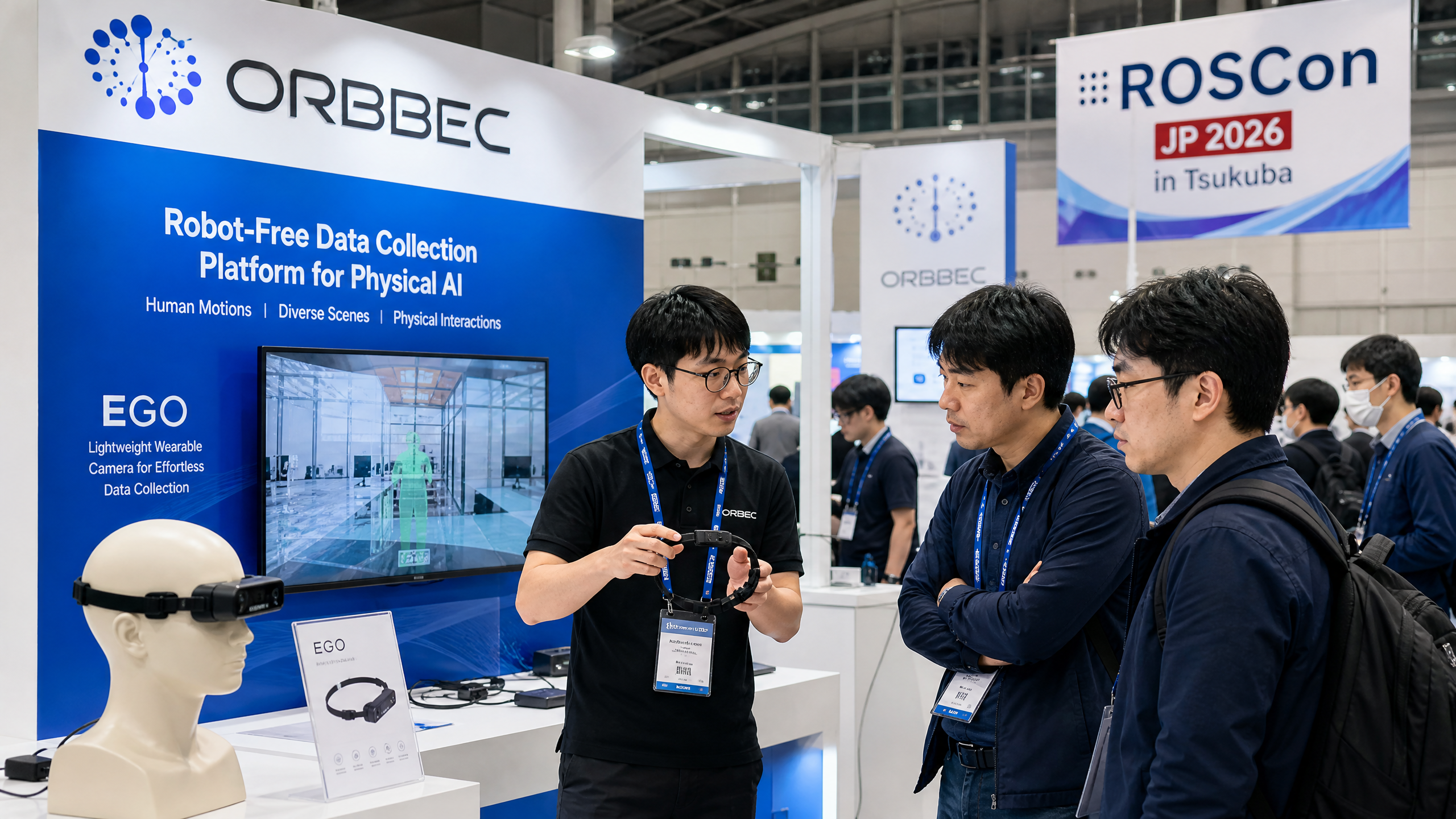
Orbbec brings robot free data platform to Japan at ROSCon JP 2026
Orbbec introduced a robot free data collection platform for Physical AI at ROSCon JP 2026 in Tsukuba. The EGO, UMI, and WristCam units target first person observation, hand interaction, and wrist level sensing, with a Dual Ego prototype showcased for synchronized egocentric capture.
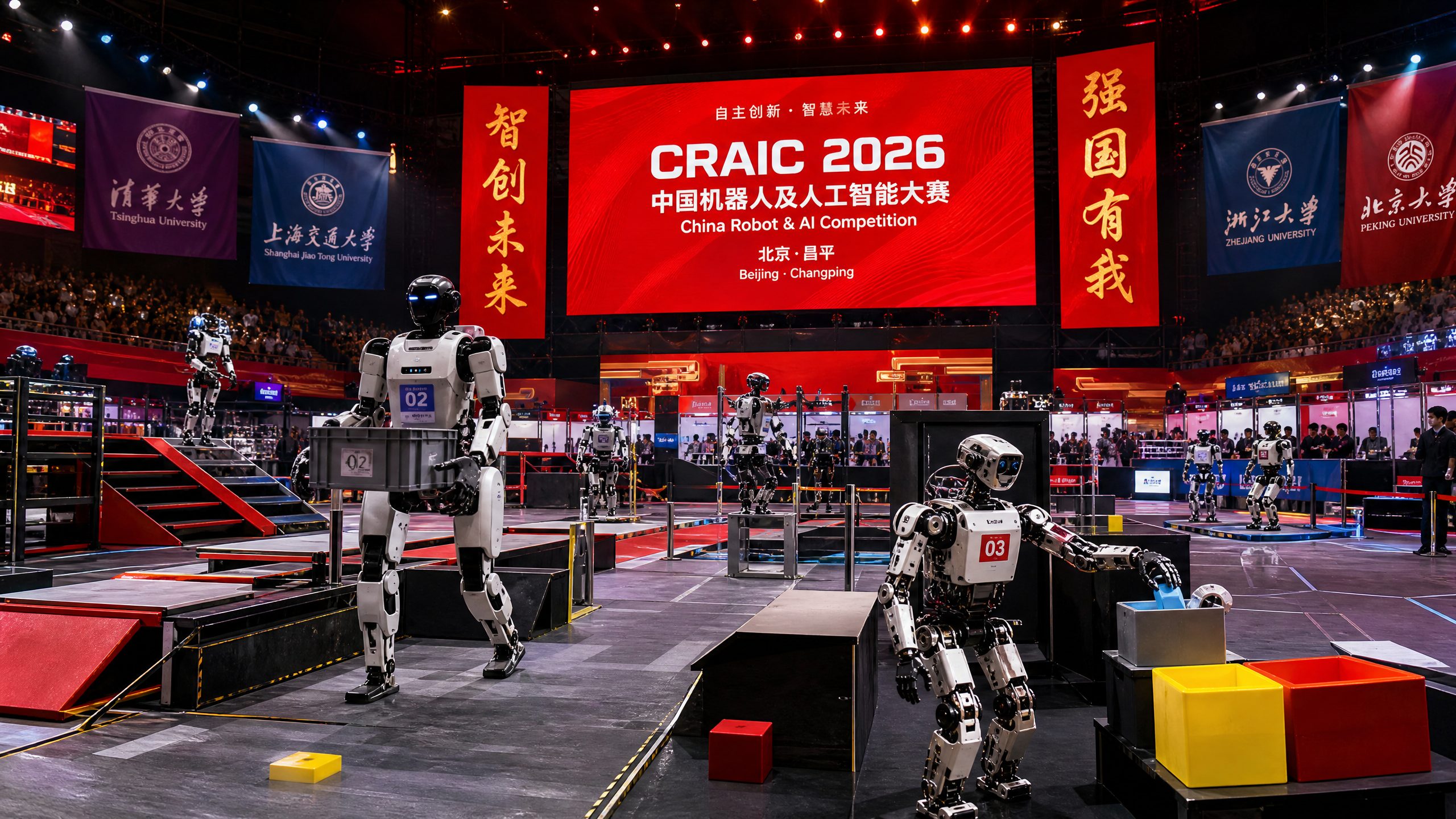
Beijing finals put 350 humanoid robots through first true autonomy test
China’s CRAIC national finals for humanoid robots in Beijing brought 213 university teams and 350 machines into the first full size competition without remote control, stressing industrial tasks and language model driven interaction. The shift signals a push from academic showcase to a national talent pipeline for factory ready embodied AI.

China’s embodied AI champions invest while raising to lock supply chains
A new wave of Chinese embodied AI firms is investing in suppliers and peers while they raise their own capital. The strategy aims to secure components, data and talent during a short competitive window for humanoid and mobile robots.
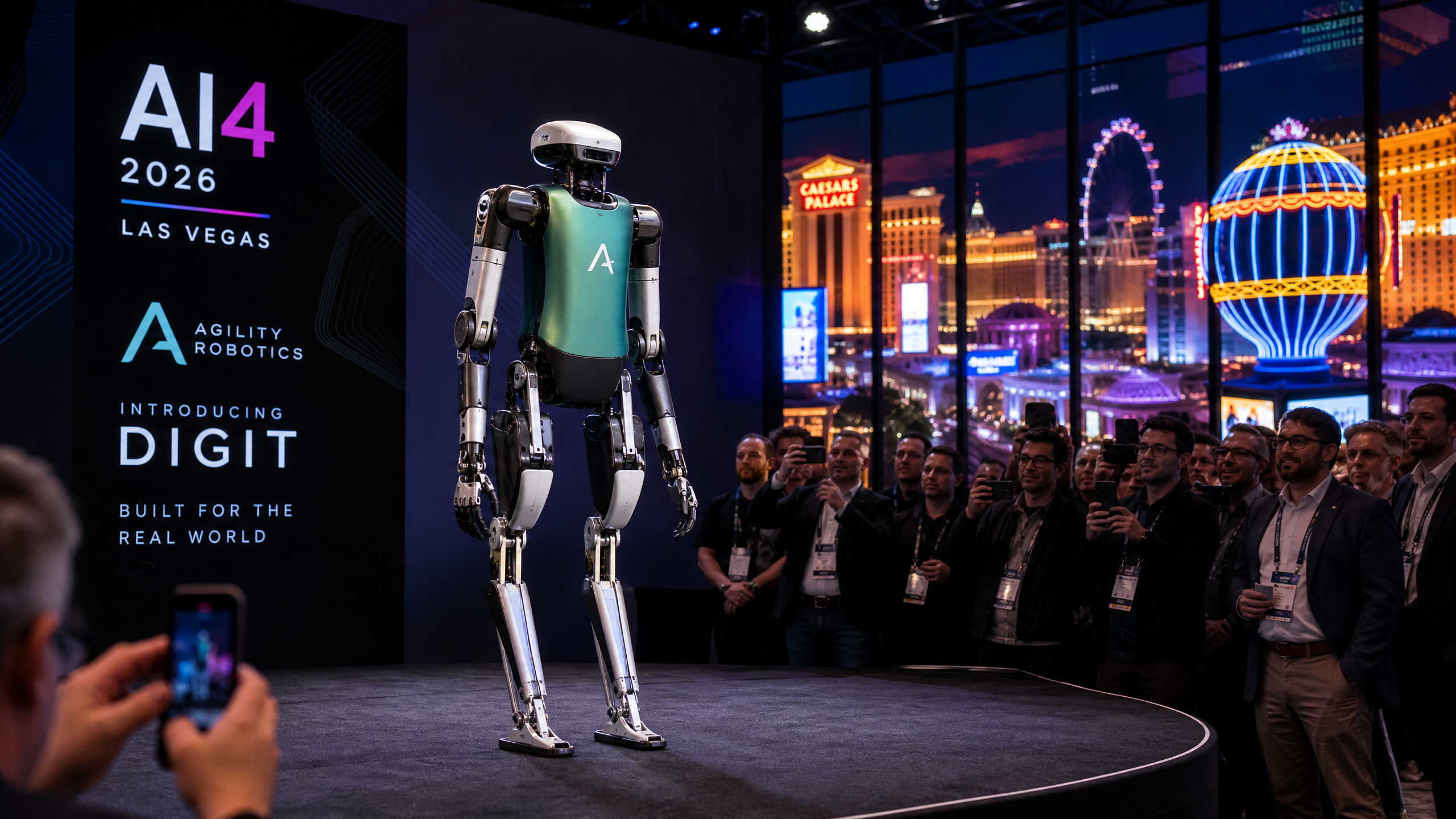
Agility Robotics hits US$2.5 billion valuation as Digit goes enterprise
At AI4 Las Vegas, experts anointed 2026 as the year of the robot as Agility Robotics showcased Digit and confirmed a US$2.5 billion valuation. The event underscored a decisive shift from software bound generative AI to Physical AI deployments inside factories and warehouses.

NVIDIA Alpamayo 2 Super Brings Frontier Reasoning to Robotaxis Under Open Commercial License
NVIDIA has released Alpamayo 2 Super for commercial use, delivering frontier-scale autonomous driving reasoning under the permissive OpenMDW-1.1 license managed by the Linux Foundation. The model ranks first on the LingoQA benchmark among nearly 40 evaluated models and generates five tightly coupled outputs per driving scenario, including trajectory planning and chain-of-causation traces.
jamie 4 min read
Waymo Drops Waitlist and Opens Dallas Robotaxi Service to All Riders
Alphabet's autonomous vehicle unit Waymo has officially opened its robotaxi service to the general public in Dallas, Texas, eliminating the waitlist that had been in place since February 2026. Approximately 150,000 riders used the service during the waitlist phase, and anyone can now hail an all-electric autonomous Jaguar I-Pace through the Waymo app.

SpaceX and NVIDIA Partner to Build Starmind AI1 Orbital Data Centers
SpaceX has announced an exclusive partnership with NVIDIA to develop the Starmind AI1 satellite, a spacecraft designed to process artificial intelligence workloads directly in low Earth orbit. Powered by NVIDIA's Space-1 Vera Rubin module, the system aims to deliver up to 25 times the AI performance of an H100 GPU, with prototype testing scheduled for early 2027.
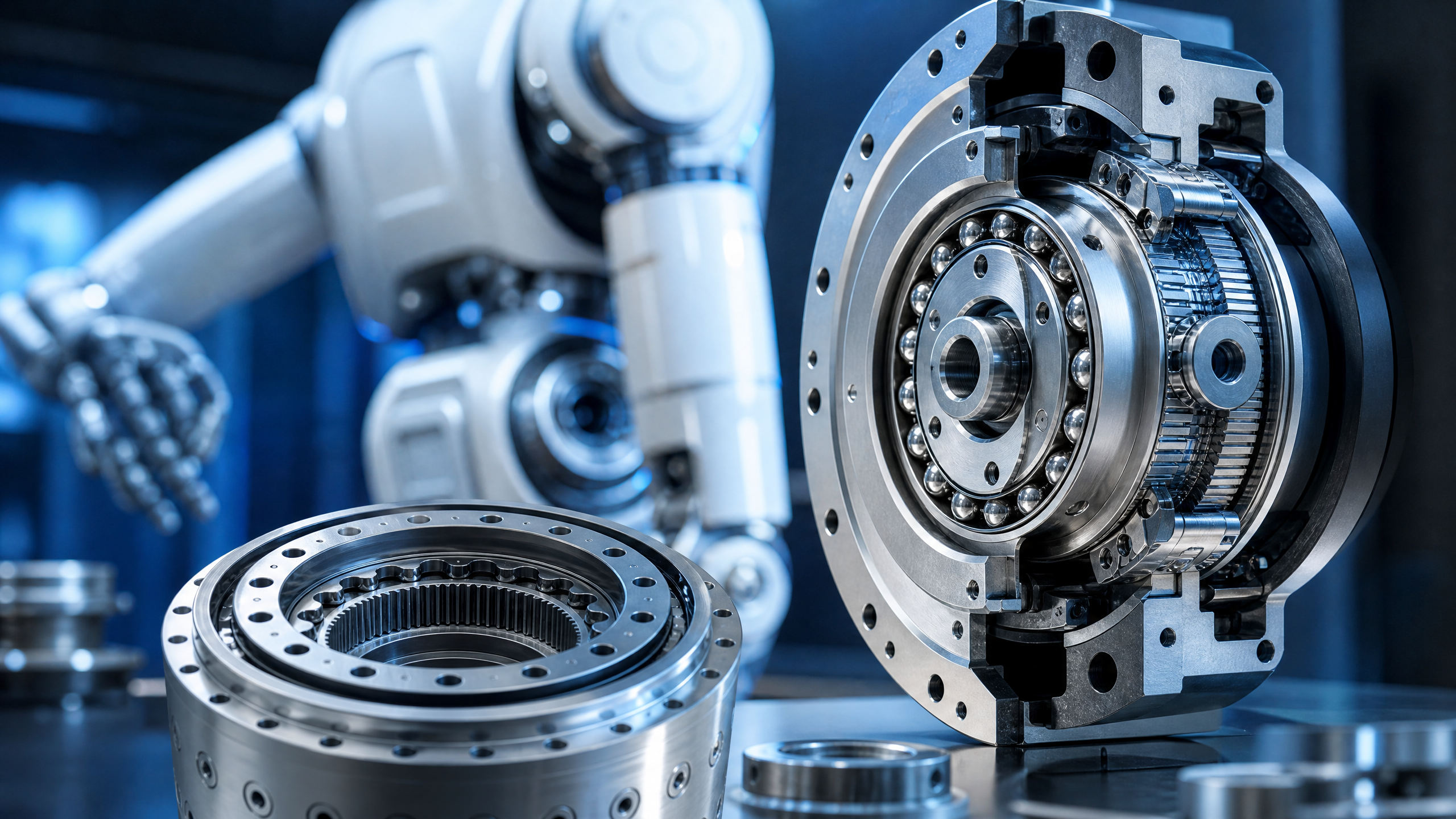
SKF Enters Humanoid Robot Supply Chain via Joint Venture with LeaderDrive
Swedish bearing and motion technology giant SKF has entered the humanoid robot market through a new joint venture with LeaderDrive, a Chinese manufacturer specializing in high-precision transmission components for robot joints. The partnership targets industrial humanoid applications, combining SKF's global manufacturing footprint with LeaderDrive's established position in robotic harmonic drives.
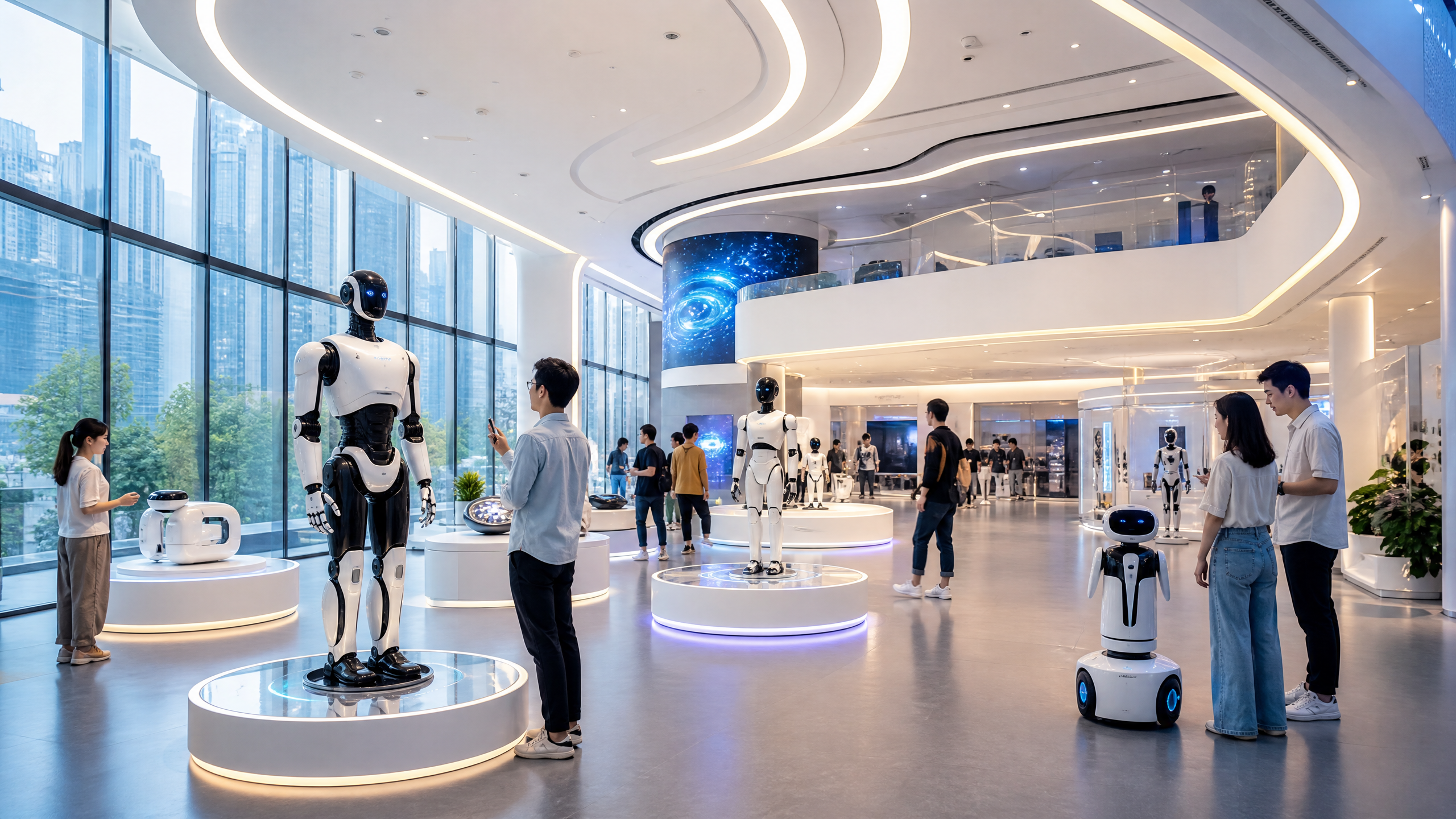
Shenzhen Opens World's First Robot 6S Dealership Complex
The world's first 6S offline complex dedicated entirely to robotics has opened in Shenzhen's Longgang district. Spanning over 5,000 square meters, the facility adapts the traditional automotive 4S dealership model and expands it into a comprehensive robotics hub offering leasing, personalized customization, technology demonstrations, and industrial training.

Open Source Ate the Capex Thesis and Wall Street's AI Funds Paid the Bill
The artificial intelligence investment narrative faced its most severe stress test in July 2026, triggering massive drawdowns across specialized tech funds. Whale Rock Capital fell 21.7% in a single month, while the Situational Awareness fund collapsed entirely. The catalyst was the success of open-source AI models that challenged the premise behind US$720 billion in planned infrastructure spending.
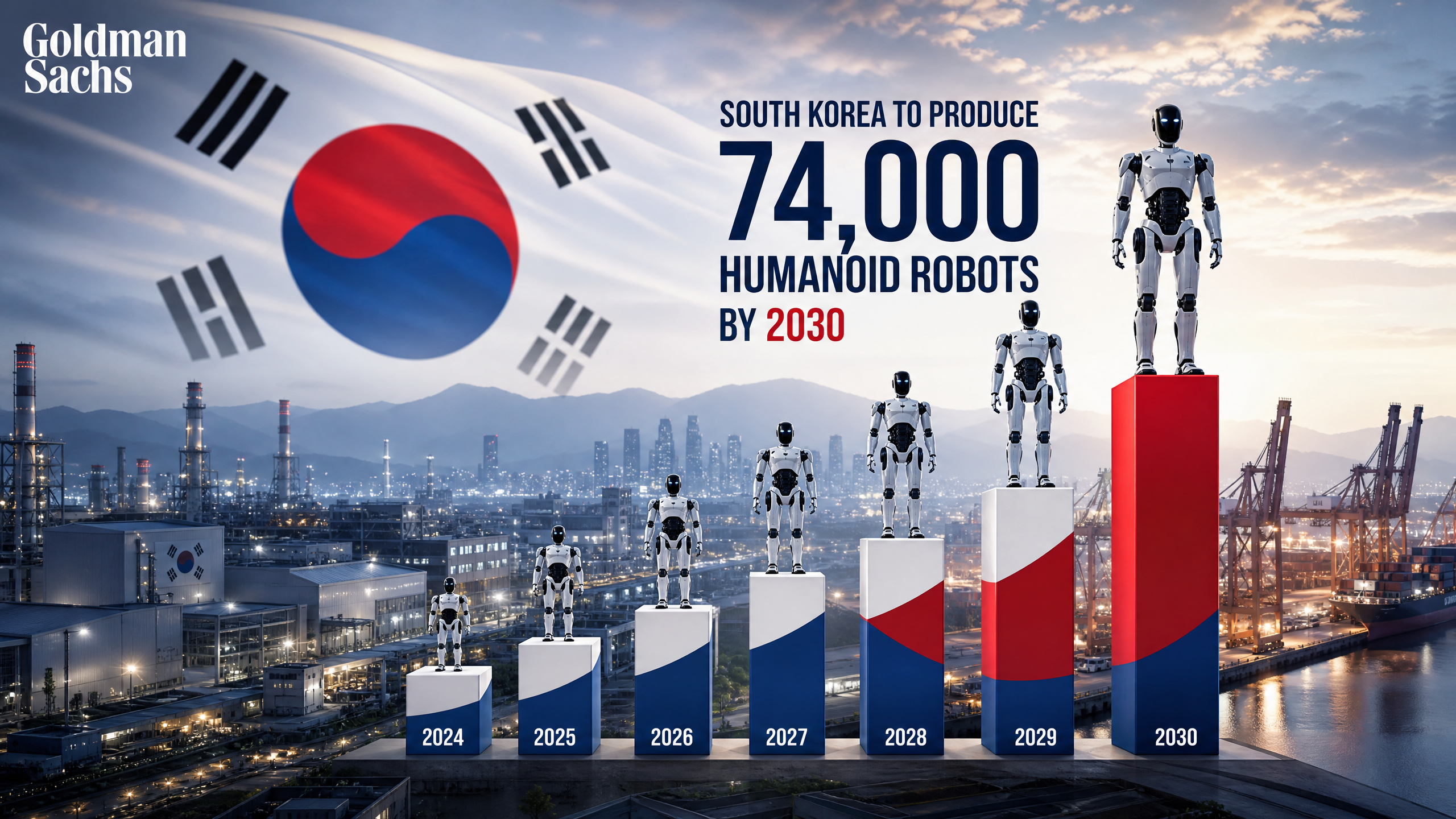
Goldman Sachs Projects Korea Will Produce 74,000 Humanoid Robots by 2030, Representing 30 Percent of Global Output
Goldman Sachs has released a report projecting that Korea will produce 74,000 humanoid robots by 2030, equivalent to 30 percent of global humanoid production, based on the country's automotive component manufacturing expertise and its position in the Boston Dynamics supply chain. The projection comes as Korean parts makers including Halla Cast and SL pivot production lines to robot components following the US FCC ban on Chinese robots.
jamie 9 min read
AgiBot and Unitree Are Racing to Hong Kong and Shanghai With Opposite Bets on What Makes a Robot Worth Billions
AgiBot has confirmed its Hong Kong IPO process targeting a US$4.8-6.0 billion valuation, one day before Unitree opens STAR Market book-building at US$5.85 billion. The two companies represent divergent technology philosophies -- AgiBot bets on AI-first, Unitree on hardware-first -- and the market is about to price both simultaneously.
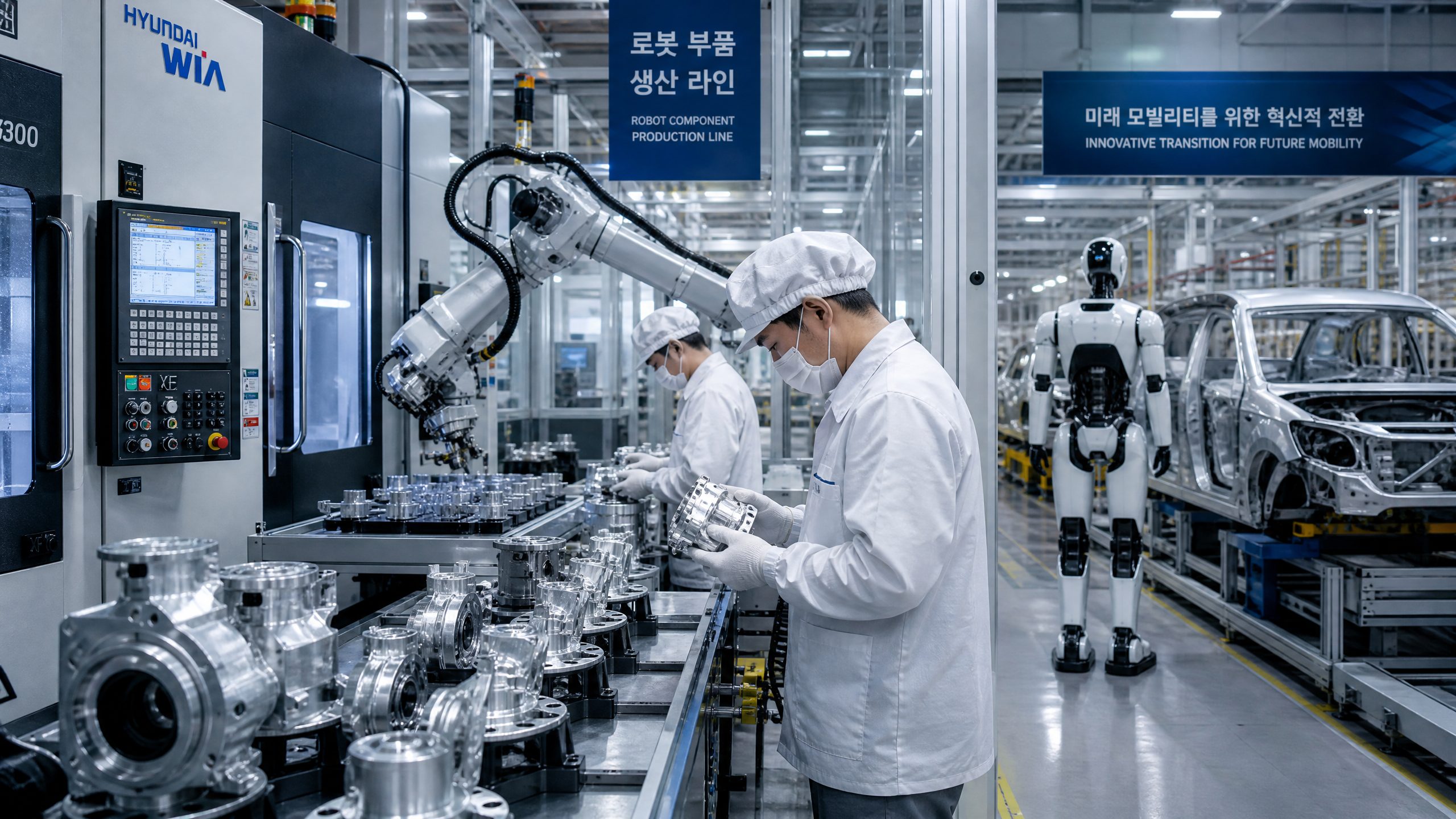
Korean Auto Parts Makers Are Doubling Production Lines and Signing Robot Contracts as the FCC Ban Opens a US$10 Billion Gap
Halla Cast, SL, and Samhyun are pivoting from automotive to robot component manufacturing as the US FCC ban on Chinese humanoid and quadruped robots creates a supply gap in the North American market. Goldman Sachs projects Korea will produce 74,000 humanoid robots by 2030, representing 30 percent of global output.
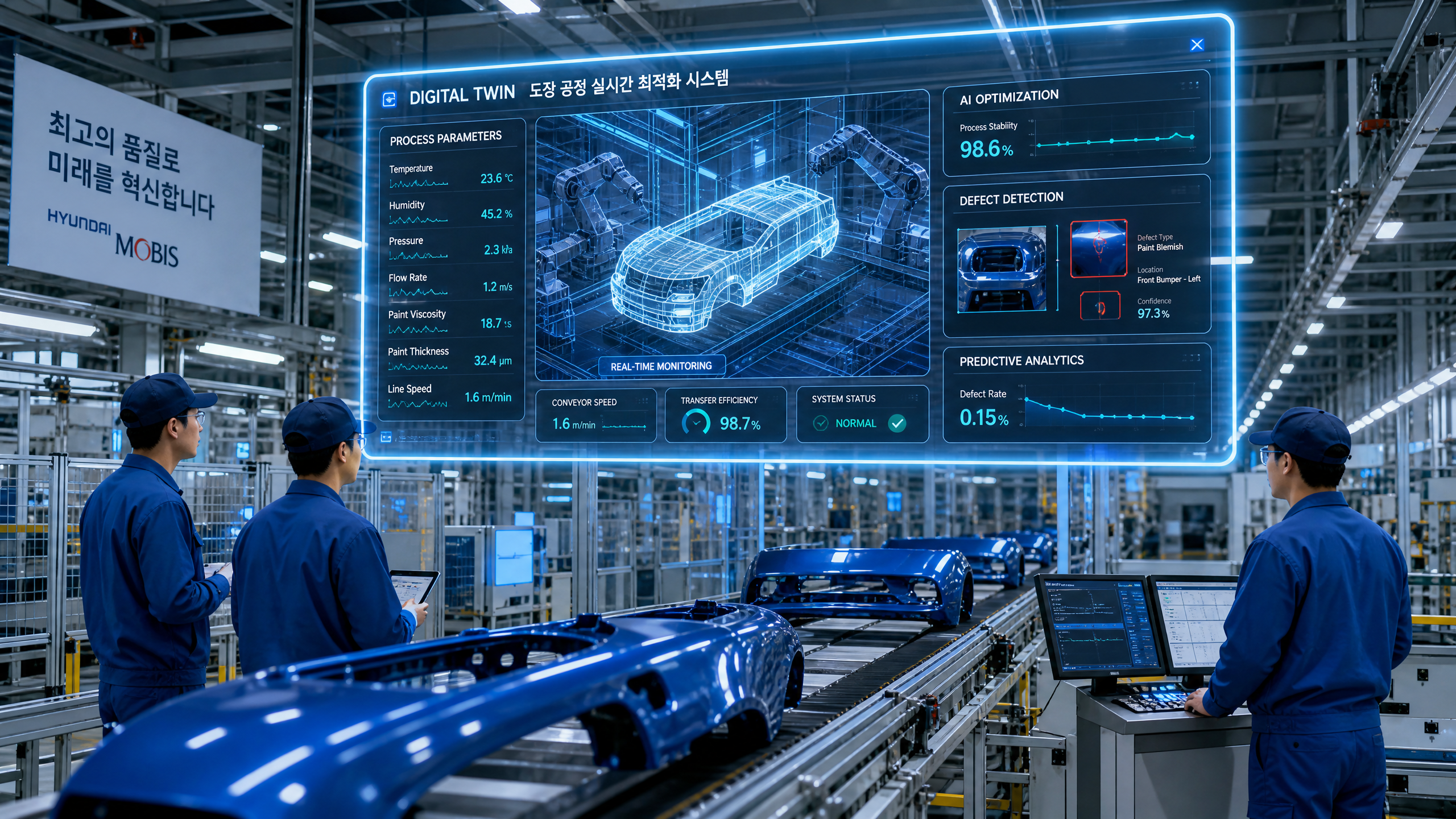
Korea Alps Cut Painting Defects 13 Percent and Halved New Product Lead Times by Combining AI With Digital Twin Technology
Korea Alps, a mid-sized Korean auto component manufacturer, deployed AI and digital twin technology to optimize its painting process, cutting defects 13 percent, raising daily output 5 percent to 47,250 units, and reducing new product preparation time from two months to two weeks. The company has accumulated 710,000 process scenario data points and has been designated a regional leading company under Korea's Manufacturing AI Transformation program.
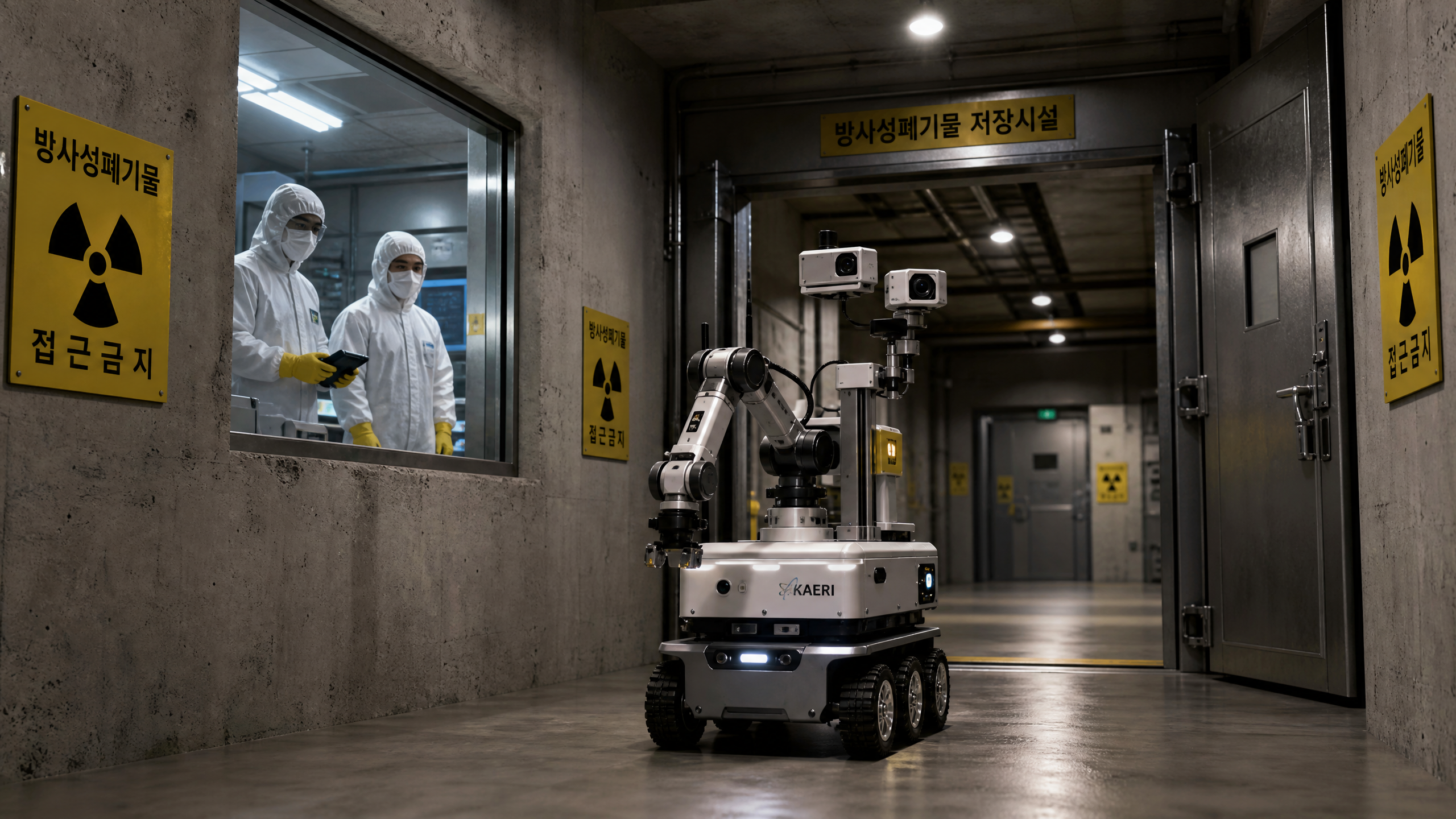
T-Robotics Signs MOU With Korea's Nuclear Waste Agency to Deploy AMR and Industrial Robots in Radioactive Facilities
T-Robotics has signed a memorandum of understanding with the Korea Atomic Energy Environment Corporation (KORAD), Clobot, and the Gyeongbuk ICT Convergence Industry Promotion Association to deploy autonomous mobile robots and industrial robots in radioactive waste disposal facilities. The project is part of Korea's 2026 Large-scale Convergence Robot Demonstration Program and targets expansion into semiconductors, chemicals, and steel.
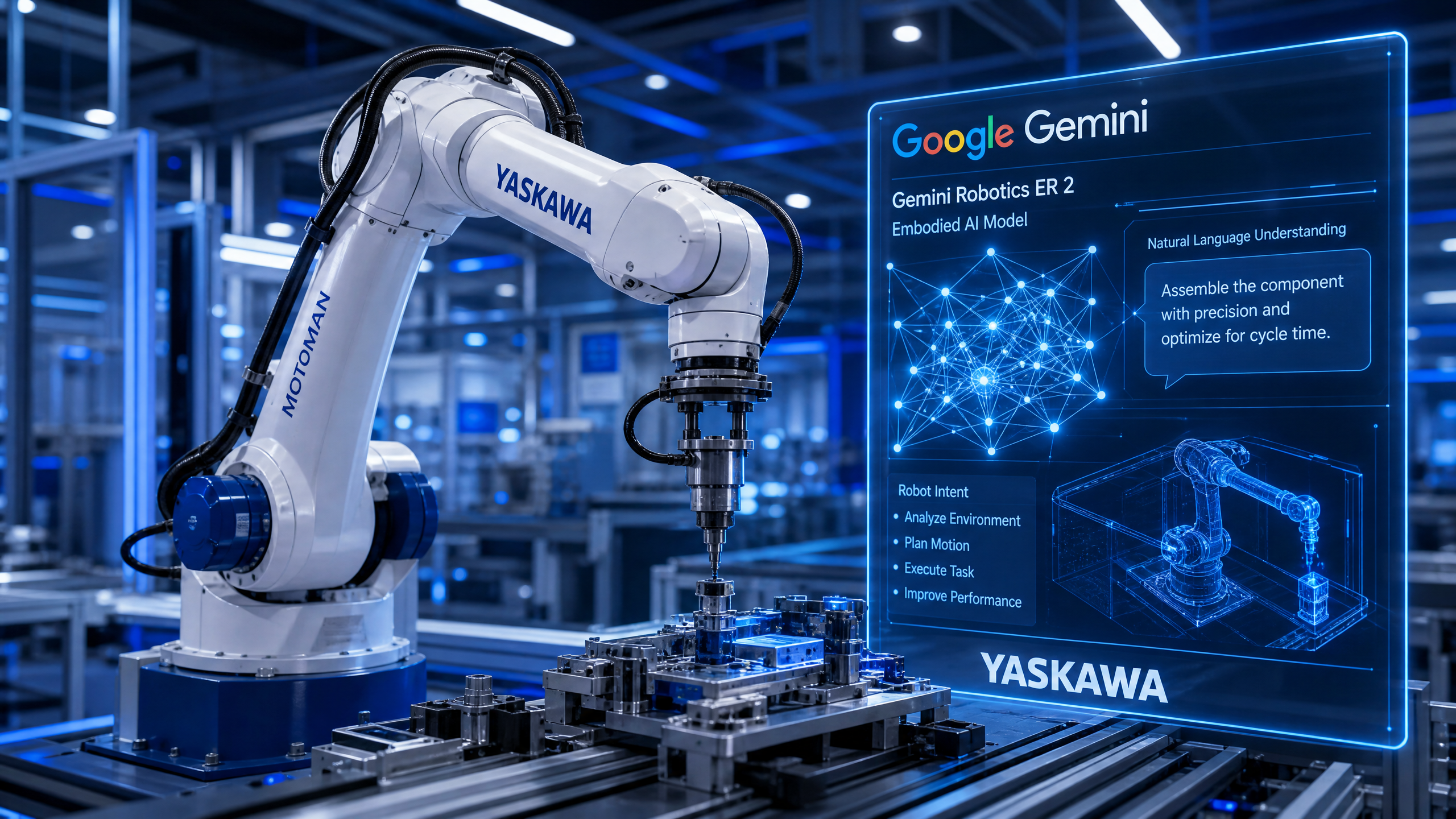
Google Confirms Gemini Robotics ER 2 as Its Most Capable Embodied Reasoning Model and Yaskawa Deploys It in Industrial Robots
Google's official July 2026 AI recap confirms Gemini Robotics ER 2 as the company's most capable embodied reasoning model, enabling natural conversation, environmental understanding, and complex multi-step task execution. Yaskawa has already deployed the model in its MOTOMAN NEXT AI Robot, marking the first major industrial robot manufacturer to integrate a Google AI model at the product level.
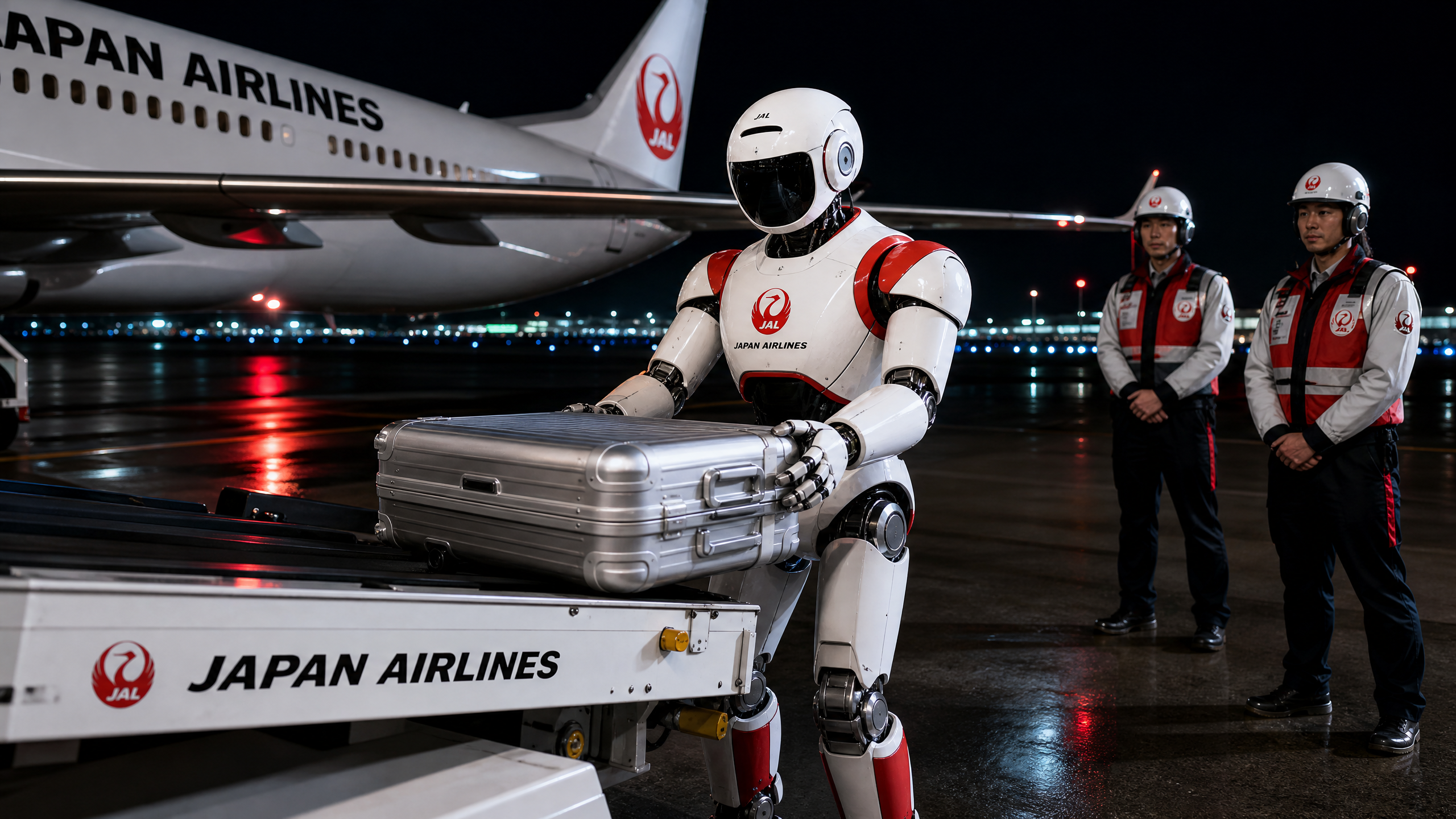
Japan Airlines Runs a Two-Year Humanoid Robot Trial at Haneda to Address a Baggage Handling Workforce That Is Running Out
Japan Airlines has launched a two-year pilot program through 2028 deploying humanoid robots for baggage and cargo handling on the tarmac at Tokyo Haneda Airport. The trial, run in partnership with GMO Internet Group, directly addresses Japan's severe aviation workforce shortage and positions JAL as the first major Asian airline to test humanoid robots in a live airport operations environment.
jamie 9 min read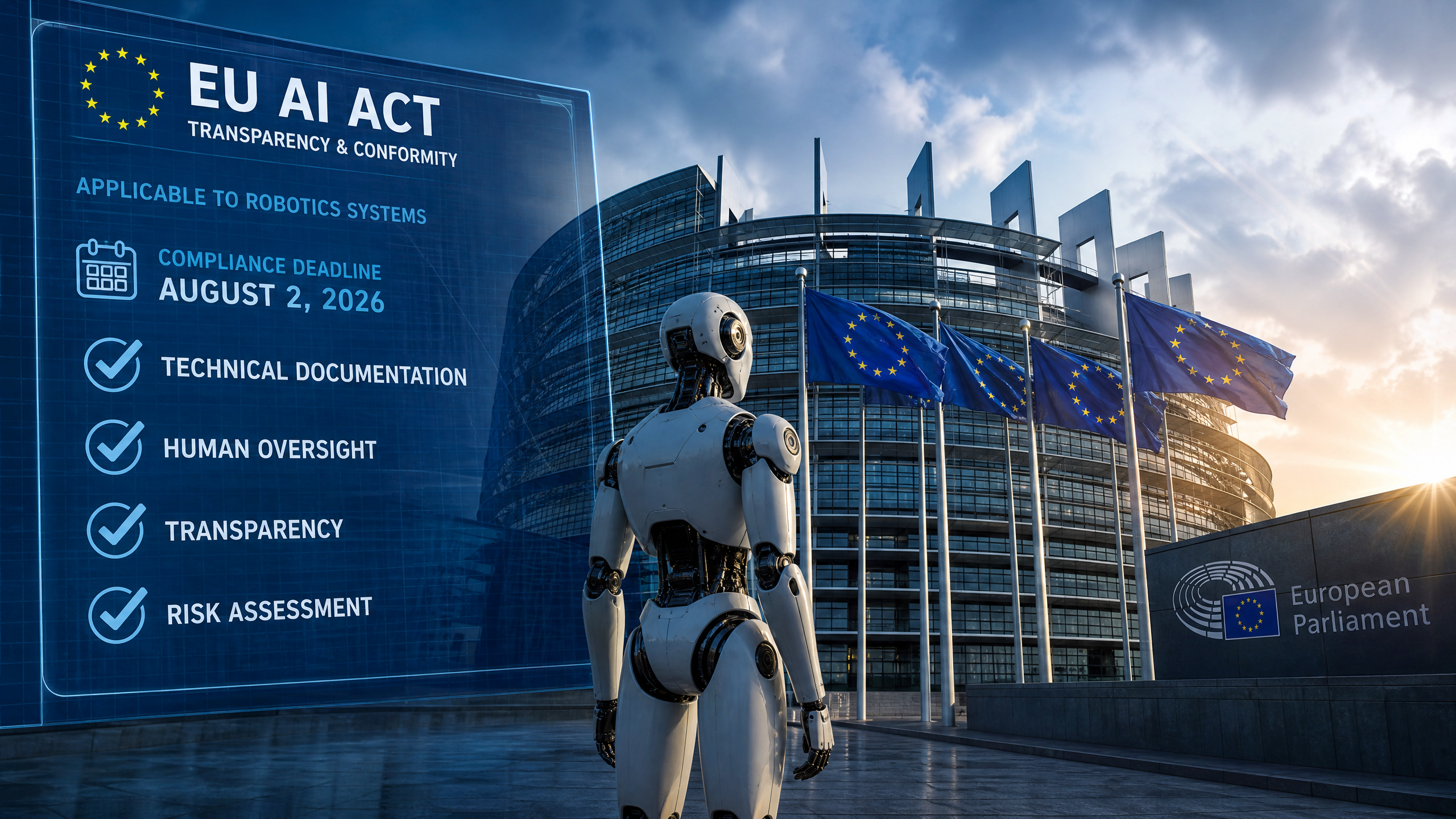
The EU AI Act's Transparency and Conformity Rules Now Apply to Robotics Systems as the August 2026 Compliance Deadline Passes
The European Union's AI Act transparency and conformity assessment obligations entered full force in August 2026, extending to robotics and autonomous systems classified as high-risk AI. Robot manufacturers selling into the EU market must now maintain technical documentation, implement human oversight mechanisms, and register high-risk systems in the EU database. The rules apply to any company selling robots in the EU regardless of where the company is headquartered.
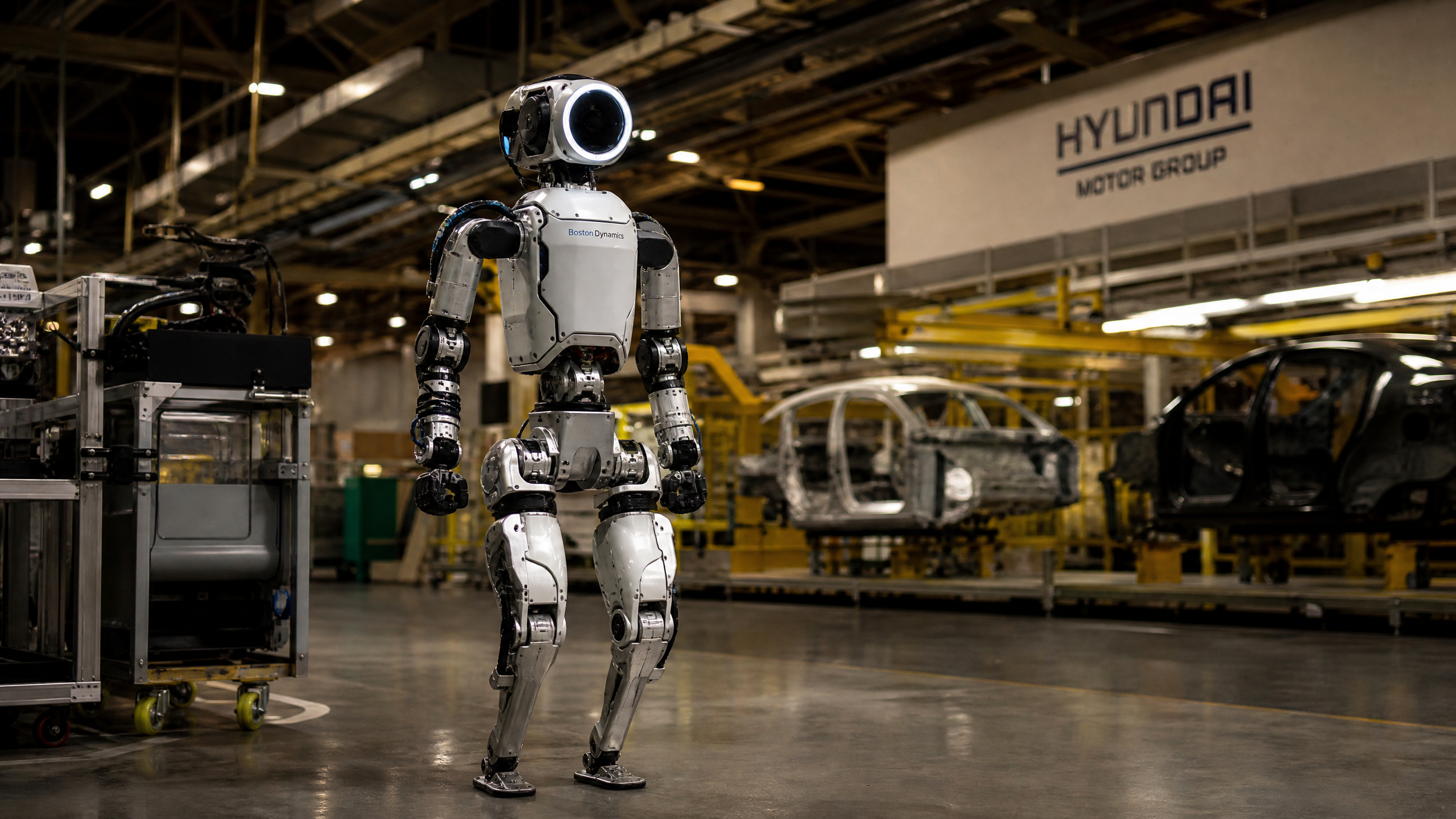
Hyundai Completes Full Boston Dynamics Acquisition and Targets 30,000 Robots a Year by 2028
Hyundai Motor Group has completed its full acquisition of Boston Dynamics after SoftBank exercised its put option on the remaining 9.65% stake, making Hyundai the sole owner of the Waltham, Massachusetts robotics company. The move consolidates Hyundai's physical AI strategy, which includes a target of 30,000 robots per year by 2028 at its Georgia Metaplant, a KRW 9 trillion (approximately US$6.24 billion) AI and robotics hub in Saemangeum, and a commitment to 50,000 Nvidia Blackwell GPUs.
jamie 13 min read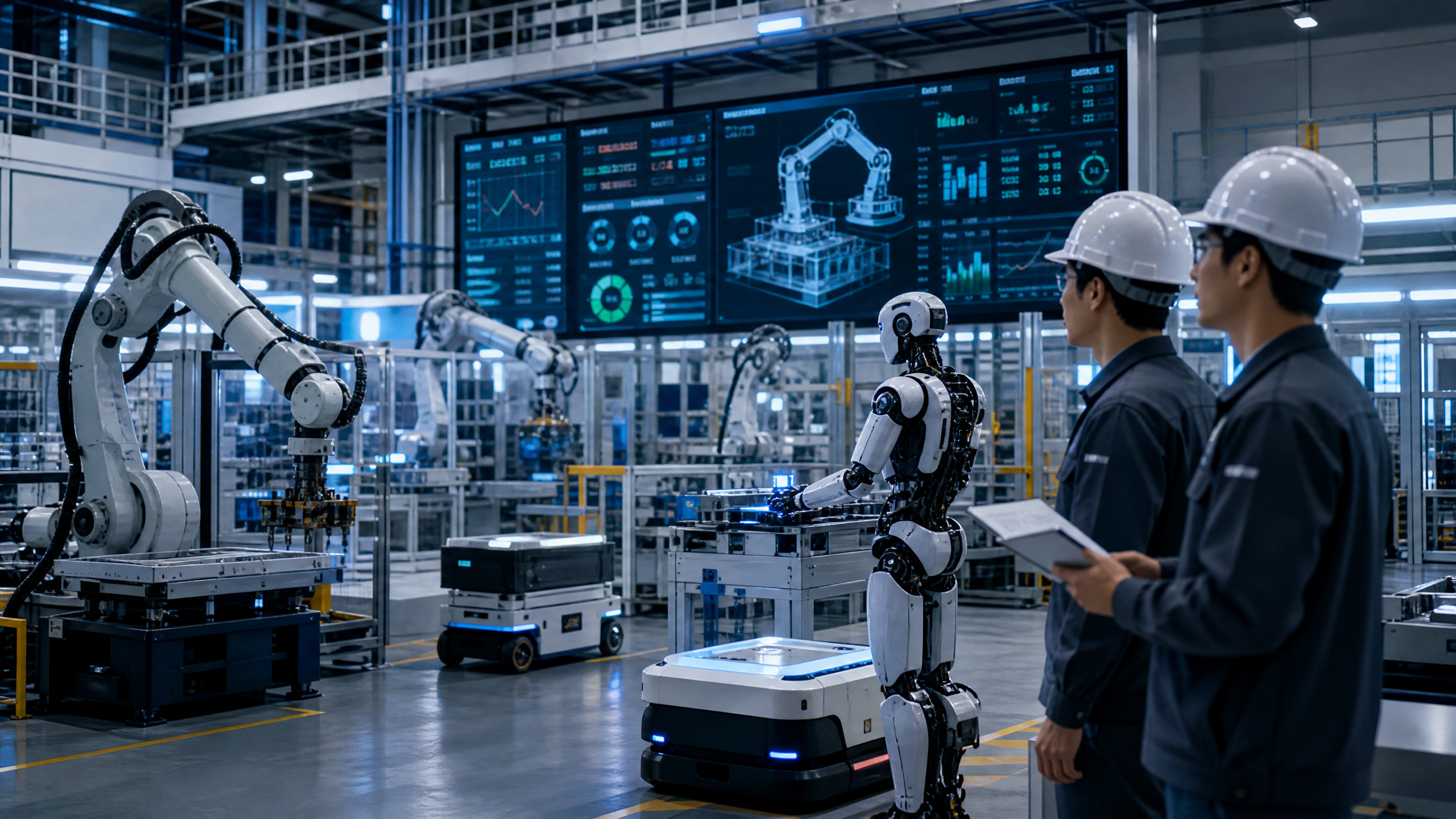
Korea's IT Giants Build the Software Layer That Will Run the Robot Factory
South Korea's four largest IT service conglomerates -- POSCO DX, SK AX, LG CNS, and Samsung SDS -- are each developing proprietary robot operating system platforms designed to serve as the AI brain layer for industrial robot deployments. The race reflects a structural shift in the Korean robotics market, where hardware commoditization is accelerating and the value is migrating to software orchestration, data management, and AI model integration.
jamie 15 min read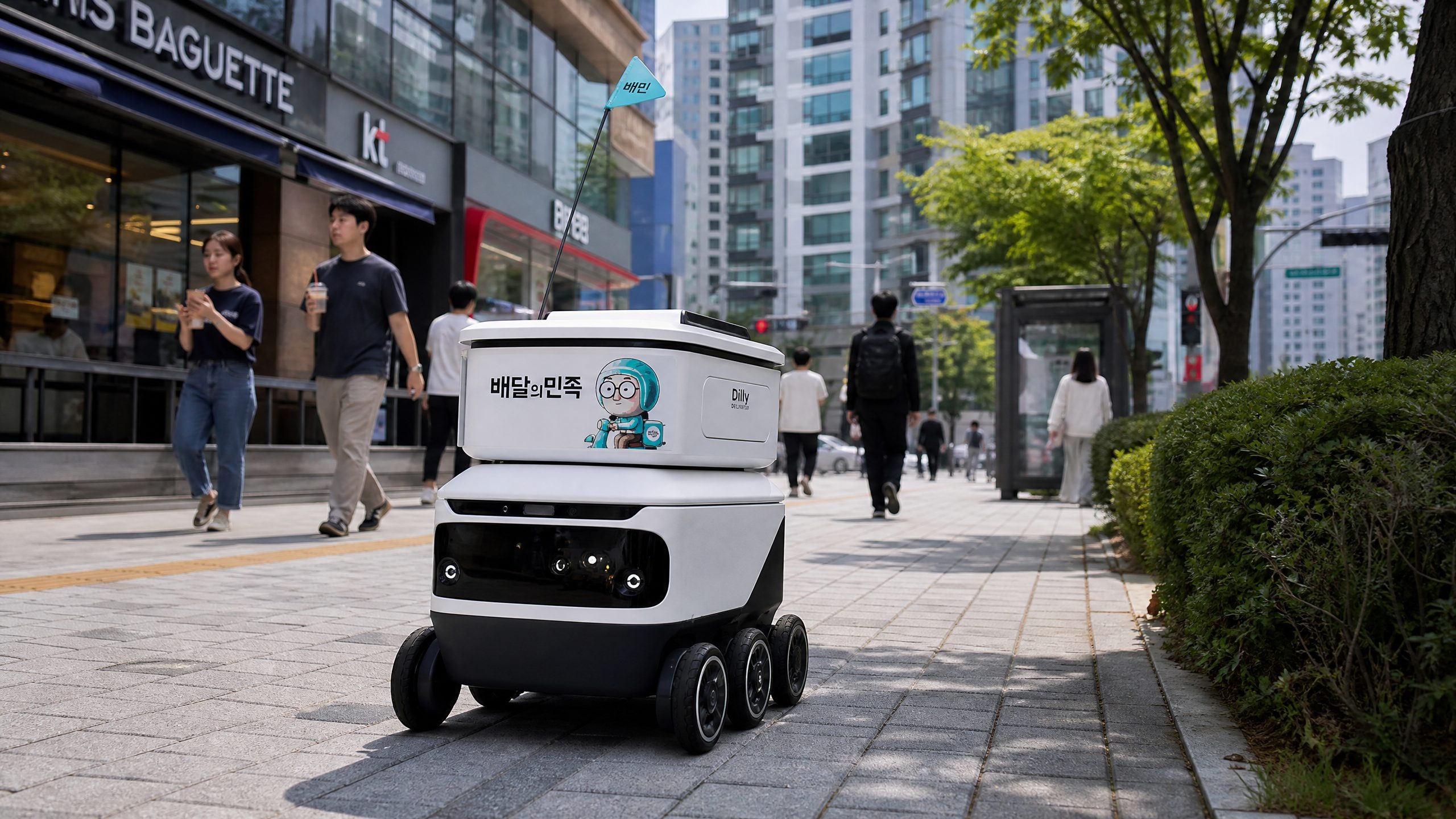
Baemin Deploys Faster Dilly X3-R 1.4 as Seoul Delivery Robot Orders Triple Year on Year
Woowa Brothers has deployed the Dilly X3-R 1.4 delivery robot in Seoul's Gangnam district, featuring an expanded polypropylene foam body that cuts weight below the 15 kg legal threshold for the faster speed class, enabling a 50% speed increase and a 240% year-on-year demand surge. The deployment comes as Baemin's parent Delivery Hero faces acquisition by Uber.
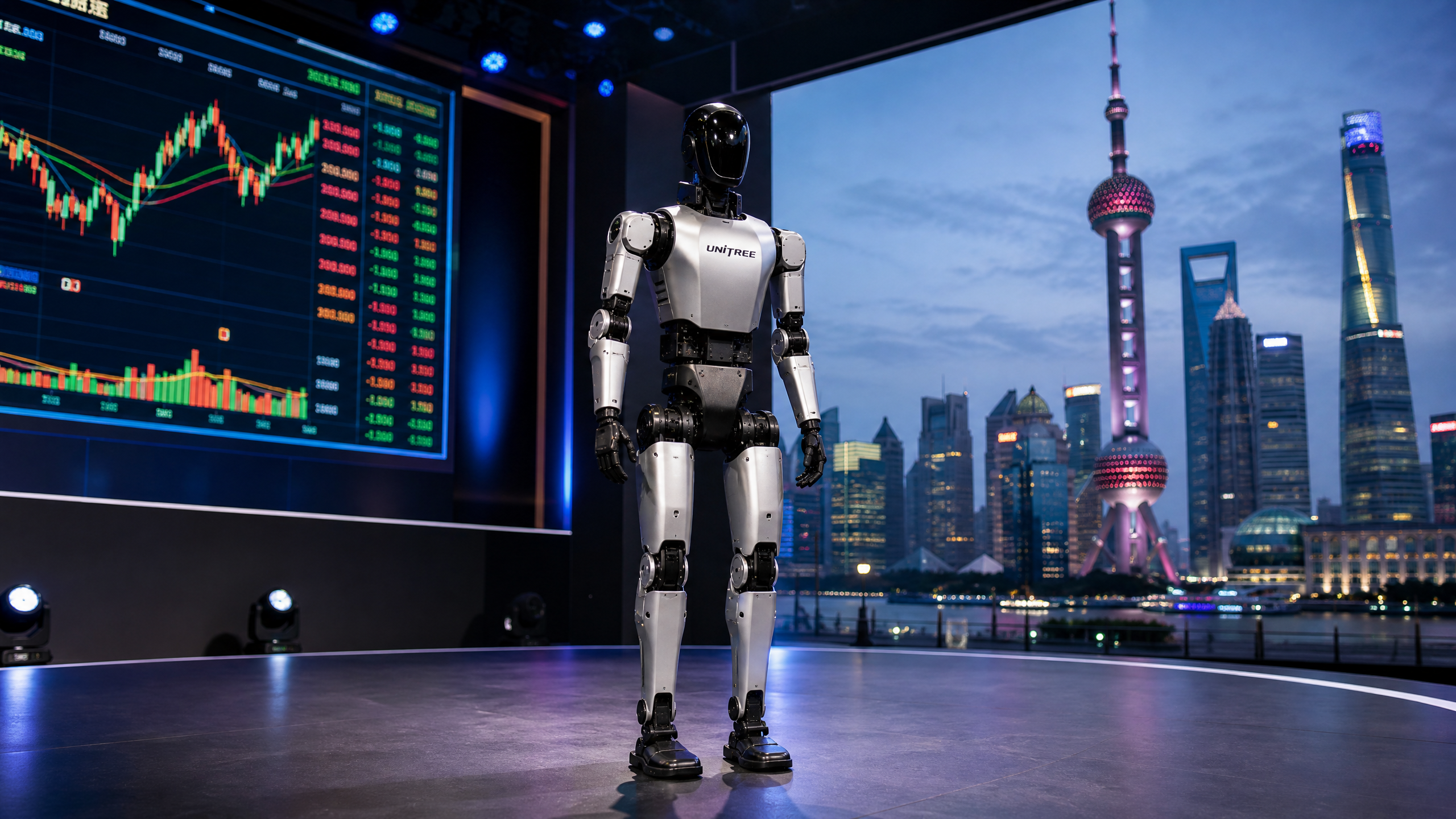
Unitree Robotics Opens Book-Building Tomorrow as China's First Profitable Humanoid Maker Seeks a US$6.2 Billion Valuation
Unitree Robotics opens STAR Market IPO book-building on August 5, 2026, seeking a floor valuation of RMB 42 billion (approximately US$5.85 billion) after completing a record 104-day review process. The company is China's first profitable humanoid robot manufacturer, with RMB 1.2 billion in 2025 revenue and positive net income, setting a pricing benchmark for the wave of humanoid robotics IPOs expected in the next 12 to 18 months.
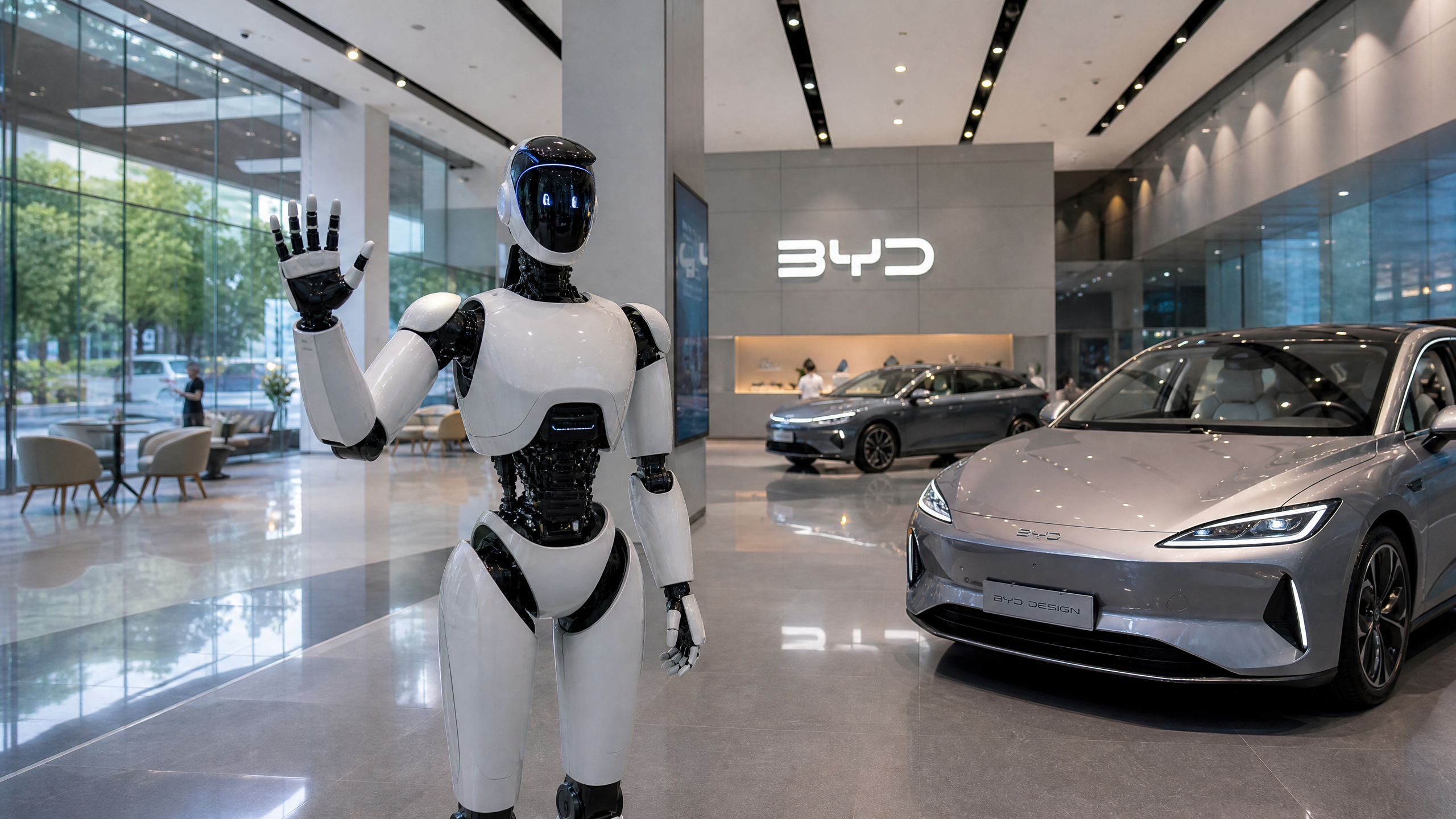
BYD Brings Its First Humanoid Robot to Showrooms This Month as China's EV Giants Enter Embodied AI
BYD, China's largest electric vehicle manufacturer, will unveil its first humanoid robot at its Di Space experience centres in Zhengzhou this month. The robot is reportedly called Xiao Di, stands 1.61 metres tall, weighs 58.5 kg, and can translate between six Chinese dialects and six foreign languages in real time. The debut comes as BYD's car business faces pressure from China's EV price war, with first-half sales down approximately 16%.
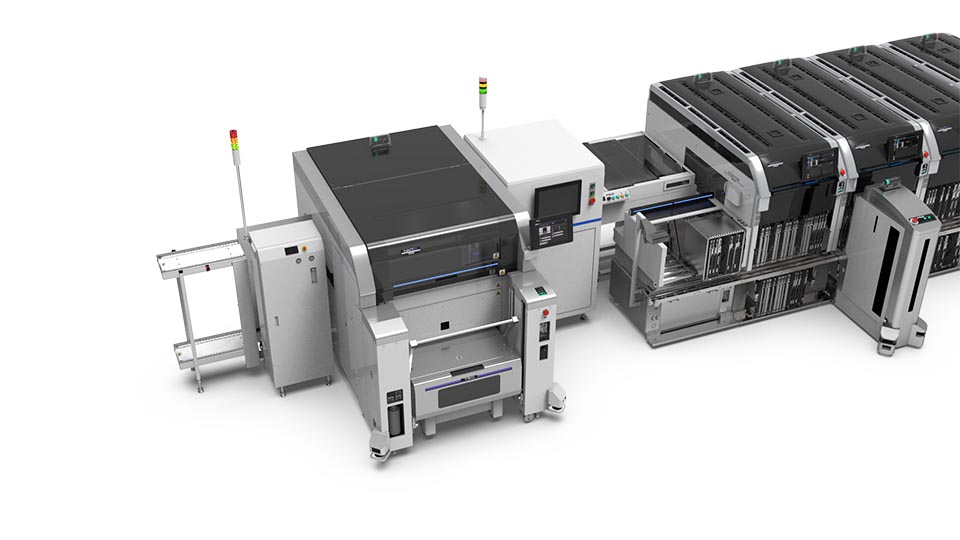
FUJI Corporation AI Server Mounting Technology
FUJI Corporation achieved industry-first automated mounting of 200mm, 2kg components for AI servers, eliminating manual placement of heavy GPU modules and HBM stacks on production lines.
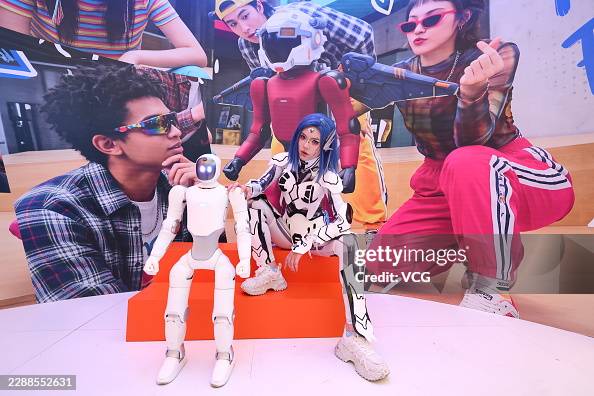
Qiyuan Robot × World of Warcraft at ChinaJoy
Qiyuan Robot unveiled a Murloc-themed consumer robot at ChinaJoy 2026, the first time a major gaming IP has been licensed for an embodied AI product at a mainstream entertainment expo.
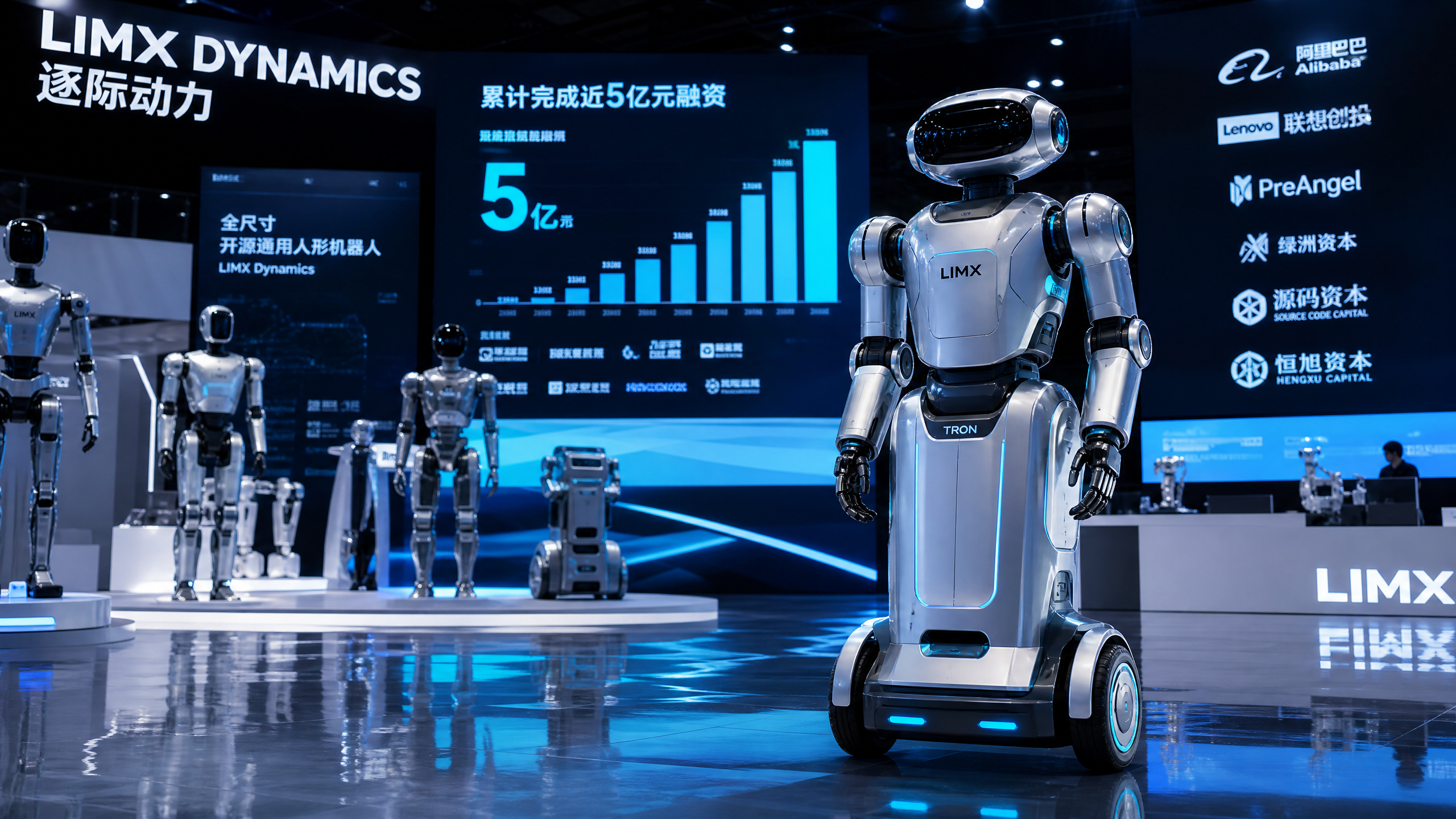
LimX Dynamics pre IPO raises US$200 million 2026
LimX Dynamics closed a US$200 million pre initial public offering round in July 2026, lifting the Chinese embodied artificial intelligence company to a US$2.2 billion valuation. The funding follows an earlier US$200 million raise this year, bringing LimX’s 2026 total to about US$400 million. Capital will scale production for TRON, a multi form robot platform spanning full sized bipedal humanoid Oli and wheeled humanoid Luna. The company showcased both at ChinaJoy 2026 in Shanghai, signaling a push beyond research pilots into paid deployments. The raise underscores a broader Chinese surge in humanoid and embodied platforms, where form factor bets are proliferating and consolidation pressure is building as companies face yield, reliability, and unit cost realities on the road to mass manufacturing.
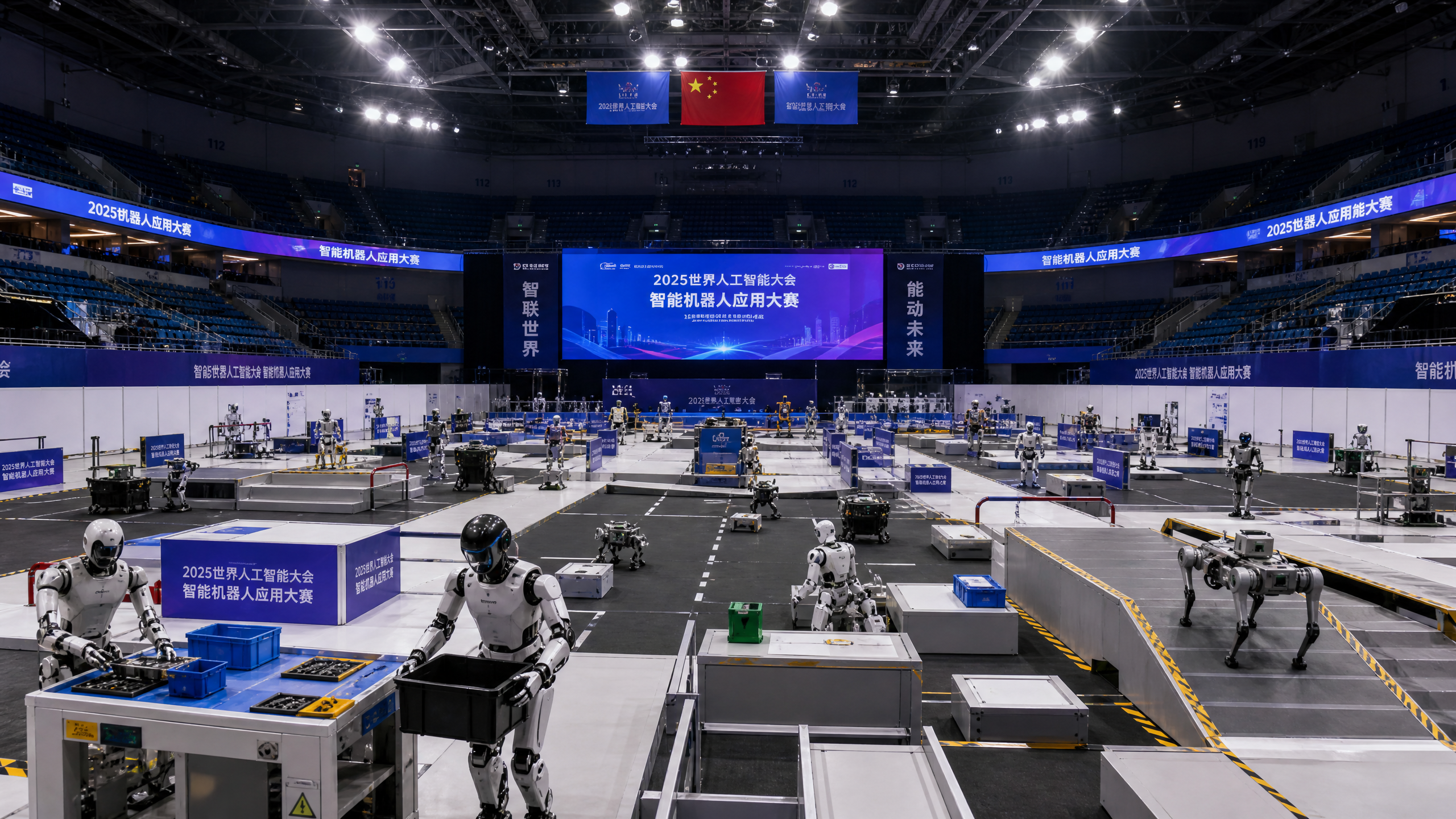
CRAIC 2026 humanoid finals set autonomy benchmark
The 28th China Robot and Artificial Intelligence Competition humanoid finals at Beijing’s Shougang Park on August 1 and 2, 2026 moved the needle from showmanship to shop floor credibility. With 350 robots competing, the full size class ran fully autonomous for 50 minutes over slopes and through parts sorting tasks with zero remote control. Lepu Kuafu disclosed eight hours continuous operation, 95.8 percent unstacking success, and an approximate unit cost of RMB 100,000, equal to US$13,800. The headline is not athletic balance. It is industrial autonomy, cycle yield, and cost down. For procurement leaders, the contest framed a pragmatic question. Does a humanoid at RMB 100,000 now pencil in for real shifts, or does integration friction keep payback out of reach.