CATL backs RoboParty with near RMB 500 million in exclusive pre A
RoboParty closed Angel plus plus and pre A rounds totaling nearly RMB 500 million, with CATL exclusively investing in the latest round. The 22 year old founder targets a first robot launch in late 2026 as the startup moves its team to Shanghai’s Zhangjiang Robot Valley.

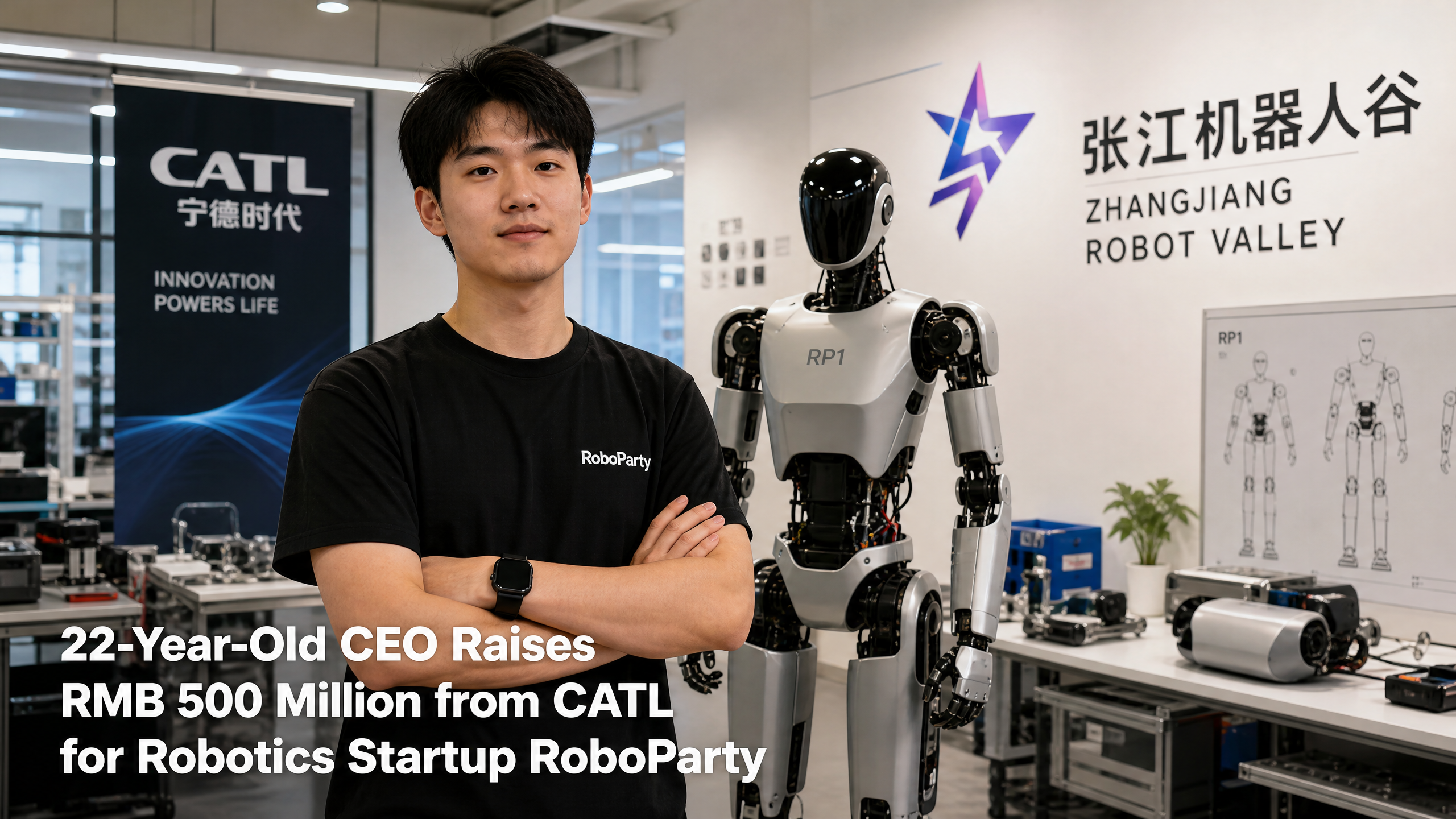
Shanghai based RoboParty said it closed Angel plus plus and pre A rounds totaling nearly RMB 500 million with battery giant CATL as the exclusive investor in the latest round.
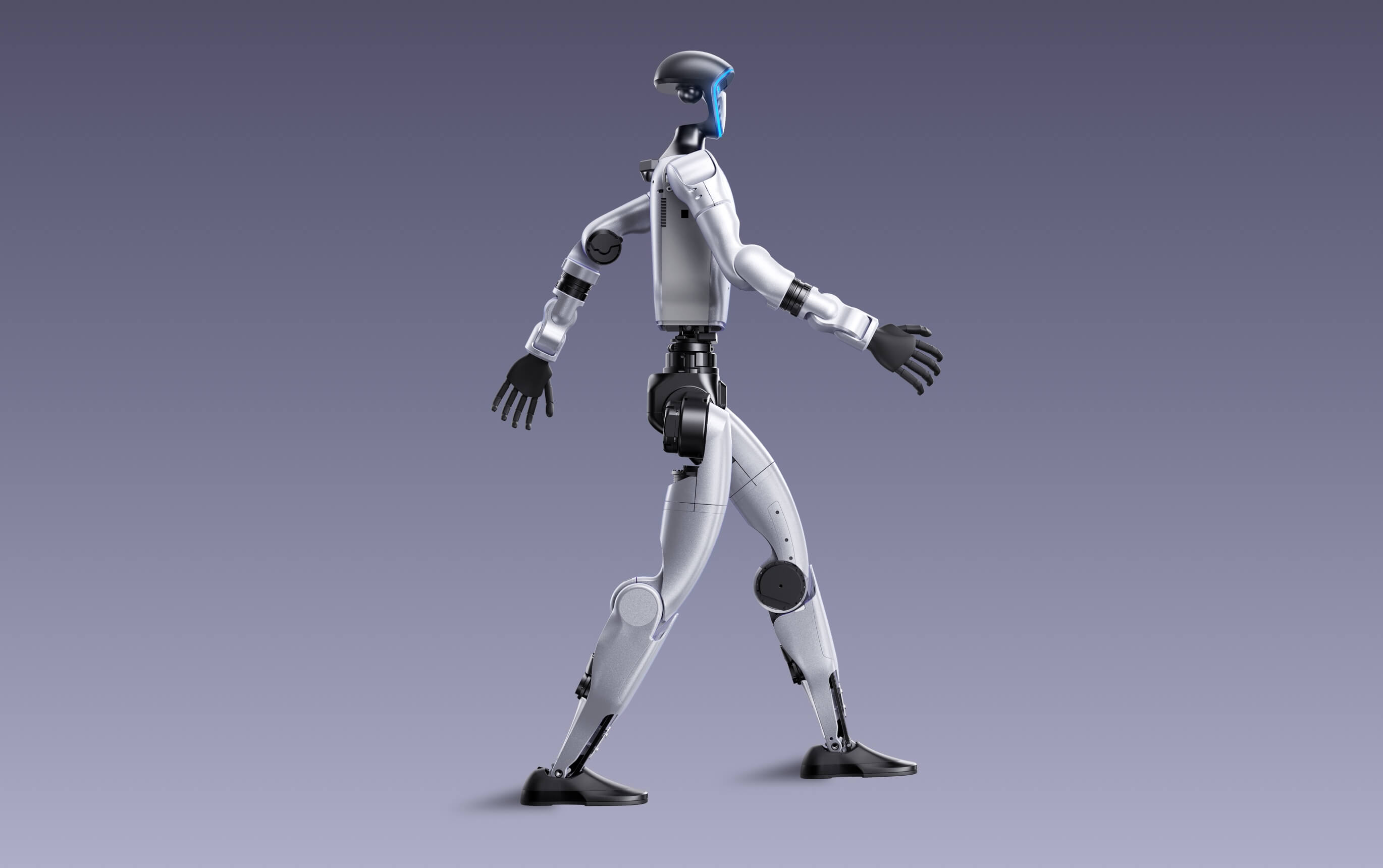
The company has completed six financings in eight months and shifted its team to Zhangjiang Robot Valley in Shanghai. Founder and chief executive Huang Yi, age 22, plans to bring the RP1 robot to market in the fourth quarter of 2026.
RoboParty is a young robotics developer now headquartered in Shanghai’s Zhangjiang cluster, an industrial zone that has become a focal point for China’s humanoid and advanced automation push. The startup is building a general purpose robotic platform under the RP1 program with the stated aim of serving industrial and commercial scenarios. The company’s niche is still forming, but the choice of Shanghai places the team within a short distance of actuator suppliers, contract manufacturers and the engineering talent needed to take robots from lab to line.
The deal with CATL does more than add capital. It puts one of the world’s most sophisticated battery and energy management operators behind a startup that will need to squeeze every minute of runtime and every kilogram of weight from its machines. CATL has historically scaled from cells to entire power systems in electric vehicles and stationary storage. If that systems approach translates to robotics powertrains and safety architectures, RoboParty gains a partner that can help integrate batteries, thermal safety, and power distribution into a coherent stack rather than a basket of parts.
The capital surge signals China’s accelerating bet on humanoid and service robots
Six rounds in eight months with a 20-fold step up in valuation tells a clear story. Chinese capital is moving quickly to secure positions in robotics firms that can become national champions. Beijing has prioritized intelligent manufacturing and next generation robots and provincial governments are layering in subsidies, rent support and procurement commitments to seed buyers for local champions. The Shanghai government has already promoted Zhangjiang Robot Valley as a home base for humanoid developers. That puts pressure on investors to pre-empt promising teams before competitors do.
In such a market, the participation of CATL is notable. The company is not a traditional venture investor. Its presence implies a strategic angle that goes beyond financial return. Robots need safer, lighter, smart power packs that can handle peak currents for high torque movement and then recover with efficient charging and thermal control. CATL can transfer know how from electric vehicles and energy storage into robotics modules, including battery management systems, protection circuits, and pack architectures that enable fast swaps or distributed packs inside limbs and torsos.
The investment also widens CATL’s optionality. The company faces margin pressure in batteries and must expand into adjacent verticals where its chemistry and pack design strengths are valued. Robots can be that adjacent space. If humanoid or mobile manipulators gain traction in factories, warehouses and services, standardized packs and energy modules will become a recurring revenue layer much like EV replacement and fleet contracts.
A 22 year old chief executive chooses patience over premature bookings
Huang Yi, born in 2004 and graduate of Harbin Institute of Technology represents a new cohort of founders in China who move fast but are not afraid to say no. He reportedly turned down an early order of hundreds of robots from an overseas listed company. The reason was simple and blunt. The technology and capacity were not ready and the team did not want to risk brand damage through failed deliveries or rushed engineering.
The decision evokes a common sense analogy. Opening a busy restaurant with a half built kitchen can fill the dining room on day one, but the first hundred plates will come out cold. In robots the cost of a cold plate is not a lost meal. It is a viral video of a fall, a recall for safety and a churned customer who will not come back for years. Saying no in the short term can preserve the potential for credible yes answers later.
The counterpoint is equally clear. Early orders can fund the development of reliability. Many robot firms iterate fastest when they are deployed, not when they are perfecting lab demos. Postponing shipments can mean losing the chance to shape customer requirements and to secure lock in. Investors do not typically reward patience if milestones slip. RoboParty is therefore executing a high wire act. It needs to use CATL’s cash to build production readiness and core subsystems while keeping to a publicly stated 2026 schedule that is ambitious even by industry standards.
The core technical stack will determine whether capital converts to capability
RoboParty’s RP1 must compete not only with marketing videos but with the gritty numbers of torque, control bandwidth, degree of freedom performance, and mean time between failure. For humanoid or general purpose industrial robots the bill of materials is dominated by four buckets.
(1) Actuators that include motors, gear reductions, and torque sensors often consume 35 to 50 percent of unit cost depending on performance goals;
(2) Structural components such as frames, shells and linkages account for 10 to 20 percent;
(3) Power systems including batteries and power electronics range from 15 to 25 percent; and
(4) Compute and sensing including cameras, lidars, depth sensors and edge AI typically sit around 5 to 15 percent.
These shares vary by design but the point is consistent. Without reliable locally sourced actuators and control electronics, a startup can raise RMB 500 million and still struggle to ship ten robust units. While Shanghai and Suzhou host several actuator specialists in harmonic drives, planetary gearboxes and high torque density motors, partnerships or in house development will be decisive for RoboParty’s cost curve. Hence, CATL’s support helps in deciding the right direction, even if it does not solve servos, reducers and compliant control.
The compute question carries geopolitical risk. Many advanced robots today run on Nvidia embedded platforms. Export restrictions affect top end AI accelerators and can spill into embedded products. Some Chinese developers are shifting to domestic options such as Huawei Ascend or solutions from companies like Hygon, Cambricon or Sophon for perception and planning workloads. Tooling, developer ecosystem strength and performance per watt remain concerns. RoboParty will have to pick a path that is resilient to export policy while keeping model performance sufficient for real time perception and control.
The manufacturing plan must turn a lab schedule into a factory schedule
The RP1 launch target sits in the fourth quarter of 2026. That milestone implies a gated plan that moves from alpha prototypes to engineering validation, design to production validation. Each gate usually requires months of test cycles, redesign, and supplier qualification. For startups, this timeline can be very intense.
The decision to move to Zhangjiang Robot Valley matters for this transition. The cluster gives access to contract manufacturers that have built consumer electronics at scale and are now moving into higher precision automation assemblies. It also brings proximity to quality labs and certification bodies. Safety standards for robots that operate near humans are evolving. Achieving compliance for electrical safety, functional safety, ingress protection, thermal runaway mitigation and electromagnetic compatibility will be a non-negotiable requirement for enterprise deployments. Early engagement with certifiers in Shanghai can compress later bottlenecks.
Supply chain contracts should be negotiated with both scale up and scale down in mind. Robotics history is filled with cautionary tales where firms bought long lead components in optimistic quantities and then missed a design change or a demand shift. A rolling twelve month planning window with quarterly re forecasts is standard for automotive and will increasingly be required for humanoids. Payment terms and buffer inventory of ten to twelve weeks for critical components such as harmonic drives and battery cells are prudent in a market where even small delays compound into missed quarters.
CATL’s playbook can reshape robot energy systems from cell to service
CATL’s strategic value extends beyond a check. Robots that work shoulder to shoulder with people need energy systems that are safe, swappable and smart. The parallels to electric vehicles are real but do not map one to one. A humanoid that must hold a tool steady for eight hours cannot carry a multi hundred kilogram pack. It needs energy density and thermal stability in a compact form.
CATL can help optimize voltage architectures that balance motor control needs against safety and cable management. Distributed packs in limbs can lower current spikes and reduce thermal hotspots. Advanced battery management can track cell health in real time and schedule predictive maintenance before a failure causes downtime. Thermal interface materials, venting and pack containment can mitigate thermal runaway risks. Pack interfaces designed for quick swaps can enable continuous operations in factories where robots rotate through charging rather than going offline for hours.
On the commercial side energy as a service can become part of the revenue model. Swappable pack subscriptions, guaranteed uptime and recycling credits can turn a one time sale into a recurring contract. CATL already runs battery leasing and recycling networks. Replicating the loop for robots gives RoboParty an advantage that is hard for smaller rivals to copy quickly.
The competitive field is crowded and moving quickly
China’s robotics push is not happening in a vacuum. Some of the notable Robotics companies like UBTech has shipped service robots for years and is now positioning its Walker line for industrial assistance. Fourier Intelligence has demonstrated humanoid prototypes and forged partnerships with academic labs. Unitree offers high performance quadrupeds and has introduced a biped program that has drawn global attention. Large multinational players also loom. Tesla’s Optimus program has lifted investor expectations about humanoid viability, even if real deployments remain limited.
Against this backdrop RoboParty must define where it intends to win. The generic idea of a robot that can do everything is commercially weak. Early wins in tightly scoped tasks are more credible. In factories the first wave of humanoid adoption is likely to target pick and place, part kitting, light machine tending and intralogistics support. In services robots could handle back of house tasks in retail, hospitality and healthcare logistics. Each niche demands specific grippers, end effectors and software pipelines. A modular architecture that supports quick swaps of hands and tools can shorten sales cycles.
Pricing and business model will be decisive. Capital expense purchases of RMB 300,000 to RMB 800,000 per unit are difficult for many customers to approve without multi month piloting. Robot as a service with monthly fees in the range of RMB 10,000 to RMB 50,000 has gained traction for mobile robots and may extend to humanoids, paired with service level agreements that guarantee uptime. Fleet management software and teleoperation support can differentiate offerings when mechanical capabilities are similar. The caution is clear. Service models push hardware risk back to the vendor, so durability and maintenance logistics must improve fast.
--- Disclaimer: This article is for informational purposes only and does not constitute financial or investment advice.