CRAIC 2026 humanoid finals set autonomy benchmark
The 28th China Robot and Artificial Intelligence Competition humanoid finals at Beijing’s Shougang Park on August 1 and 2, 2026 moved the needle from showmanship to shop floor credibility. With 350 robots competing, the full size class ran fully autonomous for 50 minutes over slopes and through parts sorting tasks with zero remote control. Lepu Kuafu disclosed eight hours continuous operation, 95.8 percent unstacking success, and an approximate unit cost of RMB 100,000, equal to US$13,800. The headline is not athletic balance. It is industrial autonomy, cycle yield, and cost down. For procurement leaders, the contest framed a pragmatic question. Does a humanoid at RMB 100,000 now pencil in for real shifts, or does integration friction keep payback out of reach.
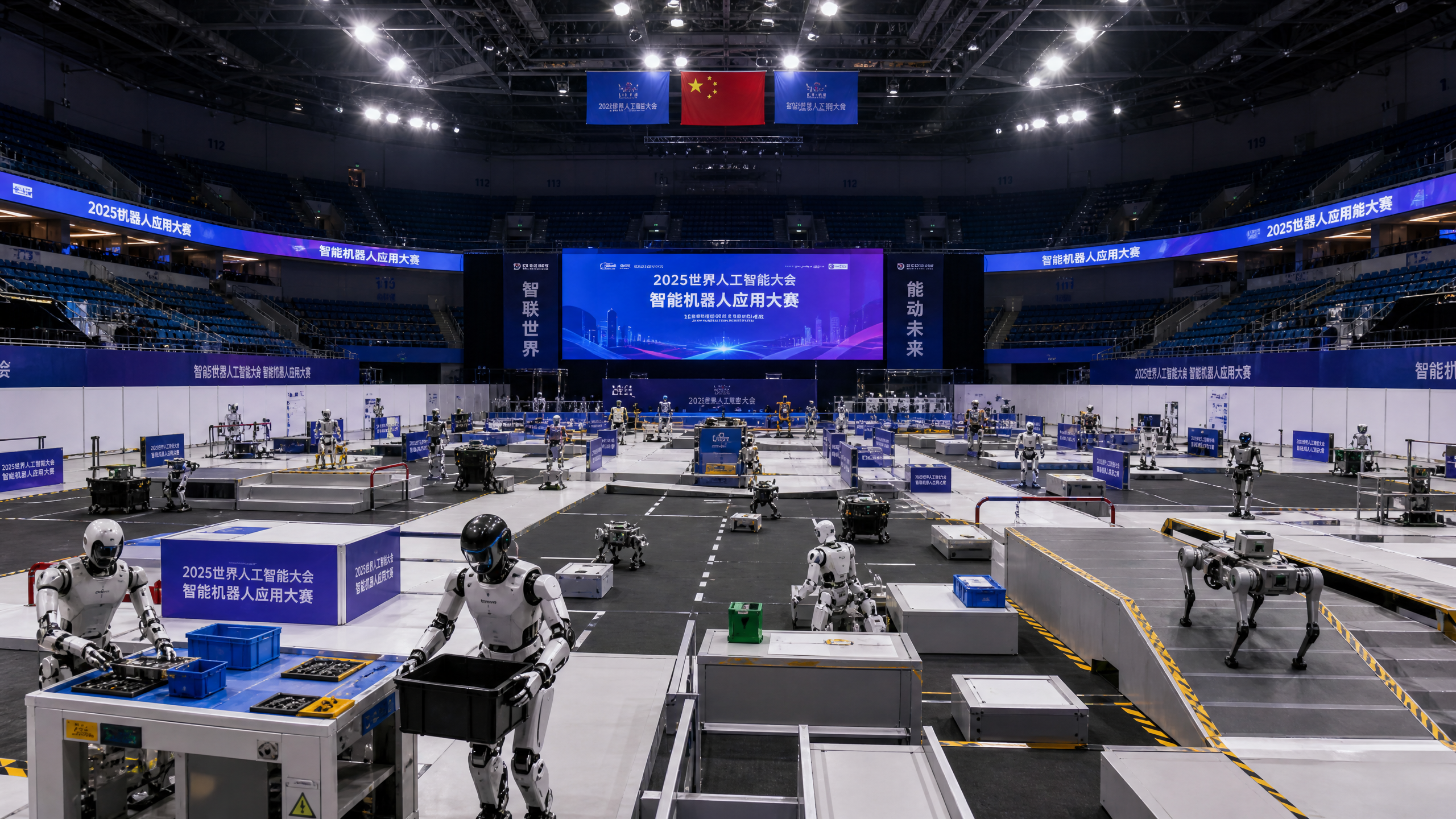
Beijing hosted the 28th China Robot and Artificial Intelligence Competition humanoid finals at Shougang Park on August 1 and 2, 2026. Three hundred fifty robots competed. The full size humanoid class ran fully autonomous for 50 minutes across sloped terrain and real parts sorting with zero remote assist. The rule change reframed the event around shop floor relevance.
Lepu Kuafu, a Shenzhen based humanoid startup, released production grade data during the finals. The company focuses on pallet unstacking and line feeding using proprietary torque dense actuators, vision driven [autonomous mobile manipulation], and whole body control. The reported eight hours continuous operation, 95.8 percent unstacking success, and a target unit cost near RMB 100,000 signal a push for cost sensitive factory niches.
Autonomy Took Center Stage over Choreography
CRAIC, short for China Robot and Artificial Intelligence Competition, has long mixed student ingenuity with commercial showpieces. This year the stage looked less like a conference and more like a commissioning bay. For the first time, full size humanoids had to operate hands off for 50 minutes, not five, while tackling tasks that mirror day one factory asks. Course designers introduced ramps and uneven flooring, cable protectors, pallet bays, and bins of mixed parts that required perception, grasp planning, and error recovery. Teleoperation, previously a safety blanket for many demos, was banned for the duration.
That single rule change matters more than any backflip. It converts the exam from an oral test to a closed book written test. If a robot can walk, perceive, decide, and self correct for 50 minutes without a hidden human in the loop, the conversation shifts from could to how often and how cheaply. Power budgets, thermal behavior, [whole body control], and bump tolerant [force control] suddenly become the decisive factors, not stage lighting.
Fifty Minutes felt like a Compressed Shift
A 50 minute run is not a shift. It is long enough to flush out brittle autonomy stacks. Over that window, dead reckoning drift, contact uncertainty at the gripper, part slippage, and gait planner corner cases show up. If a controller requires a joystick save every two minutes, it fails. If the perception stack needs perfect lighting, it fails. The finals pressure tested reliability in a way that a two minute stage demo cannot.
Think of it like hiring a driver. A stunt reel is fun but does not tell you if someone can handle weekday rush hour without directions. The CRAIC format forced humanoids to commute, not perform. One skeptical counterpoint is obvious. Fifty minutes is still compressed, curated, and safe. No oil spills, no broken shrink wrap, no irate supervisors. True, yet the shift from teleoperated sparks to unsupervised work is the only path that transitions humanoids from trade show attractions to capital assets.
Data moved from Sizzle to Yield
Lepu Kuafu was the first team at the finals to share production facing numbers in plain terms. Eight hours continuous operation suggests battery sizing, thermal management, and actuator efficiency are moving past bench tests. The 95.8 percent unstacking success rate adds clarity to the most boring yet valuable metric in factory work. Yield, not wow factor, governs purchase orders. A near RMB 100,000 build target reframes the cost floor.
Autonomy is a stack, not a checkbox. Eight hours continuous operation is meaningful only if the robot maintains cycle time consistency and does not drift into needlessly conservative behavior after minor bumps. The 95.8 percent unstacking success metric likely reflects a specific SKU mix and packaging geometry. Corrugated supply variance, pallet warp, and taped edges can cause nasty edge cases. Integration teams will want to see confusion matrices by part family and a breakdown of fault classes like double picks, misgrips, and dropped items. The more Lepu Kuafu and peers publish per task breakdowns, the faster buyers can model true [mean time between failures] and intervention rates.
Unit cost is the headline that cuts through noise. If RMB 100,000 produces an industrial humanoid with force compliant arms, an IP rated chassis, and a service plan, then actuator and gearbox cost curves have bent. That would imply supply partners for torque dense motors, strain wave or cycloidal reducers, and LiFePO4 packs are hitting electric vehicle scale pricing, which squares with what China’s component ecosystem has been building over the past decade.
From Remote Theatrics to unattended Worksite Credibility
Teleoperation had its moment. It let teams prove mechanical capability while autonomy caught up. Buyers were patient until they realized every teleop minute becomes a cost center. CRAIC’s new format pushes what matters in procurement reviews. Key questions now include autonomous fault detection and self correction behavior, safe states under uncertainty, and graceful degradation when a sensor goes out of spec.
In field work, small reliabilities add up. An arm that backdrives cleanly after an edge collision preserves alignment and avoids damage. A gait planner that downshifts on ramps reduces slip risk and saves actuators. A perception stack that fuses depth, force, and tactile cues can resolve occlusions from shrink wrap glare. The Beijing finals placed robots on graded ground, near pallet lips and cable trays, to flush out those behaviors. It is not a complete proxy for a stamping plant, yet it is a better filter than a red carpet routine.
The Labor Arithmetic shifts at RMB 100,000
The elephant in the procurement room is payback. A humanoid priced at roughly RMB 100,000, equal to US$13,800, invites a hard spreadsheet exercise. Assume a three year life, with 250 working days per year, and 16 hours of operation per day with battery swap or charge rotation. That gives 12,000 operational hours over the period. Amortized capital is roughly RMB 8.3 per hour before service and spares. Add RMB 2 to RMB 5 per hour for maintenance, parts, and connectivity. Even padded, the hourly baseline is below RMB 20.
Contrast that with two shift staffing for basic line feeding, pallet unstacking, or tote transfer. All in monthly costs for a shift worker in coastal China often run between RMB 7,000 and RMB 10,000 once social insurance and overtime are included. That translates to RMB 40 to RMB 60 per hour on a loaded basis depending on overtime and factory location. Regional variance is real. Inland plants may run cheaper, premium plants in the Pearl River Delta may run higher. The productivity gap grows wider with third shift differentials.
Now the skeptic speaks. The all in robot number must include integration, grippers, guarding, safety certification, and a service contract. Those can double initial outlay and add commissioning time. If the humanoid cannot hold 95 percent task yield without babysitting, the economics collapse. In other words, the headline price is not the total cost, just as a forklift chassis price excludes forks, batteries, and chargers. Sensible buyers will model per task cycle times, expected exception rates, and human intervention costs before green lighting fleet orders.
EV Industry Talent is Refactoring Humanoids
The most visible change behind the scenes at Shougang Park was badges and resumes. The humanoid field looked and sounded like the Electric Vehicle community circa 2018. Teams brought ex electric powertrain engineers, cell pack designers, motor control experts, and low cost electronics buyers who cut teeth at automotive programs. This is not a coincidence. The same cost down and scale up playbook that drove EV motors and inverters into commodity pricing is arriving in actuators and drives.
Torque density and thermal performance improve when motor laminations, windings, and magnets are specified to scale with stable suppliers. Battery teams that know how to extract current safely with minimal sag under dynamic loads now spec packs that support hours of [whole body control] with plenty of headroom. Design for manufacturing habits from electric vehicles, like parts count reduction and modular harnessing, are showing up in humanoid bill of materials. The cultural habit of ramp fast, fix fast, and requalify suppliers at speed is also present, for better and worse.
This talent migration has another implication. The graduate pipeline that fed new energy vehicles is now split between software defined vehicles and software defined robots. Universities that had EV racing teams now field humanoid squads that treat controllers, calibration rigs, and hardware in the loop as table stakes. The long tail of small integrators benefits because component price floors fall when the top ten buyers for reducers, motors, and drives start to look like the EV tier list.
Procurement checklists now mirror plant KPIs
Buyers will emerge from Beijing with a more mature checklist. Fancy videos do not pass gate reviews. Data and duty cycles do. Useful artifacts include
- Task level yield with at least 1000 cycle runs per SKU family
- Mean time between interventions with a clear definition of intervention classes
- Battery endurance at temperature with measured cycle time drift
- Safe stop and recovery behavior after slips, trips, or sensor dropouts
- Swap time for end effectors and parts availability with local stocking plans
- Service network map and response time commitments by geography
- Security model that allows remote diagnostics without violating data policies
One more operational ask is overdue. Buyers should require a fallback mode that is useful without restoring full autonomy. A guided mode that allows a technician to nudge grasps or reseed a planner from a pendant can keep a cell productive while a software update or reindex runs. Fully remote human in the loop is no longer allowed at events like CRAIC, yet a local assist tool can be the difference between a one hour stoppage and a five minute hiccup.
Geography and Compliance still Shape Deployments
China scale bends cost curves, not safety codes in other markets. Export buyers will factor shipping, duty, and compliance. European sales require CE and Machinery Regulation compliance with risk assessments and performance levels that match collaborative claims. North American deployments need OSHA awareness and functional safety features that meet local expectations for stops and zones, even if the humanoid is not a traditional industrial arm. IP ratings and lockout provisions still matter. If a vendor quotes RMB 100,000 ex works in Shenzhen, an EU or US buyer should budget meaningful extras for documentation, validation, and local service readiness.
A visiting European automotive buyer offered a telling line at Shougang Park. The floor price near RMB 100,000 reframes make versus buy in Europe, yet aftercare will decide winners. That geo grounded view cuts through boosterism. Price opens the door, compliance and service decide who stays inside.
Factory Readiness Looked Closer than Last Year
The aggregate quality of motion, perception, and grasping was a notch up from 2025 events. Gaits appeared less tentative on slopes. Recovery behaviors looked less panicked after minor stumbles. Bin picking of simple parts like small casings and pouches happened without obvious human hints. The course was curated, but it contained enough friction to screen flimsy stacks. Teams used larger tactile pads on hands, more robust wrists, and better torque sensing. The transition from brittle key frame motions to adaptive behaviors was visible.
Energy management is still the silent governor. Eight hour continuous operation claims require careful reading. They imply battery swap processes, not a single charge marathon. In the finals, swaps and staged charging rigs were visible. That is fine. A forklift does not run a full shift without swap or charge either. The real tell will be whether teams can maintain consistent cycle times through a full working day and night across temperature variations.
Shougang Park and the Symbolism of Steel to Software
Holding the finals at Shougang Park, the repurposed steel mill in Beijing, kept the symbolism grounded. Old industry meets new, yes, but with practical echoes. Sloped passages, uneven paving stones, and tight corners around repurposed blast furnaces recreated what many plants still look like behind fresh paint. The setting avoided the sterile flatness of many expo halls. It gave integrators a real sense of toe clearance, shin height obstacles, and the unforgiving nature of steel.
The site also underscores China’s public push to turn robotics contests into industrial catalysts. University teams based in the Beijing Tianjin Hebei region showed strong mechanical builds. Shenzhen and Suzhou startups carried sharper supply chain reflexes. The mix resembled past semiconductor and EV ecosystem cross pollination. Contests like CRAIC now function as talent markets and benchmark labs more than parades.
Winners may not be Trophy Holders
In buyer meetings, the brand that posts repeatable data and publishes learning curves on yield tends to win. Lepu Kuafu put numbers on the table. Other teams will follow. The question is how fast they can turn contest tuned systems into audited workcells with traceability and documentation that procurement trusts. A robot that can handle pallet unstacking and tote transfers at 95 percent yield with less than one intervention per hour is already useful for backrooms, inbound logistics, and e commerce consolidation where floors are imperfect and tasks vary daily.
There is a counter argument. Fixed automation can do pallet unstacking faster, cheaper, and more reliably. In many cases, yes. If the task is stable and the volume is high, a fixed cell still wins on speed and cost. The humanoid value proposition rises when constraints are higher mix, shorter runs, tighter footprints, and sites that do not justify a permanent rebuild. It is not either or. It is a portfolio. Humanoids that pass the 50 minute unattended trials begin to earn a slot in that portfolio.
China’s Scale Advantage will Test Foreign Rivals
Component availability and cost in China remain unmatched at the price points cited in Beijing. Motors, reducers, and low voltage drives ship by the container load. Wiring harness houses can pivot from electric vehicle subassemblies to robot looms in weeks. Sheet metal and casting vendors have been trained by EV programs to quote, sample, and ramp on tight cycles. That does not automatically win exports. It does create a home market beachhead for rapid iteration and field learning.
Foreign rivals can counter with compliance readiness, software depth, and well staffed service models. Many will choose to integrate Chinese components into their stacks while selling higher service tiers. The better approach for buyers is to treat CRAIC results as a data point, then run site specific pilots. A small fleet trial that measures true intervention rates, fault causes, and maintenance loads in local conditions is worth more than a hundred event videos.
What to watch in the Next Twelve Months
Metrics that matter now are not show tricks. They are
- Repeatable autonomous uptime over entire shifts across temperature bands
- Yield curves over mixed SKUs with realistic packaging flaws
- Hands and grippers that survive drops and maintain calibration
- Battery and swap logistics that maintain cycle time consistency
- Field service posture including parts stocking and remote diagnostics that respect data policies
If these curves move in the right direction while unit costs inch toward or below RMB 100,000, the humanoid category will enter the same procurement conversations where cobots and mobile robots sit today. Not the majority of tasks, but a meaningful minority where flexibility is king and floorplans are unforgiving.
Conclusion
Beijing’s CRAIC finals turned a page from teleoperated theater to autonomous accountability. The numbers shared by Lepu Kuafu and the 50 minute hands off format sharpened the economic question. If humanoids can hold high yield without babysitting and if RMB 100,000 survives integration and service math, shift work will start to be shared. The coming year will decide whether these robots graduate from contest winners to line items in capital plans.
This analysis synthesizes company statements from the event and observable public market activity around components and deployments.
Disclaimer
This publication is for information only and does not constitute investment, legal, or engineering advice. Buyers should perform independent evaluations and safety reviews before procurement or deployment.