Booster ships 1,000 plus K1 humanoids and launches embodied AI IDE
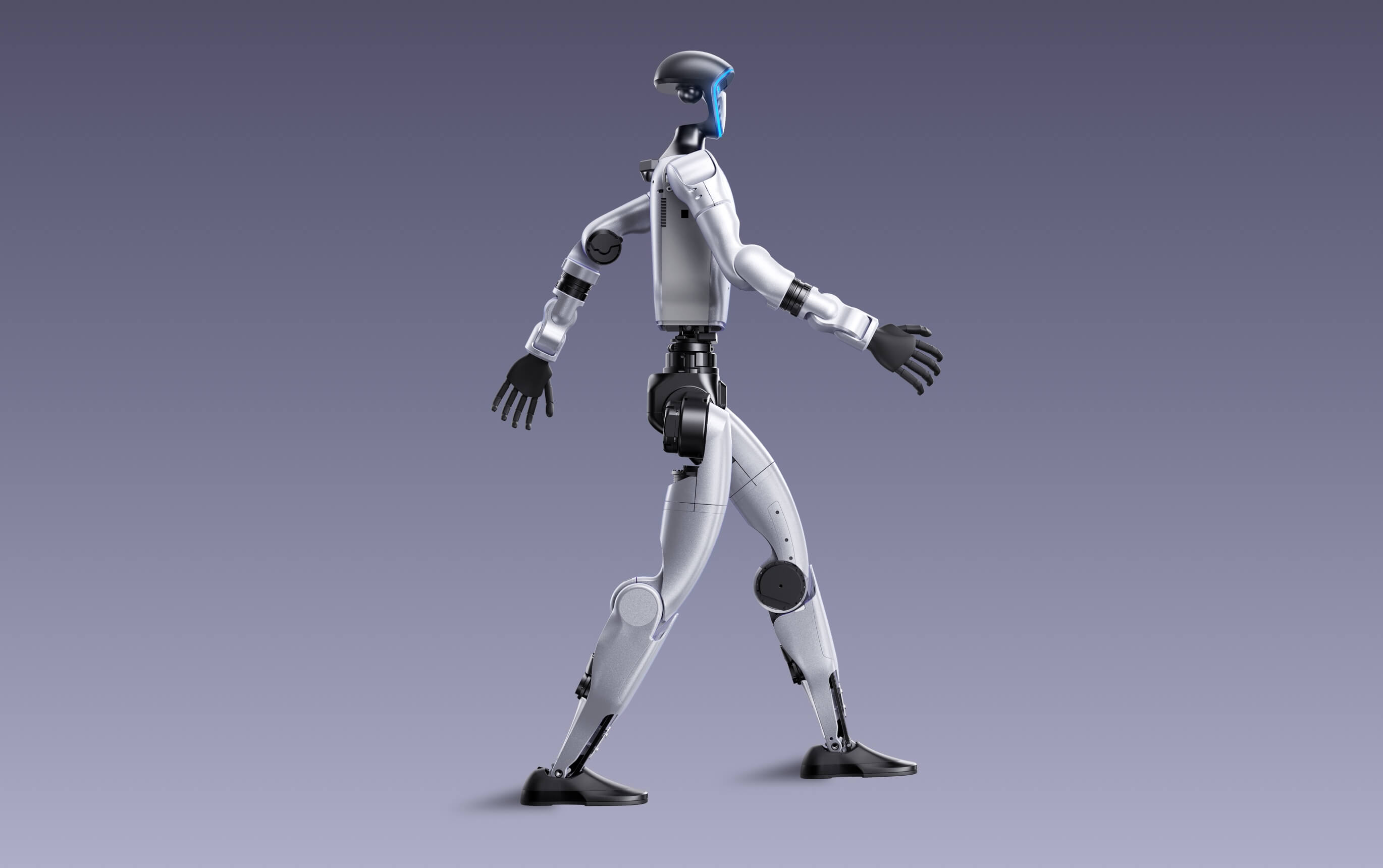
Beijing based Acceleration Evolution known as Booster is pushing its K1 humanoid into university campuses and releasing Booster Studio, an all in one IDE for embodied AI. The company reports more than 1,000 K1 units shipped and rapid early sales growth.
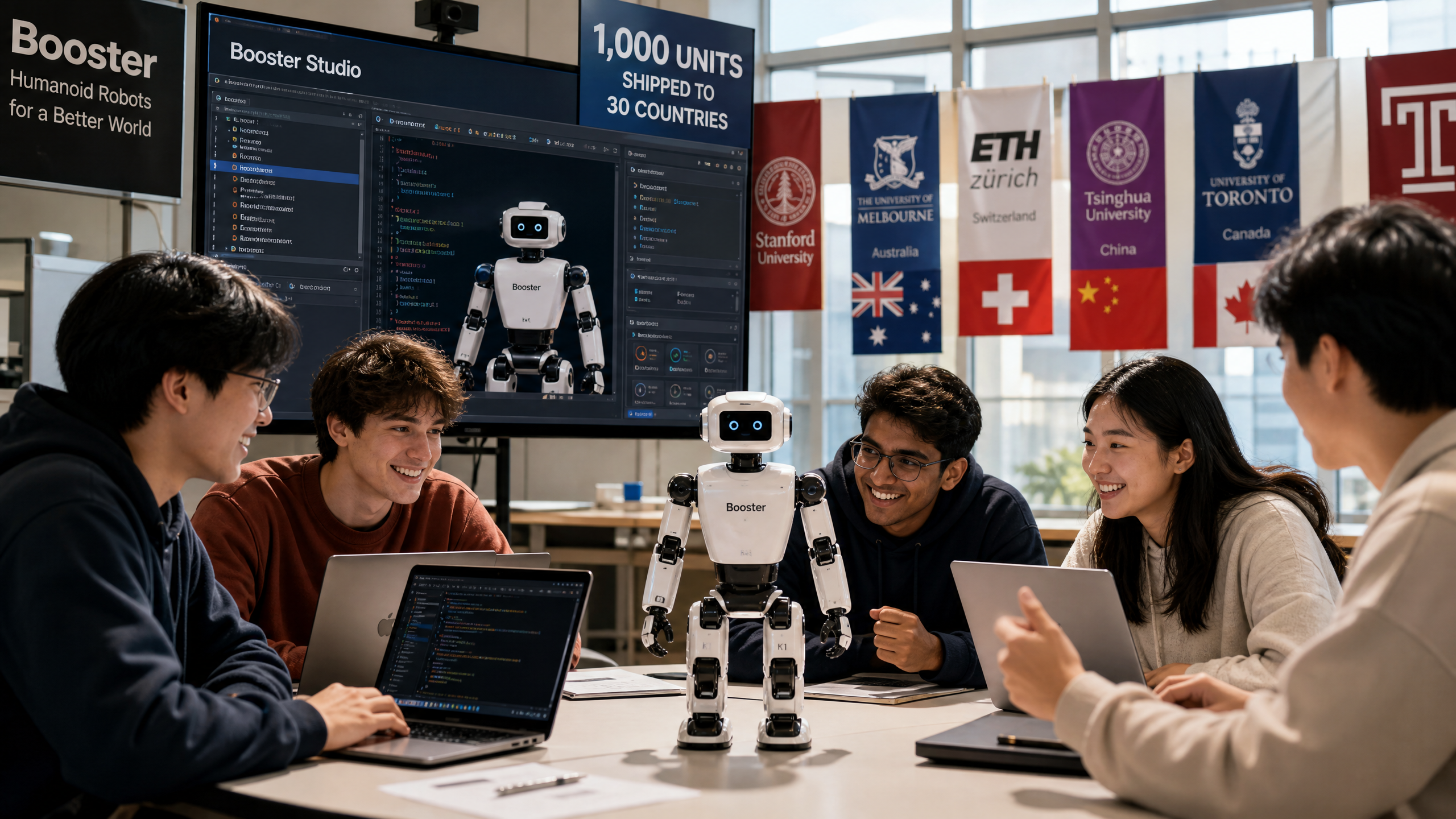
Beijing Daily reported on August 6 that Acceleration Evolution known as Booster is bringing its K1 humanoid and new Booster Studio IDE to university campuses in China and overseas.
Booster says more than 1,000 K1 units have shipped to over 30 countries, its first quarter 2026 sales rose 500 percent year on year, and Tsinghua led Vulcan won RoboCup 2026.
Beijing headquartered Booster moves from prototypes to campus scale
Acceleration Evolution is headquartered in Beijing with a focus on embodied AI for humanoid robots. Its K1 humanoid targets education and research users, while the Booster Studio software suite aims to unify simulation, coding, debugging, visualization, and one click deployment. The flagship T2 Pro sits above K1 and is paired with NVIDIA Thor, a next generation compute platform that Booster states is rated at 2,070 TFLOPS, positioning it as a high headroom development and pilot operations machine. With a customer base that now spans more than 30 countries and a claimed surge in early 2026 orders, the company is trying to shift the center of gravity in Chinese humanoid robotics from hardware specs to developer workflows.
A campus first strategy recalls the early personal computer era
Booster is building its go to market around universities. The playbook looks familiar. In the early years of personal computing, vendors seeded schools with machines and software, trained teachers and students, and watched as those users grew into the workforce with tool preferences already set. The same approach showed up in game consoles, mobile operating systems, and cloud platforms. Booster wants K1 to be the hands on robot that undergraduates can program in courses and that graduate labs can adapt for research. The company wants Booster Studio to be the pane of glass that unites simulation, code, logs, and deployment so that students and researchers spend less time wrestling with drivers and build pipelines and more time shipping experiments and applications.
The analogy is a starter kit in a garage that grows into a workshop standard. If the entry level kit is affordable and the tools are reliable, habits turn into loyalty. On campuses, those habits spread quickly through peer support, course materials, and project templates. The campus channel also creates a distributed beta program that hammers the tools in messy real world conditions. For a young robotics company, that is priceless product feedback and a low cost marketing engine wrapped into one.
Booster positions itself as a toolchain company not only a robot maker
K1 is the front door, but Booster is placing unusual emphasis on the software stack. Booster Studio bundles a physics backed simulator, a code editor with extensions, an integrated debugger, data visualization, and one click deployment to real hardware. That one click phrase matters. Robotics teams often spend days stitching together container images, drivers, firmware, and calibration files, only to find a mismatch in the field. By integrating those steps and linking the simulator with the same APIs and state machines that run on the robot, Booster is attempting to shorten the distance between a working prototype in sim and a working demo on the lab floor.
The strategy echoes the CUDA effect in accelerated computing. CUDA not only unlocked GPU performance, it locked workloads to a toolchain and made switching costly. Robotics has lacked a similar glue because ROS and ROS 2, while powerful and widely adopted, resemble a set of parts more than a polished end to end tool. NVIDIA has built a credible stack with Isaac Sim, Omniverse, and ROS bridges, and Western vendors such as MathWorks and Unity also support robotics workflows. If Booster can create a daily use workbench for embodied AI that becomes second nature on Chinese campuses and within early adopter labs abroad, the company can gain a durable advantage that persists even if hardware becomes commoditized.
RoboCup trophies add credibility yet real work will stress the stack
The Tsinghua affiliated Vulcan team won RoboCup 2026 across humanoid sizes, a headline Booster is happy to amplify. Competition success demonstrates athleticism, fast control loops, and solid hardware packaging. It also places students inside Booster tools. Yet tournament conditions are not factory floors or hospital corridors. University halls are controlled environments compared with wet kitchens, dark warehouses, and outdoor loading bays. The true test for Booster Studio and K1 will be whether projects move smoothly from course assignment to pilot deployment in departments that demand uptime and safety. Wins on stage bring attention, but repeatability under varied lighting, slippery surfaces, and network constraints decides whether paying customers stick.
A skeptical read on growth and the first IDE claim
A 500 percent gain in first quarter 2026 sales creates a strong headline. The base effect likely explains much of the percentage spike since shipments only recently crossed the 1,000 unit mark. Schools often purchase in bursts tied to semester calendars and government budget cycles, so sustained momentum will require a broader front of departments and new geographies. The claim that Booster Studio is the first IDE for embodied AI is also open to debate. Isaac Sim with associated libraries, ROS 2 tooling, and even general purpose IDEs with robotics plug ins already serve the community. The differentiator here is not the existence of an IDE but the tight packaging of simulation, debugging, visualization, and click based deployment with first party robots. If that tight loop proves stable, the claim will matter less than the daily time saved by students and lab leads.
Supply chain realities shape the humanoid ramp in China
Every humanoid program runs into the same industrial wrinkles. High torque actuators need precision machining and dependable reduction gears. Lightweight yet rigid structures require a balance between aluminum, carbon fiber, and advanced plastics that can survive drops. Battery packs must deliver high current safely. Depth cameras and lidars must handle glare and mixed lighting. China has strong domestic suppliers in motors, gearboxes, carbon composites, and camera modules, which helps on cost and lead times. Yet high end components such as low backlash harmonic drives, advanced optical sensors, and safety certified batteries still pinch. For a campus focused robot, the safety bar is non- negotiable because many users are untrained and will push limits for experiments.
Booster will need to prove it can secure reliable volumes of actuators and sensors while maintaining quality across batches. The jump from 100 units to 1,000 looks big on a slide, but statistically it is the most brittle step because suppliers remain hesitant to invest in dedicated lines. Moving from 1,000 to 10,000 requires signed demand and working capital that often strain young companies. The campus channel offers some protection because orders can be planned around academic calendars, yet research seasonality also introduces gaps. Resellers and distributors can smooth that gap, but they add margin pressure.
NVIDIA Thor brings headroom yet supply and rules create uncertainty
The T2 Pro rides on NVIDIA Thor. The branding signals ambition to leave the hobby tier and enter professional settings. A device rated at 2,070 TFLOPS gives researchers headroom for vision transformers, diffusion policies, and complex control architectures. The pairing aligns Booster with global software stacks built around CUDA and PyTorch, which simplifies hiring and collaboration. It also creates a political and logistical dependency. Export rules from the United States have already reshaped the mix of AI accelerators that Chinese firms can buy. While NVIDIA has produced China specific variants in the past, high-performance embedded compute is under scrutiny. Any abrupt change in permitted performance levels, memory bandwidth, or shipment volumes could slow T2 Pro deployments or force a redesign around domestic chips.
There is also the matter of cost and power. High end compute increases bill of materials and thermal complexity. In a campus bot, that cost must be justified by academic outcomes. Students can run many policies offline on lab servers and only deploy the final model to the robot. K1 likely runs on a more modest compute platform to keep budgets in line. That split keeps the portfolio sensible. T2 Pro serves advanced labs and corporate pilots. K1 seeds classrooms and clubs. The common Booster Studio layer ties both together.
Universities become both testbeds and procurement channels
The most attractive feature of campus led expansion is the dual role of universities as testbeds and buyers. A department can host K1 units in course labs, borrow additional units across faculties, and spin up shared resources for robotics clubs. Research groups that win grants can scale to T2 Pro and publish with Booster Studio pipelines embedded in methods sections. Those papers then become how to guides for the next cohort. In China, provincial funding matched with corporate sponsorships can place fleets of robots in model campuses that act as show sites for visiting delegations. Overseas, early adopters in Europe, the Middle East, and Southeast Asia often buy from distributors that specialize in education kits and research equipment. Booster will need a tight logistics backbone with spares and remote diagnostics to support this network.
Serviceability is a practical edge. A robot that can be repaired quickly by swapping subassemblies wins on downtime and total cost. For a campus with limited technical staff, the difference between a 2 hours fix and a 2 weeks return can decide the next purchase. Booster would be wise to publish detailed maintenance guides, make parts easy to order, and certify student technicians under a light touch program. The community will then act as field support.
Competition in China and abroad intensifies across hardware and software
Booster is not alone. In China, companies such as Unitree, Fourier Intelligence, and UBTech have humanoid or bipedal programs with aggressive pricing. Unitree in particular has shipped large volumes of quadrupeds and is quickly pushing humanoids into the research segment. These firms carry brand recognition and engineering depth that can compel university buyers to split orders. Internationally, Tesla, Figure, Agility Robotics, and Sanctuary AI operate at a different scale, aiming at logistics, manufacturing, and service work. Their products may not compete directly with K1 today, but their work on control policies, safety frameworks, and software tooling will influence expectations across the field.
On the software side, no one has won the definitive workbench. ROS 2 remains the lingua franca, binding nodes and topics across vendors. NVIDIA’s Isaac environment is deep and well supported. Unity and Unreal provide rich simulators with physics plugins. MathWorks owns the control theory user base in many departments. Booster Studio will have to earn its place by working cleanly with ROS 2 packages, playing nicely with existing simulators, and demonstrating that its debugger and deployment layers remove drudgery rather than adding another layer of glue. An all-in one promise only resonates if it eliminates friction.