FUJI Corporation AI Server Mounting Technology
FUJI Corporation achieved industry-first automated mounting of 200mm, 2kg components for AI servers, eliminating manual placement of heavy GPU modules and HBM stacks on production lines.
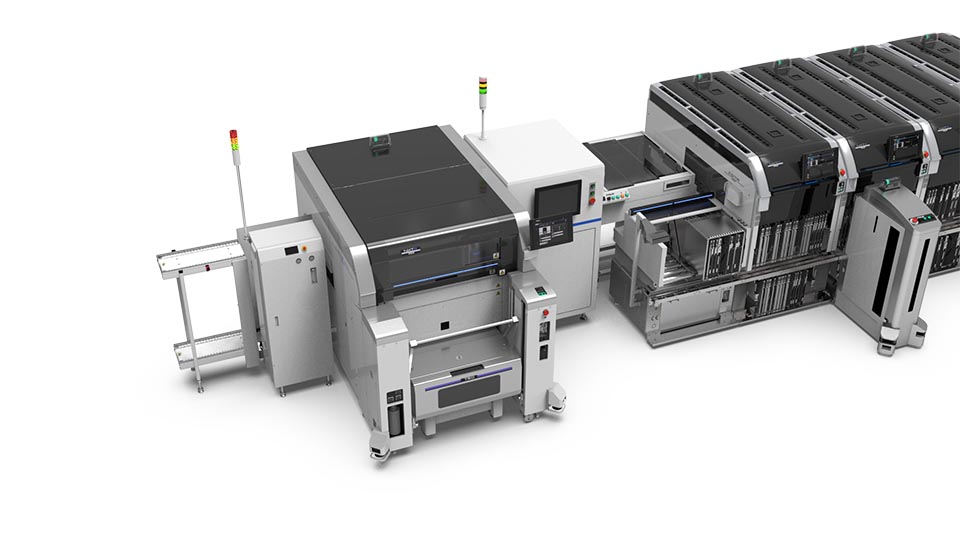
FUJI Corporation announced on July 30 that its NXTR and AIMEXR platforms can now mount electronic components measuring 200×200 millimetres and weighing 2.0 kilograms onto printed circuit boards using standard surface-mount technology. No other production equipment in the industry can do this. The achievement matters because AI server demand is pushing component sizes far beyond what existing automated lines were designed to handle. GPU modules, high-bandwidth memory stacks, and co-packaged optics assemblies are getting physically larger and heavier with each generation. Until now, the heaviest of these components had to be placed by hand. FUJI just automated that last manual step.
The company calls the capability "実装限界ZERO," which translates to Zero Mounting Limits. The branding is aspirational but the engineering is concrete. A 2-kilogram component is roughly the weight of a full water bottle. Picking it up, aligning it to sub-millimetre tolerances on a circuit board, and placing it without damaging either the component or the board requires force control, vibration damping, and vision-guided positioning that standard pick-and-place heads were never designed to provide. FUJI's solution integrates all three into its existing platform architecture, meaning factories that already own NXTR machines can upgrade rather than replace their lines.
Why AI Servers Broke the Old Limits
Traditional server boards use components that weigh grams, not kilograms. A standard CPU package weighs 50 to 100 grams. Memory DIMMs weigh less. Even large FPGA modules rarely exceed 200 grams. Surface-mount machines were designed for this weight class. Their vacuum nozzles, placement heads, and conveyor systems all assume components that are light enough to be held by suction and positioned by high-speed linear motors.
AI servers changed the equation. NVIDIA's latest GPU modules are physically larger than previous generations because they integrate more silicon, more memory, and more power delivery onto a single package. The B200 and successor modules approach the size limits of existing mounting equipment. HBM stacks, which provide the memory bandwidth that large language models require, are growing taller and heavier as manufacturers add more layers. Co-packaged optics, which replace electrical interconnects with optical ones for higher bandwidth between racks, add another class of large, heavy components that must be precisely placed.
The result is a production bottleneck. Automated lines can place 90 percent of an AI server's components at high speed. The remaining 10 percent, the largest and heaviest modules, must be placed by human operators using manual alignment tools. That manual step limits throughput, introduces variability, and creates a quality-control challenge. A human placing a 2-kilogram module by hand cannot achieve the same positional accuracy as a machine. The yield loss from misalignment is measurable and expensive when each module costs thousands of dollars.
The Engineering Solution
FUJI's approach modifies the placement head of its NXTR platform to handle the weight and size of AI server components without sacrificing the speed and accuracy that the rest of the board requires. The company has not disclosed the full technical details of the modification, but the press release indicates three key capabilities. First, the head can grip and hold 2-kilogram components securely during high-speed transport from feeder to board. Second, the vision system can align 200×200mm components to the placement tolerance required for reliable solder joints. Third, the force-control system can set the component down without the impact shock that would crack solder paste or damage the board's surface layers.
The fact that this runs on existing NXTR and AIMEXR platforms is commercially significant. FUJI has an installed base of thousands of machines in factories worldwide. Customers do not need to buy new lines. They need to upgrade their existing heads and software. That lowers the adoption barrier from a capital-expenditure decision to an operational-expenditure decision. The upgrade cost is a fraction of a new machine. The production benefit is immediate.
FUJI's Position in the Robot Ecosystem
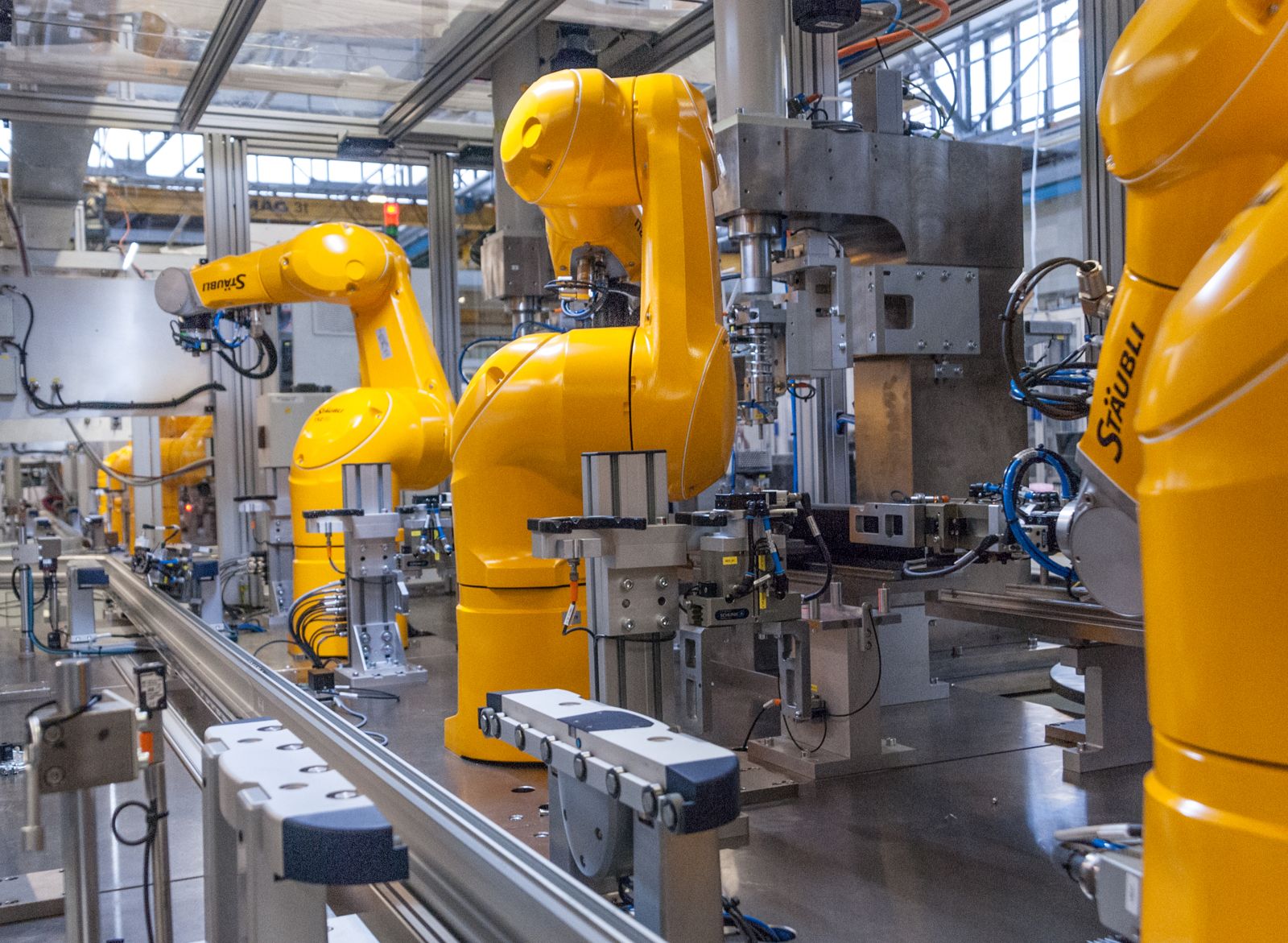
FUJI Corporation is not typically discussed in robotics coverage because its machines do not look like robots. They look like large industrial printers. But they are robots in every functional sense. They perceive components using machine vision. They make placement decisions using software algorithms. They execute physical movements with sub-millimetre precision at high speed. They operate autonomously without human intervention for hours at a time. The only difference between a FUJI NXTR and a humanoid robot is form factor. The intelligence, perception, and actuation capabilities are comparable.
The company was founded in 1959 in Chiryu, Aichi Prefecture. It has spent six decades building precision placement robots for the electronics industry. Its machines assemble the circuit boards inside every smartphone, laptop, server, and automobile electronics module on the planet. The company's revenue is not publicly broken out by product line in English-language filings, but its market position in surface-mount technology is among the global top three alongside ASM Pacific and Yamaha Motor's robotics division.
The Technical Challenge
Placing a 2-kilogram component on a circuit board is not simply a matter of building a stronger arm. The challenge is precision under load. A surface-mount machine must position components within 50 micrometres of their target location. At low weights, this is straightforward. The machine's actuators can accelerate and decelerate smoothly without the component's inertia affecting placement accuracy. At 2 kilograms, the component's mass becomes a significant factor. Stopping a 2-kilogram object moving at placement speed within 50 micrometres requires force-control algorithms that account for momentum, vibration dampening, and thermal expansion of both the component and the board.
FUJI's solution combines three technologies. First, a new head design with integrated force sensors that measure the actual placement force in real time and adjust the descent speed accordingly. Second, a vision system that photographs the component from multiple angles during transit and calculates its exact centre of mass, compensating for any asymmetry in weight distribution. Third, a board-support system that reinforces the PCB from below at the exact placement point, preventing the board from flexing under the component's weight and causing adjacent components to shift.
The combination of these three systems is what FUJI calls Zero Mounting Limits. The name is marketing, but the capability is real. No other SMT machine in production can place components above 500 grams with the accuracy required for AI server boards. The gap between 500 grams and 2 kilograms represents approximately 18 months of engineering work, according to industry analysts who track the SMT equipment sector.
The Competitive Response
ASM Pacific Technology, FUJI's primary competitor in the high-end SMT segment, has not announced a comparable capability. Yamaha Motor's robotics division, which competes in the mid-range, has not either. Both companies will likely respond within 12 to 18 months. The SMT equipment market is small enough that a single customer win can shift market share by several percentage points. FUJI's first-mover window is narrow but valuable.
The Market Opportunity
AI server production is growing at roughly 40 percent annually. Every major cloud company is building or expanding data centres. Every data centre needs servers. Every server needs a populated circuit board. The total addressable market for AI server assembly equipment is expanding faster than any other segment of the electronics manufacturing equipment industry.
FUJI's heavy-component capability positions it to capture the highest-value step in that assembly process. Light components are commoditised. Any competent SMT machine can place a resistor or capacitor. Heavy components are differentiated. Only FUJI can now place a 2-kilogram module automatically. That exclusivity will not last forever. Competitors will develop similar capabilities. But the first-mover advantage in a market growing at 40 percent annually is substantial. Every quarter of exclusivity translates directly into market share that is difficult to reclaim once lost.
The Broader Trend
FUJI's announcement is one data point in a larger pattern. The AI boom is pulling traditional manufacturing-equipment companies into new roles. Companies that built machines for the smartphone era are retooling for the AI era. The components are larger, heavier, and more expensive. The tolerances are tighter. The production volumes are lower but the per-unit value is higher. The entire economics of electronics manufacturing is shifting from high-volume, low-value consumer devices to lower-volume, high-value AI infrastructure.
For robot makers, this shift is an opportunity. Every new capability that AI servers require is a capability that a robot must provide. Heavier components need stronger robots. Larger boards need robots with wider reach. Tighter tolerances need robots with better vision and force control. The AI boom is not just creating demand for robots in the abstract. It is creating demand for specific new capabilities that push the boundaries of what manufacturing robots can do. FUJI's Zero Mounting Limits is one answer to one of those demands. More will follow.
The company's timing is not accidental. FUJI announced the capability at the same moment that Nvidia, AMD, and custom silicon makers are shipping their largest-ever accelerator modules to hyperscale data centres. The components that need placing are getting heavier every product generation. Last year's heaviest module weighed 800 grams. This year's weighs 1.4 kilograms. Next year's will approach 2 kilograms. FUJI built the capability ahead of the demand curve rather than behind it. That is unusual for a 65-year-old company. It suggests that the AI infrastructure buildout is changing the innovation cadence of even the most conservative Japanese manufacturers.
Disclaimer: This article is for informational purposes only and does not constitute investment advice, endorsement, or recommendation of any company, product, or technology mentioned.