Waymo Drops Waitlist and Opens Dallas Robotaxi Service to All Riders
Alphabet's autonomous vehicle unit Waymo has officially opened its robotaxi service to the general public in Dallas, Texas, eliminating the waitlist that had been in place since February 2026. Approximately 150,000 riders used the service during the waitlist phase, and anyone can now hail an all-electric autonomous Jaguar I-Pace through the Waymo app.
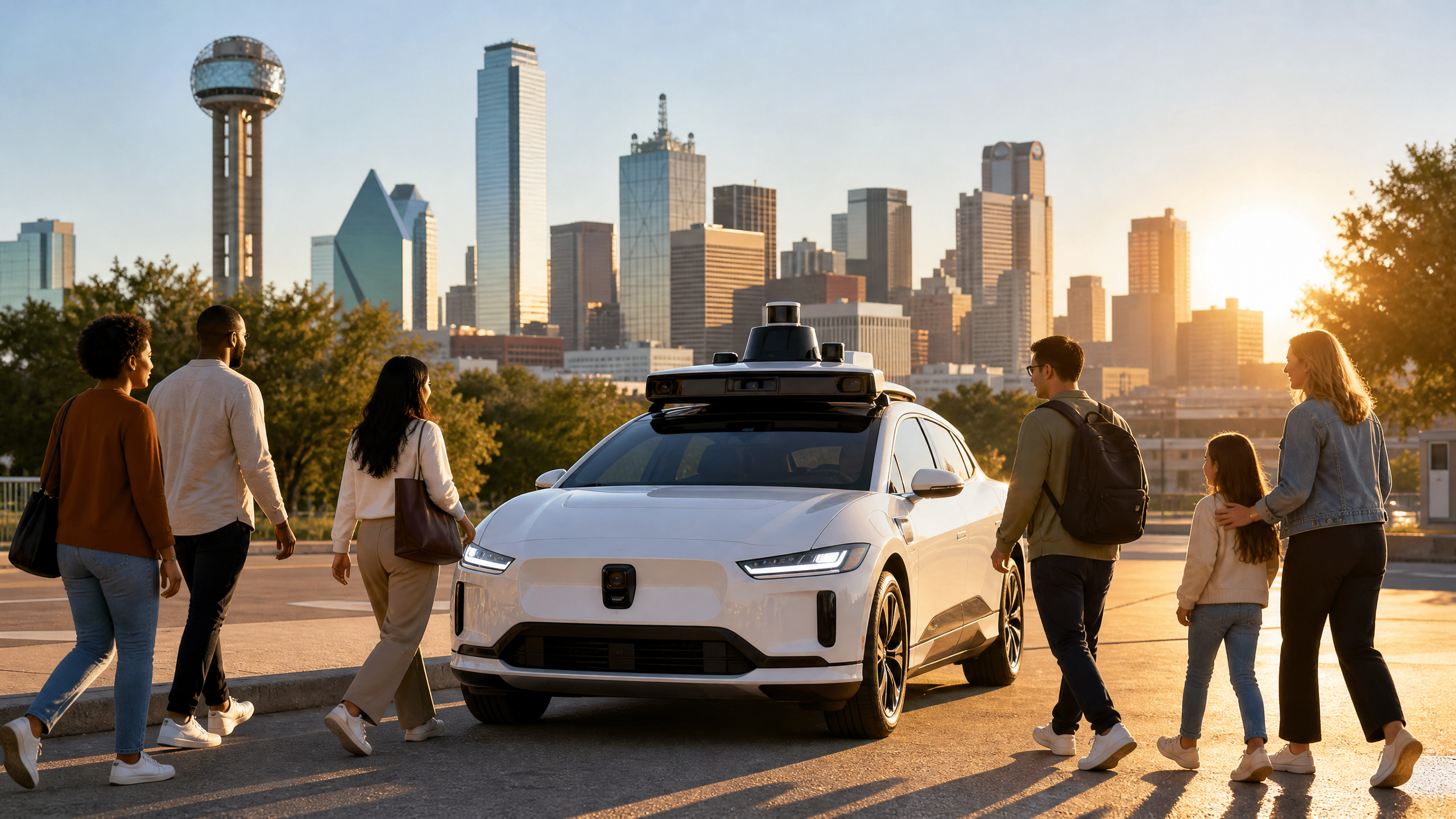
Alphabet's autonomous vehicle unit Waymo has officially opened its robotaxi service to the general public in Dallas, Texas, eliminating the waitlist that had been in place since February 2026. The expansion marks the latest milestone in the company's aggressive strategy to scale self-driving technology across the United States, following similar playbook rollouts in Phoenix, Los Angeles, and San Francisco.
The move transforms Dallas from a testing ground into a fully operational commercial market, making it the fifth major US metropolitan area where Waymo offers unrestricted public access to autonomous rides. For the broader autonomous vehicle industry, the Dallas opening provides further evidence that the graduated deployment model, beginning with geofenced testing, expanding through waitlists, and culminating in open access, can reliably scale across diverse urban environments.
Open Access After 150,000 Waitlist Riders
Anyone in the Dallas area can now download the Waymo app and immediately hail a ride in one of the company's all-electric autonomous Jaguar I-Pace vehicles. During the waitlist phase, approximately 150,000 riders utilized the service, providing Waymo with extensive real-world operational data in the Texas market. That rider count represents significant demand validation for a city that had no prior exposure to commercial robotaxi service before February of this year.
The Dallas operation is supported by Avis Budget Group, which manages the local fleet operations including charging, maintenance, and vehicle cleaning. The partnership with Avis represents Waymo's preferred model for fleet management, allowing the technology company to focus on software and safety systems while outsourcing the capital-intensive logistics of maintaining a large vehicle fleet. While the service area covers a significant portion of the city, rides to Dallas Love Field Airport are currently restricted as Waymo continues testing in that specific environment, though the company expects to open airport service in the near term.
The service operates around the clock, with the autonomous Jaguar I-Pace vehicles navigating Dallas streets without a human safety driver. Riders interact entirely through the Waymo app, which handles pickup location selection, ride tracking, and payment. The vehicles use a combination of LiDAR, cameras, and radar to perceive their environment, with Waymo's proprietary AI system handling all driving decisions in real time.
Weather Challenges and Operational Resilience
The road to full public access in Texas has not been without challenges. In May 2026, Waymo temporarily paused its services across Dallas, Houston, San Antonio, and Atlanta due to difficulties the autonomous systems experienced when handling heavy rain and flooded roads. The pause lasted several days and highlighted one of the persistent challenges facing autonomous vehicle deployment in regions with severe weather patterns.
While operations have resumed, the company maintains that it may adjust or pause services based on severe weather or real-time flood warnings. This transparency about operational limitations stands in contrast to the marketing narratives of some competitors, and reflects Waymo's conservative approach to safety that has characterized its deployment strategy since the earliest days of the Google Self-Driving Car Project.
The weather-related pause also underscored the importance of geographic diversity in AV testing. The challenges encountered in Texas, including flash flooding, extreme heat affecting sensor performance, and unfamiliar road configurations, differ substantially from those in Waymo's original California testing grounds. Each new market adds to the company's operational knowledge base and forces engineering improvements that benefit the entire fleet.
Scaling the Robotaxi Playbook Across Markets
This milestone reinforces Waymo's position at the forefront of commercial robotaxi deployment, moving beyond early adopter testing phases into broad public utility in major metropolitan markets. The Dallas opening follows the same graduated approach the company has used in every market, beginning with a waitlist to manage demand and gather safety data before opening to all riders.
Waymo's expansion continues at a time when the autonomous vehicle industry is accelerating toward commercial scale, with multiple operators now competing for market share across US cities and international markets. The company has signaled intentions to expand into additional US cities and has begun preliminary operations in the United Kingdom, positioning itself for a global footprint that extends well beyond its American roots.
The Dallas milestone also carries implications for the regulatory landscape. Texas has maintained one of the most permissive frameworks for autonomous vehicle testing and deployment in the United States, requiring no special permits for companies operating self-driving vehicles on public roads. This regulatory environment has attracted multiple AV companies to the state, creating a competitive dynamic that benefits consumers through expanded service availability and accelerated technological improvement.
The analysis synthesizes company statements and public operational disclosures.
Disclaimer: This analysis is provided for informational purposes only and does not constitute investment, legal, or procurement advice. RobotAIGeek does not endorse specific vendors or guarantee the performance of early-stage technologies.