SpaceX and NVIDIA Partner to Build Starmind AI1 Orbital Data Centers
SpaceX has announced an exclusive partnership with NVIDIA to develop the Starmind AI1 satellite, a spacecraft designed to process artificial intelligence workloads directly in low Earth orbit. Powered by NVIDIA's Space-1 Vera Rubin module, the system aims to deliver up to 25 times the AI performance of an H100 GPU, with prototype testing scheduled for early 2027.
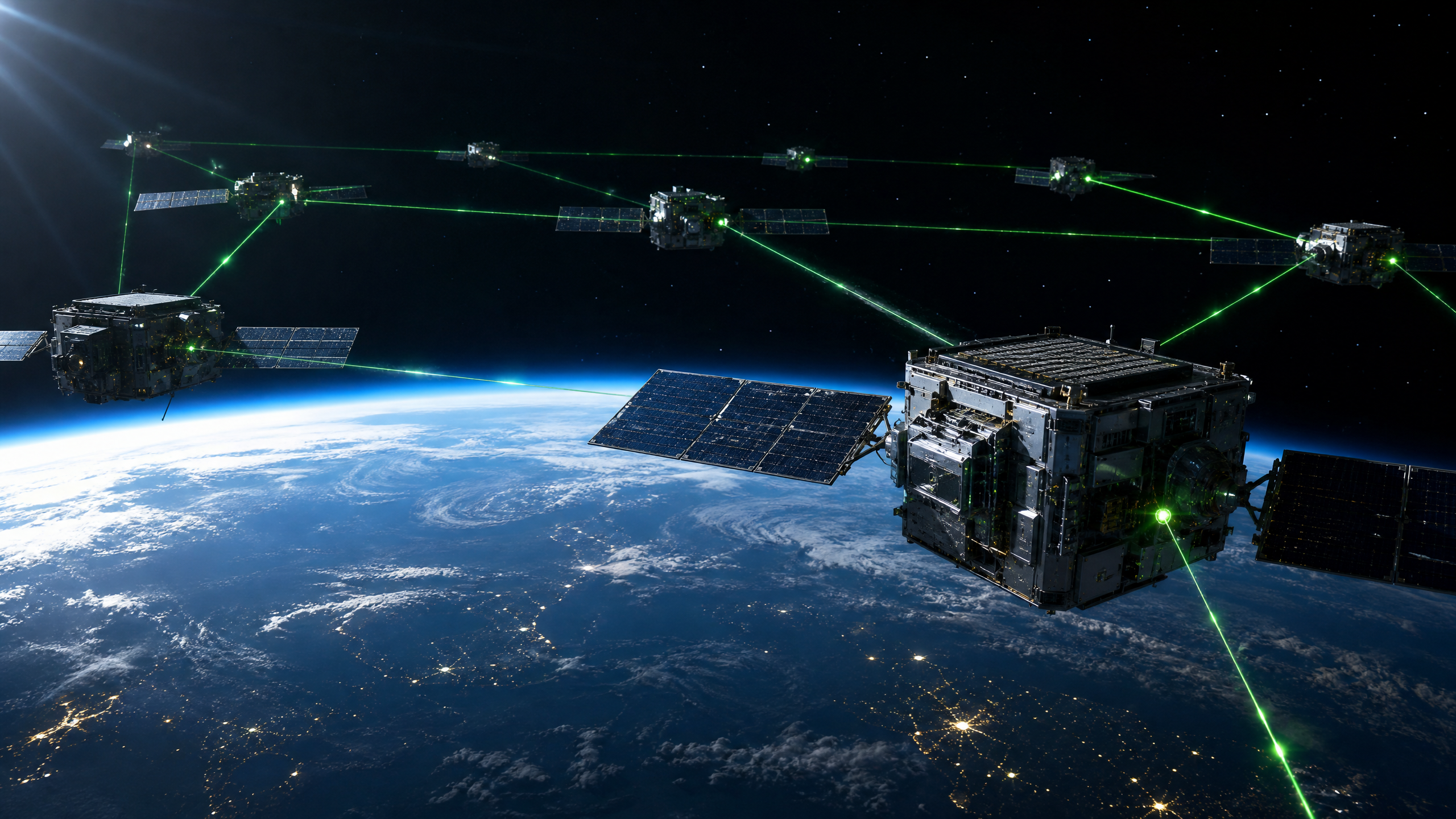
SpaceX has announced an exclusive partnership with NVIDIA to develop the Starmind AI1 satellite, a spacecraft designed to process artificial intelligence workloads directly in low Earth orbit. The collaboration aims to create a distributed AI supercomputer in space, potentially scaling to a constellation of one million satellites that would collectively represent the largest computing infrastructure ever constructed.
The partnership represents a convergence of two dominant forces in technology. SpaceX, founded by Elon Musk and headquartered in Hawthorne, California, has become the world's most prolific launch provider and satellite operator through its Starlink constellation. NVIDIA, the Santa Clara-based chipmaker that has become the dominant supplier of AI training and inference hardware, brings its latest-generation computing architecture to a deployment environment that eliminates many of the constraints facing terrestrial data centers.
Vera Rubin Architecture Goes to Orbit
The first generation of Starmind satellites will be powered by NVIDIA's Space-1 Vera Rubin module, which the chipmaker claims can deliver up to 25 times the AI processing performance of an H100 GPU. The Vera Rubin architecture, named after the astronomer who discovered evidence for dark matter, represents NVIDIA's next-generation computing platform designed specifically for AI workloads at unprecedented scale.
SpaceX CEO Elon Musk confirmed the exclusive nature of the partnership during the company's first public earnings call. "We think the Vera Rubin architecture is the best architecture. We think it's the best AI computer. So we're exclusive to Nvidia," Musk stated. The exclusivity commitment signals that SpaceX views NVIDIA's hardware as sufficiently ahead of competitors to warrant a single-vendor strategy for what could become the company's largest capital investment program.
SpaceX has already filed an application with the Federal Communications Commission to deploy orbital data center satellites at altitudes between 500 and 2,000 kilometers. The planned architecture features a petabit-scale optical communications network utilizing high-speed laser links to exchange data between satellites. This inter-satellite mesh would allow workloads to be distributed across hundreds or thousands of nodes simultaneously, creating a computing fabric that scales with constellation size. Prototype testing for the Starmind AI1 is scheduled for early 2027, with mass production expected later that year.
Bypassing Terrestrial Infrastructure Constraints
The move to orbital data centers offers unique advantages for AI infrastructure that cannot be replicated on Earth. Satellites in sun-synchronous orbit can receive steady solar energy for approximately 90% of each orbital period, bypassing the power grid constraints that currently bottleneck terrestrial data center expansion. In many regions, new data center construction is being delayed by years due to insufficient grid capacity, making space-based alternatives increasingly attractive from a timeline perspective.
The vacuum of space eliminates the massive cooling requirements that consume roughly 40% of a terrestrial data center's total energy budget. Without atmospheric heat to manage, orbital computing modules can dedicate nearly all available power to computation rather than thermal management. The absence of land acquisition challenges, zoning restrictions, and water usage concerns further simplifies the deployment equation.
However, the orbital approach introduces its own engineering challenges. Radiation hardening, thermal cycling between sun and shadow, limited physical maintenance access, and the latency of ground-to-orbit communication links all present obstacles that terrestrial facilities do not face. The success of the Starmind program will depend on whether NVIDIA's Space-1 module can maintain reliability over multi-year orbital lifetimes without the option of physical servicing.
Revenue Growth and Commercial Partnerships
The announcement coincides with SpaceX reporting massive growth in its AI sector. During its Q2 2026 earnings call, the company revealed AI revenues climbed 247% year-over-year to US$2.6 billion, driven by cloud service agreements and increased subscriptions. Multi-billion dollar leasing deals with Google (reportedly US$920 million per month) and Anthropic anchor the commercial pipeline. SpaceX expects to reach 2 gigawatts of compute capacity by the end of this year, scaling to nearly 10 gigawatts by the end of 2027.
The orbital computing initiative represents a fundamental rethinking of where AI infrastructure lives, moving compute closer to the physics of energy generation rather than competing for scarce terrestrial power and cooling resources. For the robotics and physical AI sector, the implications are significant. If orbital computing can deliver on its cost and latency promises, it could provide the massive inference capacity needed to support millions of embodied AI agents operating simultaneously without requiring proportional terrestrial infrastructure buildout.
The analysis synthesizes company statements and public market activity.
Disclaimer: This analysis is provided for informational purposes only and does not constitute investment, legal, or procurement advice. RobotAIGeek does not endorse specific vendors or guarantee the performance of early-stage technologies.