AgiBot and Unitree Are Racing to Hong Kong and Shanghai With Opposite Bets on What Makes a Robot Worth Billions
AgiBot has confirmed its Hong Kong IPO process targeting a US$4.8-6.0 billion valuation, one day before Unitree opens STAR Market book-building at US$5.85 billion. The two companies represent divergent technology philosophies -- AgiBot bets on AI-first, Unitree on hardware-first -- and the market is about to price both simultaneously.
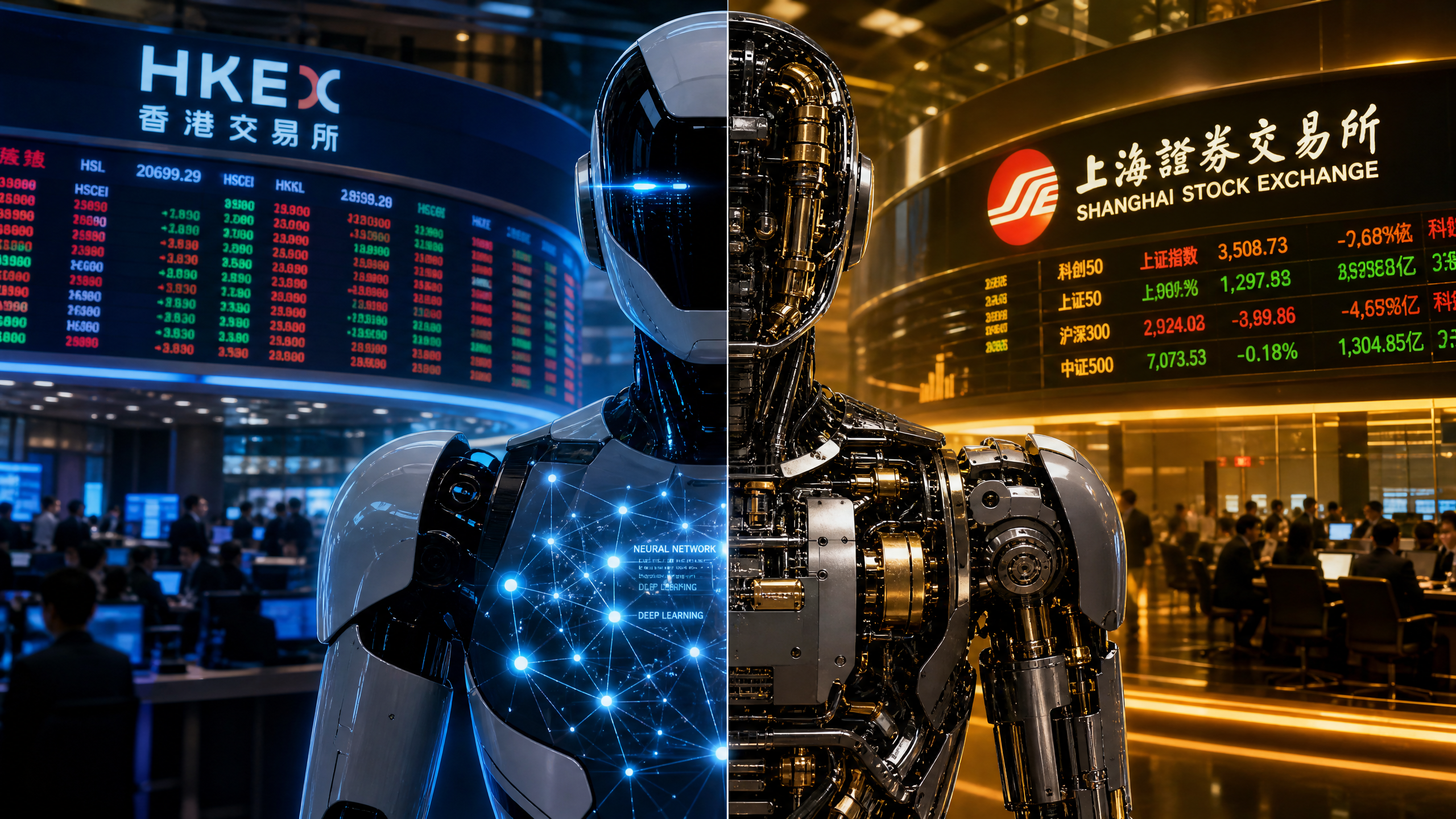
China's humanoid robot industry is about to receive two simultaneous market verdicts. AgiBot, the Shanghai-based company that shipped more than 5,100 humanoid units in 2025 to claim roughly 39 percent of global market share by volume, has confirmed it is pursuing a Hong Kong IPO. The announcement came on August 4, one day before Unitree Robotics opens book-building on the Shanghai STAR Market at a floor valuation of RMB 42 billion (approximately US$5.85 billion). The timing is not coincidental. Both companies are racing to establish a pricing benchmark before the other, and the outcome will shape how investors value the entire next wave of humanoid robotics listings.
The two companies are not simply competing for capital. They represent fundamentally different theories about what a humanoid robot company is worth and why. AgiBot has allocated more than 75 percent of its research and development budget to AI systems -- the software, models, and training pipelines that determine what a robot can perceive and decide. Unitree has taken the opposite position, with approximately 95 percent of its components self-developed and a philosophy that the robot's physical capabilities are the primary source of competitive advantage. The market is now being asked to price both theories at roughly the same moment.
AgiBot's Revenue Acceleration and What It Implies
AgiBot's financial trajectory makes the IPO timing understandable. The company reported RMB 1.05 billion (approximately US$145 million) in revenue for the full year 2025, a figure it nearly matched in the first quarter of 2026 alone, with Q1 2026 revenue exceeding RMB 1 billion. That acceleration -- from annual to quarterly in a single year -- reflects a shift from pilot deployments to commercial orders at scale.
The company's cumulative production reached 15,000 units by June 2026, and its target valuation of HK$40-50 billion (approximately US$5.1-6.4 billion) implies a price-to-sales multiple that is aggressive even by the standards of high-growth hardware companies. The justification, per investor sources, is that AgiBot should be valued as a software and AI platform company that happens to ship physical units, not as a hardware manufacturer with thin margins.
That framing deserves scrutiny. AgiBot's revenue is currently driven by hardware sales -- physical robots delivered to customers. The AI software layer the company is building is not yet generating independent revenue streams. The valuation premium for the software thesis is therefore a bet on future monetization rather than current economics. This is not unusual for early-stage technology companies, but it does create a gap between the story being told to investors and the income statement being filed with regulators.
Unitree's Profitability Argument
Unitree's case for its STAR Market listing rests on a different foundation. The company is China's first profitable humanoid robot manufacturer, with RMB 1.699 billion (approximately US$235 million) in 2025 revenue and positive net income. Profitability at this stage of the market is genuinely rare, and it reflects Unitree's strategy of controlling its own component supply chain. When you manufacture your own actuators, sensors, and structural parts, you eliminate the margin compression that comes from buying components at market prices. The tradeoff is capital intensity and the risk that proprietary components fall behind the state of the art.
Unitree's Q1 2026 revenue of RMB 423 million (approximately US$58 million) showed revenue growth decelerating from 332 percent year-on-year in 2025 to 68 percent in Q1 2026. That deceleration is not alarming at this scale -- the base effect alone explains much of it -- but it is a number that institutional investors will scrutinize during book-building. A company seeking a valuation of roughly 25 times annual revenue needs to demonstrate that the growth rate can be sustained or re-accelerated.
Two Technology Routes, One Market
The brain-versus-body debate in humanoid robotics is not merely philosophical. It has direct implications for supply chain structure, gross margin trajectory, and the speed at which a company can respond to new applications.
AgiBot's AI-first approach means the company can theoretically upgrade its robots' capabilities through software updates without requiring new hardware. If a customer needs the robot to perform a new task, the answer is a model update, not a new mechanical design. This is the same logic that made smartphones more valuable than feature phones -- the platform effect, where the value of the device increases over time as software improves. The risk is that the hardware must be capable enough to execute whatever the software demands, and there is a physical floor below which no amount of AI can compensate.
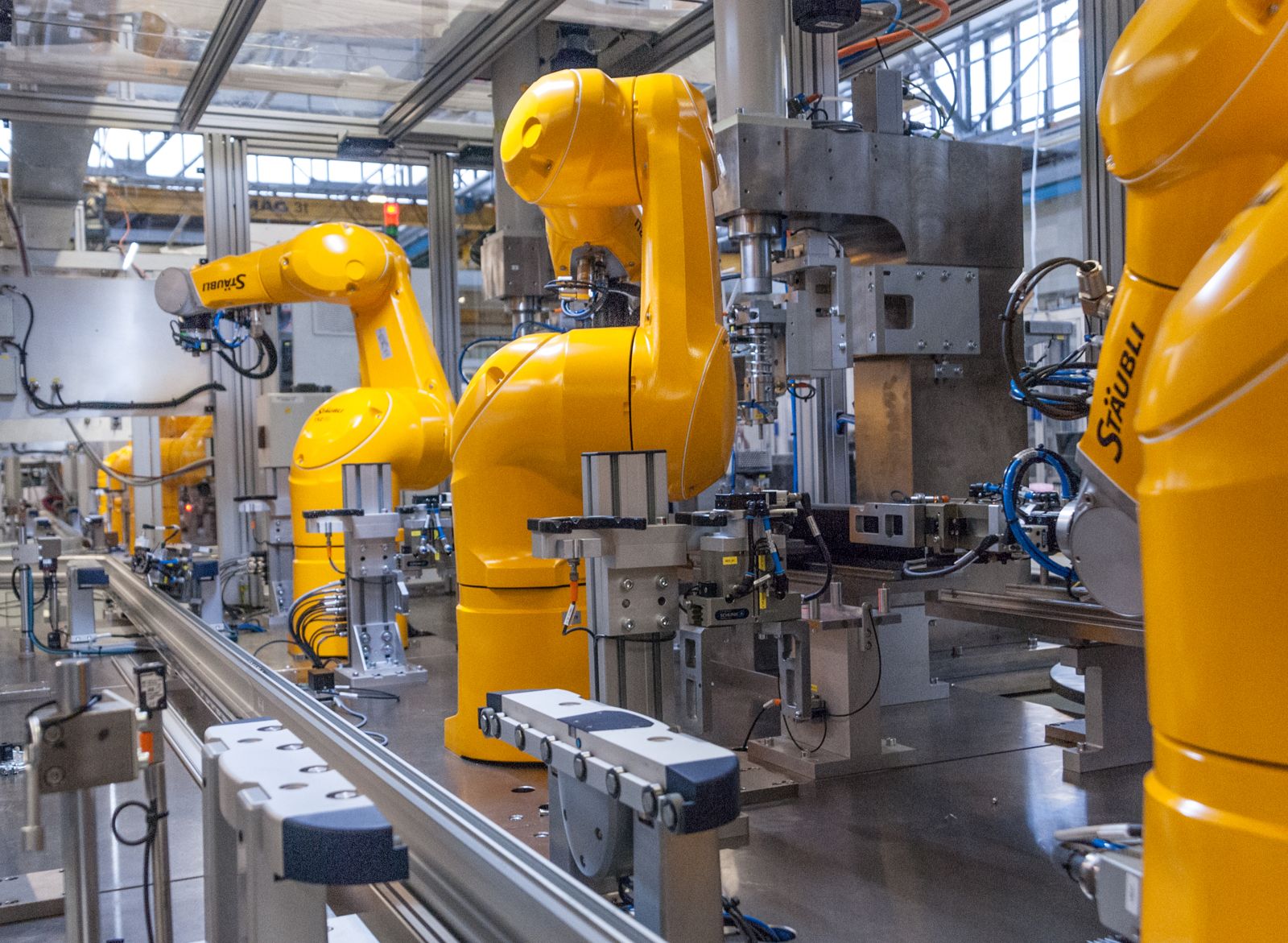
Unitree's hardware-first approach means the company's robots are optimized for the tasks they are designed to perform. The actuators are tuned, the weight distribution is engineered, and the structural tolerances are tightened through iterative manufacturing rather than simulation. The risk is that as AI capabilities advance rapidly, a robot with superior hardware but inferior software may find itself outcompeted by a less mechanically refined but more intelligent alternative. The automotive analogy is instructive -- a car with a perfect engine but no navigation system is less useful than a car with a good-enough engine and excellent route planning.
The Geopolitical Dimension of the Supply Chain
Both companies are building their supply chains in an environment where geopolitical constraints are tightening. The United States and European Union have implemented increasingly strict controls on technology transfers to Chinese companies, particularly in the areas of advanced semiconductors and AI training infrastructure. This creates asymmetric pressure on the two technology routes.
AgiBot's AI-first strategy depends on access to large-scale compute for training its embodied reasoning models. As export controls on high-end GPUs tighten, the company's ability to maintain its AI development pace relative to global competitors becomes a strategic question. Unitree's hardware-first strategy is less dependent on imported compute but more dependent on precision manufacturing equipment and materials, some of which are also subject to export restrictions.
Both companies are accelerating domestic substitution efforts, and China's state-backed investment in semiconductor manufacturing and AI infrastructure is providing some buffer. But the pace of domestic substitution in advanced AI chips has not yet matched the pace of export control escalation, creating a window of vulnerability that investors should factor into their valuation models.
The Industry-Wide Implications of Two Simultaneous Listings
The near-simultaneous listing of AgiBot and Unitree -- one in Hong Kong, one on the STAR Market -- will create the first real pricing data for humanoid robot companies at commercial scale. Before these IPOs, valuations were set in private funding rounds where a small number of institutional investors negotiated terms without the discipline of public market price discovery.
The public listings will establish reference points that affect every subsequent funding round and IPO in the sector. If AgiBot's Hong Kong listing prices at a significant premium to Unitree's STAR Market valuation, it will validate the AI-first thesis and accelerate capital flows toward software-centric robotics companies. If Unitree's profitable hardware model commands a higher multiple, it will signal that the market values demonstrated economics over speculative software premiums.
TrendForce projects that China's humanoid robot market will grow 94 percent year-on-year in 2026, with AgiBot and Unitree together holding approximately 80 percent of combined market share. That concentration means the two IPOs are not just company events -- they are a referendum on the entire sector's investment thesis. The global robotics investment community is watching both listings with the same attention that the technology industry paid to the first major cloud computing IPOs a decade ago.
The Honest Assessment
Both companies face real execution risks. AgiBot must prove that its AI investments translate into commercial differentiation before hardware competitors close the software gap. Unitree must prove that its hardware margins can be sustained as the market scales and component prices commoditize. Neither risk is fatal, but neither is trivial.
The investors who buy into these listings are making a bet not just on the companies, but on which theory of value creation will define the humanoid robotics industry for the next decade. The companies that win this race will not necessarily be the ones with the best robots today, but the ones with the most defensible moats -- whether those moats are built from proprietary AI models or from vertically integrated manufacturing. The market is about to find out which kind of moat it is willing to pay more for.
Disclaimer: This article is for informational purposes only and does not constitute financial or investment advice.