Beijing finals put 350 humanoid robots through first true autonomy test
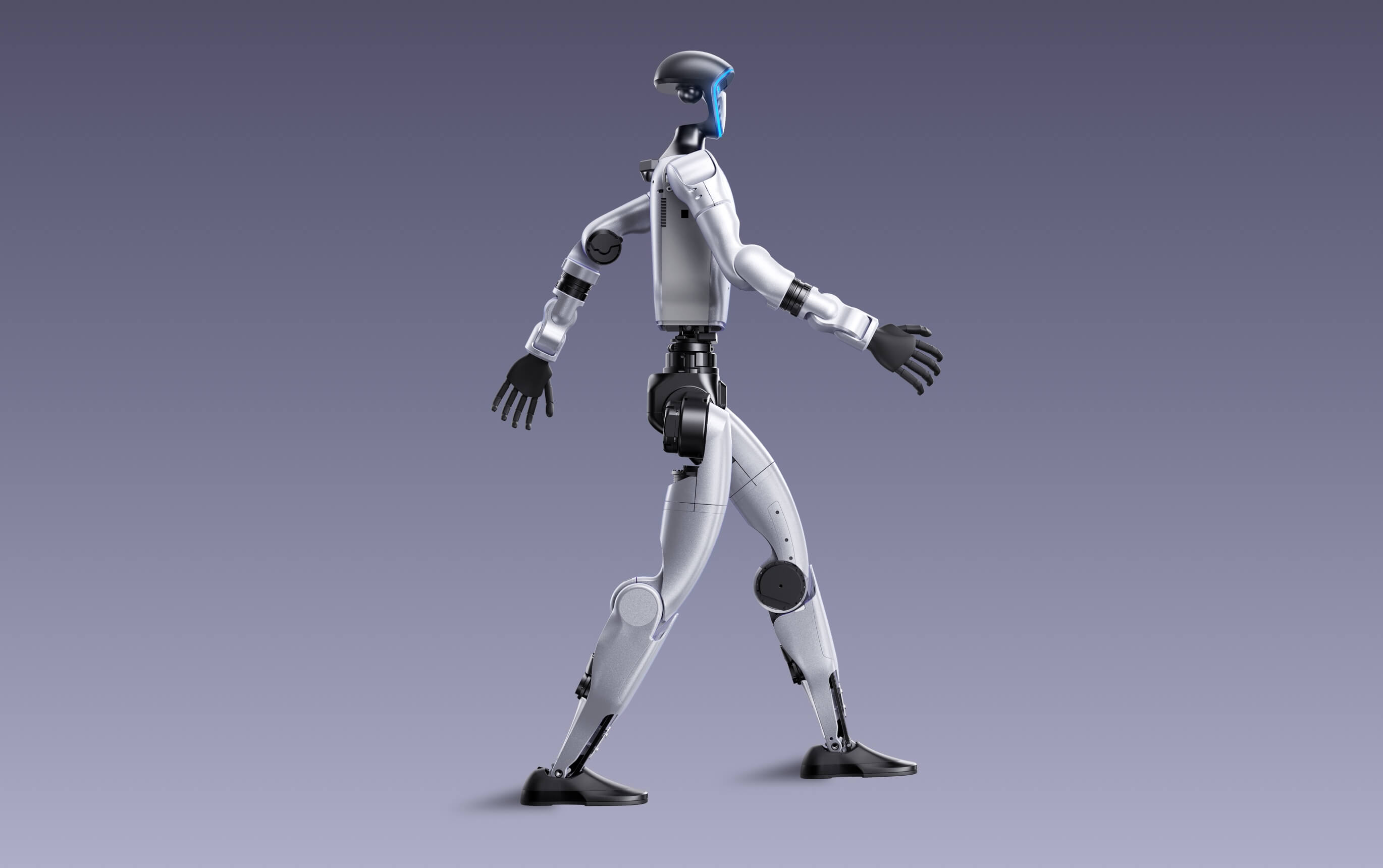
China’s CRAIC national finals for humanoid robots in Beijing brought 213 university teams and 350 machines into the first full size competition without remote control, stressing industrial tasks and language model driven interaction. The shift signals a push from academic showcase to a national talent pipeline for factory ready embodied AI.
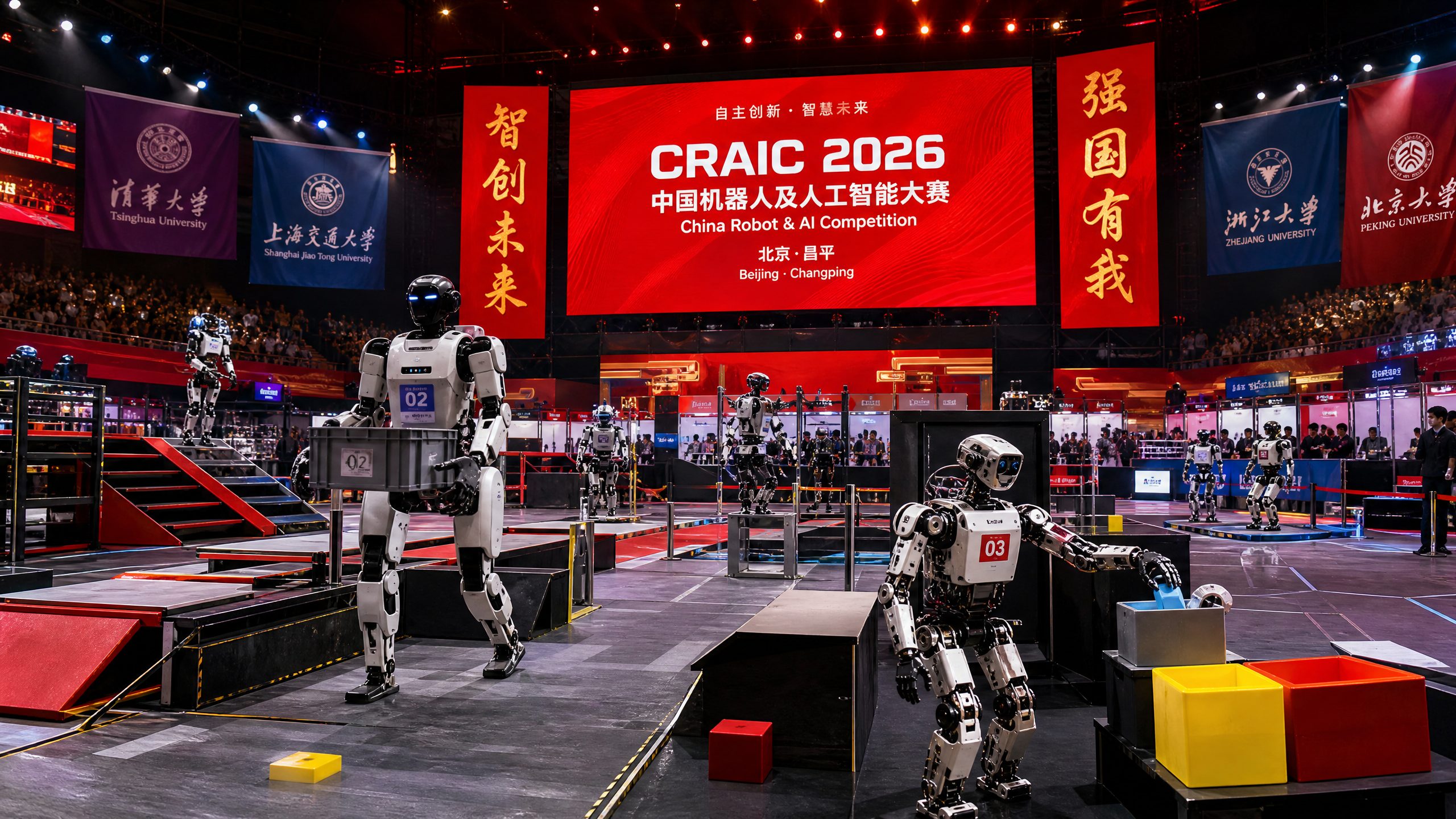
Beijing hosted the 28th China Robot and Artificial Intelligence Competition National Finals for humanoids this week, bringing 213 teams from more than 100 universities and 350 robots into a single venue.
For the first time, full sized humanoids competed without remote control in realistic industrial trials spanning high risk inspection, production line loading, and tasks driven by large language models.
The competition’s rise from campus showcase to industrial gateway reflects China’s bid to move humanoid robotics from research labs to shop floors. That ambition has a commercial anchor in a growing ecosystem that includes companies such as Fourier Intelligence in Shanghai, a developer of powered exoskeletons and the GR series humanoids aimed at industrial support, and UBTech in Shenzhen, which has focused on service and commercial humanoids. These firms form the market niche the finals are designed to feed with new talent and validated approaches. The headquarters centric gravity of Beijing, Shanghai, Shenzhen, and Hangzhou has created a dense corridor of research institutes, suppliers, and systems integrators now oriented toward embodied AI.
Beijing puts humanoid autonomy on a factory clock
The ruleset pushed entrants away from joystick theatrics and into a test of hands-free decision making. Image recognition and path planning were table stakes. The course layout then stacked on multi terrain mobility and intelligent obstacle avoidance, demanding that robots cross surfaces that mimic shop floor transitions from epoxy to metal grating to anti slip mats. Part sorting through environmental perception added manipulation under uncertainty. None of it looked like a YouTube demo. It looked like work.
The headline difference was the ban on remote control for full sized units. The organizers forced teams to prove that autonomy was more than a marketing video. Without a human in the loop, robots had to decide when to step, when to wait, when to rotate a wrist and when to re-plan a route to avoid a pallet that was not there during calibration. The competition also wove in interactive development with large language models, encouraging teams to bind natural language intent with task planning and low-level control in a single loop.
Trials mirror the reality of plants and power stations
Benchmarks matter when they capture the messiness of real life. The finals’ simulated high-risk inspections resembled utility walkthroughs where humans check gauges, listen for anomalies and navigate around hot piping. The production line loading drills mimicked kitting and bin picking with inconsistent parts and variable lighting. This matters because the hardest gap in humanoids is not a single feat of balance or dexterity. It is reliability across a thousand imperfect cycles.
A plain language analogy helps. Training a humanoid for a factory is less like teaching a dancer to perform a perfect pirouette and more like teaching a warehouse worker to push a dolly through a cluttered storeroom without hitting a broom handle. The pirouette is impressive once. The dolly run is boring but pays the bills, and it is full of little frictions you only notice after the twentieth aisle.
Large language models enter the shop floor without the spotlight
The emphasis on interactive development with large language models signaled that natural language is becoming a programming surface for embodied systems. Teams linked voice or text commands to symbolic planners and then to locomotion and manipulation primitives. That approach cuts development friction for non specialist operators. Tell the robot to inspect valves three through seven, and the model maps that instruction to a waypoint route, a segmentation task, a grasp policy, and a report template.
There are caveats. Latency, false positives and the inability of general purpose models to understand plant specific jargon can produce brittle behavior. The better results came when teams fine tuned small specialized models on their own scenes, parts and tasks, then used a general model as a coordinator rather than an all purpose brain. That is a practical pattern with commercial consequences. Toolmakers that package small vision models with task libraries and a thin language layer could see faster adoption than those betting on one giant model to do everything.
China pushes for a robot workforce as demographics tighten
The urgency for humanoids in China has structural roots. The country remains the world’s largest market for industrial robots by annual installations, but most of those units are stationary arms. As the working age population growth slows and manufacturers search for flexible automation, mobile bipeds and bipeds with arms promise to slot into tasks that previously needed human form factors. Inspection routes across stairs, retrofitting tools designed for people, and handling variable parts are not easy to rewrite for gantries or conveyors. A humanoid that can be taught through demonstration or natural language command fits this need.
The finals cast that goal in pragmatic light. Universities are not merely filling podiums. They are becoming a vendor pipeline. Students who solve sensor fusion for a slippery staircase now will be the engineers deploying fleets in electronics plants within a couple of years. The competition’s industrial focus shows that the organizers understand where the constraint lies. Software excellence is not enough. On site integration and uptime define success.
Actuators, sensors and batteries become the quiet bottlenecks
The supply chain challenge is as strategic as the algorithms. A humanoid needs light but strong actuators, energy dense batteries, compliant grippers, solid state depth sensors and controllers with enough compute to run perception and control loops on board. China has been closing gaps in gear reducers and motors and domestic suppliers of harmonic drives and cycloidal reducers have grown in sophistication. Even so, behaviour under stress remains a differentiator. A reducer that backlashes after a few hours on a ladder ruins a shift.
Sensor stacks pose parallel constraints. Depth cameras, force torque sensors at the wrist, and tactile arrays on fingertips are core for industrial dexterity. Domestic sourcing can meet many needs, yet specialized sensors still depend on overseas vendors. That dependence feeds into geopolitics. Trade friction and export controls can interrupt a bill of materials, which in turn forces design shifts toward different sensor modalities or heavier on device computation. Teams that architected redundancy into their perception stack scored better during the finals. The same approach will separate commercial winners from feature demo machines.
Power is the other silent constraint. Weight budgets fight with battery endurance. The finals demonstrated that an hour of confident autonomy beats two hours of tentative motion. Developers who prioritize gait efficiency, attention aware sensing, and work loop planning will extract more useful work per watt. That shifts value to software that harmonizes the entire stack, and to suppliers who can ship reliable battery modules with ruggedized connectors and safe charging cycles.
Competitive dynamics intensify at home and abroad
China’s humanoid field has thickened rapidly. UBTech’s Walker series, Unitree’s H1, and Fourier’s GR line are the most visible domestic efforts. Internationally, Tesla has pushed Optimus into factory trials, Agility Robotics is deploying Digit in logistics, Figure has signed early interest in automotive, and Sanctuary AI is honing dexterity in research collaborations. The Beijing finals will not decide that race, yet they will influence it in two subtle ways.
First, the contest creates a public yardstick for autonomy without remote aid. Videos of robots stumbling or self correcting are more informative than curated product teasers. Second, the finals build a hiring market for practical talent. Teams that internalized fault recovery, fall detection, and onboard replanning proved that they can move beyond lab conditions. Recruiters from domestic startups and state owned integrators will likely make offers quickly.
There is a crucial distinction between a competition robot and a production unit. The former can tolerate one off fixtures, annotated environments, and a support team nearby. The latter must survive shocks, dirt, and boredom. Still, the conversion path is shorter when students have already worked under rules that approximate factory duty cycles. That is the strategic advantage of this finals format.
Universities emerge as integrators and product incubators
The scale of participation matters. Two hundred thirteen teams from over one hundred universities is not just a number. It represents a distributed R and D engine. Mechatronics students mastering series elastic actuators this summer will spend next summer optimizing handover routines with human coworkers. Robotics clubs that learn to log and replay sensor data under noise will become software teams that ship diagnostic tools product managers can understand.
There is also a regional effect. Beijing’s concentration of top engineering schools, national laboratories and corporate R&D centers creates a feedback loop. Trial lessons learned at the finals will propagate through capstone projects, internships and vendor ecosystems. That shortens the iteration cycle between academic findings and factory deployments. It also raises the baseline expectations across the country. When one university demonstrates stair climbing in wet conditions, the community treats it as a new normal rather than a special feat.
Standards, safety and liability become the next choke points
Autonomy without a remote pilot elevates questions of safety and certification. A robot that falls near a human coworker carries risk even if it is within a designated zone. China has draft guidelines for human robot collaboration, and global standards bodies have published norms for industrial arms. Humanoids sit at an awkward intersection of mobile manipulation, service robotics, and industrial automation. The finals amplify the need for shared definitions of safe stop, emergency override, speed limits in proximity to people, and logging for post incident analysis.
Liability will become a live issue as deployments scale. If an autonomous humanoid loads the wrong part and damages a line, who is responsible. The integrator who scoped the task, the model supplier, the robot manufacturer, or the plant operator. Contracts will adapt, but insurers will demand evidence of testing, redundancy, and update discipline. The finals can seed best practices. Requiring black box logging, structured safety checks, and fail safe modes in a competition setting normalizes expectations for industry.
The financing and procurement model shifts toward outcomes
Competitions signal readiness to buyers. Procurement executives in electronics, automotive, and energy want confidence that pilots can turn into purchase orders. They care about cycle time, task coverage, and serviceability more than a glossy press release. The finals’ focus on real work aligns incentives. Teams optimizing for uptime, maintainability, and quick retraining on variant tasks will map more directly to procurement scorecards.
Financial backers will watch two metrics that never appear on stage. The first is cost per hour of useful work compared with human labour, inclusive of maintenance and downtime. The second is time to integrate at a new site. Humanoids that ship with modular grippers, pre-built inspection routines and data tools for quick retraining will reduce both. Investors in China already favour companies that can partner with state owned system integrators, because those integrators control access to projects where humanoids can amortize development costs. The finals funnel talent and tools toward that model.
--- Disclaimer: This article is for informational purposes only and does not constitute financial or investment advice.