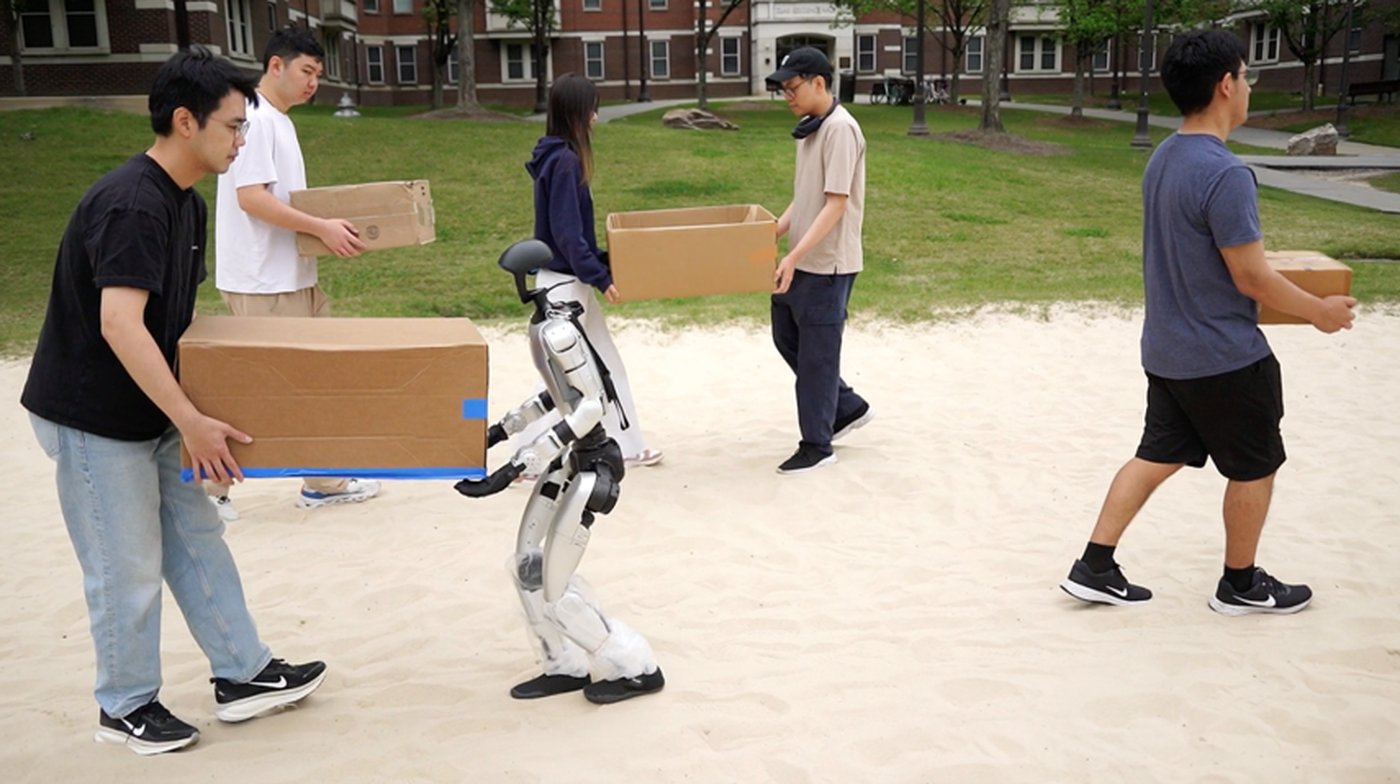
T-Robotics Signs MOU With Korea's Nuclear Waste Agency to Deploy AMR and Industrial Robots in Radioactive Facilities
T-Robotics has signed a memorandum of understanding with the Korea Atomic Energy Environment Corporation (KORAD), Clobot, and the Gyeongbuk ICT Convergence Industry Promotion Association to deploy autonomous mobile robots and industrial robots in radioactive waste disposal facilities. The project is part of Korea's 2026 Large-scale Convergence Robot Demonstration Program and targets expansion into semiconductors, chemicals, and steel.
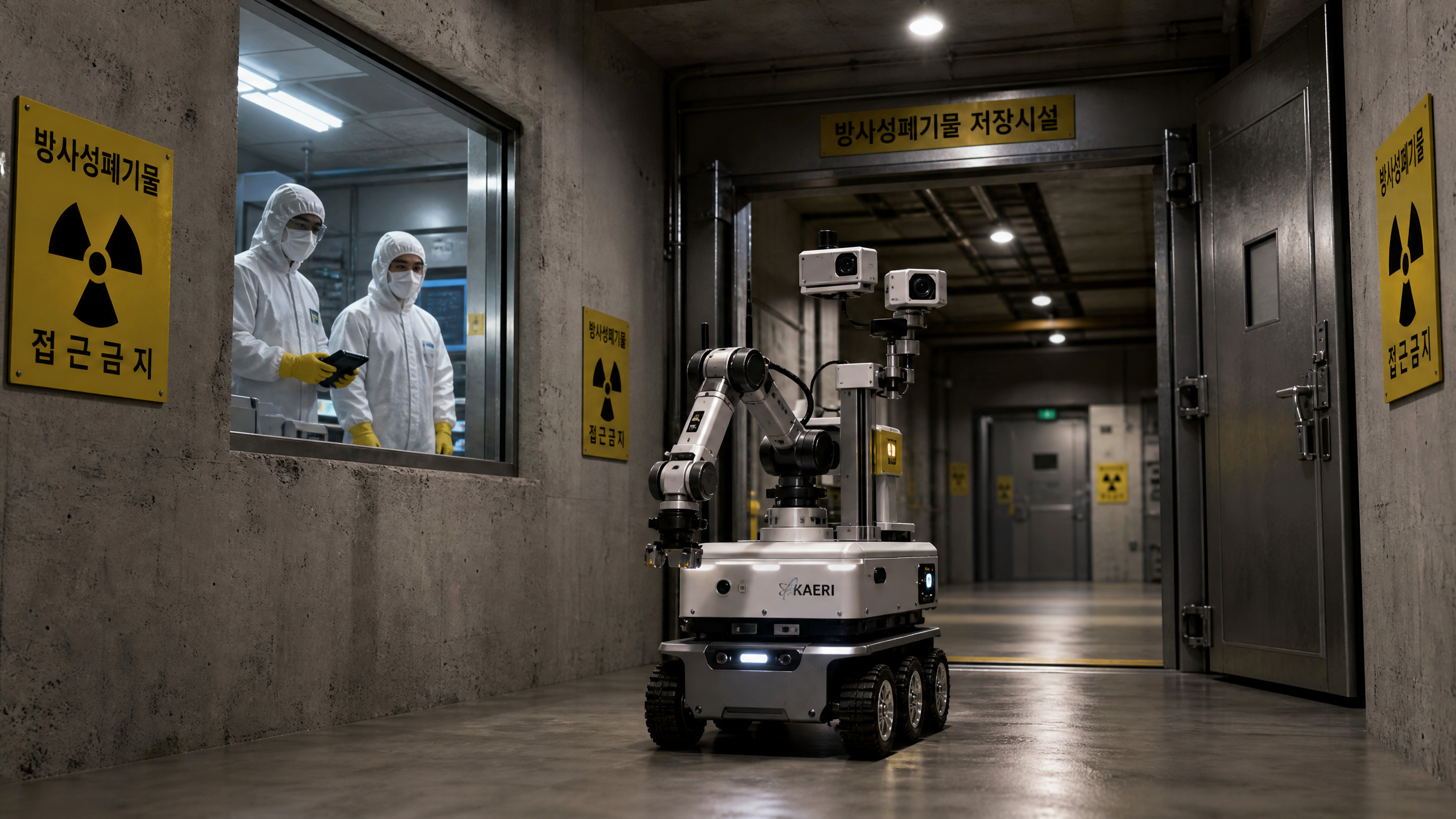
T-Robotics, a Korean company specializing in industrial humanoid robots and autonomous mobile robots, has signed a memorandum of understanding with the Korea Atomic Energy Environment Corporation (KORAD), Clobot, and the Gyeongbuk ICT Convergence Industry Promotion Association to deploy robots in radioactive waste disposal facilities. The agreement, announced on August 4, formalizes a project that was selected last month as part of Korea's 2026 Large-scale Convergence Robot Demonstration Program, organized by the Korea Robot Industry Promotion Agency.
The deployment targets one of the most demanding environments for robotic systems -- facilities where human workers face radiation exposure risks and where the consequences of equipment failure are severe. The project represents a practical test of whether current-generation industrial robots and autonomous mobile robots can operate reliably in conditions that combine radiation exposure, complex spatial navigation, and the need for precise manipulation of hazardous materials.
The Application and Its Demands
Radioactive waste disposal facilities present a distinct set of challenges for robotic systems. Radiation can degrade electronic components over time, requiring either radiation-hardened hardware or regular replacement cycles. The spatial layouts of these facilities are often complex, with narrow corridors, heavy shielding structures, and areas that are inaccessible to human workers for extended periods. The tasks involved -- monitoring, inspection, material handling, and decommissioning support -- require a combination of mobility, manipulation, and sensing capabilities that pushes the limits of current robotic platforms.
T-Robotics' role in the project is to handle unmanned dangerous work using its AMR and industrial robot technology. The company will be responsible for demonstrating the operation of various robots for the safety management of high-risk radioactive waste, sharing technology and information necessary for demonstration, jointly promoting the demonstration project, and creating and diffusing the results of the government robot demonstration project.
Clobot, the other robotics company in the consortium, brings complementary capabilities in autonomous navigation and multi-robot coordination. The combination of T-Robotics' industrial manipulation expertise and Clobot's navigation capabilities reflects the reality that no single company currently offers a complete solution for complex hazardous environment robotics -- the field requires integration across multiple specialized platforms.
The Broader Market Thesis
T-Robotics has been explicit about its ambitions beyond the nuclear sector. The company's official statement frames the nuclear demonstration as a proof of concept for a broader industrial physical AI platform targeting high-risk industries including semiconductors, chemicals, and steel. Each of these industries shares the characteristic that certain operations are too dangerous or too demanding for human workers to perform consistently and safely.
Semiconductor fabrication facilities use highly toxic chemicals in processes that require precise environmental control. Chemical plants handle materials that are flammable, corrosive, or toxic. Steel mills involve extreme temperatures and heavy materials that create significant injury risks. In each case, the argument for robotic deployment is not primarily about cost reduction -- it is about safety, consistency, and the ability to operate in conditions that are unsuitable for human workers.
The nuclear sector is a credible starting point for this thesis because the safety imperative is unambiguous and the regulatory framework for demonstrating safety is well-established. A robot that can demonstrate reliable operation in a radioactive waste facility has cleared a higher bar than one that has only been tested in a controlled laboratory environment. The KORAD demonstration project is therefore not just a commercial opportunity -- it is a certification pathway that could open doors to other regulated industries.
Korea's Hazardous Environment Robot Market
Korea's industrial base includes a significant concentration of the industries that T-Robotics is targeting. Korea is the world's largest shipbuilder, a major semiconductor manufacturer, a significant chemical producer, and a substantial steel producer. Each of these industries has facilities where hazardous environment robots could be deployed, and the domestic market provides a testing ground that is both large enough to be commercially meaningful and close enough to T-Robotics' operations to allow rapid iteration.
The government's support for the 2026 Large-scale Convergence Robot Demonstration Program reflects a recognition that hazardous environment robotics is a strategic capability for Korea's industrial base. The program provides funding and institutional support for demonstration projects that would be difficult for individual companies to finance independently, particularly at the early stage when the technology is being validated rather than deployed at commercial scale.
The Korea Robot Industry Promotion Agency's selection of T-Robotics' nuclear project for the demonstration program signals that the government views this application as a priority. The agency's involvement also provides a pathway for the demonstration results to be incorporated into regulatory frameworks and procurement guidelines, which is a necessary step for commercial deployment in regulated industries.
The Technical Challenges Ahead
The MOU signing is a beginning, not a conclusion. The technical challenges of deploying robots in radioactive waste facilities are substantial, and the demonstration project will need to address them systematically before commercial deployment is feasible.
Radiation hardening is the most fundamental challenge. Standard electronic components degrade when exposed to ionizing radiation, and the degree of degradation depends on the radiation type, intensity, and duration of exposure. T-Robotics will need to either use radiation-hardened components -- which are expensive and often less capable than their commercial equivalents -- or design systems that can be quickly replaced or repaired when radiation-induced degradation occurs.
Navigation in complex, partially obstructed environments is a second challenge. Radioactive waste facilities are not designed for robot navigation, and the presence of heavy shielding structures, irregular layouts, and areas that cannot be mapped in advance creates navigation challenges that are more demanding than those encountered in warehouse or factory environments. The integration of Clobot's navigation expertise is intended to address this challenge, but the proof will be in the demonstration results.
Manipulation of hazardous materials adds a third layer of complexity. Picking up, moving, and placing radioactive waste containers requires precise force control, reliable grasping, and the ability to handle objects of varying size, weight, and surface texture. Industrial robots have demonstrated these capabilities in controlled manufacturing environments, but the variability of real-world waste handling scenarios is greater than most manufacturing applications.
The 2026 demonstration project will generate data on how well current technology addresses these challenges. The results will inform both T-Robotics' product development roadmap and the government's assessment of what additional investment is needed to make hazardous environment robotics commercially viable at scale.
--- Disclaimer: This article is for informational purposes only and does not constitute financial or investment advice.