Agility Robotics hits US$2.5 billion valuation as Digit goes enterprise
At AI4 Las Vegas, experts anointed 2026 as the year of the robot as Agility Robotics showcased Digit and confirmed a US$2.5 billion valuation. The event underscored a decisive shift from software bound generative AI to Physical AI deployments inside factories and warehouses.
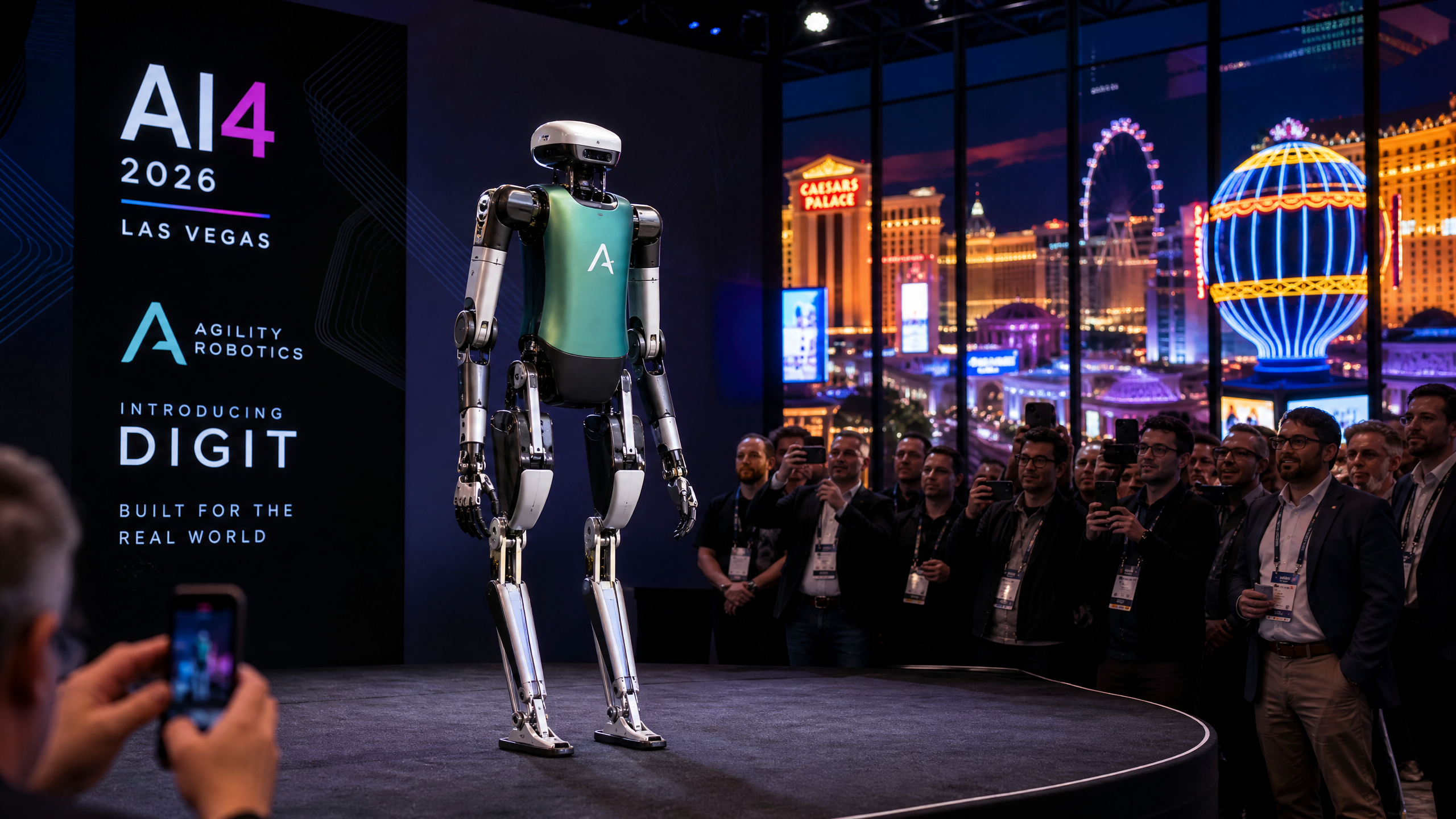
Robotics insiders gathered at AI4 in Las Vegas this week and agreed on a bold marker for the industry. They called 2026 the year of the robot as demonstrations of humanoids and mobile manipulators took center stage as enterprises asked when they could buy, not whether they should explore. Agility Robotics confirmed a fresh US$2.5 billion valuation amid brisk conversations about pilots turning into purchase orders.
The AI4 program leaned heavily into Physical AI and downplayed pure generative AI showcase theatrics. Floor traffic clustered around hardware that can lift, carry, and place. Agility’s Digit walked, grasped, and stacked with poise. Startups and incumbents mapped timelines to production scale and promised safer human robot collaboration on actual factory floors rather than lab benches.
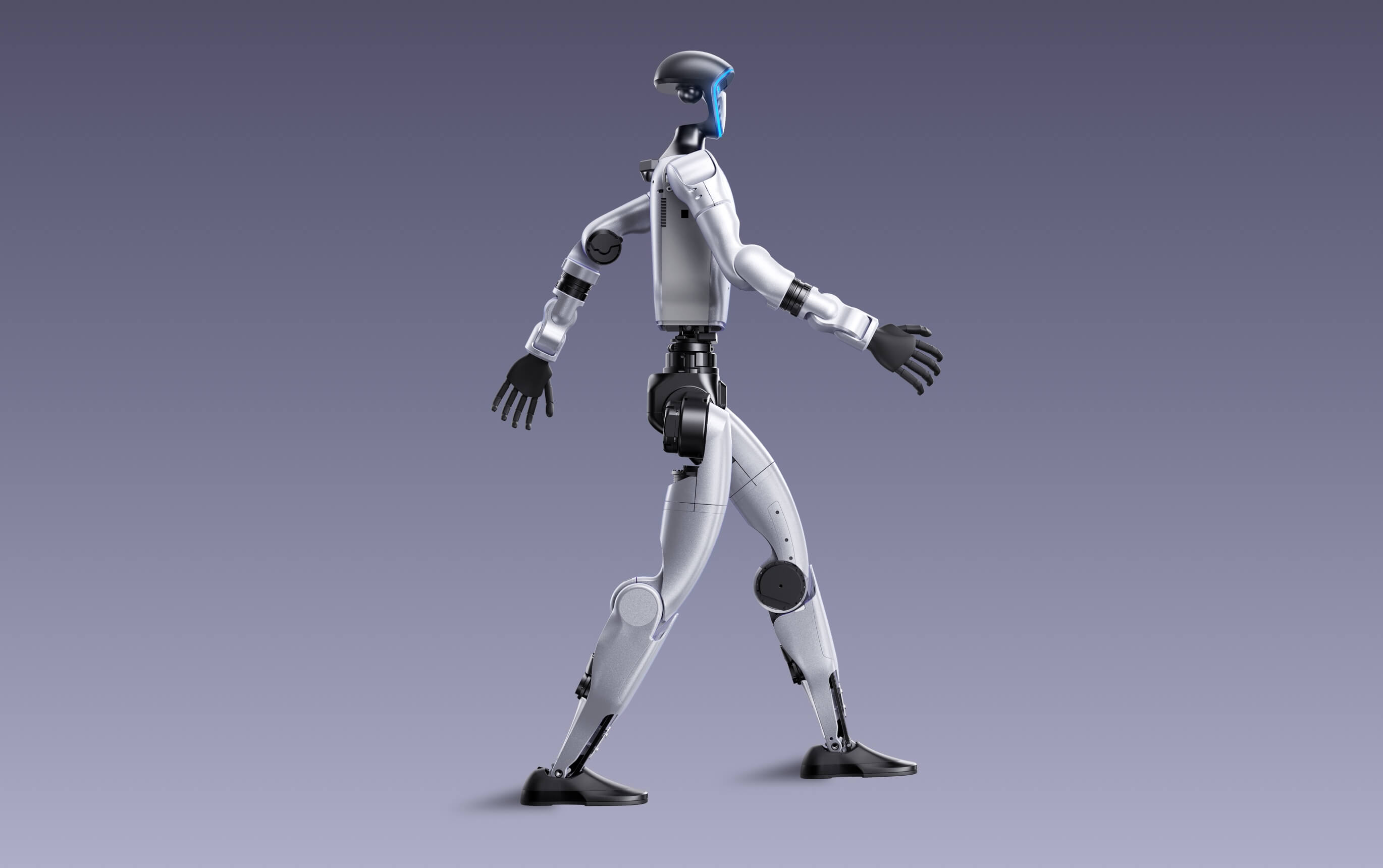
Founded in 2015 and headquartered in Corvallis, Oregon, Agility Robotics has become a focal point for the rise of humanoid platforms in enterprise automation. The company designs and builds Digit, a bipedal mobile manipulator positioned for warehouse and factory material handling tasks. Its market niche sits between autonomous mobile robots and fixed robotic arms, bringing human scale mobility to repetitive workflows that remain difficult to automate.
Digit is a prominent example of what the industry now calls Physical AI. That label refers to systems that sense, reason, and act in the real world using a blend of machine learning, classical control, and robust hardware. While chatbots generate words and images, Digit generates work. It maneuvers in tight spaces, manipulates varied objects, and runs on a safety envelope designed for mixed human settings.
The enterprise buying cycle is turning from pilots to production
For several years, warehouse and manufacturing leaders have run proofs of concept for humanoids. Agility’s most visible reference has been its pilot with Amazon to handle tote recycling tasks that are tedious yet necessary in fulfillment centers. Conversations at AI4 suggest that 2024 and 2025 will see fleet sized orders emerge, with 2026 becoming a mainstream deployment horizon.
There is an important nuance in the buyer mindset. Early experiments asked whether humanoids could walk reliably without falling. Today the questions focus on total cost per task and integration with warehouse execution systems. Buyers want lead times, service level agreements, and throughput metrics measured in totes per hour. The sentiment echoed a broader maturity. If the last two years were dominated by prompts and tokens, the next two must be dominated by picks and pallets.
The capital leverage strategy behind Agility’s valuation
Agility’s US$2.5 billion valuation positions it among the leaders of a capital intensive race. Physical AI demands factories, inventory, field service, and safety certification. Those are not optional overhead items. They are the cost of admission. The company opened its RoboFab manufacturing facility in Salem, Oregon, and has signaled a path to thousands of units per year once customer demand and component supply align.
The firm’s capital stack must therefore do double duty. It funds the core mechatronics and software program while underwriting the supply chain scale up that lowers unit costs. Rivals have followed similar playbooks. Figure AI reportedly raised about US$675 million at a valuation near US$2.6 billion earlier this year with partners from Big Tech and automotive. Hyundai acquired a controlling stake in Boston Dynamics for about US$1.1 billion in 2021 to integrate legged mobility into a broader industrial automation strategy. The competitive set is capitalized enough to run sprints and marathons at the same time.
Physical AI shifts the enterprise stack from chat to chassis
Conference sessions described a pivot in enterprise AI spending. Generative platforms remain vital for documentation and code assistance, yet the marginal dollar is migrating toward systems that move inventory and parts. Think of it like a company that has trained an army of smart clerks but now needs forklifts and skilled handlers to ship products. Intelligence without embodiment peaks quickly in environments defined by physical work.
Digit’s differentiator is its human compatible form factor. It steps over thresholds, turns in narrow aisles, and reaches shelves without major infrastructure changes. That approach contrasts with fleets of autonomous carts and fixed arms that require dedicated zones and conveyor rework. For operators with hundreds of brownfield facilities, a robot that adapts to the building rather than the building adapting to the robot can cut deployment time and capital expense.
Supply chain realities will make or break the humanoid rollout
The first wave of mass deployment will collide with a famously tight supply chain for precision components. Humanoid robots rely on strain wave gears, high torque density motors, power electronics, lightweight structural materials, and high-performance compute. Japanese vendors such as Harmonic Drive Systems and Nabtesco dominate core actuation elements. Swiss and German motor specialists supply compact servos. Sensors come from Japanese, European, and US firms including IMUs, 3D cameras, and force sensors.
That concentration presents a risk. Lead times for harmonic drives have historically stretched into months under demand spikes. Battery cells with high power density compete with e bikes and industrial equipment. Edge AI compute boards draw on GPUs and NPUs that remain subject to cyclical shortages. Export controls complicate sourcing strategies for companies with global ambitions. Agility’s decision to build in the United States helps mitigate geopolitical exposure but does not insulate it from upstream component bottlenecks centered in Japan, Europe, and Taiwan.
Managing this reality will require a playbook familiar to automotive. Multi sourcing critical parts, qualifying second and third suppliers, and designing around supply constraints can be as strategically decisive as any machine learning breakthrough. A humanoid that depends on a single, long lead drive component is a single point of failure for any rollout target. The winners will treat hardware procurement as a first-class engineering problem.
The performance to price equation must match warehouse economics
Enterprises measure automation by cost per unit handled and payback period. For Digit, that means comparing a robot hour to a human hour across tasks such as unloading totes, moving return bins, or pulling items from a staging area to a conveyor. If a robot costs US$12 to US$20 per hour equivalent when amortized, it competes well in markets with scarce labor and high turnover. If costs push above US$30 per hour or uptime sags, the value proposition weakens.
Agility argues that Physical AI enables generality across a family of tasks rather than a single hard coded job. That generality spreads cost across more shifts and reduces idle time. In effect, Digit aims to be a flexible associate that can be reassigned as a volume mix changes. The analogy from software is a cloud instance that can run multiple services as demand shifts. The skeptical counterpoint is simple. Robotics history is littered with general purpose promises that delivered niche results once the complexity of the real world intruded. The burden is on every humanoid vendor to show consistent performance in messy, variable workflows.
Safety, standards and insurance will shape deployment speed
Humanoids share space with people, so safety is not a feature. It is the license to operate. Standards bodies are moving to adapt machinery norms to bipedal and mobile manipulators. Sensor redundancy, force limiting and real time fall detection are table stakes. Large customers will require third party certification and detailed hazard assessments before allowing scaled deployments.
Insurers have entered the discussion with their own models. Premiums depend on incident rates, worker proximity and the quality of maintenance programs. The best teams will win not only on mechatronics and AI, but on documentation, operator training and recovery procedures. A robot that can gracefully fail and safely reset is more bankable than one that chases performance at the edge of stability.
Competitive dynamics are converging on a few repeatable jobs
Across booths and closed-door briefings, the same job families came up. Tote handling. Case picking at waist height. Line side material delivery in factories. Dock operations for inbound and outbound flow. These tasks share constraints that fit humanoids well. They involve moderate weights, predictable pathways, and frequent human collaboration. They are also expensive today because they depend on labor pools with high churn.
Agility’s strategy appears to focus on such repeatable tasks where Digit’s reach and mobility confer an edge. Figure AI is targeting similar zones while forging automotive partnerships. Tesla is positioning Optimus as a factory worker that can eventually reach households, though the consumer leap remains speculative. Sanctuary AI has emphasized dexterous manipulation for light manufacturing. Boston Dynamics has leveraged decades of mobility research but has not yet announced a humanoid for warehouse picking at scale. The field is crowded, yet the market is enormous. Retailers, parcel carriers, consumer goods producers, and electronics manufacturers all share overlapping needs.
The software stack is becoming the true moat
Hardware grabs attention at trade shows, but software determines long term defensibility. Digit’s autonomy comprises perception, planning and control layers fused with task planners and integration with warehouse systems. Physical AI here means the ability to adapt grasps to different handles, recover from slips, and coordinate foot placement with arm motion while tracking goals emitted from enterprise software.
Vendors are racing to build behavior libraries and simulation pipelines that compress learning time. Cloud based retraining and over the air updates extend capability without swapping hardware. Here a hybrid approach is emerging. Companies use foundation models for vision and language where appropriate, but they wrap them with deterministic controllers and safety envelopes. The analogy is a self-driving stack that combines learned perception with rule bound driving policies. The result is predictable performance that still benefits from data scale.
Labor markets and union dynamics add a real-world constraint
No physical automation story is complete without labor context. Warehouses across the United States grapple with vacancy rates and seasonal peaks that are difficult to staff. Injury rates for repetitive lifting are non-trivial. Robots that reduce strain and absorb churn can improve outcomes. That said, unions and worker councils will demand a clear accounting of job redesign, training, and wage effects.
At AI4, several panels emphasized collaborative deployment models where robots take on the worst ergonomic tasks while humans move to quality control, exception handling, and oversight. If companies can show injury reductions and career path improvements, adoption accelerates. If deployments appear as thinly disguised cost cutting that compresses headcount without worker benefits, expect political and social friction. The reputational costs in a consumer facing brand environment are real.
Disclaimer: This article is for informational purposes only and does not constitute financial or investment advice.