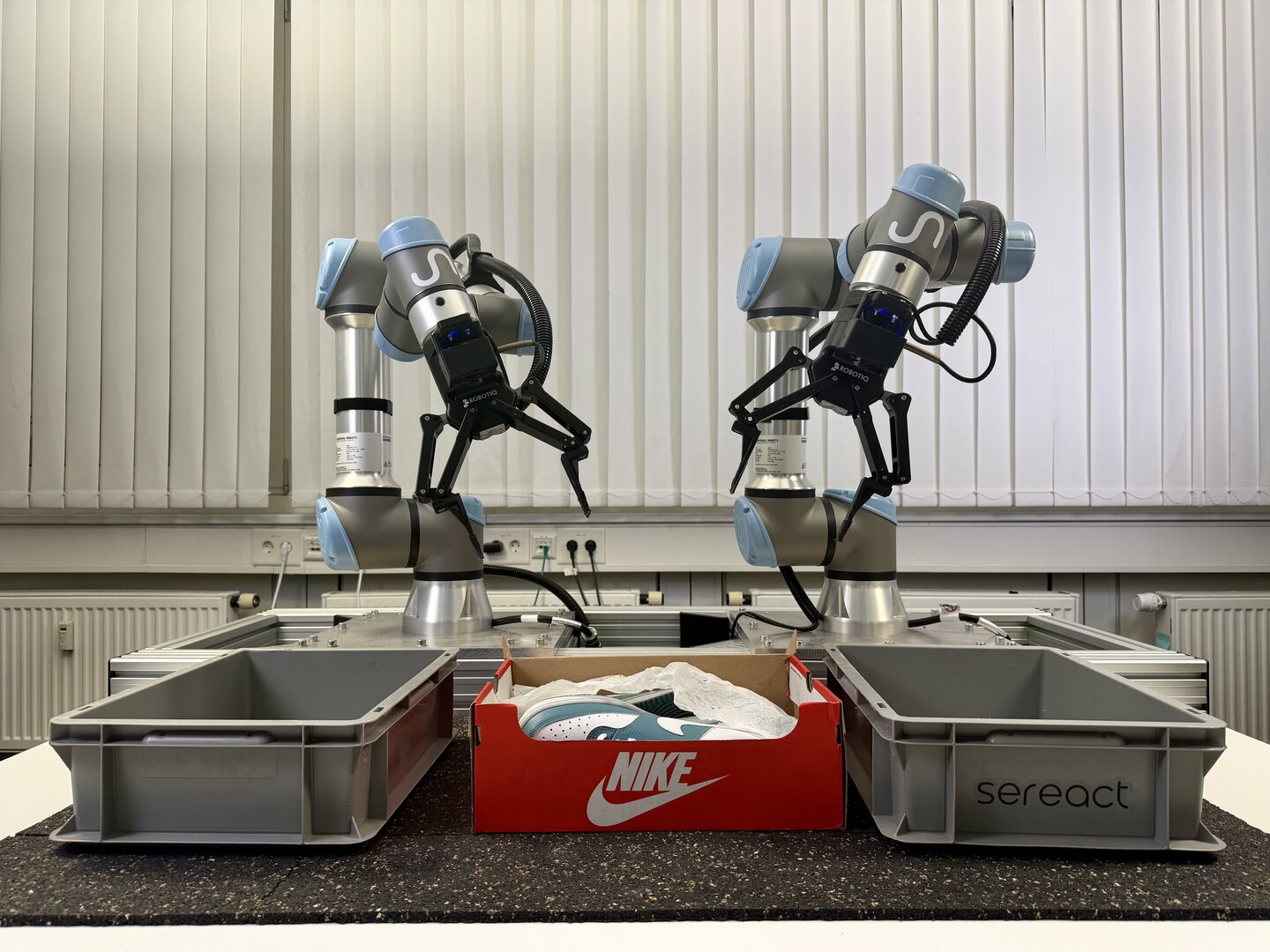
Physical AI data in retail Maniformer trains robots in Shanghai
Shanghai is seeing embodied robots trained on live shop floors by Maniformer, a physical artificial intelligence data service platform focused on retail. Reported on August 5 to 6, 2026, the company operates staffed data operations inside convenience stores and supermarkets, capturing time-synced multi modal data and human demonstrations for stocking, facing, scanning, recovery, and customer handoffs. The core story is not new hardware. The bottleneck has moved to high quality, permissioned, real world interaction data that can drive learning in messy environments at a commercial pace. Simulated data tops out for retail. Dedicated physical artificial intelligence data service providers are emerging as a new layer in the robotics supply chain. The strategic advantage now accrues to whoever controls the most useful real world data loops.

Maniformer staff spent August 5 and 6, 2026 training embodied robots in active Shanghai retail aisles, capturing multi modal data and teleoperated demonstrations to build task datasets for stocking, scanning, and customer service.
Maniformer is a Shanghai headquartered physical artificial intelligence data service platform. The company builds sensorized rigs, human in the loop workflows, and dataset pipelines for retail and light logistics. Its niche is real world training data for manipulation and navigation where simulation falls short.
Retail is the proving ground for physical artificial intelligence
Retail has the right blend of density, diversity, and downtime to pressure test embodied artificial intelligence. Shelves shift daily. Promotions create seasonal chaos. Workers juggle restocks, mispicks, planogram resets, spills, and constant customer interruptions. Lighting changes across the day. Packaging is glossy, crinkled, and color saturated, a worst case scenario for vision. Aisles are narrow and ambient noise is high. That makes retail a profitable headache, and a data goldmine.
In Shanghai, Maniformer positions staff as trainers on live floors, often during off peak hours or controlled micro windows. They drive robots through tasks by teleoperation and shared autonomy, annotate state changes, and score outcomes. The platform ingests synchronized color video, depth, inertial and force torque signals, barcode scans, planogram references, and store events from point of sale and inventory systems. It produces tightly versioned datasets aligned to specific tasks and fixtures, then pushes them into customer model training pipelines.
The emphasis is surgical. Not every frame is useful. What matters is capturing edge conditions that melt simulated agents. Think of sticky bottles that twist in racks, end caps with seasonal cardboard cutouts, reflective snack bags sliding under grippers, or a customer that hands a product to a robot at a strange angle. In a lab, those are anecdotes. In stores, those are constants.
Why simulated aisles miss the messy 20 percent
Simulation is a powerful accelerant for robotics. Domain randomization, synthetic photorealism, and keyboard perfect physics cover the first 80 percent. Retail lives in the last 20 percent, the rough seam where reality refuses to cooperate. Four patterns explain why.
- Perception aliasing is rampant. Many different products share near identical geometry and color. Minor glare or shrink wrap crinkles push detectors over the edge. Simulated materials rarely match the optically annoying truth of glossy packaging.
- Contact is non ideal. Deformable items buckle or stick. Shelves wobble. Gravity wins. Simulated friction, stiffness, and compliance help, but calibration drift at the store level dominates.
- Social interaction matters. A customer can interrupt, ask for an item, or move a basket into a planned path. Even a polite pause reshapes the action plan in ways that current simulators struggle to encode.
- Store state is volatile. Planograms are guidelines, not gospel. Promotions, local manager fixes, and late night restocks bend the map.
A practical analogy helps. Training only in simulation is like teaching a chef with plastic food. You can practice knife skills and plating, but you will not learn how onions make you tear up, how pan heat behaves, or how a sauce looks an instant before it turns.
The field evidence is blunt. Retail models trained on mixed data perform better, but the gains track real world coverage, not simulator hours. The implication for buyers is commercial. You do not buy more servers to fix this. You buy data operations tied to your stores and your fixtures.
Maniformer builds a data utility for physical work
Maniformer’s product is not a robot. It is a data utility that stitches four zones into one continuous loop.
- Capture. Sensor rigs on carts and robots collect synchronized streams with precise timestamping. Staff wear haptic or handheld control devices for demonstrations and corrective nudges. Audio is logged only with consent and is often dropped in final sets to de risk privacy.
- Curate. A labeling engine fuses planograms, barcode databases, and shelf maps to auto label static context. Human reviewers focus on articulation states, failure modes, and social events that automation misses. Every frame carries store, aisle, fixture, and time metadata for selective replay.
- Train. Data exports into imitation learning, reinforcement learning, and vision language action stacks. Abbreviations are always expanded on first use. For example, reinforcement learning from human feedback (RLHF) is driven by rater scores and rich reward definitions tied to speed, safety, and shelf quality.
- Validate. Maniformer runs scripted tasks and perturbations to measure off policy robustness. It aligns benchmarks to buyer key performance indicators, for example pick rate, recovery time, and customer wait time.
The company’s core technology choices lean toward throughput and auditability. Everything is versioned. Dataset lineage is explicit. A store manager can ask what data taught a robot to turn a cap or move a bottle, and the team can point to a slice of a run on a date with the exact conditions. That makes retraining less of a gamble and more like patching a known bug.
The new robotics supply chain includes data service platforms
A decade ago, the pipeline for a retail robot centered on sensors, manipulators, mobile bases, and an integrator. Today, a new layer is visible. Physical artificial intelligence data service platforms sit between stores and model training. They standardize capture, cleaning, and consent, then broker data into learning loops for multiple robot vendors.
For procurement teams, that changes category strategy. You now source three things. You buy hardware. You buy models and autonomy. You buy data services that make both useful on your floors. You can award these to one vendor, but the better risk posture is modular. A retailer can pilot two hardware providers on a shared data utility to keep learning assets portable. A robot vendor can contract a data partner in priority markets to avoid chasing permissions store by store.
A Shanghai based operations director put it succinctly. Shanghai is where you can test for a week and see a month of edge cases. Promotions turn over fast, and customer flow is relentless. That pace makes data operations worth the trouble.
From capture to curation to control becomes a closed loop
In the field, the loop looks like this. A shelf facing task fails near a reflective snack section. An operator takes control, completes the move, and marks the cause, glare induced misclassification. The frames and action traces get flagged for priority ingestion. Overnight, the training job biases toward those scenes. A new model lands the next day. The team replays the scene in a quiet window and runs a small A B test in a live aisle. If it holds, the fix promotes to a larger group of stores.
That loop only works if the data pipe is fast, clean, and safe. Fast means stores can push and pull without clogging local networks. Clean means each run is tagged, deduped, and sanity checked. Safe means personal information is redacted and no store trade secrets leak. Maniformer claims all three are first class concerns. The company says it uses on device blurring for faces and license plates, route level anonymization for store layouts, and write only pathways that prevent cross customer leaks. It also aligns data capture with the Personal Information Protection Law of the People’s Republic of China (PIPL) and the Data Security Law of the People’s Republic of China (DSL).
Why Shanghai retail is an ideal data furnace
Shanghai pushes robots and trainers into difficult density. Hundreds of convenience stores cluster near transit. Aisles are tight. Footfall peaks are sharp. Promotions rotate quickly and demand capricious shelf changes. The city’s service culture is high touch, so a robot must pause, acknowledge, and recover without being in the way.
That density delivers coverage faster. A week of runs can cover a season of edge cases in slower markets. That shapes training economics. Data service costs are amortized over richer coverage with fewer store days. If you are planning a trial budget, expect capture crews, consent signage, floor marshals, and after hours blocks to be the big line items, not the robot rentals.
The bill is high and the bottlenecks move
A skeptical counterpoint is healthy. Building real world data operations is expensive and distracting. Store managers dislike extra bodies on the floor. Privacy risk is nontrivial. Vendor lock is a real fear. Even if a pilot succeeds, does the model travel to a different city with different fixtures and habits
These are real risks. The mitigation is design, not slogans.
- Disruption control. Train during low traffic bands. Use micro windows with one aisle at a time. Place clear signage with opt out options. Track and publish incident rates to build trust.
- Privacy and compliance. Minimize capture. Blur at the edge. Delete fast. Mute audio unless explicitly needed for a feature, for example voice handoff. Align to PIPL and store policy.
- Portability safeguards. Contract for shared data schemas and explicit dataset ownership. Avoid opaque encodings that bind you to one model stack. Require egress paths in service level agreements.
- Generalization plans. Plan for city to city transfer. Include a first week data burst in each new city to tune for lighting, dialect, and fixture norms.
What it costs and who pays in practice
Procurement leaders want numbers. They also want no surprises. In China, program costs will skew to labor and store access. A typical three store pilot could run eight to twelve weeks, with two to three capture technicians per site and a central labeling and training team. Expect a service contract structured as a monthly fee that bundles staffing, hardware kits, data processing, and training runs. In current Shanghai conditions, a single active store may carry a monthly fee in the range of RMB 80,000 to RMB 200,000 depending on hours, fixture count, and model training frequency. Hardware rentals and premium overnight access can lift the upper bound.
Who pays is strategic. Retailers often fund the first round to tune to their planograms and operations. Robot vendors will co invest if they can reuse elements across customers. A shared utility model is emerging, where a data platform serves multiple hardware vendors in a given vertical, with strict data walls and explicit governance.
Metrics that matter for data first robotics in retail
Store leaders do not care about frames per second. They care about shelves that look good and customers who do not wait. Convert that into a simple scorecard.
- Task quality. Facing score by planogram tolerance. Barcode scan confidence tied to actual sellable units.
- Throughput. Units picked or placed per hour with human interventions logged.
- Reliability. Mean time between interventions. Recovery time after interruptions.
- Customer impact. Wait time for in aisle handoffs. Blocking events per hour.
- Safety. Near miss count. Contact force excursions. Clean aisle pass rate.
- Data health. New edge cases per week. Label acceptance rate. Time to deployment for a fix.
If your data partner cannot show improvements against these, you are buying theater, not progress.
Why control of real world interaction data is the new moat
Model weights are portable. Hardware is increasingly modular. The scarce asset is a high coverage, permissioned corpus of real world interactions tied to specific fixtures and workflows. Whoever owns the clean loop between stores, models, and redeployments sets the pace.
The strategic logic mirrors past platform shifts. In web advertising, control of click and conversion data drove market power. In autonomous driving, fleet miles drove advances and valuations. In physical retail robotics, aisle hours and successful recoveries drive advantage. The difference is consent and safety requirements are higher, and the unit of work is a shelf or a customer, not a pageview.
Buyers should treat this as a portfolio decision. Invest in at least one data partner that can operate in your priority cities. Keep model pathways open. Negotiate audit rights on data handling. Build an internal competency that can read dataset cards, interpret validation runs, and request targeted data sprints when a fixture or promotion cycle changes.
Maniformer’s operating playbook in stores
What does this look like inside a Shanghai convenience store
- Setup. Consent signage goes up at doors and affected aisles. Cameras and depth sensors mount to the robot and sometimes to a short mast cart for context. The floor manager schedules thirty to ninety minute windows around traffic.
- Run. Staff teleoperate or co-pilot through target tasks. For stocking, they collect reach, grasp, turn, and placement motions with force profiles. For scanning, they vary angles, distances, and lighting. For service, they capture language prompts and handoffs with clear opt in from customers.
- Annotate. On a nearby tablet, a labeler ties frames to planogram slots, fixture geometry, and product barcodes. They flag failure reasons with a controlled vocabulary, for example glare, occlusion, deformable slip, customer interrupt, label mismatch.
- Sync. Data uplinks through a store side relay after a privacy pass. Overnight runs push to training.
- Redeploy. A new model lands with a changelog. The team replays problem scenes first, then scales.
Governance, privacy, and intellectual property guardrails
Shanghai retail sits inside Chinese data law. PIPL and DSL set boundaries. Retailers add their own, for example bans on ceiling wide filming or customer audio. Maniformer states it designs to store only what is needed, at the lowest fidelity that is still useful. Faces blur at the edge. Layouts are abstracted to non reversible maps unless a store grants explicit research rights. Product planograms are treated as trade secrets and are never shared across customers.
On the intellectual property front, contract clarity is the only safe path. Answer three questions in writing. Who owns raw captures. Who owns labels and derived datasets. Who owns model weights. Many retailers now split ownership. Store owns raw and labels. Vendor owns base model. Fine tuned weights and recipes are either shared or placed under a time bound license. This is worth careful lawyering before a pilot.
The competitive set is forming fast
Maniformer is early, not alone. Integrators are spinning up data units. Cloud providers are courting retailers with edge pipelines and privacy toolkits. Robot vendors are building in house capture crews. The market will likely stratify. Pure play data platforms that run city by city. Full stack vendors that bundle hardware, autonomy, and data as a locked package. Hybrid alliances where a robot vendor partners a local data operator.
Buyers will push for interoperability. There will be schema standards for fixtures, products, and actions. There will be safety and consent templates per city and chain. Expect third party auditors to offer badge programs for privacy and dataset quality. The winners will publish dataset cards with coverage maps, label methods, and known gaps. The losers will talk about magic.
What this means for procurement and operations leaders
Treat data service platforms as a new vendor category with its own RFP. Scope should cover store access plans, consent templates, privacy tooling, capture hardware lists, labeling processes, training stack outputs, and validation methods. Require a pilot that ties to your target Key Performance Indicators. Ask for dataset cards and for a plan to hand you the data. Demand a cutover pathway if you swap model vendors.
Work with operations to schedule low friction windows. Select aisles that mirror your national mix. Include a noisy corner with glossy packaging and a quiet fresh section. Put a customer service task in the mix even if you are focused on stocking. That is where many failures hide.
Maniformer’s Shanghai runs point to a broader rebalancing
For years, retail robot programs stalled on hardware. Grippers slipped. Bases jammed on ramps. Sensors blew out under fluorescent lights. Today, the common hardware is capable. The limiter is data that teaches robots to operate inside each specific store reality, without babysitting and without scaring customers.
Maniformer’s thesis is simple. If you industrialize the data loop, the robots will get better fast enough to be worth the floor space. The Shanghai work suggests it is a bankerly thesis. The company is not chasing a moonshot. It is selling a utility. If you run many aisles, you already know the power of utilities.
There is a temptation to see data work as a commodity. Point a camera, record, label, train, repeat. That misses the point. In physical work, where small differences in lighting, packaging, and human behavior swing outcomes, data quality is performance. It is closer to sourcing fresh produce than to ordering more servers. Fresh wins. Stale rots. A platform that can harvest the right scenes at the right time at the right stores is not a vendor to swap lightly.
This analysis synthesizes company statements and observable market activity in Shanghai retail during the stated period.
Disclaimer: This analysis is provided for informational purposes only and does not constitute investment, legal, or procurement advice. RobotAIGeek does not endorse specific vendors or guarantee the performance of early-stage technologies.