Unitree Robotics Opens Book-Building Tomorrow as China's First Profitable Humanoid Maker Seeks a US$6.2 Billion Valuation
Unitree Robotics opens STAR Market IPO book-building on August 5, 2026, seeking a floor valuation of RMB 42 billion (approximately US$5.85 billion) after completing a record 104-day review process. The company is China's first profitable humanoid robot manufacturer, with RMB 1.2 billion in 2025 revenue and positive net income, setting a pricing benchmark for the wave of humanoid robotics IPOs expected in the next 12 to 18 months.
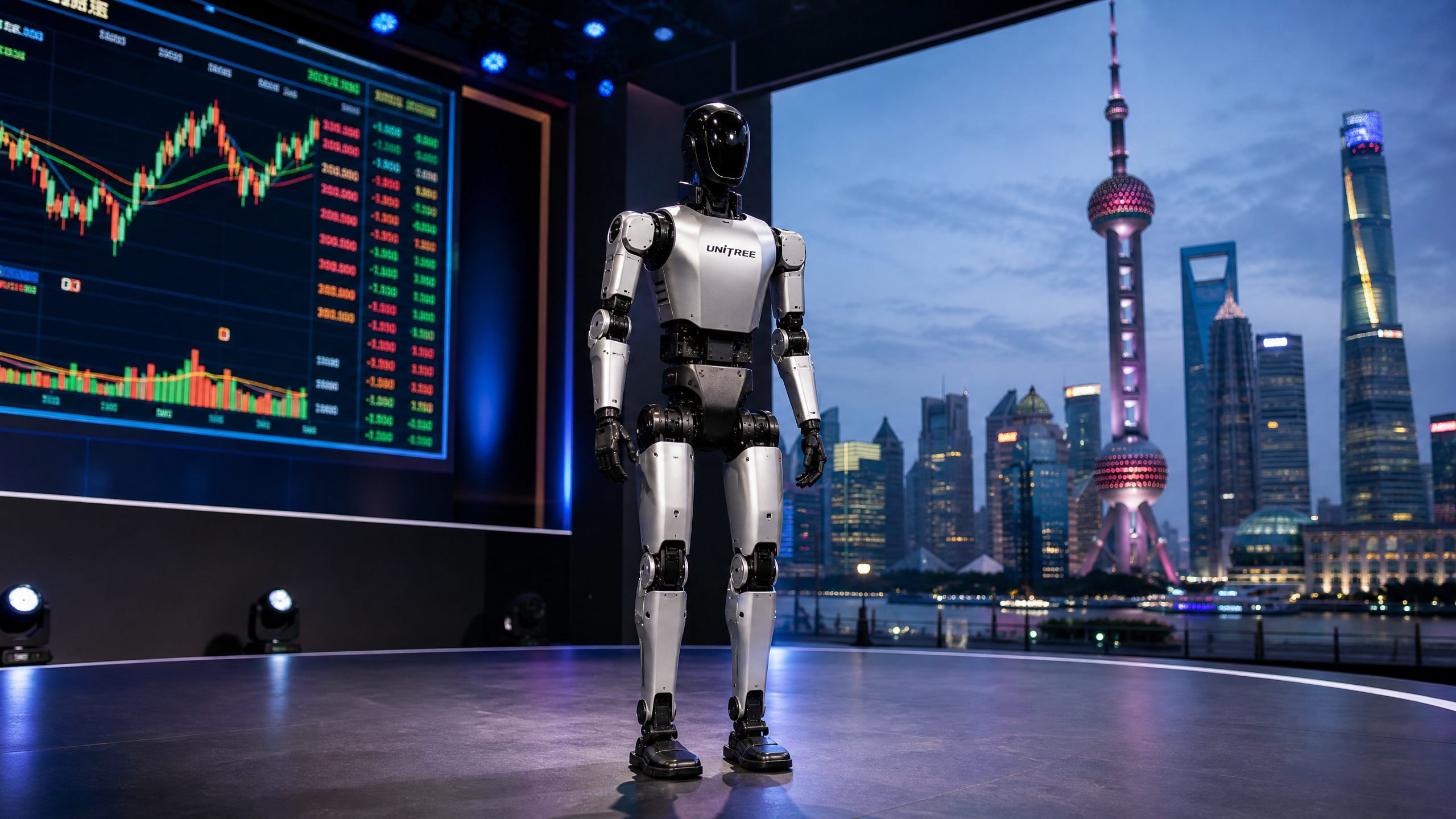
Unitree Robotics, the Hangzhou-based maker of the G1 and H1 humanoid robots and the Go2 quadruped, begins book-building on the Shanghai STAR Market tomorrow, August 5, 2026. The company is seeking to raise RMB 4.202 billion (approximately US$586 million) through the placement of 8,089,286 shares, at a floor valuation of RMB 42 billion (approximately US$5.85 billion). Preliminary price inquiries open August 5, online and offline subscriptions open August 10, and the final listing results are scheduled for August 14. The IPO would make Unitree the first profitable humanoid robotics company to list publicly -- a distinction that sets it apart from most of its peers in a sector where revenue remains elusive.
The listing follows a 104-day review process, described as a record for the STAR Market. Unitree filed its prospectus in April 2026 and received approval in late July, with the accelerated timeline reflecting both the company's financial profile and the STAR Market's stated priority of supporting advanced manufacturing and deep technology companies. The proceeds are earmarked for research and development in next-generation humanoid platforms, manufacturing capacity expansion, and sales and marketing infrastructure.
The Financial Case for Unitree
Unitree's financial profile is unusual in the humanoid robotics sector. The company reported revenue of RMB 1.2 billion (approximately US$167 million) in 2025 and has achieved profitability, making it one of the very few robotics companies globally that can point to a positive bottom line. Most of its humanoid robotics peers -- Figure AI, 1X Technologies, Agility Robotics, and the majority of China's humanoid startups -- are still pre-revenue or operating at significant losses while building toward commercial deployment.
The revenue base is built primarily on the G1 and H1 humanoid robots and the Go2 quadruped, which have found buyers in research institutions, universities, and enterprise customers globally. Unitree's pricing strategy -- the G1 starts at approximately US$16,000, significantly below most humanoid competitors -- has been central to its volume growth. The company has shipped robots to customers in more than 40 countries and has built a developer ecosystem around its hardware that generates recurring software and support revenue.
The RMB 42 billion (approximately US$5.85 billion) floor valuation implies a price-to-sales multiple of approximately 35x on 2025 revenue -- high by conventional standards but consistent with the multiples that technology hardware companies with strong growth trajectories have commanded on the STAR Market. The comparison that investors will draw is with Figure AI's most recent private valuation of approximately US$39 billion, which was achieved without revenue. Unitree's case is that it offers a path to the same market opportunity with actual commercial traction already established.
The G1 and H1 as Commercial Anchors
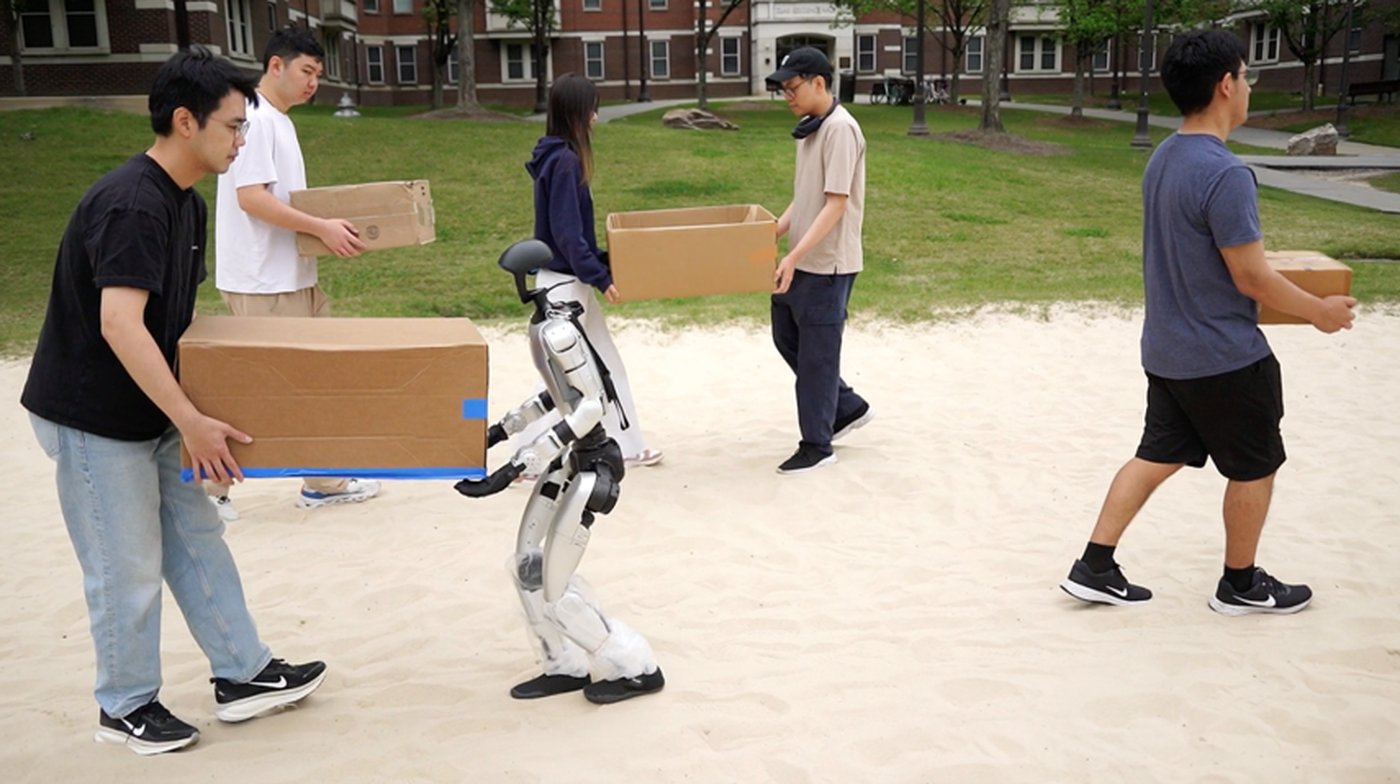
The G1 humanoid robot, launched at US$16,000 in 2024, was designed explicitly for affordability and developer accessibility. It stands 1.27 meters tall, weighs 35 kg, and features 23 degrees of freedom with a battery life of approximately two hours. The design philosophy prioritized getting hardware into the hands of researchers and developers at a price point that would generate volume -- a deliberate contrast to the approach of companies like Boston Dynamics, whose robots have historically been priced for enterprise customers with large capital budgets.
The H1 is the higher-capability platform, standing 1.8 meters tall and weighing 47 kg, with 19 degrees of freedom and a more powerful actuator set designed for industrial applications. The Go2 quadruped, priced at approximately US$1,600 for the base model, has become one of the most widely deployed research quadrupeds globally, generating the developer community and software ecosystem that Unitree is now leveraging for its humanoid platforms.
The IPO prospectus describes plans to use the proceeds to develop next-generation humanoid platforms with improved dexterity, longer battery life, and enhanced AI capabilities. The company has not publicly disclosed specific product roadmap details, but industry observers expect a G2 platform announcement in the second half of 2026 or early 2027.
The US-China Robotics Rivalry as Context
The Unitree IPO is proceeding against a backdrop of escalating US-China competition in robotics. The US Federal Communications Commission's move to add Chinese-made robots to its Covered List -- restricting their use in sensitive environments -- has created uncertainty about Unitree's long-term access to the US market, which has been one of its most important export destinations. The company has not publicly addressed the FCC action in its prospectus, but the risk is material -- a significant portion of Unitree's international revenue comes from US research institutions and technology companies.
China's government has responded to the US restrictions with a combination of domestic market support and retaliatory signals. The Ministry of Industry and Information Technology has accelerated its humanoid robot production targets, with the goal of reaching 100,000 units annually by the end of 2026. State-backed investment funds have increased their commitments to humanoid robotics companies, and local governments in Beijing, Shanghai, and Shenzhen have introduced subsidies for robot procurement. This policy environment provides a floor under domestic demand that partially offsets the US market risk.
The STAR Market listing is itself a strategic signal. By listing in Shanghai rather than pursuing a US or Hong Kong listing, Unitree is aligning itself with China's domestic capital markets and signaling confidence in the domestic investor base's appetite for robotics exposure. The timing -- with book-building opening the day after this article publishes -- means that the pricing process will be one of the most closely watched events in the robotics sector this week.
The Skeptical Case
The floor valuation of RMB 42 billion (approximately US$5.85 billion) implies that investors are pricing in substantial future growth beyond Unitree's current revenue base. The company's profitability is real, but it is built on a product mix that is heavily weighted toward research and developer customers -- a segment that is price-sensitive, volume-constrained, and not representative of the industrial and commercial deployments that would justify a multi-billion-dollar valuation.
The path from research robot supplier to industrial automation platform is not straightforward. It requires solving reliability, safety certification, and integration challenges that are qualitatively different from the challenges of building a robot that researchers can program and experiment with. Unitree has not yet publicly demonstrated commercial deployments at the scale and reliability level that industrial customers require. The IPO proceeds are intended to fund that transition, but the transition itself is unproven.
The comparison to Figure AI's US$39 billion private valuation -- a company with no revenue -- cuts both ways. It suggests that the market is willing to pay for robotics optionality at very high multiples. It also suggests that the sector's valuations are driven more by narrative and strategic positioning than by near-term financial fundamentals. Unitree's profitability is a genuine differentiator, but it does not by itself justify a valuation that prices in a future that has not yet materialized.
What the IPO Means for China's Robotics Capital Markets
The Unitree listing is the first of what is expected to be a wave of humanoid robotics IPOs in China over the next 12 to 18 months. Agibot has announced a Hong Kong listing process targeting a valuation of US$200 billion (approximately RMB 1.35 trillion). UBTech is already listed on the Hong Kong Stock Exchange, with a current market cap of approximately RMB 51 billion. Approximately 50 companies are in active listing processes on either the Hong Kong or A-share markets. The Unitree IPO will set a pricing benchmark that will influence how subsequent listings are valued.
The 104-day review process -- described as a record for the STAR Market -- is itself a signal. The STAR Market, launched in 2019 as China's answer to the Nasdaq, was designed to support technology companies that might not meet the profitability requirements of the main A-share boards. Unitree is profitable, which means it would qualify for a main board listing, but the STAR Market offers a faster review process and a more receptive investor base for high-growth technology companies. The accelerated timeline reflects both Unitree's financial profile and the STAR Market's competitive positioning as the preferred listing venue for China's deep technology sector.
For the broader robotics investment ecosystem, the Unitree IPO represents a maturation event. Private market valuations for humanoid robotics companies have been set by venture capital rounds with limited price discovery. A public listing forces financial transparency, subjects the company's claims to secondary market scrutiny, and creates a reference price that anchors subsequent private and public valuations. Wang Guangxi of Lenovo Capital has predicted that the wave of robotics IPOs will trigger a "brutal interrogation" by secondary market investors, separating companies with real revenue and deployment traction from those with only demonstration capabilities. The Unitree book-building that opens August 5 is the first test of that prediction.
Disclaimer: This analysis is provided for informational purposes only and does not constitute investment, legal, or procurement advice. RobotAIGeek does not endorse specific vendors or guarantee the performance of early-stage technologies.