Songyan Dynamics sells out 500 N2 humanoids at RMB 9,998 (approximately US$1,380) in two days
Songyan Dynamics launched the N2 humanoid at RMB 9,998 and sold 500 units in two days on JD.com. Backed by RMB 1 billion in new funding and fresh retail partnerships, the company is pushing a price war that targets broad consumer and store adoption.
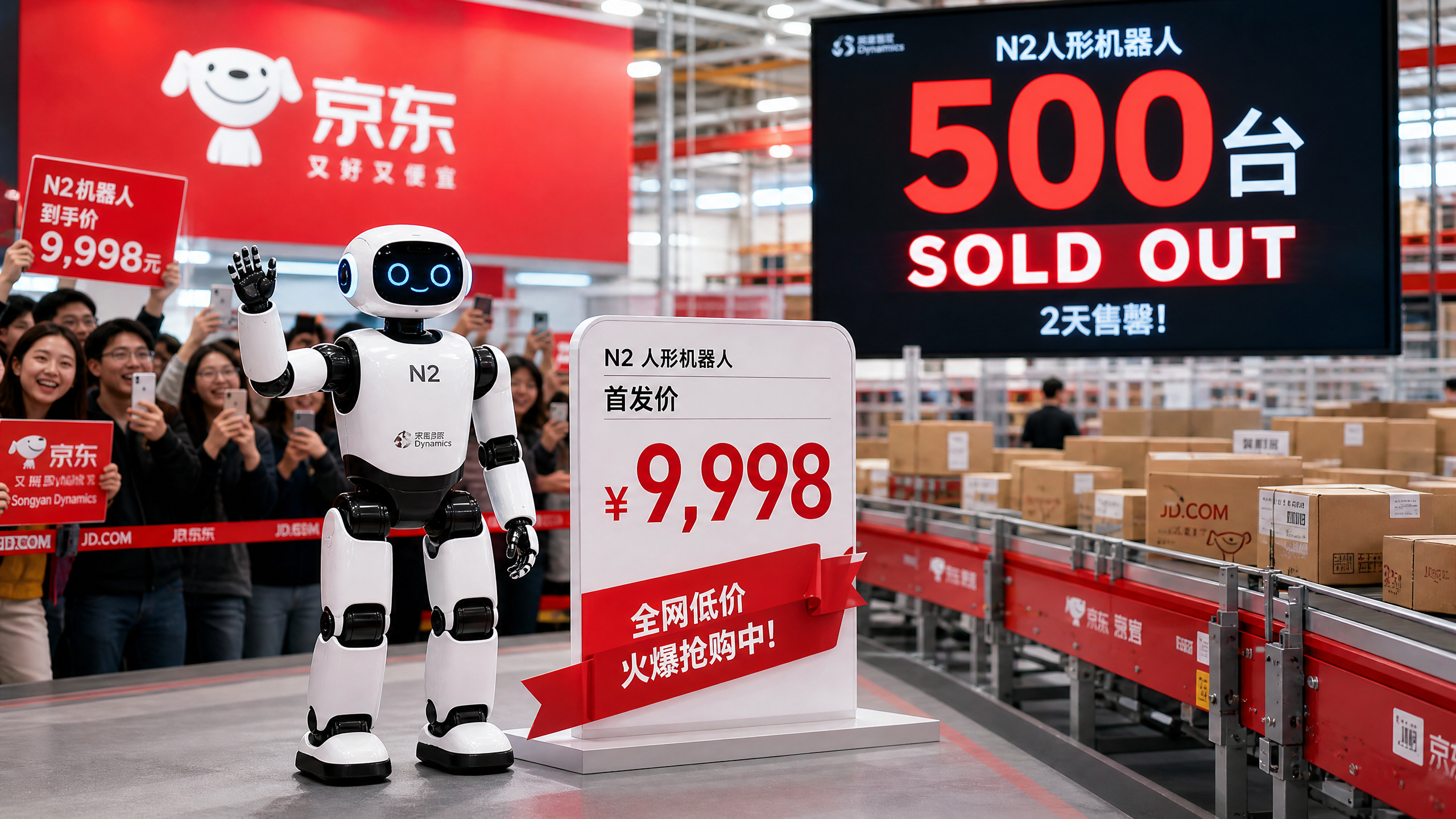
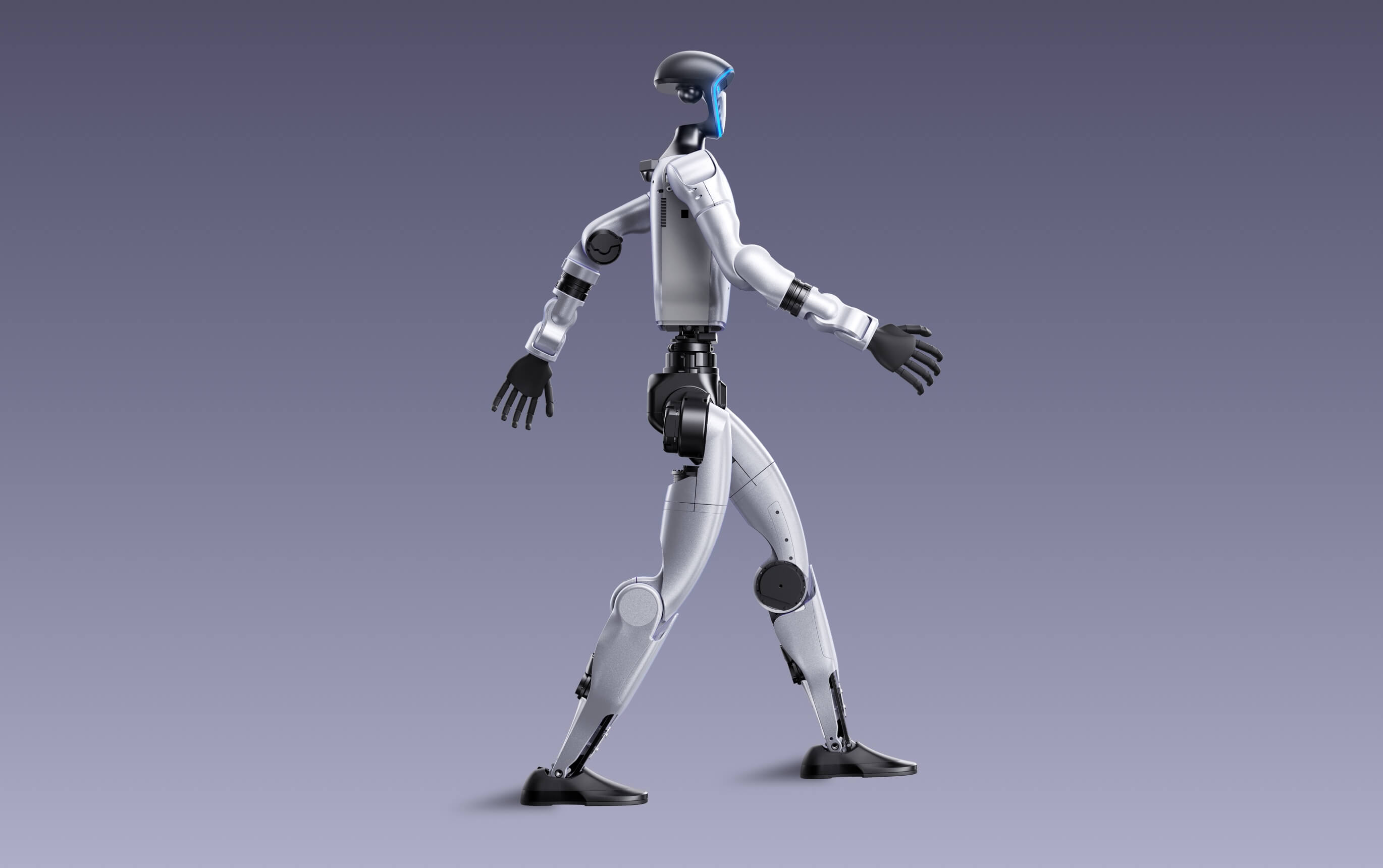
Songyan Dynamics has launched the N2 humanoid robot priced at RMB 9,998 (approximately US$1,380) or about US$1,380. The first batch of 500 units sold out in two days on JD.com. The company recently closed a RMB 1 billion (approximately US$138 million) Series B and secured distribution with JD.com and retail exposure with Kids King.
CEO Jiang Zeyuan said 10,000 units is the threshold for preliminary commercialization. The JD.com partnership targets one million users over three years. Aggressive pricing below the RMB 10,000 (approximately US$1,380) mark signals a new phase in China where consumer and retail buyers are pushed to experiment with humanoid assistants.
Songyan Dynamics is a China based robotics maker focused on affordable humanoid platforms intended for consumer and retail scenarios. The company is positioning N2 as a general purpose assistant that can move through home and store environments while running basic perception and control software on comparatively low cost hardware. By using dominant e commerce channels and a large scale retail partner, the firm is attempting to leapfrog the slow lab to pilot cycle that has defined humanoid robotics for years.
A sub RMB10,000 sticker is a strategic line in the sand
Breaking under RMB 10,000 (approximately US$1,380) changes the psychology of both buyers and competitors. For consumers, this price sits closer to a premium smartphone and a mid range e bike than to a luxury appliance. For retailers, it falls into a gadget pilot budget that store managers can justify without a corporate capex committee. For rivals, it is a shot at the upper limit of bill of materials plus logistics plus warranty support that they will be forced to confront sooner than planned.
Think of it like the first time budget Android phones dropped beneath the price of a game console. Once the comparison shifted from lab demo to purchase decision, volumes grew and software ecosystems followed. Humanoid robots still face higher functional hurdles, but the same price psychology now applies in China.
The funding and partnerships mix sets up a volume push
RMB 1 billion (approximately US$138 million) in fresh Series B funding gives Songyan Dynamics room to absorb losses as it scales production, subsidizes early adopters, and builds a service network. The three year JD.com agreement that targets one million users is structured to provide traffic, marketing placement, and logistics muscle. A contract with Kids King adds a visible retail stage where shoppers can see robots in action and impulse decisions become possible.
The company is weaving together three engines that matter in China. First is manufacturing readiness with enough capital to place large component orders and to invest in custom tooling. Second is front end demand through JD.com, whose user base and payment system simplify nationwide rollouts. Third is a physical showcase where parents and children interact with devices and generate word of mouth that online videos alone cannot deliver.
The 10,000 unit target frames the commercialization path
Jiang Zeyuan set 10,000 units as the takeoff point for preliminary commercialization. That figure matters because it supports several breakpoints. At 10,000 units, actuator and gearbox suppliers can justify dedicated lines with improved yields. Plastic and metal housings can shift from small batch CNC to optimized molds. Battery pack vendors negotiate better cell pricing and testing throughput improves. Most importantly, the field base becomes large enough to surface real world failure modes quickly, then feed those learnings back into design and software updates.
At that scale, an after sales framework becomes viable. You can justify regional depots for spare parts, deploy faster swap programs, and standardize repair times. A 500 unit drop proves there is heat around the product. Ten thousand units turns the product into a managed operation with measurable cost curves.
A probable bill of materials signals ruthless design tradeoffs
A humanoid at RMB 9,998 (approximately US$1,380) implies strict limits on parts. While the company has not disclosed specifications, the price suggests a compact frame with reduced degrees of freedom, cost sensitive servo motors rather than high torque custom actuators, and commodity depth cameras instead of multi sensor fusion arrays. Compute likely sits on an embedded system that balances low power draw with enough onboard inference to handle navigation and gestures. Networking probably relies on Wi Fi for home use and standard 4G or store Wi Fi for retail routines.
The result is a platform that can handle guided tasks and remote updates but will not stage backflips or warehouse heaving. The engineering choice is sound. Mass buyers do not need Hollywood moves. They need reliable movement in narrow spaces, clear feedback through voice and screen, safe force limits, and predictable battery life that survives a work shift or a family evening.
China supply chain depth supports the cost floor
China offers a dense network of suppliers for servos, reducers, injection molded parts, and lithium battery packs. That network enables rapid quoting and component swaps when suppliers slip on quality or delivery. If the first wave of N2 relies on off the shelf actuators from multiple vendors, Songyan Dynamics can dual source and maintain margins while keeping unit costs close to target. Over time, as volumes approach the 10,000 unit line, the company can in source critical components such as harmonic drives or partner with domestic specialists for semi custom units that reduce failure rates and noise.
Domestic compute options also help avoid the most restrictive export controls. Consumer robots at this price likely run on mid tier system on modules that are widely available. If constraints tighten on cutting edge AI chips, these devices can continue to ship with domestic or previously cleared silicon. The strategic risk then shifts from chip embargoes to commodity price swings, especially for rare earth magnets and battery grade lithium, which can be cushioned through forward contracts once purchase volumes are locked.
Chinese price war is taking shape and incumbents must reset plans
Songyan Dynamics did not create the humanoid hype cycle in China, but it has set a practical marker on price. Enterprise focused makers have been quoting far higher figures for pilots and research platforms. A consumer ready price beneath RMB 10,000 (approximately US$1,380) shifts comparative value. Enterprise teams will now question whether a heavily ruggedized platform justifies a premium that exceeds ten times the N2 price when many pilot tasks involve greeting, guided tours, or shelf scanning where shock resistance is secondary.
Competitors like Unitree, Fourier Intelligence, and other domestic players have emphasized performance metrics and lab demos. That remains important for industrial work. Yet volume in China will be driven by buyers who want an appliance with personality that can move, sense, and update itself overnight. If enough players follow Songyan Dynamics into this band, the market will reward tight integration of hardware and services rather than peak motion speeds. International brands with higher cost bases will struggle to match a sub RMB 10,000 (approximately US$1,380) bracket without significant localization and supplier partnerships inside China.
Retail pilots create data loops and monetization paths
The Kids King relationship offers more than in store spectacle. Children and parents interact with robots in natural ways that stress test perception and engagement. This yields data that improves wake word accuracy, gesture recognition, and safe distance handling. Retailers gain queue management, inventory prompts, and loyalty program sign ups. If a robot can convert a fraction of foot traffic into registered users and app downloads, the device becomes a marketing funnel as much as a concierge.
Songyan Dynamics can monetize through accessories, extended warranties, and skill packs that add seasonal content or store specific workflows. A JD.com tie means every upsell can flow through a familiar payment rail. That reduces friction and makes it easier to trial monthly services. Even modest service attach rates, multiplied across thousands of devices, can become a material revenue stream that subsidizes hardware losses.
Skeptical view warns that sellout headlines can hide constraints
Selling 500 units at launch is a strong signal, yet it may reflect a capped initial batch with heavy marketing. Early units often carry promotional pricing, bundled perks, or exclusive cachet. Return rates after the novelty fades will matter. If a meaningful share of buyers find the device too limited or too noisy for apartment life, the apparent momentum could soften. Service load is another risk. A wave of support tickets can turn a marketing success into a logistical headache if spare parts and trained technicians lag demand.
There is also the expectation management problem. Shoppers drenched in viral robot videos often assume general intelligence and tool use that current consumer hardware cannot deliver. If the N2 experience centers on greeting, basic navigation, music control, simple fetch tasks with light objects, and store directory functions, that must be communicated upfront. Clear framing will reduce churn and position software updates as real improvements rather than promises deferred.
Disclaimer: This article is for informational purposes only and does not constitute financial or investment advice.