Qiyuan Robot × World of Warcraft at ChinaJoy
Qiyuan Robot unveiled a Murloc-themed consumer robot at ChinaJoy 2026, the first time a major gaming IP has been licensed for an embodied AI product at a mainstream entertainment expo.
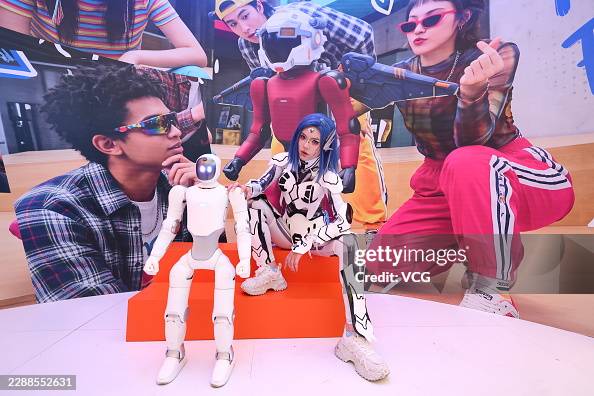
Shangwei Xinma's consumer robotics brand Qiyuan Robot unveiled a limited-edition World of Warcraft Murloc robot at ChinaJoy 2026 in Shanghai on August 2. The product is a themed version of the company's Q1 platform, an open-source modular consumer robot designed for home environments. It is the first time a major Western gaming intellectual property has been licensed for a consumer embodied AI product and displayed at a mainstream entertainment expo rather than a technology trade show. The move borrows directly from the collectibles industry's playbook, where character licensing turns generic products into objects that fans pay premium prices to own.
The Q1 robot is not a toy. It is a programmable embodied AI platform with perception, locomotion, and manipulation capabilities. The Murloc edition wraps that platform in the visual identity of one of World of Warcraft's most recognisable creatures, the small amphibious characters that have been a fan favourite since the game launched in 2004. The combination is deliberate. Qiyuan is betting that the path to consumer robot adoption runs through emotional attachment rather than utility alone.
The Parent Company
Qiyuan Robot is not a startup. It is a brand owned by Shangwei Xinma (上纬新材), a company listed on China's stock exchange. The parent company's original business is advanced composite materials for wind turbine blades and electronic circuit boards. Its pivot into consumer robotics represents a diversification strategy that uses the parent's manufacturing expertise in precision materials and miniaturised components. The listed-company backing gives Qiyuan something that most consumer robot startups lack. It has access to public-market capital, established supplier relationships, and manufacturing infrastructure that can scale production without the fundraising cycles that constrain venture-backed competitors.
The Q1 platform itself is open-source and modular. Users can swap components, write custom behaviours, and share code through a developer community. The open-source approach is strategic. It creates a network effect. Every developer who writes a behaviour for the Q1 makes the platform more valuable for every other owner. The Murloc edition adds a layer on top of that community. It attracts World of Warcraft players who may never have considered buying a robot but who will consider buying a Murloc that happens to be a robot.
The Gaming IP Strategy
Character licensing is a proven monetisation mechanism in physical products. Funko built a US$1.5 billion company by putting licensed characters on vinyl figures. LEGO's most profitable product lines are licensed themes. The sneaker industry generates billions annually from character collaborations. In each case, the underlying product is generic. A vinyl figure is a vinyl figure. A brick is a brick. A shoe is a shoe. The license transforms it into something that fans will queue, pay premiums, and collect.
Qiyuan is applying the same logic to robots. A consumer robot is a consumer robot. Most people do not know why they would want one. But a Murloc robot is a Murloc that lives in your house, responds to voice commands, and can be programmed to perform tasks. The emotional connection to the character lowers the barrier to purchase. The utility of the underlying platform provides the justification to keep it rather than shelving it after the novelty fades.
The choice of ChinaJoy as the launch venue reinforces the strategy. ChinaJoy is China's largest gaming and digital entertainment expo. Its audience is young, digitally native, and accustomed to spending money on virtual and physical collectibles. These are not the industrial buyers who attend robot trade shows. They are consumers who buy products because they want them, not because a procurement spreadsheet justifies them. Qiyuan is meeting that audience where it already gathers rather than trying to drag it to a robotics conference.
The Blizzard Relationship
The collaboration with Blizzard Entertainment is notable because Western gaming companies have been cautious about licensing their IP for Chinese hardware products. The relationship between Blizzard and the Chinese market has been complicated. NetEase lost and then regained the license to operate Blizzard games in China. The regulatory environment for foreign gaming IP remains unpredictable. For Blizzard to license World of Warcraft characters for a Chinese consumer robot suggests that the company sees the product category as distinct from the gaming market's regulatory complications.
The Murloc character specifically is a low-risk choice. It is beloved by fans but not central to any ongoing narrative controversy. It does not carry political associations. It is visually distinctive, immediately recognisable, and translates well to a physical form factor. If the collaboration succeeds, expect more characters to follow. The World of Warcraft universe contains hundreds of licensable creatures, each with its own fan base and visual identity.
The Sceptical View
Consumer robotics has a long history of products that generate excitement at trade shows and then fail in the market. Sony's Aibo, Anki's Vector, and Jibo all attracted attention, sold initial units, and then struggled to sustain demand beyond early adopters. The pattern is consistent. Consumers buy the robot out of curiosity. They use it for a few weeks. They lose interest because the robot cannot do enough useful things to justify its presence in the home. It becomes furniture.
Qiyuan's open-source approach is designed to break that pattern by letting the community continuously add new capabilities. The gaming IP licensing is designed to break it by adding emotional attachment that persists beyond the novelty period. Whether either strategy works at scale remains unproven. The Q1 is still early in its commercial life. The Murloc edition is a limited run, not a mass-market product. The real test comes when Qiyuan attempts to sell hundreds of thousands of units to consumers who are not early adopters, developers, or World of Warcraft fans.
The Platform Economics
Qiyuan's business model does not depend on hardware margins alone. The Q1 is priced at RMB 2,999 (US$415) for the base model, a figure that likely sits near or below manufacturing cost when development expenses are included. The company's revenue thesis relies on the platform layer. Developers who build applications for the Q1 will sell them through Qiyuan's marketplace. The company takes a percentage of each transaction. If the installed base grows large enough, the marketplace revenue exceeds the hardware revenue, and the unit economics flip from loss-making to profitable without raising the retail price.
This is the smartphone playbook applied to robotics. Apple and Google proved that hardware sold near cost can generate enormous profits if the software ecosystem achieves critical mass. Qiyuan is betting that the same dynamic applies to physical robots. The difference is that smartphone apps are digital and can be distributed at zero marginal cost. Robot applications involve physical interactions with the real world, which means they require testing, safety validation, and hardware-specific tuning that digital apps do not. The marketplace friction is higher. The question is whether it is high enough to prevent the ecosystem from reaching critical mass.
The World of Warcraft collaboration addresses this question indirectly. By attracting the gaming community to the platform, Qiyuan gains access to a developer population that is technically sophisticated, creatively motivated, and accustomed to modding physical and digital systems. Game modders are exactly the demographic that builds robot applications for fun. If even a small percentage of the World of Warcraft modding community begins building Q1 applications, the marketplace could reach critical mass faster than organic growth alone would allow.
The Broader Signal
The appearance of a consumer robot at ChinaJoy rather than at the World Robot Conference or CES tells us something about where the industry thinks its next customers will come from. The industrial market for robots is established. Factories buy robots because the ROI calculation works. The consumer market for robots does not yet exist at scale because no one has found the emotional or practical trigger that makes ordinary people want a robot in their home.
Gaming IP might be that trigger for a specific demographic. Young Chinese consumers already spend heavily on digital collectibles, figurines, and themed merchandise. A robot that combines collectibility with programmability and daily utility occupies a space that no existing product category fills. It is not quite a toy, not quite a smart speaker, not quite a pet. It is something new. Whether "something new" translates into a sustainable product category or remains a curiosity depends on whether the Q1 can do enough useful things to survive the transition from novelty to routine. The Murloc gets it through the door. The platform has to keep it off the shelf.
The ChinaJoy timing is deliberate. The event draws 300,000 visitors over four days, almost all of them in the 18-to-35 demographic that consumer robot companies struggle to reach through traditional channels. A single viral moment on Bilibili or Douyin from the show floor can generate more awareness than months of conventional marketing. Qiyuan is betting that a Murloc robot walking through a crowd of gamers creates exactly that moment. The bet costs one limited-edition production run. The potential return is a brand association that no advertising budget can buy.
Disclaimer: This article is for informational purposes only and does not constitute investment advice, endorsement, or recommendation of any company, product, or technology mentioned.