Real World leads K-Physical AI Alliance and advances DexBench
Korean physical AI startup Real World formed a K-Physical AI Alliance with PhysicsSim Lab, Space AI, and Endright to set global dexterity standards. The group will expand DexBench with NVIDIA and work with Lotte, SK Telecom, CJ Logistics, Hyosung, HL Mando, Fuji, ANA, and Mitsui Chemicals.

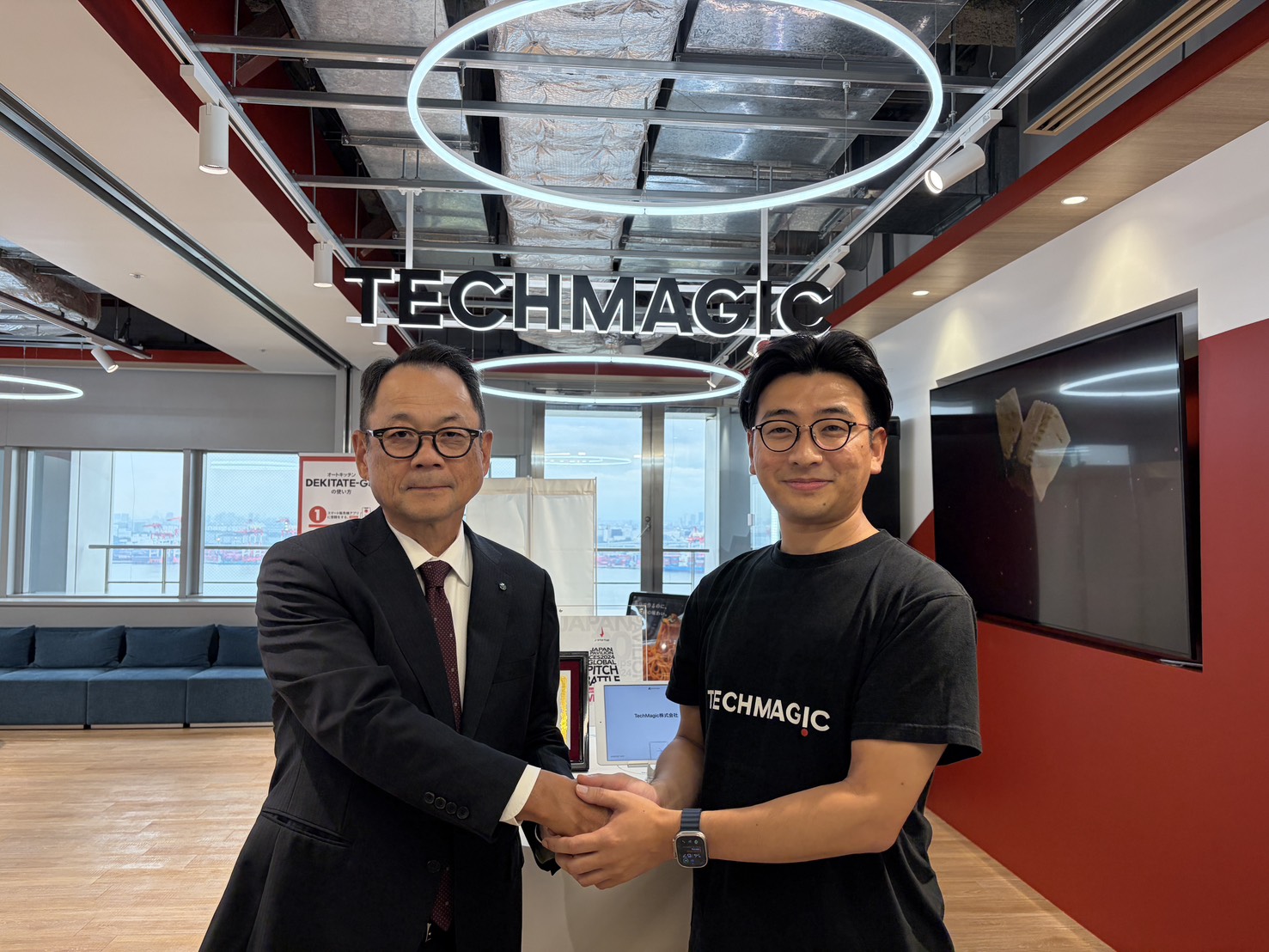
Korean physical AI company Real World said it signed a memorandum of understanding in Seoul with startups PhysicsSim Lab, Space AI, and Endright to form the K-Physical AI Alliance. The group aims to set global industrial standards for robot dexterity and simulation, anchored by the DexBench benchmark developed with NVIDIA.
The alliance will expand DexBench, which uses 18 atomic tasks and 80 cases to measure humanoid hand precision. Corporate partners include Lotte, SK Telecom, CJ Logistics, Hyosung, HL Mando, Fuji, ANA, and Mitsui Chemicals. Real World reported its RLDX-1 model holds state-of-the-art results across eight benchmarks.
Seoul-based Real World focuses on physical AI for humanoids and industrial robots, with core strength in dexterous manipulation and sim-to-real training. Its market niche targets precision handling in retail, logistics, aviation, automotive, and chemicals. By spearheading a standards push that pairs a benchmark with simulation pipelines, the company aims to turn dexterity performance into a shared metric that customers and integrators can trust.
A Korean physical AI alliance seeks to turn dexterity into a standard
The alliance sets out to solve a growing problem in robotics. Companies want humanoids and dexterous arms to handle real work, yet each lab uses different tasks and metrics. DexBench gives a common ruler to measure whether a robot hand can perform fine motor work with repeatability. The benchmark splits complex activities into 18 atomic tasks with 80 cases. That covers everyday industrial actions such as grasping, turning, inserting, threading, peeling, folding, cap twisting, and resealing. The approach echoes a quality control regimen in a factory, where each step is tested against tolerances before the whole line is approved.
Partner roles are explicit. PhysicsSim Lab builds digital twins of warehouses and retail stores so that DexBench tasks can be tested in facilities that match the scale and clutter of commercial environments. Space AI focuses on soft and deformable objects such as fruit or rubber parts, a domain where pure rigid body physics fails. Endright expands the simulation asset library known as TRINIX so that variability in lighting, textures, object geometries, and fixtures can be expressed and randomized at industrial scale. Real World coordinates the benchmark specification and brings the RLDX-1 model, which it says has set the pace across eight external test suites.
The DexBench specification targets reproducible hand work across industries
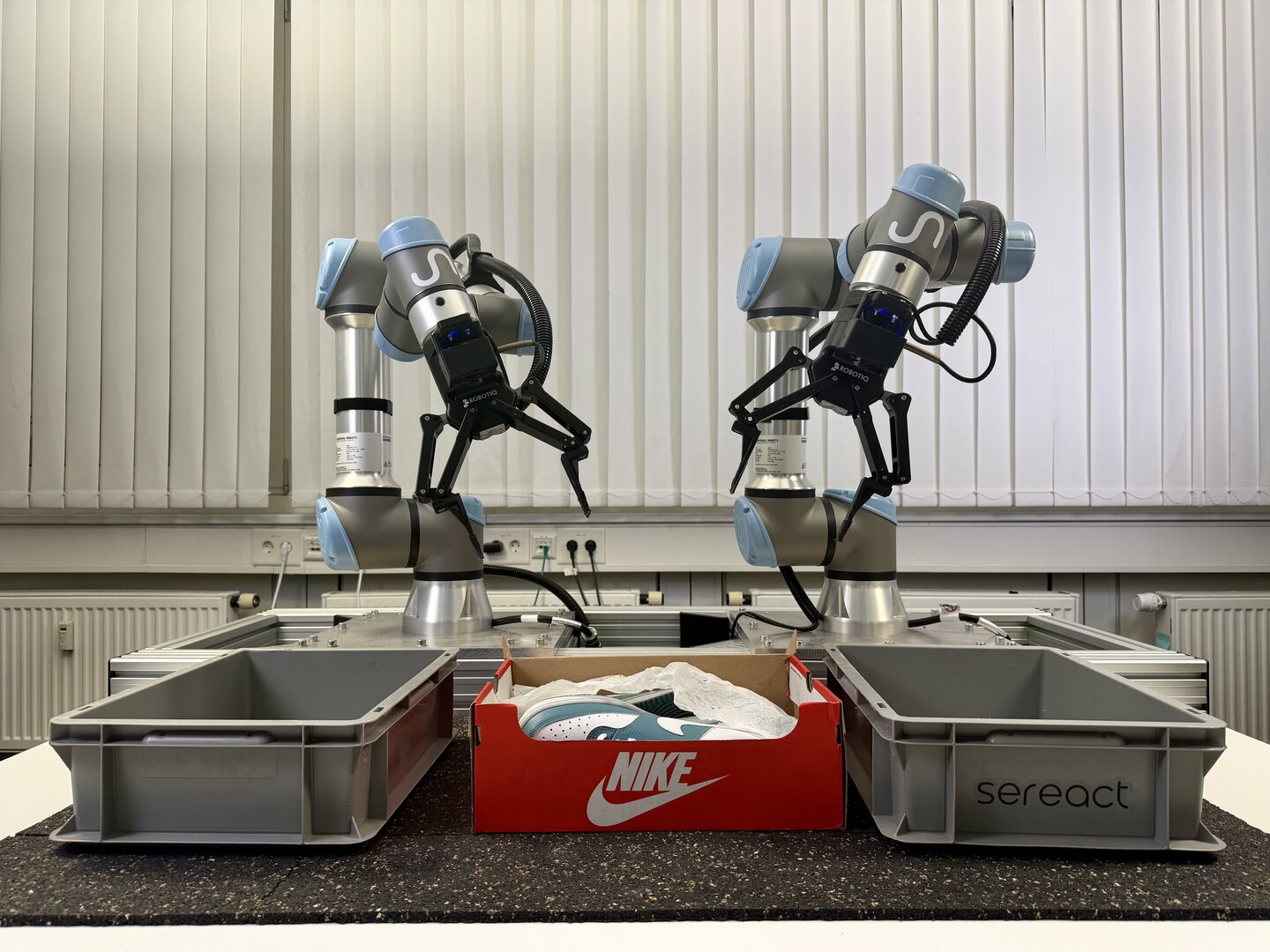
Benchmarks only matter if they match real work. DexBench is designed to reflect the line-of-business tasks that cause most robot projects to stall. In a grocery scenario a robot must pick tomatoes without bruising them, identify a damaged pack, and restock a shelf with mixed packaging. In an aviation ground operation a robot might need to open a panel, inspect a latch, and resecure it without stripping the screws. In an auto-parts plant a robot must thread a wire harness through tight channels and close a clip with correct force. DexBench breaks each of those into atomic motions such as pinch, rotate, slide, align, and force control, then defines pass or fail conditions with time and quality thresholds.
The standard also recognizes that a hand is a system. Sensors, control loops, tactile feedback, and gripper materials all shape performance. The alliance aims for a task suite that can be run with a wide range of end effectors, from soft grippers with gel tips to anthropomorphic hands, and across control stacks that include commercial middleware as well as proprietary controllers. That design choice, if executed well, reduces vendor lock-in and gives buyers the confidence to mix components from different suppliers without losing certification.
A plain comparison helps. Think of DexBench as the driving test for robot hands. You do not just show up with a shiny car. You must parallel park, merge into traffic, and execute a three-point turn under observation. Pass those tasks and you earn a license that signals competence to others. DexBench wants to be that license for industrial dexterity.
Simulation assets and digital twins expand the training pipeline
Dexterity depends on data breadth and practice time. Simulation fills the gap that real facilities cannot cover every day. Endright plans to expand TRINIX with thousands of high-fidelity 3D assets that reflect variants of packaging, containers, fixtures, and store layouts. PhysicsSim Lab will map these assets into dynamic digital twins of warehouses and convenience stores, complete with shifting stock, human traffic, and seasonal displays. Space AI will bring physics models and datasets for deformable materials, which are notoriously hard to simulate due to non-linear behavior and contact uncertainty.
The bet is that synthetic variety trains policies that generalize better. NVIDIA is a central partner here, linking DexBench procedures to Isaac Sim, RTX accelerated rendering, and reinforcement learning toolchains that can generate and validate control strategies at scale. If the alliance wires DexBench tasks into a reproducible sim stack, then labs across Asia, Europe, and North America could train against a common target and publish results that are directly comparable.
There is a skeptical view worth noting. Simulated mastery can mislead if the synthetic world is too clean. Humidity, dust, wear on gripper pads, and slightly warped parts can derail a task that looks solved in a lab video. The alliance will need to prove that DexBench scores in sim translate into uptime and throughput in the field. A benchmark that encourages overfitting to a virtual setup would harm credibility. That is why the involvement of operators such as CJ Logistics and ANA matters. Their facilities can supply messy data, edge cases, and human-in-the-loop constraints that sharpen the standard.
Corporate partners bring real operations and scale to the effort
Large companies in the alliance are not window dressing. Lotte spans retail and e-commerce where restocking, returns processing, and backroom handling dominate labor hours. SK Telecom brings edge connectivity and 5G services that could handle low latency control and fleet monitoring. CJ Logistics owns distribution centers and last mile hubs that host endless pick-pack tasks. Hyosung and Mitsui Chemicals connect the alliance to materials science, from gripper polymers to packaging films that affect friction and detectability. HL Mando is a tier one auto parts supplier that can validate precision assembly in plants. Fuji has production expertise and machine tools. ANA can test ground handling and maintenance workflows under strict safety regimes.
If DexBench becomes embedded in pilot projects with these partners, the standard gains teeth. Suppliers will need to demonstrate passing scores to bid for work. Integrators can align their stacks to a known bar. Insurers and regulators can reference an independent metric when assessing safety and reliability. That is how a benchmark turns into a market ticket.
NVIDIA alignment signals a push for global relevance
Physical AI is a GPU business as much as it is a mechatronics business. By linking DexBench development with NVIDIA, the alliance signals an ambition beyond regional adoption. Isaac tools already drive training and validation for many labs. If DexBench becomes a first class citizen in those tools, then the benchmark can propagate through simulation scenes, reinforcement learning curricula, and dataset generators used globally.
That alignment also matters for hardware. Many humanoid and mobile manipulator projects run NVIDIA Jetson at the edge. A benchmark that integrates profiling and hardware in the loop testing could tell customers how a given stack performs under different compute budgets. That would sharpen procurement choices and accelerate porting from the lab to factory floors.
A cautious view on benchmark inflation and real world gaps
Robotics has a history of benchmark inflation. New test suites sprout with each lab and the field splinters into incompatible scoreboards. Without governance, a standard can turn into a marketing tool. DexBench will face two immediate tests. The first is transparency of task definitions and result audits. The second is resistance to cherry picked demos that pass only a narrow slice of cases.
The alliance composition helps. Operators will push for tasks that map to service level agreements and downtime penalties. Japanese partners such as ANA and Fuji bring a culture of continuous improvement and statistical process control. Korean partners such as HL Mando and CJ Logistics live by parts per million defect rates and throughput guarantees. That pressure should keep DexBench focused on production relevance. Even with that push, the group will need third party reviewers and open leaderboards to tame hype.
Supply chains for humanoids could shift with standardization
If dexterity becomes measurable and comparable, supply chains will adjust. End effector makers will design fingertips, skins, and tactile sensors tuned to DexBench tasks. Materials suppliers could offer gripper pads with defined friction coefficients and wear rates that match benchmark tolerances. Motion component vendors from harmonic drives to belt actuators may publish performance under DexBench scenarios to validate backdrivability, stiffness, and control bandwidth.
Korea and Japan have a strong base in these components. HL Mando’s actuation systems and servo control know-how are already in automotive domains. Japanese groups such as Harmonic Drive Systems and Nabtesco dominate precision reducers. Mitsui Chemicals and Hyosung can provide elastomers and engineering plastics for grippers and compliant joints. With a benchmark in hand, these suppliers can co-design with integrators to hit target scores. That coordination cuts iteration cycles and improves first pass yield for pilots.
There is another supply chain effect. Standardized dexterity lets customers buy capability rather than brand. A system integrator could spec a hand from one vendor, tactile arrays from another, and a controller from a third, so long as the assembled stack meets DexBench pass rates and cycle times. That modularity lowers risk for buyers and squeezes vendors that relied on closed ecosystems. Companies with the best unit economics and reliability win rather than those with the flashiest videos.
Disclaimer: This analysis is provided for informational purposes only and does not constitute investment, legal, or procurement advice. RobotAIGeek does not endorse specific vendors or guarantee the performance of early-stage technologies.