WRC 2026 opens in Beijing with 300 exhibitors and 150 product debuts
The 2026 World Robot Conference will run August 19 to 23 in Beijing with more than 300 exhibitors, over 2,000 exhibits, and at least 150 product debuts. A new application program will place mass produced humanoids and dexterous hands with external teams for real world trials.
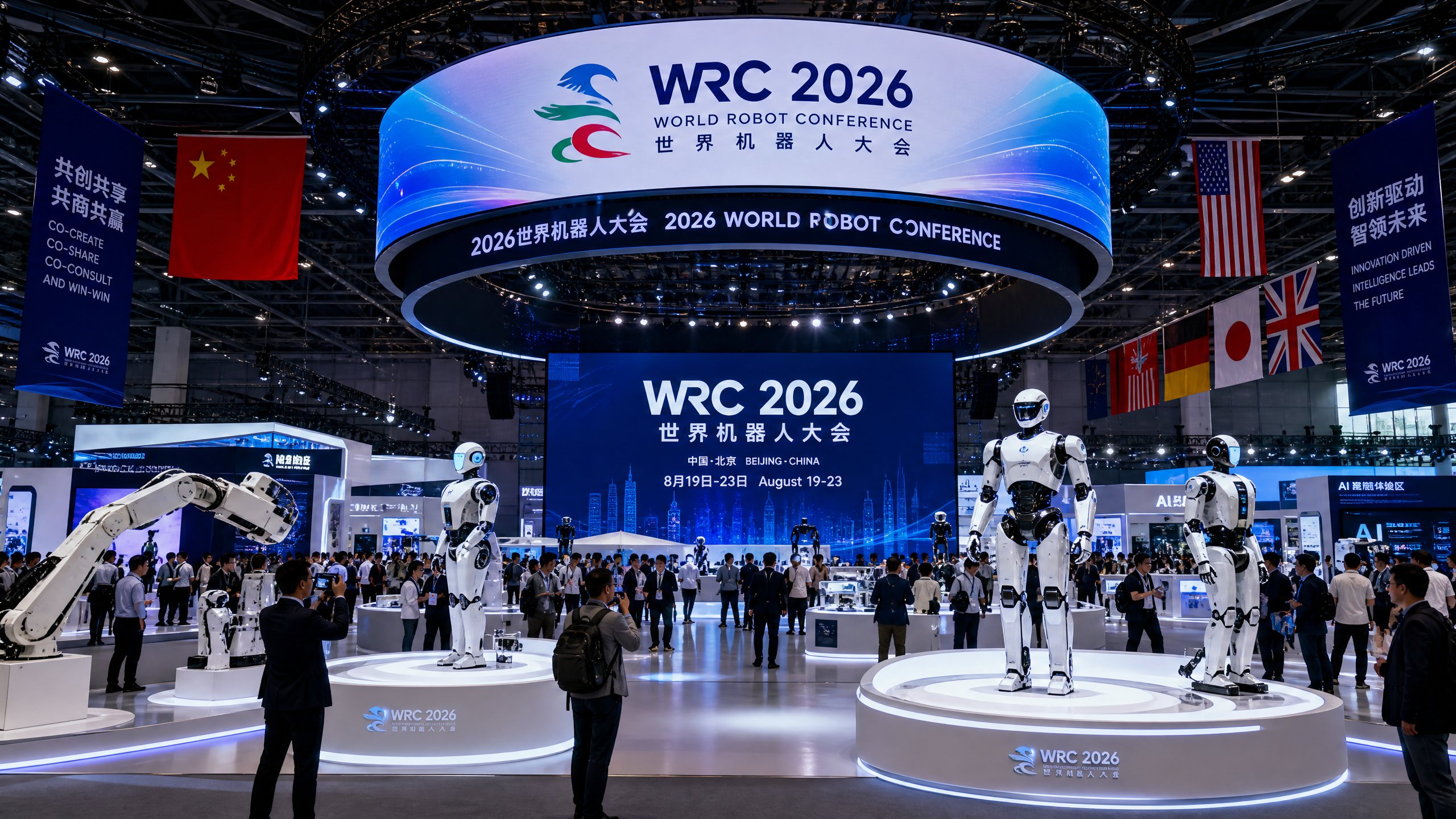
The 2026 World Robot Conference will run August 19 to 23 at the Beiren Yichuang International Convention Center in Beijing, featuring more than 300 exhibitors and 2,000 exhibits. Organizers set the theme as Human Robot Symbiosis, Industry Demand Integration, with over 150 product debuts and a 4-day program flow.
Exhibitor numbers are up 36% and total exhibits are up 27 percent from last year, according to organizers. The event adopts a daily focus with Product Launch Day on August 19, Procurement Day on August 20, Developer Day on August 21 and Public Days from August 22 to 23, alongside a new application exploration program.
The World Robot Conference has grown into a defining checkpoint for global robotics, with Beijing positioned as the operational hub. The venue in the capital attracts component makers, full stack robot companies, integrators, software platforms, and buyers from logistics, manufacturing, healthcare, and municipal services. The event’s message is unambiguous. Hardware is center stage, and Beijing is where the hardware chain convenes to turn prototypes into production and production into scaled deployment.
Beijing positions WRC as a commercial engine for hardware driven robotics
This year’s theme signals a blunt pivot from spectacle to utility. Robots that work alongside humans, guided by clear industry needs, will dominate the agenda. Companies that ship actuators, reducers, vision systems, end effectors, and safety modules are leaning into a buyer heavy program where procurement and developer engagement are not afterthoughts but primary hooks. For vendors, the calendar creates a funnel that starts with attention on launch day, moves into deal making on procurement day and then into engineering depth on developer day.
Beijing’s promise is simple. The city becomes a one week control room for the robotics supply chain. Executives can meet three dozen potential motor suppliers before lunch, then walk ten meters to evaluate competing force torque sensors, and finish the day in a test cell running a collaborative arm with two rival grippers. This concentration matters because the sector is in a scale or stall moment. Companies shipping hundreds of units must prove pathways to thousands, and that requires predictable sourcing of core parts, stable firmware and software stacks, and a steady pipeline of integrators who can handle last mile deployment.
The daily format aligns with buying cycles and engineering milestones
A 4-day arc gives a rhythm that serves different stakeholders across the week. Product Launch Day concentrates media and analyst attention on new entries. These range from humanoid platforms and warehouse mobile robots to high torque actuators and low latency depth cameras. Launches that might be lost in a crowded expo schedule get a focused twelve hour window where buyers and developers can absorb specifications and roadmaps.
Procurement Day is built for decisions. Purchasing managers and operations leaders can schedule block sessions with shortlists, compare lead times and warranties, and align on integration services. The structure mirrors enterprise buying behavior. Companies often do two passes on the floor, gather materials, then retreat to a private room to reconcile technical claims with commercial terms. A planned procurement track normalizes that cadence and signals that the show is as much a marketplace as it is a showcase.
Developer Day pulls the conversation closer to code and integration. Expect workshops on robot operating systems, motion planning, force control, and simulation testbeds. For many hardware companies, the most durable commercial advantage rests not in the spec sheet but in the quality of software development kits, driver stability, and reference applications. Providing hands on labs and publishing reproducible benchmarks form the connective tissue that helps pilots advance to production.
Public Days round out the week with demonstrations and outreach. While the general audience focus often feels secondary, contact with students, teachers, and the broader community feeds a workforce pipeline that the industry will need if humanoids and service robots are to move beyond headline grabbing demonstrations to everyday tools.
The humanoid and dexterous hand program targets proof of utility
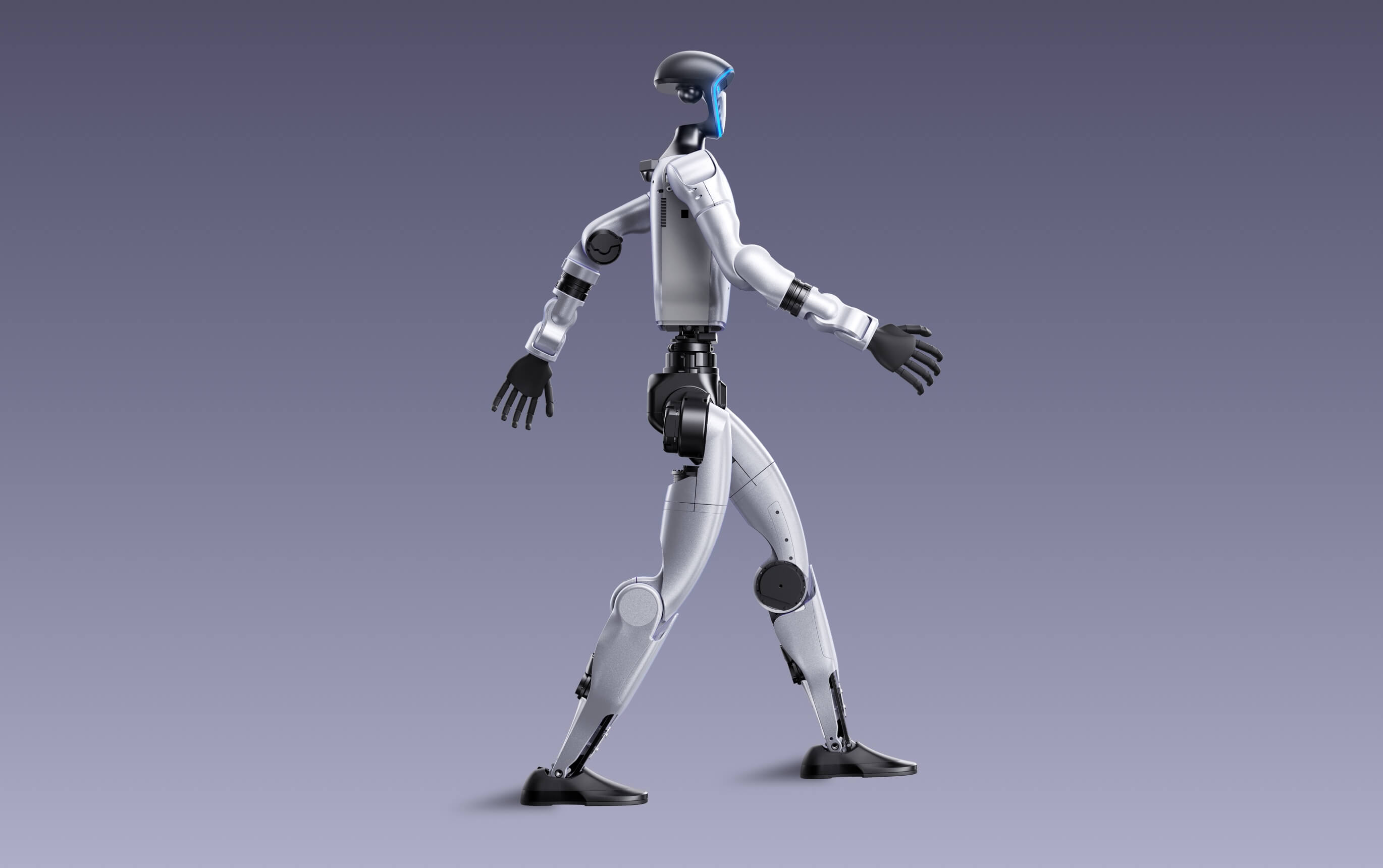
A highlight of this year’s conference is the Global Robotics Application Exploration Program. The initiative will place mass produced humanoids and dexterous hands with outside teams for real world testing. That includes logistics, manufacturing sub tasks, retail backrooms, and municipal field work where manipulation is non trivial and environments are not sanitized for cameras.
The program looks designed to answer a hard question. Can general purpose form factors find repeatable high margin jobs in the near term. Many humanoids can walk and wave. Far fewer can lift, sort, and manipulate across shifts without babysitting. The promise of humanoids is compelling. A bipedal platform can traverse stairs, reach existing machinery, and use tools made for people. Yet adaptation to the noise of actual workplaces remains a work in progress.
Think of the initiative as a months long test drive rather than a showroom spin. A robot that looks steady on a polished stage can stumble on a warehouse ramp or struggle with plastic wrap glare confusing a vision system. Real users will stress edge cases that cannot be anticipated in a lab. The dexterous hand placements are just as important. Hands that grasp foam cubes are easy to build. Hands that unbox, bag, wire, or latch with human like reliability at industrial cycle times are rare. The program could surface the designs and control policies that close that gap.
Supplier dynamics concentrate around motion, sensing, and safety
Behind the humanoids, exoskeletons, and mobile platforms is a parts market that decides who can scale. The core components include harmonic or cycloidal reducers, frameless motors, high power density drives, compliant actuators, and series elastic modules. Add to that the nerve system of cameras, lidar, depth sensors, tactile pads, micro force sensors, and torque sensors embedded in joints. Safety certified controllers and emergency stop systems complete the foundation.
Many buyers evaluate suppliers using a plane truth matrix. Cost, performance, reliability, and delivery. The weightings vary by application. A packaging robot might accept a lower torque density drive if cost and lead times are attractive. A surgical robotics team will not trade reliability for savings. The show floor compresses that deliberation into a practical sprint. Vendors who can put a part into the hands of an engineer and also produce test data, supply availability, and a clear support path will win share.
Beijing’s prominence gives an additional advantage. The show draws upstream materials experts in alloys, magnets, and silicon, plus contract manufacturers that can move from five units to fifty to five hundred without a total process rewrite. That linkage shortens the distance between a promising demo and a shippable bill of materials. It also reinforces a center of gravity effect. If the highest density of competent suppliers and integrators meets in Beijing, then high intent buyers will do the same.
Software ecosystems and interfaces emerge as decisive
Hardware maturity is necessary, but software and interfaces decide usability. Two areas stand out. First is the quality of motion planning and force control that allows arms and hands to handle variation. Second is the bridge layer of tooling and interfaces that integrators and end users touch each day. This includes graphical programming, flow logic, error recovery, and data capture for continuous improvement.
Developer Day tackles the friction that prevents buyers from expanding fleets. Integrators complain about driver mismatches, fragile API changes, and limited examples for real work. Vendors that embrace open source where it helps, document dependencies, and provide cradle to handoff examples will shorten commissioning timelines. Even small wins such as a better teach pendant layout or a clearer alert hierarchy can have outsize effects. A straightforward analogy fits. If hardware is the body, then developer tools are the muscle memory that decides whether the body can learn a job quickly and repeat it without thinking.
Competitive stakes rise for the United States, Europe, Japan, and Korea
The conference puts competitive pressure on peers in Chicago, Tokyo, Munich, and Seoul. Major shows in those cities excel in industry depth and standards work. Beijing now adds outright scale in exhibitor count and a sharpened focus on procurement and developer engagement. Companies that skip Beijing risk ceding narrative and deal flow in a cycle where hardware choices lock in for several years.
There is also a psychological effect. When buyers see hundreds of component makers and dozens of system vendors under one roof, it signals abundance of choice and lowers perceived risk. Competing regions must respond with equally concrete evidence that buyers can source a full stack at home. For governments seeking to nurture domestic robotics, this dynamic reinforces the need for cross regional supplier databases, shared testing labs, and export friendly certification paths that can match the convenience of a Beijing week.
Disclaimer: This article is for informational purposes only and does not constitute financial or investment advice.