Korean Auto Parts Makers Are Doubling Production Lines and Signing Robot Contracts as the FCC Ban Opens a US$10 Billion Gap
Halla Cast, SL, and Samhyun are pivoting from automotive to robot component manufacturing as the US FCC ban on Chinese humanoid and quadruped robots creates a supply gap in the North American market. Goldman Sachs projects Korea will produce 74,000 humanoid robots by 2030, representing 30 percent of global output.
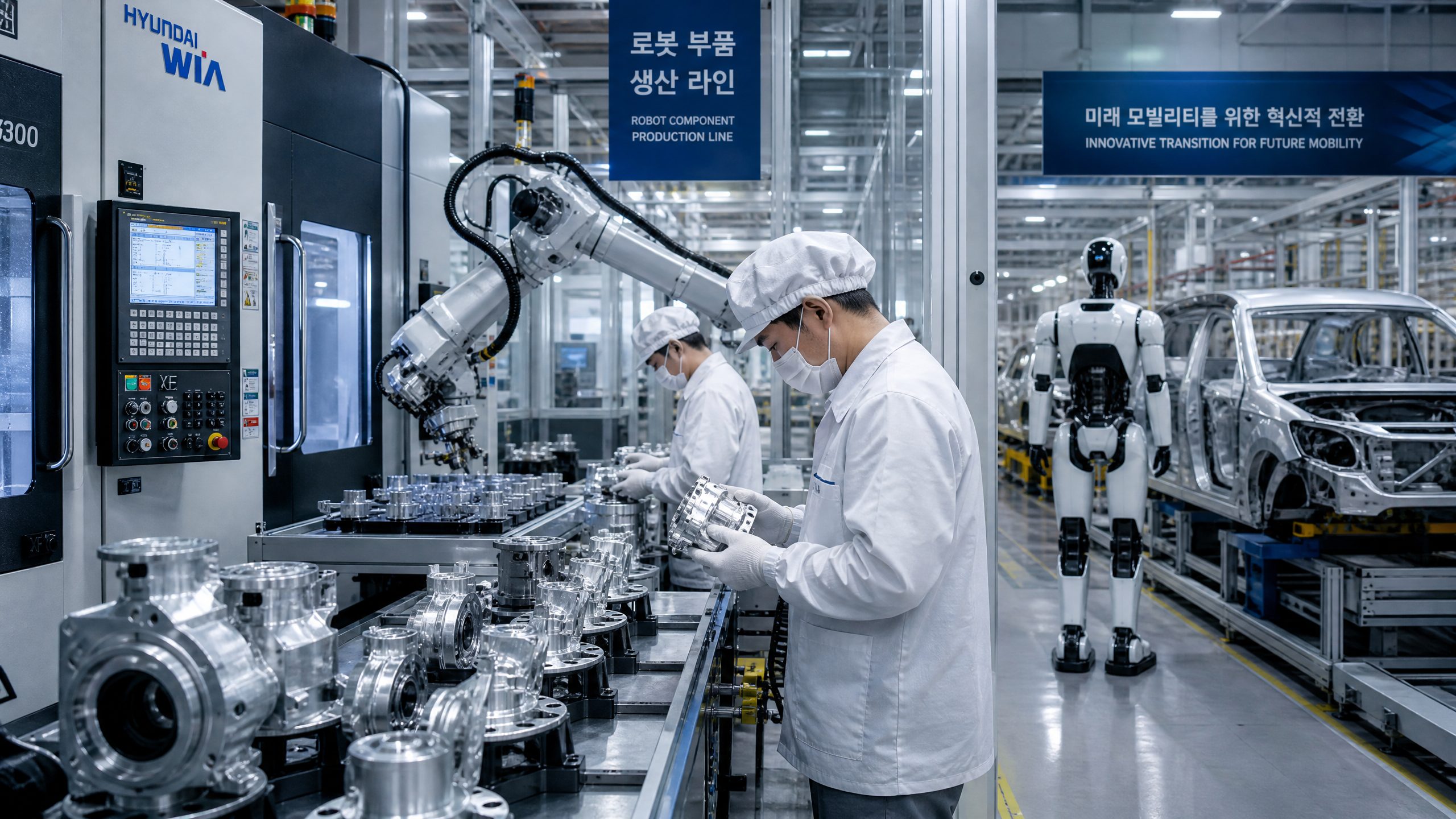
Three Korean auto parts manufacturers are moving simultaneously to capture a supply gap that opened when the United States Federal Communications Commission banned imports of new Chinese humanoid and quadruped robot models on July 28. Halla Cast, SL, and Samhyun -- each with decades of experience supplying Korean automakers -- are redirecting production capacity, signing new contracts, and seeking US partnerships in a window that analysts say may be narrow but is currently wide open.
The FCC ban, which applies to all imported robot models regardless of country of origin but is widely understood to target Chinese-made machines, has created immediate demand for non-Chinese suppliers of robot components in the North American market. Korean parts makers, who have operated local factories in the United States as suppliers to Hyundai and Kia for years, are positioned to respond faster than most alternatives. The question is whether the pivot can be executed at sufficient scale and speed to establish durable market positions before the window closes.
Halla Cast Doubles Its Incheon Line
Halla Cast, listed on the Korea Stock Exchange under ticker 125490, will double the production capacity of its parts processing line at its Incheon plant to meet demand from a global North American-based robotics company. The company will supply heat-dissipation cases that surround the semiconductors built into robots -- a component that draws directly on its advanced lightweighting technology developed for the automotive market.
The thermal management challenge in humanoid robots is structurally similar to the challenge in electric vehicles. Both require precise heat dissipation from high-density electronics in a constrained physical space, and both demand materials that are light, durable, and thermally efficient. Halla Cast's track record in automotive thermal management translates directly to this application, which is why the company was able to secure a North American contract and begin doubling capacity rather than starting from a greenfield position.
The company expects to begin supplying the North American client in the second half of 2026. The timeline is aggressive -- doubling a production line in months rather than years -- but it reflects the urgency of the opportunity and the fact that the company is adapting existing equipment rather than installing new manufacturing processes from scratch.
SL Begins Spot Leg Module Production
SL Corporation, listed under ticker 005850, is launching full-scale mass production of the leg module for Boston Dynamics' quadruped robot Spot during the third quarter of 2026. The company also handles some contract manufacturing of MobED, Hyundai Motor Group's mobile robot platform. SL's automotive technology -- specifically its expertise in robot joints and drive systems -- maps directly onto the mechanical requirements of quadruped locomotion.
The Spot leg module contract is significant for several reasons. Boston Dynamics is the most recognized brand in professional robotics globally, and a production contract with the company provides SL with a reference customer that validates its capabilities to other potential clients. The contract also positions SL in the supply chain for Hyundai's broader robotics ambitions, given that Hyundai completed its full acquisition of Boston Dynamics in August 2026 and has set a target of 30,000 robots per year by 2028.
The skeptical read is that leg module manufacturing for a single robot model is a narrow position. If Boston Dynamics redesigns the Spot platform or shifts to a different supplier, SL's exposure is concentrated. The company will need to diversify its robot customer base to build a defensible component business rather than a single-customer dependency.
Samhyun Courts Silicon Valley
Samhyun, listed under ticker 437730, took a different approach, participating in the Physical AI Super Connect 2026 exhibition in Silicon Valley in June to seek collaboration opportunities with US robotics companies. The company's presence at the event reflects a strategy of building relationships with the next generation of robotics startups before they reach production scale, positioning Samhyun as a preferred supplier before procurement decisions are locked in.
This approach is lower-risk than doubling a production line but also slower to generate revenue. The payoff is a diversified customer base across multiple US robotics companies rather than a concentrated position with a single client. The risk is that Silicon Valley robotics startups have a high failure rate, and supplier relationships with companies that do not reach commercial scale generate no revenue.
The Goldman Sachs Projection
Goldman Sachs, in a recent report cited by the Seoul Economic Daily, assessed that Korea will establish itself as a key country in the global humanoid robot supply chain based on the expertise it has accumulated in the automotive industry. The bank forecast that through the supply of key components and direct manufacturing, Korea will mass-produce 74,000 humanoid robots by 2030, equivalent to 30 percent of global humanoid production.
That projection is ambitious. It implies that Korea will not just be a component supplier but a direct manufacturer of humanoid robots at meaningful scale within four years. The automotive analogy that Goldman Sachs uses is instructive -- Korea's automotive industry took decades to build the manufacturing expertise and supply chain depth that now makes it competitive globally. The question is whether the humanoid robot industry will compress that timeline or whether the Goldman Sachs projection is optimistic about the speed of industrial transformation.
The more conservative reading is that Korea's near-term opportunity is primarily in components -- actuators, sensors, battery management systems, structural parts -- rather than in complete robot manufacturing. The component opportunity is real and immediate, while the complete robot manufacturing opportunity requires additional investment in AI software, systems integration, and brand development that Korean companies have not yet demonstrated at scale.
The Government's Role
The Korean government has signaled its intention to support the transition. The Ministry of Trade, Industry and Energy plans to expand research and development investment in three key component categories -- actuators, robot hands, and sensors -- and to provide technology development and demonstration support for parts makers transitioning into robot component firms.
This government backing is meaningful because it reduces the financial risk for companies making the pivot. A parts maker that invests in new production capacity for robot components is taking a bet on a market that is still developing. Government co-investment in R&D and demonstration projects lowers the cost of that bet and provides a safety net if the market develops more slowly than expected.
The broader context is that Korea's government has identified robotics as a strategic industry for the next decade, alongside semiconductors and batteries. The FCC ban on Chinese robots has accelerated the timeline for government support programs that were already in development, creating a moment where private investment and public support are aligned in the same direction at the same time.
The Competitive Window
The opportunity for Korean parts makers is real but time-limited. Chinese robot manufacturers will not accept permanent exclusion from the North American market without a response. The likely responses include manufacturing partnerships with non-Chinese companies, supply chain restructuring to reduce the Chinese content in their products, and lobbying for regulatory adjustments. The FCC ban creates a window, but the window will not stay open indefinitely.
Korean companies that establish durable supply relationships with North American robotics companies during this window will be better positioned than those that wait. The companies that move fastest -- as Halla Cast and SL appear to be doing -- will have the advantage of being first suppliers with established quality records when the competitive environment intensifies. The companies that move slowly risk finding that the window has closed before they have secured meaningful positions.
--- Disclaimer: This article is for informational purposes only and does not constitute financial or investment advice.