Hyundai Completes Full Boston Dynamics Acquisition and Targets 30,000 Robots a Year by 2028
Hyundai Motor Group has completed its full acquisition of Boston Dynamics after SoftBank exercised its put option on the remaining 9.65% stake, making Hyundai the sole owner of the Waltham, Massachusetts robotics company. The move consolidates Hyundai's physical AI strategy, which includes a target of 30,000 robots per year by 2028 at its Georgia Metaplant, a KRW 9 trillion (approximately US$6.24 billion) AI and robotics hub in Saemangeum, and a commitment to 50,000 Nvidia Blackwell GPUs.

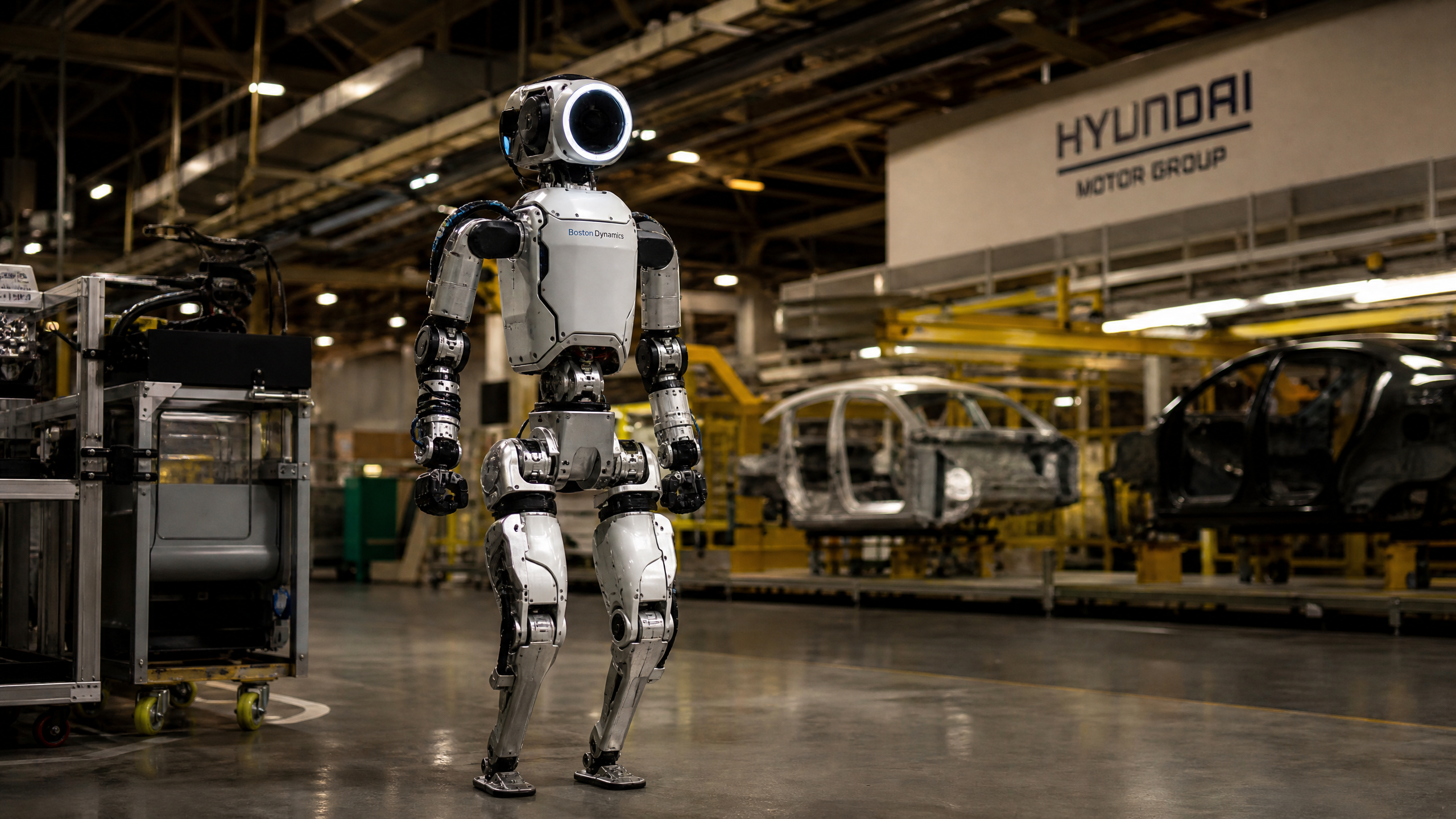
Hyundai Motor Group has secured full ownership of Boston Dynamics, the Waltham, Massachusetts robotics company behind the Atlas humanoid, Spot quadruped, and Stretch logistics robot, after SoftBank exercised its put option on the remaining 9.65% stake. The transaction makes Hyundai the sole proprietor of one of the world's most recognized robotics brands and removes the last structural barrier to integrating Boston Dynamics' research pipeline directly into Hyundai's manufacturing and product strategy. The group has announced a production target of 30,000 robots per year by 2028 at its Hyundai Motor Group Metaplant America facility in Georgia, backed by a KRW 9 trillion (approximately US$6.24 billion) AI and robotics hub in Saemangeum and a commitment to 50,000 Nvidia Blackwell graphics processing units.
From Automotive Manufacturer to Physical AI Company
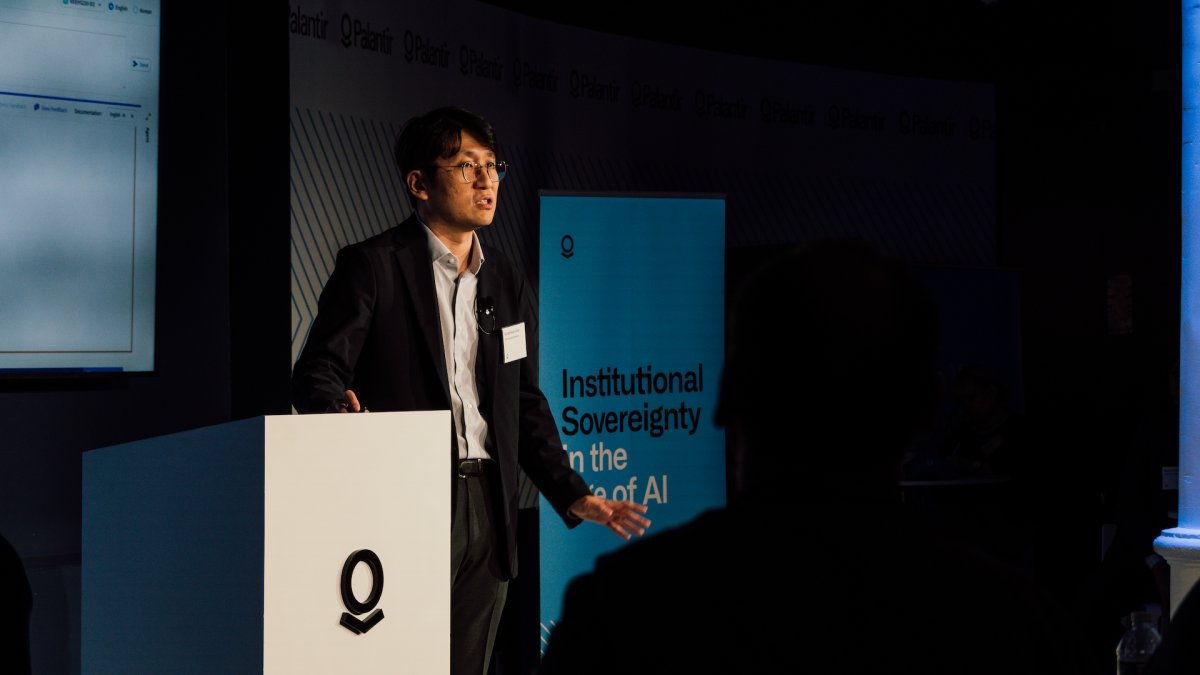
The acquisition is the operational expression of a strategic repositioning that Hyundai Motor Group Executive Chair Chung Euisun articulated publicly at the San Francisco AI Summit on July 24. Speaking alongside OpenAI CEO Sam Altman and Samsung Electronics Executive Chair Lee Jae-yong, Chung described Hyundai's intent to move beyond the traditional boundaries of automotive manufacturing into autonomous driving, robotics, and AI-defined factories. The phrase he used to describe the destination was "physical AI solutions company" -- a term that positions Hyundai not as a car manufacturer that has added a robotics division, but as a company whose core competency is deploying intelligent machines in the physical world.
Physical AI, as Hyundai defines it, refers to artificial intelligence embedded in machines and physical systems -- cars, robots, factory equipment -- rather than operating solely within software or digital environments. The group's stated vision moves through three stages. The first is intelligent devices, encompassing autonomous vehicles and robots. The second is AI-defined factories that connect production, logistics, and quality control through a unified data layer. The third is city-level intelligence, linking mobility, energy, robotics, and infrastructure across entire urban systems. Each stage depends on the one before it, and Boston Dynamics sits at the center of the first two.
The Manufacturing Edge Argument
Hyundai's case for why it can succeed where software companies have struggled rests on a specific claim about manufacturing scale. The group, which includes Hyundai, Kia, and Genesis, produces millions of vehicles annually and operates manufacturing facilities across multiple continents. Decades of experience in quality control, supply chain management, and the mass production of mechanically complex products give Hyundai a foundation that pure-play robotics startups do not have. The company can test Boston Dynamics robots across its own worldwide manufacturing network before offering them to outside customers -- a closed-loop validation environment that compresses the gap between prototype and commercial deployment.
Kim Pil-soo, a professor of automotive engineering at Daelim University College, described Hyundai's position as genuinely differentiated. "Even if Hyundai might be behind the leading players in some technology, it has a chance because it can leverage its manufacturing expertise, broad mobility portfolio and push into software-defined vehicles to differentiate itself from rivals," he said. The automotive plant environment -- structured, repetitive, physically demanding, and often hazardous -- is widely regarded by independent analysts as one of the first commercially viable markets for humanoid robots precisely because it offers the kind of constrained, predictable conditions where current robot capabilities can generate real value.
The Georgia Metaplant is the first planned deployment site for Atlas humanoid robots, with a target date of 2028. Achieving 30,000 units per year at that facility implies a level of manufacturing standardization and supply chain integration that goes well beyond the custom-built, low-volume production model that has characterized Boston Dynamics to date. It requires modular component design, repeatable assembly processes, and supplier relationships capable of delivering actuators, sensors, and compute hardware at automotive-grade volume and consistency.
The Nvidia Partnership and the Data Flywheel
The 50,000 Nvidia Blackwell GPU commitment is not primarily a compute purchase. It is the infrastructure for what Hyundai describes as a data flywheel -- a self-reinforcing cycle in which data gathered from factories, vehicles, and robots improves AI models, which are then redeployed into real-world operations to generate more data. The logic mirrors the approach that made large language models effective at scale -- more data, more compute, better models, more deployment, more data.
Hyundai has agreed to work with Nvidia to establish a Hyundai Motor Group Robot Application Center and an Nvidia AI Technology Center in Korea. The companies are also integrating Nvidia's autonomous-driving solutions -- including automotive semiconductors, sensors, and computing architecture -- with Hyundai's vehicle platforms. Separately, Hyundai plans to use Nvidia's platform to build more sophisticated digital twins of its production facilities, improving process design, operational optimization, and pre-deployment validation.
The Saemangeum hub, a KRW 9 trillion investment in a reclaimed coastal area in southwestern Korea, will house the data center infrastructure expected to handle the 50,000 GPUs. The facility is designed to serve as the physical backbone for Hyundai's AI model training, simulation, and deployment operations across its global manufacturing network.
The Waymo Parallel and the Hardware Supplier Risk
Alongside the Boston Dynamics integration, Hyundai is expanding its cooperation with Waymo, Alphabet's autonomous driving unit, to produce Ioniq 5 electric vehicles for Waymo robotaxis at the Georgia Metaplant. The partnership represents a potential template for an autonomous-vehicle foundry model in which Hyundai manufactures hardware around the software and sensor systems of technology companies.
Kim Pil-soo flagged the structural risk embedded in that model. "Hyundai has to work with Nvidia, Waymo and other tech companies if it wants to accelerate its software and AI capabilities," he said. "But it must make sure that the partnership does not deepen its dependence on their platforms." The risk is that Hyundai could become a supplier of physical hardware while US technology companies control AI chips, operating platforms, autonomous-driving algorithms, and customer data. "If an automaker only supplies the hardware while another company controls the software, algorithms and communications platform, it could ultimately be reduced to the role of a subcontractor," he said.
To manage that risk, Hyundai has been building internal software and AI capabilities through a wave of senior hires from global technology companies. Former Nvidia Vice President Park Min-woo joined in January as head of the Advanced Vehicle Platform Division and CEO of 42dot, Hyundai's software research arm. Kwon Jung-hyun, a former Samsung Electronics executive with Nvidia experience, was appointed to head the Autonomous Driving Development Center. Kim Dong-wuk, formerly of Apple and Tesla, leads software-defined vehicle platform development. Jeremy Ma, whose background spans Apple, Toyota Research Institute, and Nvidia, heads the AVP Silicon Valley operation. The pattern of hiring is consistent with a company that understands the hardware-supplier trap and is investing specifically to avoid it.
Boston Dynamics at the Center of the Transformation
Boston Dynamics' collaboration with Google DeepMind -- which aims to merge Boston Dynamics' hardware and control systems with advanced AI models -- is a key element of the Atlas deployment plan. The partnership is designed to give Atlas the ability to perform more complex tasks and respond to changing environments, moving the robot beyond the pre-programmed motion sequences that have characterized industrial robotics for decades. Atlas's performance at the halftime show of the 2026 FIFA World Cup Round of 16 match in New Jersey in June, where it performed a ball-passing demonstration, demonstrated the platform's current capability level and its value as a brand asset.
The competitive context is significant. Hyundai is not the only automotive group pursuing humanoid robotics. Tesla's Optimus program continues to advance, with Tesla claiming production targets in the thousands of units per year. BYD has confirmed a humanoid robot unveiling in August. Xpeng is trialling its Iron robot. The difference is that Hyundai enters this competition with full ownership of a robotics company that has been building and deploying advanced mobile robots commercially for more than a decade -- a head start in hardware maturity, safety certification, and real-world deployment data that startup competitors cannot replicate quickly.
The 30,000-unit annual production target for 2028 is ambitious by any standard. It implies a roughly 10-fold increase from current Boston Dynamics production volumes and requires solving supply chain, manufacturing yield, and cost-reduction challenges that have not yet been publicly addressed in detail. The skeptical read is that the target is a strategic signal rather than a near-term operational commitment -- a way of communicating seriousness to investors, partners, and competitors rather than a binding production plan. The optimistic read is that Hyundai's manufacturing infrastructure genuinely provides a path to that scale that no other robotics company currently has.
What is not in dispute is that full ownership removes the last structural ambiguity about Hyundai's commitment to Boston Dynamics. The SoftBank put option, now exercised, was the final mechanism by which the original acquisition could have been unwound or diluted. With it gone, Hyundai's physical AI strategy and Boston Dynamics' product roadmap are now fully aligned under a single ownership structure, with no minority shareholder interests to manage and no exit optionality for either side.
Disclaimer: This analysis is provided for informational purposes only and does not constitute investment, legal, or procurement advice. RobotAIGeek does not endorse specific vendors or guarantee the performance of early-stage technologies.