DOBOT unveils LUMO all terrain humanoid for real world settings
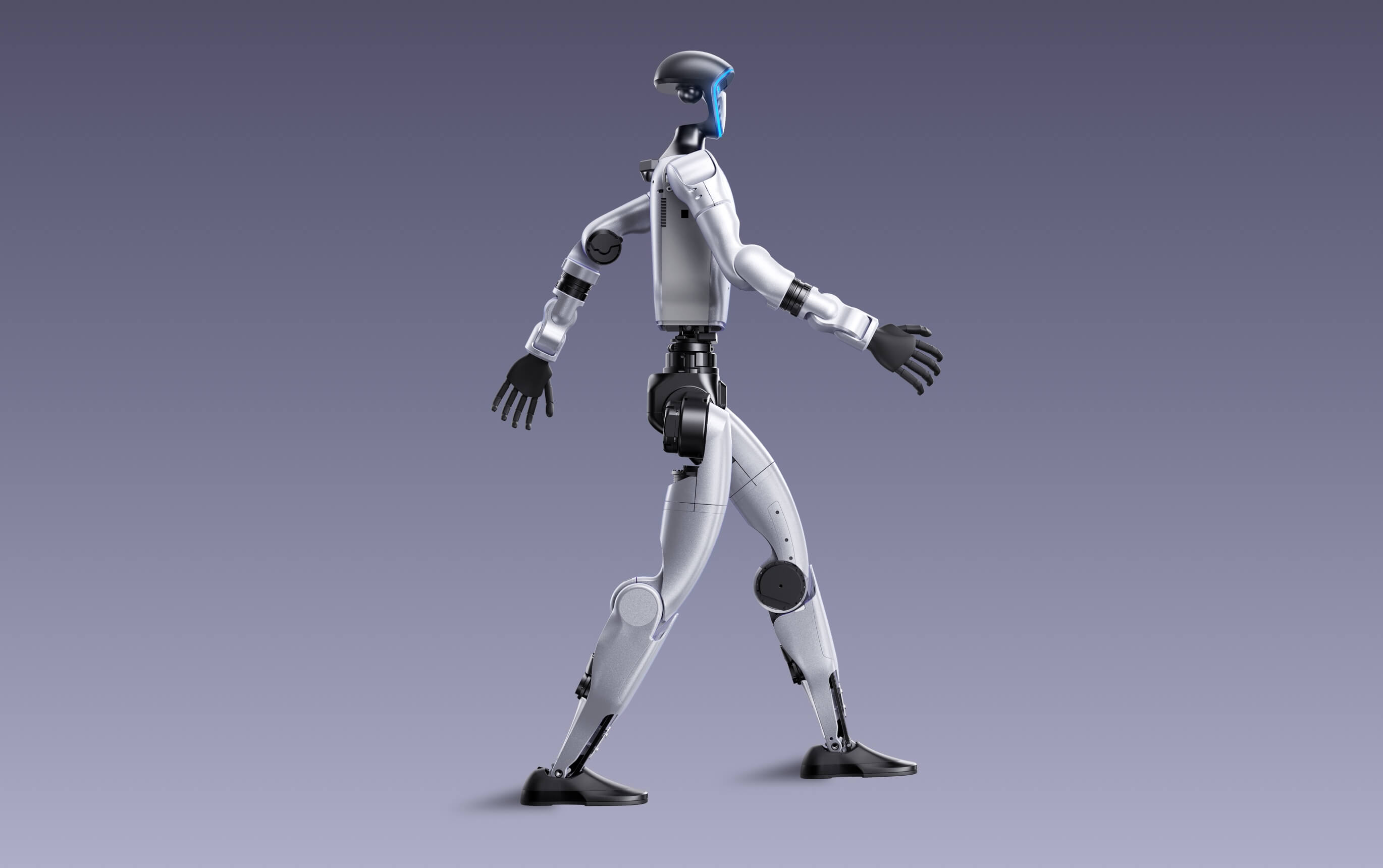
DOBOT introduced LUMO in China, presenting a 1.3 meter embodied humanoid for homes, schools, and malls with all terrain mobility and multimodal learning. The company framed LUMO as a shift from scripted automation to safe general purpose assistance near people.
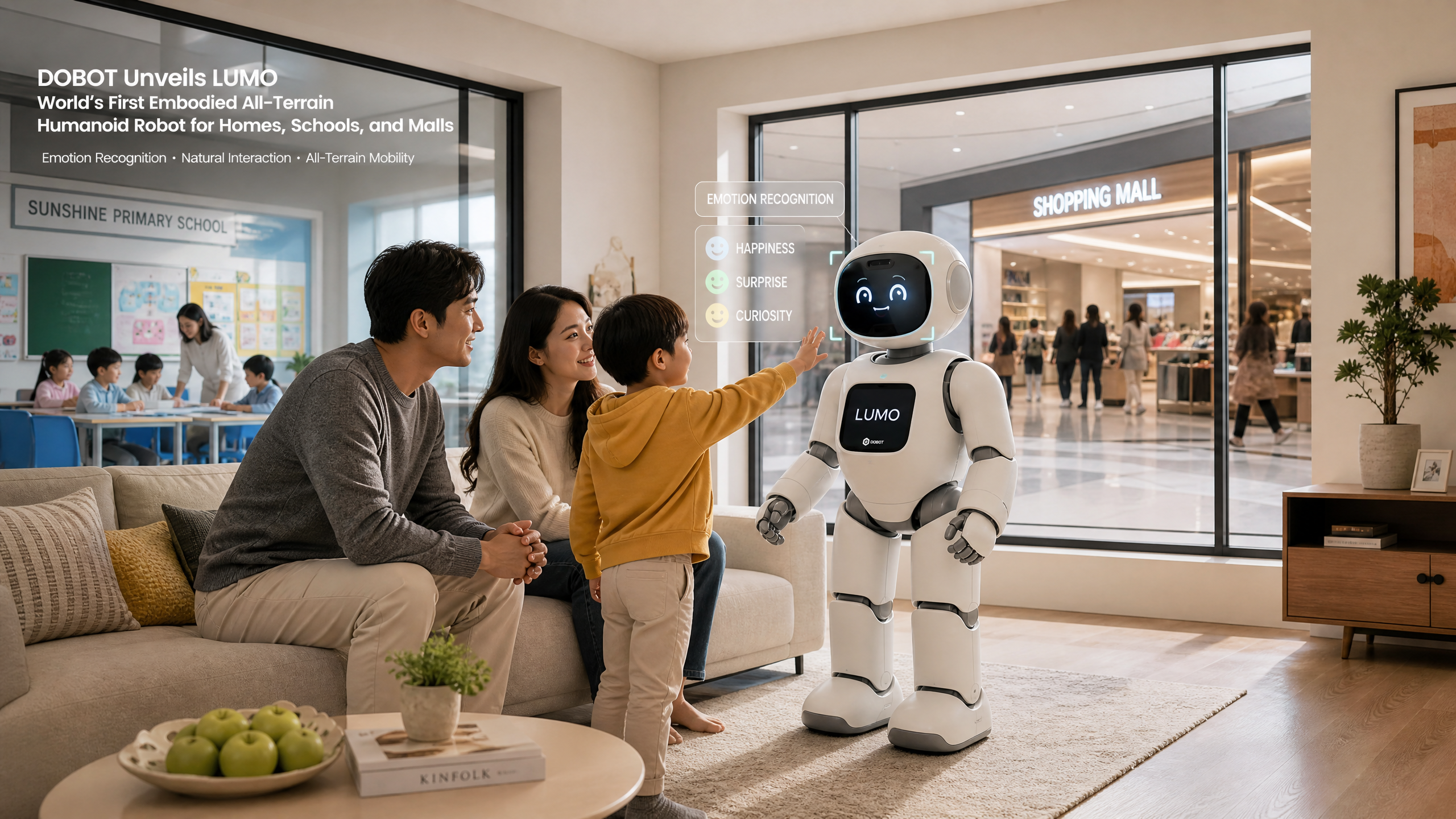
Chinese robotics maker DOBOT has unveiled LUMO in China, presenting what it bills as the first embodied all terrain humanoid designed for homes, schools, and malls. The 1.3 meter robot performed public demos that included walking on grass, sand, and cobblestones, along with boxing, dancing, backflips, and basic household assistance.
The company highlighted multimodal perception that blends vision, voice, and motion, enabling the robot to interpret user intent and act beyond fully predefined commands. In one sequence, LUMO recognized that its owner had gone to bed and turned off the lights. DOBOT said no visual effects were used in the published footage and emphasized on device learning over time.
Headquartered in Shenzhen, DOBOT is best known for compact industrial and education focused robotic arms. With LUMO, the company moves deeper into general purpose humanoids that operate safely around people. The system leans on a combination of articulated legged mobility, sensor fusion, and reinforcement style learning to handle diverse indoor environments, a step beyond fixed task factory bots.
DOBOT positioned LUMO as an embodied helper for real world settings where floors are not uniform and human intent can change mid task. That framing aligns with a broader shift in robotics that moves the center of gravity from caged industrial automation to collaborative platforms. The emphasis is companionship and utility rather than assembly line duty. It is a bold repositioning of the company’s product map and it highlights a competitive field that now includes entrants from the United States, Europe, and other Chinese manufacturers.
Demonstrated versatility signals ambition that goes beyond scripted routines
LUMO’s demo reel shows a humanoid traversing mixed surfaces that often challenge bipedal robots. Grass introduces friction and compliance. Sand shifts underfoot. Cobblestones present uneven contact points. The unit also performed athletic moves such as backflips and footwork sequences that are more than showmanship. Those moves test actuator power density, joint control bandwidth and whole body coordination.
The household clip where LUMO identifies a sleeping owner and flips the switch relies on a string of capabilities. The robot must classify human posture, map the room, locate the light switch, plan a path, and execute the action while preserving safety. The company’s claim of multimodal input is important here because visual cues alone are often insufficient in low light. A fused stack that blends cameras, inertial sensing, proximity, and audio cues gives the system redundancy. It mirrors how a person uses sight, sound, and proprioception to navigate a room at night.
DOBOT added an explicit note that no visual effects were used. That matters because the field is grappling with rising skepticism over staged or edited robot videos. The athletic highlights will spark online debate. The more telling segments are the slow and careful interactions near people and in cluttered spaces. Those are the sequences that map most directly to use cases in homes, schools, and malls.
The capital and engineering logic behind humanoids is shifting toward public spaces
For a decade, humanoid research focused on factory pick and place tasks and logistics within defined corridors. However, retail, education, hospitality, and elder care present larger potential surface areas for near term deployment. These are not monolithic markets, but they share one key trait. Human proximate tasks are highly variable and the built environment is not standardized.
DOBOT’s 1.3m design fits under common door frames and reduces intimidation in public venues. It is tall enough to reach switches and shelves while avoiding the weight and torque demands of full adult scale builds. Lower mass decreases damage risk in a fall and reduces battery sizing. That engineering choice lines up with anticipated indoor mobility circuits that run for an hour or two between charging breaks. The closer you look, the more it resembles a compact electric scooter with articulated legs and a perception stack.
The analogy is useful. A scooter balances range, power, and compactness for city travel. LUMO aims to balance manipulation reach, stability, and safety for indoor travel. It cannot carry a sofa up the stairs, but it may be able to carry out dozens of light duty tasks that add up to meaningful service coverage in a school hallway or a mall atrium.
The product narrative favors embodied learning over entirely scripted commands
DOBOT’s description of multimodal perception and on device learning signals a move beyond static decision trees. The unit learns user preferences through repeated interactions. That approach aligns with current work in imitation learning and reinforcement learning on real hardware. A robot that watches you load a dishwasher and then repeats the pattern the next time is functionally valuable, even if it is far from sentient.
The company’s previous 1,118 mile VR teleoperation demo, where an Atom humanoid cooked a steak under remote control, shows another critical pillar. Teleop bridges capability gaps while generating data for training. It can also serve as a fallback when the autonomy stack encounters an edge case. A hybrid approach uses autonomy for routine motions and teleop for tricky grasps or recovery from failure. That tiered system builds confidence with customers who care about uptime rather than novelty.
A skeptical counterpoint applies. On device learning introduces unpredictability. Enterprises demand repeatability and audit trails. Schools and malls have zero tolerance for unsafe behavior. Any adaptive system will need rigorous guardrails that bound exploration and rate limit behavior change. The best path forward likely combines cloud supervised policy updates, signed builds, and local sandboxes for incremental tuning.
Mobility over mixed terrain remains a hard engineering problem with safety at the core
Walking on grass and sand is a bar set that many research labs avoid in public demos. Resistance changes with every step. Leg controllers must adjust push off power and foot placement in real time. Contact uncertainty raises the risk of slips and knee buckle events. DOBOT’s clips suggest an effective state estimator and footstep planner.
The all terrain pitch warrants caution. Most homes and malls do not present deep sand. However, even shallow irregularities in tiles, elevator thresholds, and floor mats trip up many robots. The fact that LUMO handled cobblestones is encouraging since that surface introduces point loads and uneven roll. In the real world, upper body balance with micro arm motions and fast hip adjustments often save a step. How frequently LUMO needs those saves will determine duty cycle and wear.
Backflips showcase torque density and energy control. They are also high stress. If DOBOT can do them repeatedly without actuator overheating, it suggests efficient thermal design with either liquid or well channeled air cooling and careful current limiting. Battery chemistry and cell layout matter too because most high burst maneuvers draw significant peak current. Any commercial hardware will need a transparent rated envelope that separates show mode from service mode to manage customer expectations.
Competitive dynamics reveal a rapid global race with distinct strategies
DOBOT is entering a field packed with ambitious programs. Figure AI in the United States signed deals with BMW and raised about US$675 million from strategic investors. Tesla is testing Optimus within its factories and shows rapid progress in dexterity videos. Agility Robotics deployed Digit in logistics pilots and retooled a plant in Oregon. Apptronik pushed Apollo toward commercial trials. Sanctuary AI focuses on cognition layers for task generality. In China, Unitree markets the H1 at an aggressive price point around US$90,000 during early offers, while Fourier Intelligence has promoted the GR series.
DOBOT’s choice to target homes, schools, and malls sets it apart from factory first plays. Retail and education require friendly design, robust perception in clutter, and vocal interaction that feels natural. They also demand low total cost of ownership and easy maintenance. A mall manager has a different risk calculus than a production engineer. That is a niche where a compact, approachable humanoid could shine if it handles navigation, simple fetching, signage interaction, and light cleaning.
A good comparison is the smartphone wars before app stores matured. Manufacturers placed different bets on keyboard layouts, screen sizes, and battery tradeoffs. The winning combinations balanced daily utility and developer support. In humanoids, daily utility may equate to hours of reliable navigation and dozens of small tasks completed without fuss. Developer support means a toolchain that lets integrators build skills without advanced robotics degrees.
Supply chain and component economics will shape commercial feasibility
Humanoids are part mechatronics and part compute. The bill of materials is dominated by actuators, gearboxes, batteries, sensors, and chips. China has made rapid progress in servo motors and harmonic reducers with suppliers such as Leaderdrive and others increasing local content. That matters because imported precision reducers and motors can inflate costs and elongate timelines. If DOBOT leans on domestic components, it can control pricing and iterate faster.
Power density in actuators is a decisive factor. Quieter gear trains reduce noise in public spaces. High efficiency motors extend runtime. Joint torque sensors help with safe force control around people. Battery packs need automotive grade safety with cell partitioning and thermal protection. LUMO’s height suggests a pack capacity that might support one to two hours of mixed duty. Smart charging carts or dock based charging would keep utilization high in malls and schools where robots return to base between assignments.
On the compute side, export controls have tilted the playing field. Access to top tier GPUs has tightened for Chinese firms. However, edge inference for motor control and perception can run on domestic or non restricted chips optimized for power efficiency. Training of large models is a separate issue. DOBOT can sidestep bottlenecks by focusing on compact multimodal models and task specific networks that require less training horsepower. Data collection through teleop and fleet learning within China would remain a strong asset.
The total system cost must decline below US$50,000 for mainstream B2B service markets in China based on conversations with integrators who manage cleaning robots and delivery bots. Even with higher early prices, customers will run return on investment math. A robot that replaces one to two part time shifts per day at RMB 25 per hour over a three year period can justify US$60,000 to US$90,000 in total cost if reliability is high and downtime is minimal. Contracts that bundle hardware, service visits, and software updates into fixed monthly fees can smooth adoption.
Disclaimer: This analysis is provided for informational purposes only and does not constitute investment, legal, or procurement advice. RobotAIGeek does not endorse specific vendors or guarantee the performance of early-stage technologies.