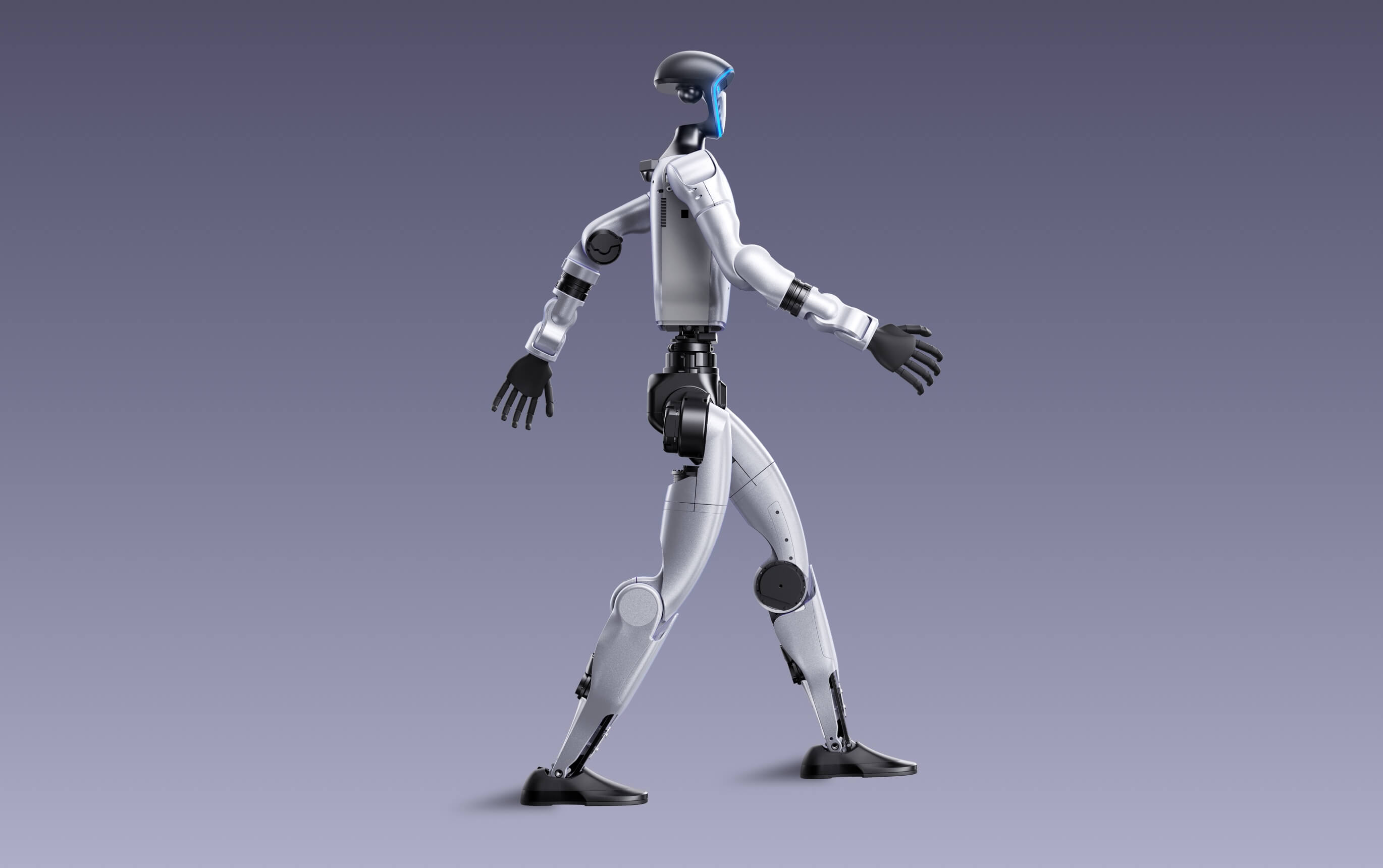
Figure AI ships 350 humanoids as Figure 03 climbs ladder and valuation hits US$39B
Figure AI shared a lab video of its Figure 03 robot autonomously climbing an industrial ladder and reported more than 350 units delivered as production scaled to one per hour. The Series C valuation stands near US$39 billion, signaling investor conviction in humanoid robotics as the company moves from demos to low volume production.
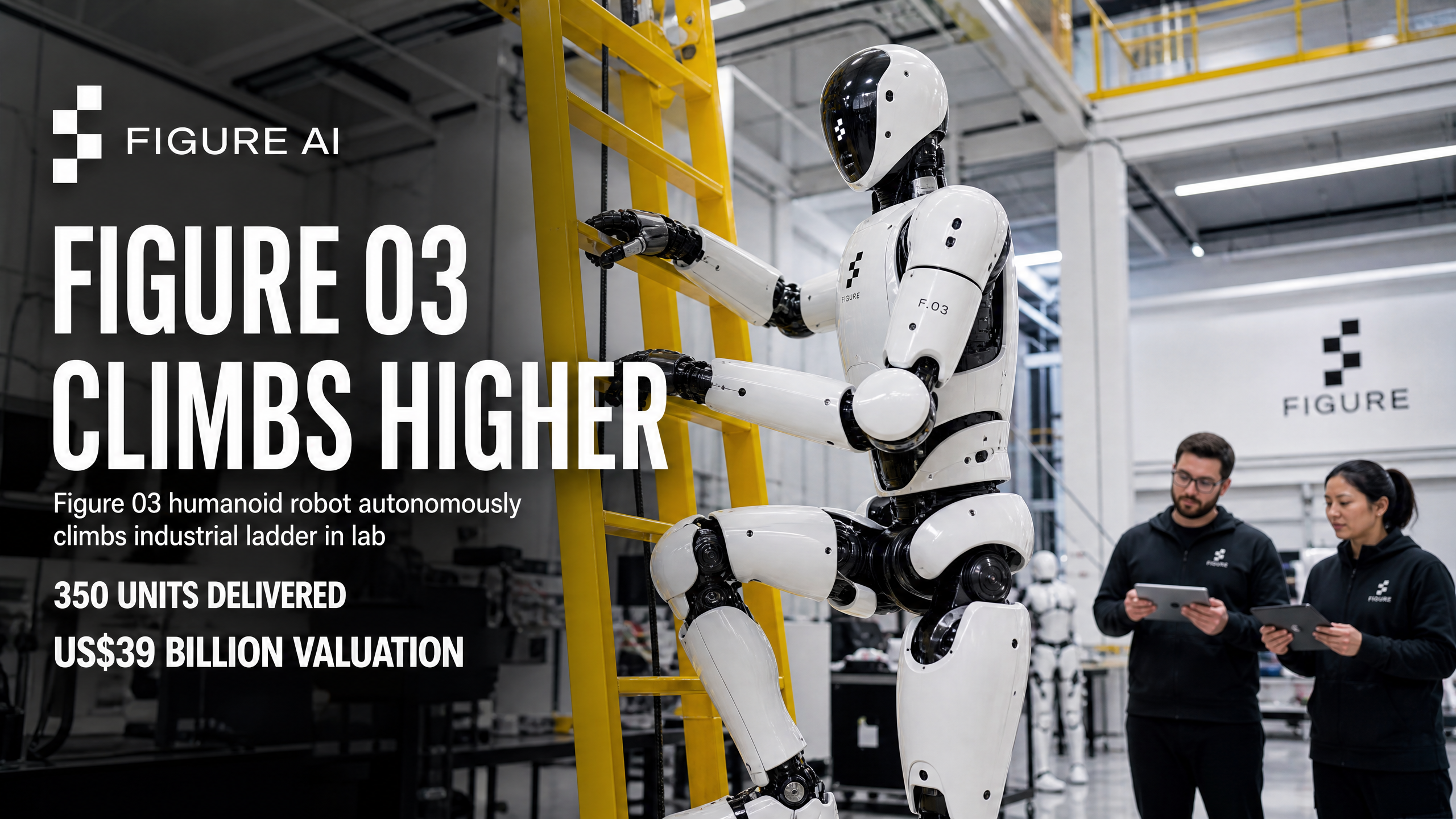
Figure AI posted a new lab video that shows its Figure 03 humanoid robot autonomously climbing an industrial ladder without teleoperation or pre-programmed steps. The company also confirmed that April production scaled from one unit per day to roughly one per hour and stated it has delivered more than 350 units to date.
The company highlighted that the ladder demo reflects integrated loco manipulation that couples visual servoing, hand grasping, and dynamic leg balancing in one continuous loop. Figure added that the capability is a lab milestone rather than a factory deployment. Its Series C financing puts the company near a US$39 billion post money valuation.
Figure AI is based in Sunnyvale, California, and is building general purpose humanoid robots for industrial and logistics tasks. Its Helix 02 system architecture runs a fast control stack for balance and locomotion while applying a slower System 2 module for higher level semantic understanding at roughly one hertz. The firm targets repetitive pick, place, inspection, and material handling work inside warehouses and manufacturing plants.
The latest video demonstrates a level of autonomy that is central to the humanoid thesis. Climbing a ladder requires coordinated foot placements, compliant handholds, body posture control, and continuous perception of rungs and distance. Figure emphasizes that no teleop or scripted sequence guided the move. Instead, the robot adjusted in real time based on vision and proprioception. This matters because industrial floors are dynamic and cluttered, and robots that cannot adapt quickly fail to provide useful work hours.
The lab ladder climb points to real progress in loco manipulation
Humanoid engineers have long chased integrated loco manipulation, which means moving and manipulating at the same time. It is one thing to balance while standing still and pick up an object. It is a tougher challenge to stay stable while the hands are occupied and the contact points change with each step. The ladder clip puts all of that into a single task that many humans treat casually but that is unforgiving for a biped. The Figure 03 hands latch each rung while the feet find stable purchase, and the torso compensates for shifting center of mass as the limbs move.
A plain language analogy helps. Imagine carrying a cup of coffee up a steep attic ladder while your eyes track each rung and your hands adapt to the rail width and your feet seek the right angle to avoid slipping. If your cup tilts, your hands barely nudge to correct. If a rung is slightly misaligned, your foot shifts without thought. Turning that mix of micro corrections into code and control loops is the difference between a robot that only performs rehearsed motions and one that can survive factory chaos.
Skeptics will note that a laboratory ladder is not a soaked, oily, or dented ladder on a real work site. Controlled lighting, clean rungs, and a narrow set of environmental variables do not equal field reliability. That critique is fair. Yet the direction of travel is clear. The core coordination appears to be running as a closed loop that could generalize to scaffolds, step stools, or truck stairs. The practical test will be consistency across hundreds of cycles and the ability to handle slips without a fall.
The production cadence signals a move beyond showcase prototypes
Figure states that April output increased from roughly one unit per day to one per hour. Even if that rate reflects peak line speed rather than entire day averages, the underlying message is unmistakable. The company is moving from handcrafted demonstration units to low volume builds. More than 350 units delivered gives Figure enough machines to run parallel reliability trials, customer pilots, and internal iteration.
The distance from low volume to true mass manufacturing remains long. Final assembly at one per hour depends on a steady incoming flow of actuators, gear sets, battery packs, wiring harnesses, shells, and compute. Yield must stay high and rework low to protect margins. Service logistics must be in place to source spare parts and swap subassemblies on short notice. Yet only a handful of humanoid firms can even cite a real unit count. That gives Figure a near term differentiator with investors and potential enterprise buyers who want to touch the hardware and observe uptime statistics.
Capital intensity and valuation reflect a long runway and large expectations
A post money valuation near US$39 billion puts Figure into the upper tier of privately held robotics firms. The company has previously drawn backing from strategic and financial investors that view humanoids as a horizontal platform that could spill into many markets. Capital is sloshing into the category because the endpoint is enticing. If humanoids can reach safe, reliable, multi hour performance for low-skill repetitive tasks, a vast pool of work becomes addressable. Hands that can plug in a hose, move a tote, scan a label, and grab a tool can fill labor gaps in high-cost regions.
The valuation also sets a bar for execution. High implied expectations demand accelerated deployment at commercial sites, not just labs. Investors will expect a credible path to multi-thousand unit annual shipments and positive gross margins within a forecastable window. That means discipline on bill of materials, supplier contracts that scale, and a software stack that turns each new task deployment into a data and model improvement loop. Without that loop, unit economics will leak through human in the loop teleoperation and constant tuning services.
The software stack separates heat from light in industrial autonomy
Figure says Helix 02 uses a fast control layer for real time reflexes and a slower System 2 module that handles semantic understanding at roughly one hertz. The split mirrors an approach common in embodied AI research. High frequency loops keep the robot upright and track contact forces. Lower frequency cognition tells the robot what it is looking at and what sequence of actions a task requires. The open question is the handoff between perception and action. If semantic understanding updates once per second, the plan must be robust to motion drift and sensor noise across those intervals.
Competitors are exploring similar blends of model-based control and neural policies. The winners will likely treat the factory floor as a living dataset. Every task attempt feeds into supervised updates that reduce errors. Safety events trigger policy constraints that lock out risky moves. Vision models fine tune on facility specific cues like rack labels and tool shapes. The lab ladder is just one benchmark. The real down payment is in the quiet work of building, versioning, and validating models that do not regress as edge cases accumulate.
Supply chain scale up is the make or break constraint for humanoids
A humanoid bill of materials pulls from several concentrated markets. Actuators need high strength magnets and precision gear trains. Magnets rely on rare earth materials that are heavily sourced from China. Gear and bearing quality depends on specialty steel and process control. Batteries require cells that compete with electric vehicles and stationary storage for supply. Sensors such as depth cameras and lidars are globally sourced and prone to export reviews when they carry advanced features. Compute boards often rely on Nvidia GPUs and high bandwidth memory that sees tight allocation in hot cycles.
To hit one unit per hour consistently, Figure must build a tiered supplier network with dual sourcing for critical items and clear geographic risk hedges. Long lead components need locked contracts and supplier financed capacity expansion. Subsystem standardization across Figure 03 variants will matter because fragmentation multiplies inventory complexity. Where possible, the company will want to push complexity upstream into supplier modules that arrive pre-tested. That reduces final line cycle time and error rates. The catch is that upstream partners will want volume commitments and visibility deeper than most young firms can provide, which brings cash burden and forecasting risk.
Competitive dynamics sharpen as rivals bring hardware and demos to market
The humanoid race is crowded with well-funded peers. Tesla shows Optimus progress and has a direct line into automotive plant use cases. Boston Dynamics unveiled a new electric Atlas and has longstanding credibility in hardware but must migrate from showpiece agility to repetitive task performance. Agility Robotics has pilots with logistics partners and a promising biped form tailored to warehouse roles. Apptronik, Sanctuary AI, and Unitree push different tradeoffs between cost, dexterity, and speed. Chinese players can leverage fast iteration cycles and flexible local suppliers, though export pathways into the United States can be fraught.
Figure’s volume claim gives it leverage in customer conversations. Buyers like to see a road map that does not rely on one off engineering per site. The first companies to present three references with uptime north of a credible threshold will pull ahead. Still, early adopters will spread bets across two or three vendors to avoid lock in. Shared pilot sites could even become common as customers test different robots on similar workflows. In that climate, small details such as connector standards, end effector modularity, and fleet orchestration software can tip decisions.
Enterprise integration will determine whether the robots earn their keep
A humanoid on its own is not a product. It is a node on a facility network. To create value, it must integrate with warehouse management software, worker safety systems, and quality assurance workflows. That requires APIs, role-based access controls, and robust telemetry. Fleet systems must schedule charging, swap shifts, and route tasks so that robots are not walking long distances with no payload. Data privacy and security obligations grow when cameras and microphones ride on mobile platforms that move across sensitive sites.
Many humanoid firms plan to deliver robots through robotics as a service contracts. That model shifts capital expense into operating expense and aligns incentives around uptime and throughput. It also forces the vendor to own the service layer with field technicians, spares, and upgrade plans. In the early years, service intensity can outweigh subscription revenue if reliability is not yet mature. Figure’s early scale can help here because a larger installed base amortizes service teams and parts depots. The company will need to publish and hit aggressive mean time between failure and mean time to repair metrics to show enterprise readiness.
Disclaimer: This analysis is provided for informational purposes only and does not constitute investment, legal, or procurement advice. RobotAIGeek does not endorse specific vendors or guarantee the performance of early-stage technologies.