NAVER Labs Europe pushes no retrain robot navigation at ECCV 2026
NAVER Labs Europe will present ten papers at ECCV 2026 in Malmo. A headline result shows high speed robot navigation using a single scalar extracted from a frozen pre trained Vision Transformer, removing retraining costs and promising faster deployments across NAVER sites in Korea and Japan.
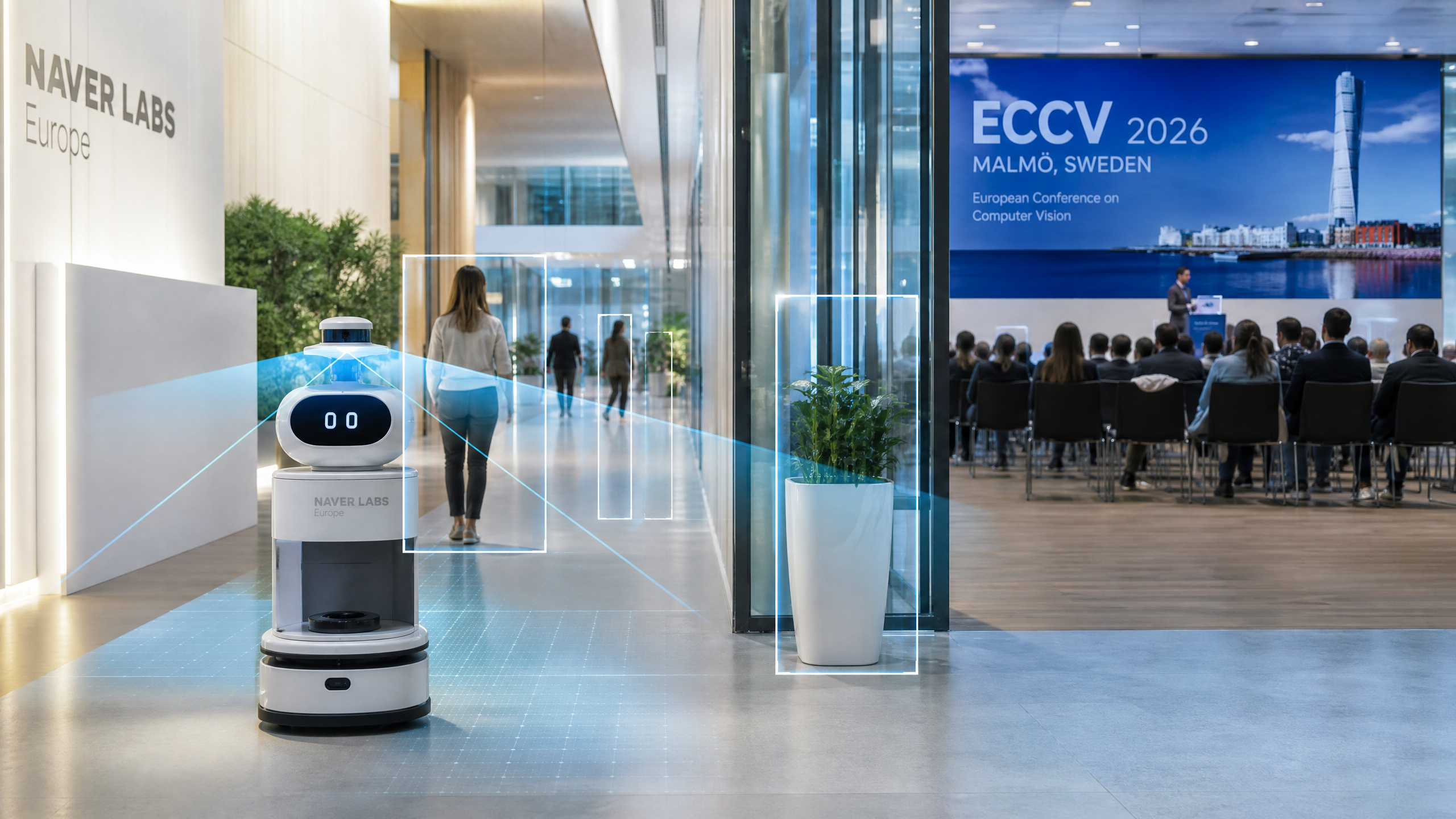
NAVER Labs Europe will bring ten research papers to ECCV 2026 in Malmo from September 8 to 12. The headline work shows a physical robot moving at speed using a single scalar value derived from a frozen pre-trained Vision Transformer, with no fine tuning of the model and no retraining required for deployment.
The Grenoble based team, part of Korean internet group NAVER, says the scalar per patch approach turns a general purpose vision backbone into a fast navigation signal. Other papers span uncalibrated 3D reconstruction with BLASt3R, autoregressive 3D scene generation, and Multi HMR 2 for camera centric human mesh recovery, with deployment paths into NAVER facilities.
NAVER Labs Europe is headquartered in Grenoble and serves as the European research arm of NAVER, the Seoul based internet and technology company best known for search, e commerce, mapping, and digital payments in Korea. The lab focuses on perception, mapping, and human robot interaction for dense indoor environments such as NAVER’s 1784 headquarters in Bundang and the Tokyo Midtown Yaesu complex. The new results aim to reduce the operational friction that has historically dogged robot rollouts in live buildings.
The scalar per patch idea trades training spend for clever extraction
The central claim is simple and provocative. A pre-trained Vision Transformer already encodes rich spatial semantics. Rather than retrain it for a narrow navigation task, the team extracts a single scalar per image patch and treats that value as a proxy for move or do not move decisions. It is akin to driving by watching a single indicator light that captures the swagger of the entire control panel. The trick lies in selecting the right scalar and mapping it to control commands without updating the backbone. That single extraction step dramatically reduces the need for site specific data collection, labeling, and model fine tuning.
This approach carries obvious operational benefits. Training and validation cycles create calendar delays and require expensive compute clusters. Site specific datasets often age quickly as layouts change. By freezing the backbone and extracting a control signal, the system avoids the flywheel of retraining that burdens integrators. The practical consequence is a smaller software update footprint, fewer on-site test cycles, and a more predictable deployment schedule.
The economics of no retrain navigation tilt toward scale
Most indoor service robotics projects collapse under the weight of hidden software costs. Fleet operators discover that every move to a new floor plate, and every change in lighting, furniture, or seasonal decorations, triggers model drifts. Each drift spawns another data capture and training loop. A scalar extraction method sidesteps that treadmill. If the pre trained model remains truly frozen across sites, the per site configuration narrows to calibration of the control mapping and safety envelopes. Those tasks look more like traditional robotics engineering than deep learning research.
There are direct cost effects along the supply chain. Systems integrators can budget fewer machine learning specialists on each installation. Cloud compute providers see reduced demand for large retraining jobs in favor of lighter edge inference. Camera vendors and sensor suppliers gain leverage because performance now hinges on consistent visual input quality rather than custom semantics per location. Battery and motor suppliers benefit from less compute heat and longer mission durations, which improve duty cycles. Even procurement teams get leverage in contract terms since acceptance tests become more deterministic.
The competitive dynamic also shifts. Firms that rely on extensive fine tuning as a service lose pricing power. Integrators that excel in process engineering and maintenance gain share. Robots that can boot into a new building and run a standard playbook with minimal tweaking win executive patience. The winners will look more like appliance suppliers and less like bespoke project shops.
The NAVER building pipeline provides a fast feedback route to deployment
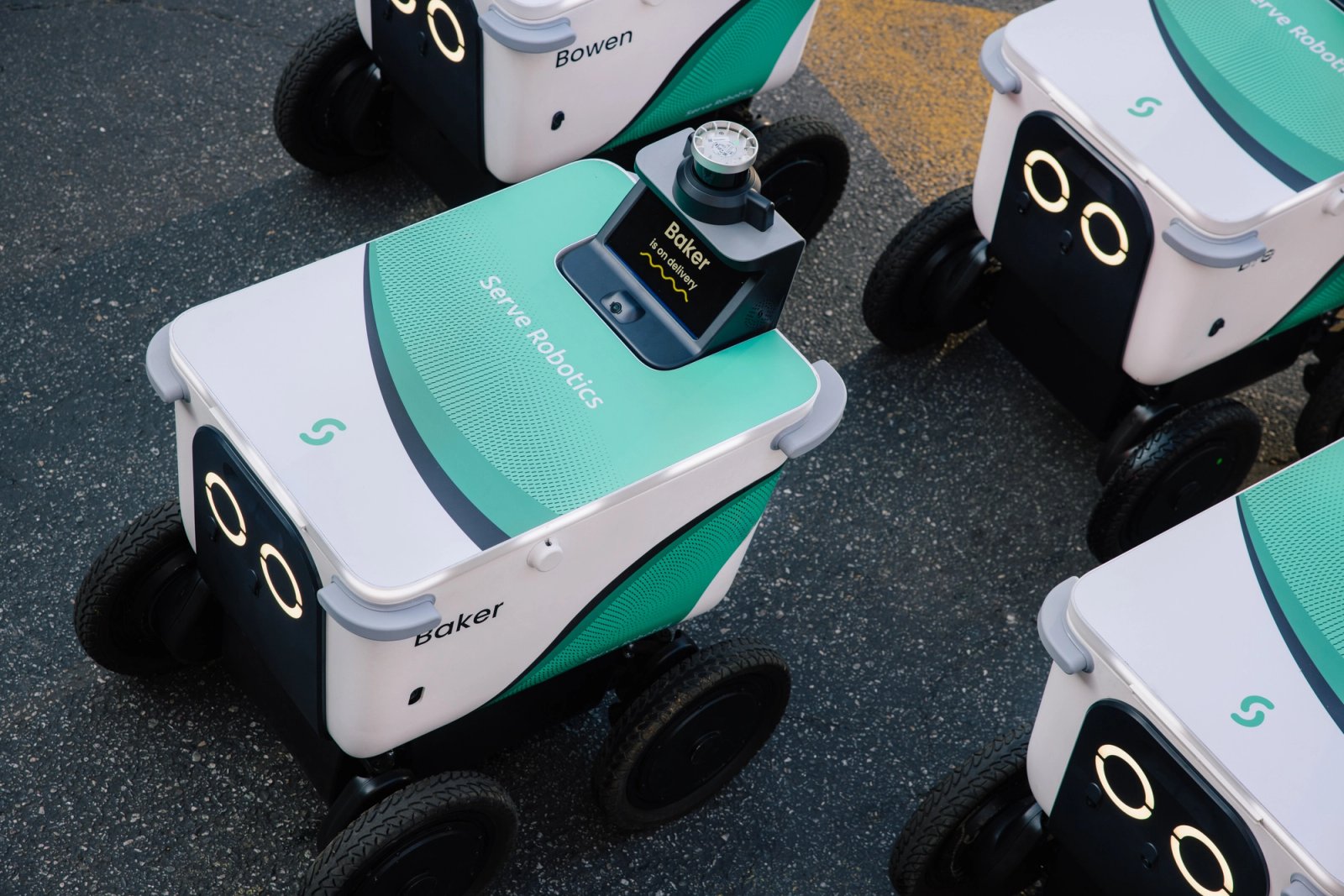
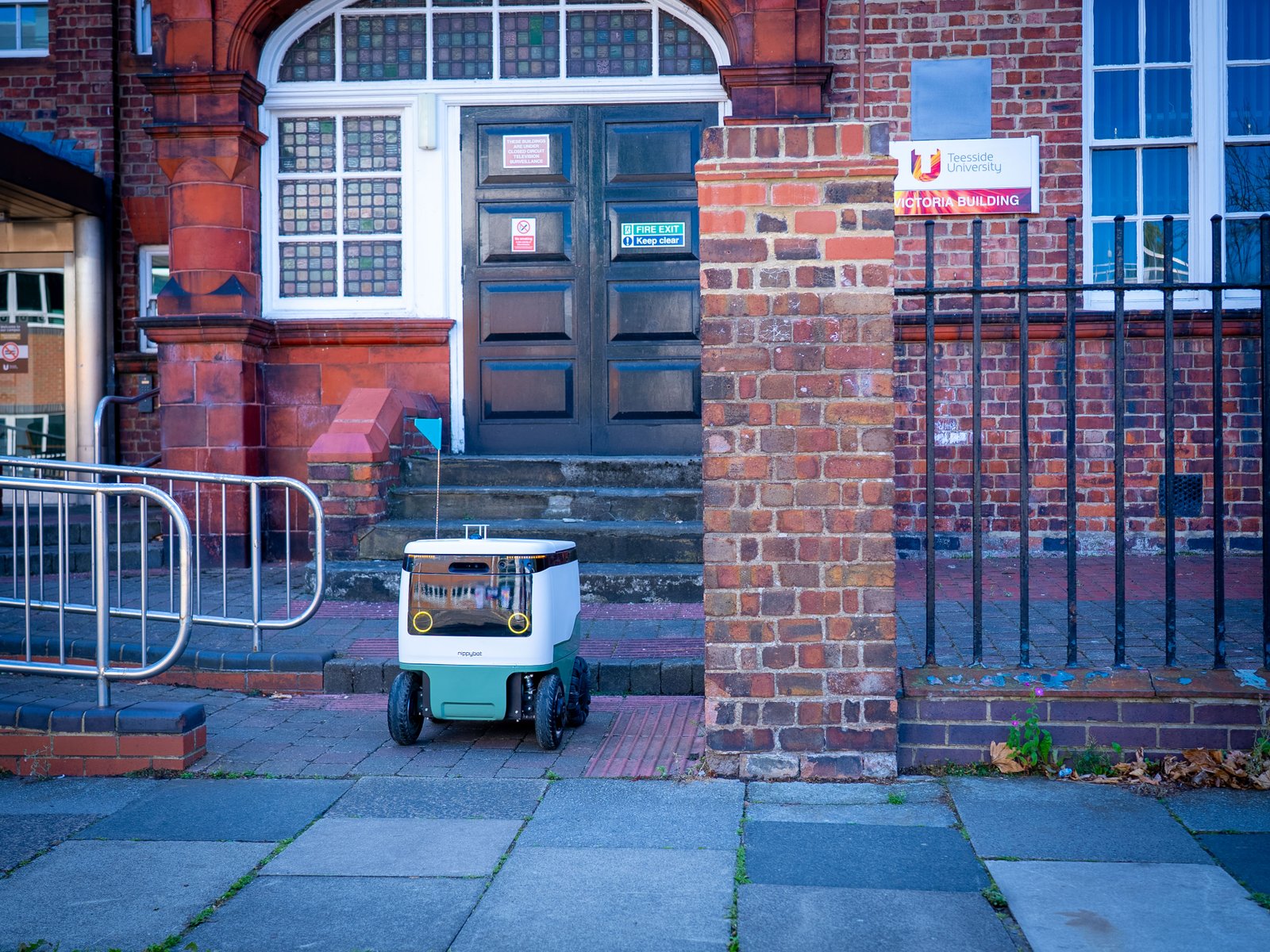
NAVER has a testing ground that many would envy. The company uses its 1784 building in Korea as a living lab with hundreds of service robots that deliver packages, ferry food, and support building operations. The Tokyo Midtown Yaesu deployment extends that proving ground into a high footfall commercial environment. Research that shaves minutes from commissioning directly feeds into better fleet utilization and faster facility acceptance.
In practice, a navigation method that cuts site retraining could translate into quicker change management. Tenants that frequently reconfigure retail fixtures, event spaces, or office layouts expect robots to keep up. A scalar per patch method can keep the backbone stable while only updating a small set of control thresholds tied to safety distances and local rules. The loop from research to field test to fleet wide rollout shortens. That is how research papers turn into operational metrics such as first run success and mean time between human interventions.
The European research footprint strengthens Korean industrial reach
The Grenoble base gives NAVER access to European academic and talent networks in computer vision. ECCV is a premier venue, and a ten paper presence is a statement of research depth. By routing that research into Korean deployment sites, NAVER builds a two way bridge. Korea gains a feed of frontier methods. Europe gains a channel to scale those methods in live facilities faster than many European corporates would attempt. This arrangement also diversifies geographic risk. If regulatory pressures in one region slow a category of deployment, another region can keep momentum.
The cross regional structure matters more as global rules on AI tighten. The EU AI Act sets specific obligations for safety, transparency, and human oversight. Techniques that use frozen models with transparent control mappings may prove easier to certify than opaque end to end retrained pipelines. Korea has its own regulatory processes for robotics in public spaces, with a bias toward pragmatic safety engineering. Operating across both regimes should sharpen the lab’s focus on explainability and audit ready tooling.
The rest of the ECCV set speaks to a full stack of perception
BLASt3R targets uncalibrated 3D reconstruction, which has hard edges in real buildings where sensor calibration drifts. A method that recovers geometry from inconsistent inputs reduces downtime and technician calls. Autoregressive 3D scene generation equips digital twins with faster what if capabilities for layout planning, crowd flow simulation, and maintenance routing. Multi HMR 2 moves human mesh recovery to a camera centric frame, which can simplify deployment in multi camera environments without per sensor harmonization. Together these components point to a goal that looks very practical. Create a perception stack that survives messy conditions and keeps the robot useful without long visits from PhD heavy teams.
The key is that each piece slots into a deployment funnel that is already running. NAVER’s on site robot operations create a scoreboard. A paper that cannot lift fleet productivity or reduce intervention rates will not last. That discipline often elevates seemingly small innovations such as scalar extraction. Simplicity at inference time beats elegance that requires weekly retraining marathons.
A skeptical view pressures the claim until it breaks
There is a risk that single scalar control proves brittle under adversarial conditions. Vision Transformers trained on internet scale images may encode biases that bleed into navigation. Reflections, glass walls, or seasonal lighting changes could fool the scalar extraction into unsafe states. Safety engineers will raise valid concerns about reliance on a single latent dimension. Redundant sensing remains necessary. Lidar, depth, and bumper sensors are not going away.
There is also a market risk. If the trick generalizes, competitors can copy it quickly. Frozen backbones are widely available, from open source ViT variants to proprietary family models. The barrier to entry may be lower than in classic end to end navigation. That pushes value capture into integration quality, fleet management software, and service reliability. NAVER’s advantage must come from speed of execution across real sites rather than from the novelty of the extraction technique itself.
Regulatory bodies will also probe verification. A scalar that maps to control outputs must be tested across edge cases such as children running, people carrying mirrors, or emergency lighting. Certification frameworks prefer traceable features. The team will need clean documentation linking scalar values to interpretable cues and to safety logic that triggers conservative behavior.
The analogy that explains the shift in simple terms
Think of a violinist who can play complex symphonies. Training them to perform a new piece is costly. The NAVER approach says keep the violinist as is and just give them a metronome signal. That one pulse keeps time across the performance and reduces rehearsal. The music still comes from a rich model, but the control loop listens to a minimal cue. It is not a perfect analogy, but it captures the flavor. The backbone knows a lot. The scalar guides action without changing that knowledge.
Implications for chip vendors and edge compute choices
If robots can navigate with frozen backbones, demand shifts from training heavy GPUs to inference friendly accelerators at the edge. That change benefits vendors of low power AI chips that handle transformer encoders efficiently. It also broadens the field of deployable compute. Commoditized x86 with a modest accelerator card may be enough. That opens procurement flexibility because operators are no longer locked into top shelf hardware for each site. The total cost of ownership trends lower. Fewer heat spikes mean smaller cooling provisions in the chassis. Batteries last longer per mission. Maintenance intervals stretch out.
Cloud providers will still host digital twins, monitoring dashboards, and fleet analytics. Yet the most expensive part of cloud spend in many robotics programs comes from repeated retraining. Freezing the backbone cuts that bill. Cloud revenue then shifts toward orchestration and data warehousing rather than compute heavy model updates. That is a different margin profile for vendors and a different negotiation ground for buyers.
Competitive posture against US and Japanese robotics players
The move intersects with efforts by US firms pursuing general purpose control. Google affiliated teams have explored large behavior models for robots that reuse pre trained vision and language components. NVIDIA pushes Isaac with synthetic data and simulation heavy workflows. Japanese groups at Preferred Networks and Toyota Research Institute combine perception with robust hardware for factories and homes. The NAVER angle is narrower and more surgical. It focuses on dense indoor buildings with known routes and repeatable tasks, and it accepts a simple control interface to a rich vision brain. That pragmatism may beat grand unified theories in near term commercial settings.
Korea’s industrial base can amplify this approach. Electronics makers, appliance brands, and logistics firms can absorb a method that fits in current quality systems. An approach that is light on retraining and heavy on operational discipline plugs into kaizen like processes. It should also mesh with the culture of facility management in Asia, where high service standards and frequent layout changes collide with acute labor shortages.
Disclaimer: This analysis is provided for informational purposes only and does not constitute investment, legal, or procurement advice. RobotAIGeek does not endorse specific vendors or guarantee the performance of early-stage technologies.