Nobody Banned JAKA's Robots From Europe. Teradyne's Lawyers Did It Instead.
Teradyne's patent suits against JAKA and Elite Robots aren't really a China-versus-West story. They're the oldest pattern in hardware: the disruptor that won a category on price becomes the incumbent defending it with patents, using a three-year-old pan-EU court that could just as easily be turned against it.

Teradyne Robotics filed a patent case this week against the German arm of JAKA Robotics at the Unified Patent Court in Copenhagen, and most of the coverage I have read since Thursday treats it as a chapter in the same story as the FCC's ban on Chinese robot imports: another Western institution moving to slow down a Chinese hardware exporter. I do not think that is the most useful way to read it.
Here is the thesis. Universal Robots, the Teradyne subsidiary bringing the case, built its entire reputation on being the cheap, simple alternative to the caged industrial arms that Fanuc, KUKA and ABB had sold for decades. It is now the incumbent using patent law to keep the next cheap, simple alternative out of its market. That is not a China story with a patent subplot. It is a patent story that happens, this time, to have a Chinese defendant, and the distinction matters for anyone trying to predict what happens next.
The category creator becomes the gatekeeper
Universal Robots was founded in Denmark in 2005 by Esben Østergaard and two co-founders who wanted a robot arm a factory worker could program in an afternoon, no safety cage, no robotics degree required. That pitch is what created the modern collaborative-robot category in the early 2010s, and it is what Teradyne paid to acquire in 2015. For a decade, Universal Robots was the disruptor, undercutting the industrial-automation majors on price and, more importantly, on how much specialized integration expertise a buyer needed before a robot arm would run.
A company that wins a hardware category by being the accessible option does not stay the accessible option forever. Eventually someone else learns to build the same thing more cheaply, and the original disruptor has two competitive levers left: cut its own margin to match, or reach for the patent portfolio it spent a decade accumulating. Universal Robots picked the second lever twice this year, against two different Chinese cobot makers, and the choice tells you more about where the category's price competition has landed than any tariff schedule does.
Two cases, two courts, one company under pressure to defend price
In February, Teradyne Robotics sued Elite Robots' German subsidiary in the Regional Court of Hamburg, alleging Elite Robots copied the PolyScope 5 control software that runs Universal Robots' arms. Elite Robots, founded in 2016 and now ranked among the top three cobot brands sold in China by volume, kept selling other product lines in Europe, but the Hamburg court issued a preliminary injunction barring the disputed software and any products built on it from the German market.
That was a national case with a national remedy. The JAKA filing is not. JAKA Robotics, a Shanghai company founded in 2014 that builds six-axis arms under its Zu line and has placed more than 10,000 units with customers including Toyota and Schneider Electric, expanded aggressively into Europe over the past two years through local subsidiaries and distributors. Teradyne's new case covers both hardware and software patents, filed at the Unified Patent Court, a forum that opened in June 2023 specifically so a single ruling could apply across participating European Union member states at once instead of forcing a plaintiff to refile the same dispute in every country where a rival sells.
One line is worth sitting with on its own: a Unified Patent Court win does not just stop a shipment. It can end a product line's European sales in a single filing.
That is the real escalation. Hamburg could only ever cost Elite Robots one country. Copenhagen can cost JAKA the whole continent, in one proceeding, on both the hardware and the software Teradyne says it copied.
The funded rival, not the scrappy knockoff
It would be convenient, and wrong, to read JAKA as an underfunded copier caught overreaching. JAKA raised roughly US$150 million in a Series D round in 2022 backed by Temasek, SoftBank's Vision Fund 2 and Aramco's Prosperity7 Ventures, the kind of investor roster that funds category leaders, not knockoff shops. This is two well-capitalized companies fighting over who owns the reference design for how a cobot moves and how its software talks to a line worker, and Universal Robots' deepest asset in that fight is not its hardware. It is PolyScope, the interface that made a cobot programmable without a robotics engineer standing next to it. Buyers compare payload and reach on a datasheet. They rarely diligence whether the software layer that actually makes a robot usable was built independently or learned by watching how the market leader did it, and that is precisely the layer Teradyne is now defending in two courts at once.
A tool that will not stay one-sided
Reading this from Manila rather than Brussels changes what looks like the story's ending. A trade desk in Brussels sees a win for European industrial policy. A cobot buyer weighing the same two vendors on the same spec sheet, from a factory floor that answers to neither Brussels nor Beijing, sees a coin flip over whose lawyers are better funded. The pattern I would flag to a European policymaker celebrating this filing is that a pan-EU patent court cuts in whatever direction the patents point, not in whichever direction industrial policy prefers. The Unified Patent Court is three years old. It has no institutional memory yet of which side, incumbent or challenger, tends to win there, and nothing about its design favors European plaintiffs over Chinese ones. A Chinese cobot maker that files its own European patents early enough, on a genuinely novel gripper design or a sensing method Universal Robots has not claimed, gets access to exactly the same single-filing, continent-wide remedy Teradyne is using now. The court is a weapon. It is not currently anyone's permanent property.
That should temper how buyers read this case. Patent litigation of this scale typically runs well over a year before a final ruling, and Hamburg shows Teradyne is willing to seek interim relief faster than that, but neither fact tells a procurement team whether JAKA's specific product line will still be sellable in the EU next year. What it does tell them is which question to be asking their vendor now: not "is this cheaper than Universal Robots," but "was this software built independently, and does the company selling it hold any patents of its own." A vendor with no answer to the second question is buying the same exposure JAKA now carries, whether or not it currently faces a lawsuit.
The nationality framing will keep dominating the headlines because it is the simpler story to tell. The more durable one is that every hardware category eventually produces an incumbent defending a price lead it no longer has with the one asset price competition cannot touch. Universal Robots did that to the caged giants it replaced. Watch for whoever underprices Universal Robots next to reach for the same lever, wherever that company happens to be headquartered.
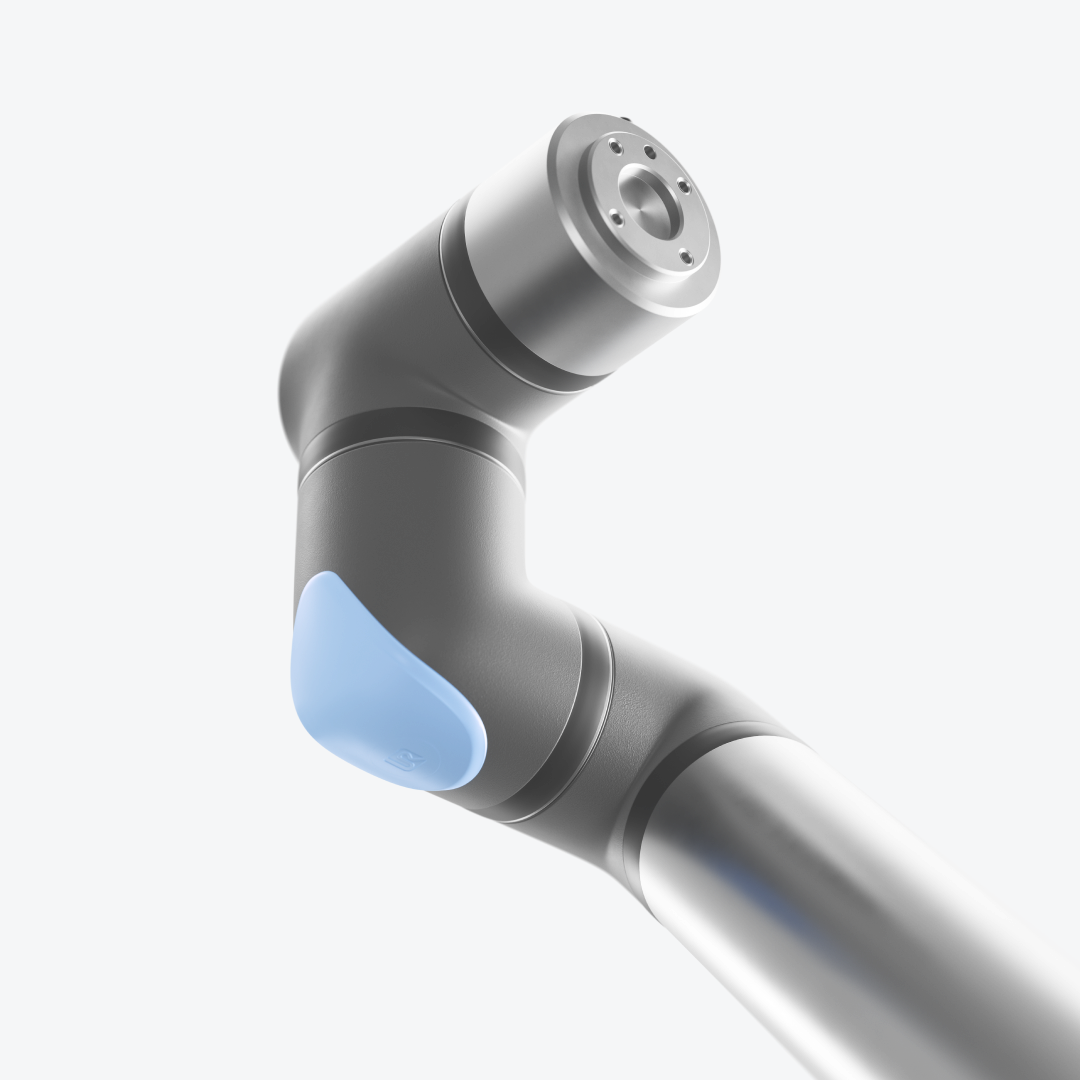
Hero image: Universal Robots collaborative robot arm joint, official product photography from Universal Robots.
Disclaimer: This article is for general information purposes only and does not constitute investment, legal, or procurement advice. Readers should verify details with primary sources before making business decisions.