The UK Just Insured a Robot Population That Does Not Exist Yet
Tokio Marine HCC International and Adrian Flux just launched the UK's first home insurance policy for humanoid robots, months before any confirmed home delivery of a humanoid robot anywhere. Measured against China, where insurers underwrote already-deployed commercial robots a year earlier, the UK policy looks less like a response to demand and more like a bet on where the forecast is headed.

Tokio Marine HCC International and the UK broker Adrian Flux announced, on 29 October, what they call the United Kingdom's first home insurance policy built specifically for domestic humanoid robots. It covers theft of the robot, accidental damage, the robot hurting someone or something in the house, and the awkward case where a unit suffers a sudden malfunction and has to be safely disabled before anyone gets near it. By the underwriters' own account, almost nobody in Britain needs this policy yet. Tokio Marine HCC International is on record saying it expects domestic humanoid robots to start arriving in UK homes from 2027.
An insurance product is a forecast with money attached to it. Underwriters do not get to hedge the way a press release does; they have to commit to a loss ratio, and committing to a loss ratio for a product category with no claims history and almost no installed base is a strange thing to do in October 2026. That is exactly what just happened, and it tells you more about where capital expects this industry to go than another funding round would.
What the policy actually prices
Stuart Heath, who runs international distribution for Tokio Marine HCC International, put the rationale plainly: "A robot that costs thousands of pounds is not something you want sitting outside your insurance policy." That is a sensible position for an underwriter to take about a washing machine-sized asset. It is a much bigger claim when the asset in question also walks around the house, picks things up, and is new enough that nobody has actuarial tables for what happens when one of them falls down the stairs with a toddler nearby.
No standard premium has been published. The policy sits inside Adrian Flux's existing home cover rather than as a standalone product, which is itself informative: this is being treated as a rider on an established business, not a market an insurer is prepared to build standalone underwriting capacity for yet. Cybersecurity and data-privacy exposure, arguably the more interesting risk a networked, camera-equipped household robot carries, is not addressed in what either company has said publicly about the cover. The policy insures the robot falling on your coffee table. It says nothing about what happens if the robot's cloud connection is compromised.
The market this is pricing barely exists
Here is the inconvenient number. The most advanced home-humanoid program in the world right now is 1X Technologies' NEO, priced at US$20,000 outright or US$499 a month, built at a 58,000-square-foot factory in Hayward, California that the company says began full-scale production on 30 April 2026 with capacity for up to 10,000 units a year. That is a real factory making a real, shippable product. What it is not, based on the most recent independently verifiable reporting, is a product with a confirmed, documented trail of completed home deliveries at scale. 1X's own public materials describe deliveries beginning during 2026, with the robot's early autonomy backed by remote human supervision for unusual or unfamiliar tasks, a meaningfully different claim from a device that has already proven itself unsupervised in someone's living room.
So the UK just underwrote a category of domestic appliance whose own leading vendor has not yet publicly documented a home delivery at any meaningful scale.
That is not a criticism of Tokio Marine HCC International's judgment. Insurers price emerging risk ahead of volume all the time; that is a legitimate part of the job. It is a reason to read the policy as a market signal rather than a response to demand. Nobody writes household theft cover for an asset class with zero households owning the asset unless they expect the curve to move fast enough to matter within the life of the policy.
China already ran this experiment, and ran it backwards
Compare it with what China's insurers did a year earlier. China Pacific Insurance's Ningbo branch launched Ji Zhi Bao in September 2025, marketed as the country's first insurance product built specifically for humanoid robots. The difference in sequencing is the whole story: Ji Zhi Bao insures commercial deployment that was already happening, covering production, sale, leasing and operational use of robots already working logistics and service jobs, with cover sold by the day, week or month to match the length of an actual job. Ningbo's local government backs it with premium subsidies of up to 80 percent, capped at two million yuan (roughly US$280,000), specifically to de-risk operators who are already running the machines. Ping An and PICC followed CPIC's lead within weeks, which only happens when insurers can see real claims volume building behind a competitor's book.
One country insured the robots already clocking paid shifts. The other just insured the ones a trade body expects to show up at some point next year. Both are reasonable bets. They are not the same bet, and conflating them, as some of the week's coverage did, misses the part worth noting: deployment-first insurance follows evidence, while launch-ahead-of-deployment insurance follows a narrative.
What this says about where the robotics capital cycle actually is
I run a platform that tracks company and robot data across this industry by hand, which means I spend more time than most people reading the gap between what a sector's financial infrastructure is willing to commit to and what a sector's marketing is willing to promise. The two usually move at different speeds. Right now, underwriting is moving ahead of delivery data in the consumer humanoid category specifically, which is a different and riskier pattern than underwriting moving ahead of delivery data in commercial deployment, where operators already have fleets running and can supply loss history within a quarter or two.
A quotable way to put it: insurance is supposed to follow the claims. When it starts following the roadmap instead, that is the moment to pay closer attention, not less.
The practical friction nobody has solved yet sits one layer below the headline. Liability allocation between manufacturer, software provider, and homeowner is still undefined in most jurisdictions when an autonomous household device causes harm, and a single household rider does not settle that question; it just moves the first claim dollar somewhere while the underlying liability framework catches up later, probably in court, probably years after the first real units ship. The policy also assumes a stable, identifiable "model" for theft replacement, new-for-old against the same or nearest equivalent, which works fine in a market with one or two vendors and gets messy fast once five humanoid platforms are competing on firmware updates that change what "the same model" even means mid-ownership, long before the firmware itself gets any simpler.
None of that makes the Tokio Marine HCC International and Adrian Flux product a bad idea. It makes it an early marker, not a mature one. The honest way to read it is as a hedge against a forecast the insurer believes enough to put its name on, not as confirmation that the forecast is already true. Watch what happens to the premium once the first few thousand policies actually get underwritten against real units in real homes; that number, not this launch, will tell you whether 2027 was a reasonable call or an optimistic one.
This column reflects the author's own analysis of public statements from Tokio Marine HCC International, Adrian Flux, 1X Technologies, and China Pacific Insurance, and is provided for general information purposes only; it does not constitute investment, financial, or professional advice.
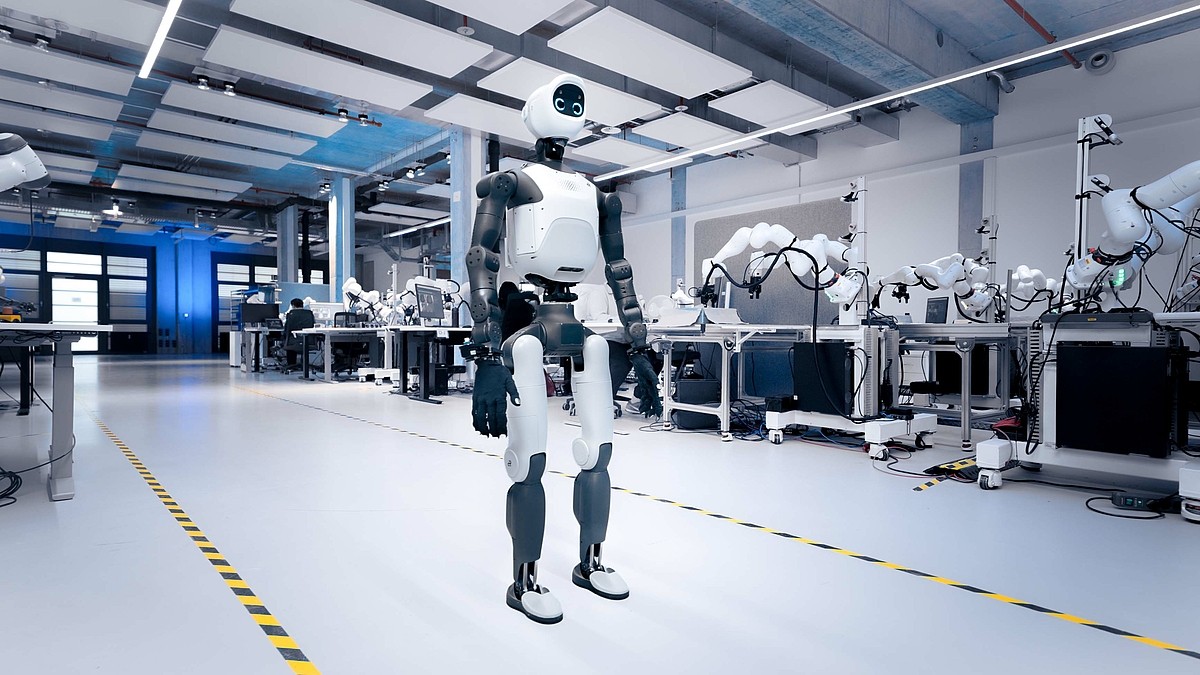
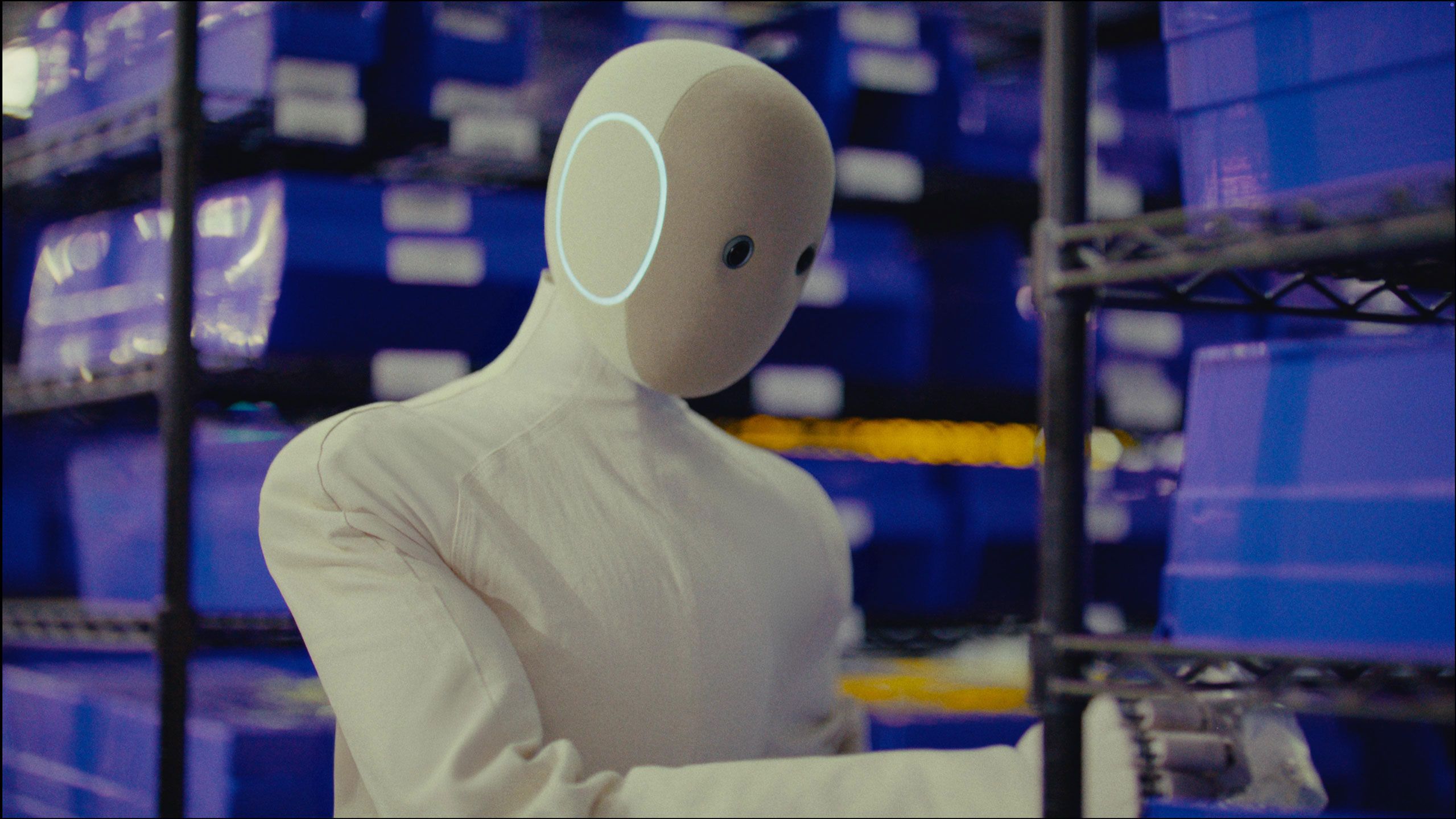
Hero image: a NEO humanoid robot in operation inside 1X Technologies' Hayward, California factory. Photo: 1X Technologies.