NVIDIA's US$250 Million UK Safety Pledge Isn't Cash. It's Five Years of NVIDIA's Own Compute.
NVIDIA's October 14 announcement of a US$250 million, five-year commitment to UK AI safety research is a compute donation, not cash, routed through NVIDIA's own Cloud Partners and reference tools to labs at Oxford, UCL, and Imperial College London whose work explicitly covers robotics and physical AI safety. This column argues that funding safety research with the donor's own infrastructure, rather than cash, creates a structural dependency that cash grants do not, and that no government has yet set a precedent requiring multi-vendor compute diversity before accepting this kind of in-kind AI safety donation.

On October 14, NVIDIA announced it would commit US$250 million over five years to strengthen the United Kingdom's "agentic safety and security research capability." Read quickly, that sentence sounds like a chipmaker writing a check to fund independent oversight of the technology it sells. It is not a check. NVIDIA is donating compute, roughly US$50 million a year in cloud access, delivered through NVIDIA's own network of Cloud Partners, running on NVIDIA's own reference tools, to a small set of named academic labs whose work explicitly includes robotics and physical AI safety.
That distinction, cash versus compute, is not a technicality. It is the whole story.
What NVIDIA Actually Announced
The release names three recipients: the British Open-Ended Learning and Discovery Lab (BOLD) at Oxford, the Science of Fundamental AI Research Lab (SOFAIR) at UCL, and Imperial College London's Frontier AI Research Lab. NVIDIA founder and CEO Jensen Huang framed it plainly: "AI capability and safety must advance together." Imperial's director, Alessandra Russo, put the scope of her own lab's work in sharper terms: "The next frontier of artificial intelligence is physical," pointing to safety and assurance work on robots and autonomous systems that "perceive, reason and act in the real world."
Two UK government figures welcomed it. AI minister Kanishka Narayan called it a "vote of confidence" in British AI research. Business secretary Jonathan Reynolds said it would help British researchers lead on safety and security. Neither of their statements addresses the mechanics of what is actually changing hands. The release itself is candid about those mechanics: provider selection, technical architecture, and commercial terms are still to be agreed. What is already fixed is the vendor. Compute will route through NVIDIA Cloud Partners, and the research itself will use NVIDIA's own tooling, named in the release as NVIDIA OpenShell and the NVIDIA Sentry reference design, to build safety assessment benchmarks and secure sandboxes.
Why Compute Is a Different Kind of Gift Than Cash
A university that receives a cash grant can spend it on any cloud provider, any chip architecture, any benchmark framework it chooses. A university that receives a compute donation spends it on the donor's infrastructure, because that is the form the gift takes. Cash can be redirected. Compute cannot. It is locked to one vendor's hardware, one reference architecture, one software stack, for the life of the grant.
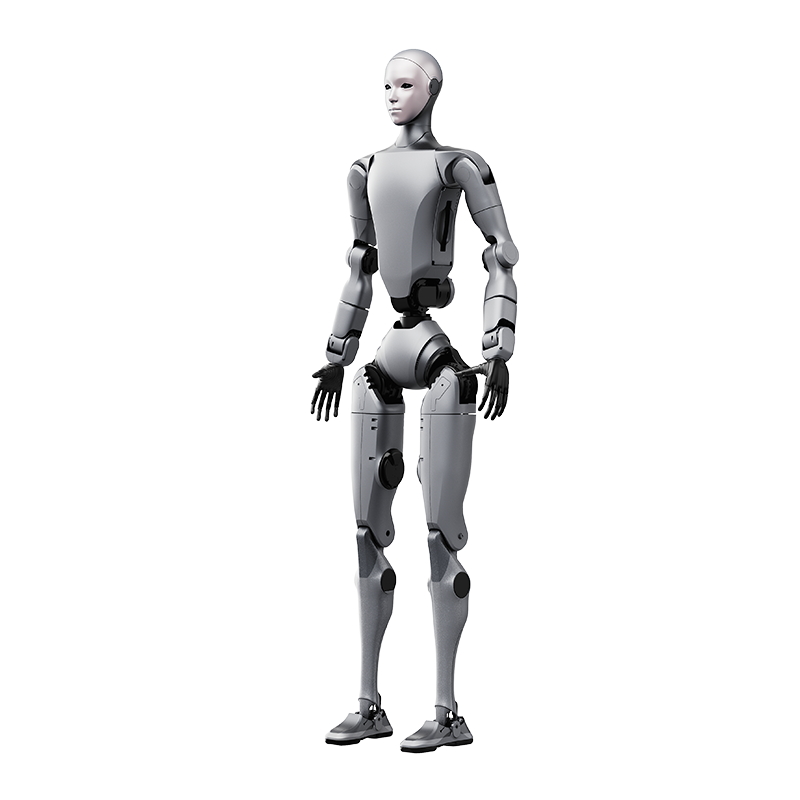
That matters more here than it would in most fields, because of what this compute is being asked to evaluate. NVIDIA's Jetson and Isaac platforms already sit inside a large share of the humanoid robots, delivery robots, and autonomous vehicles shipping commercially today. Robotics safety research that runs on NVIDIA's cloud, using NVIDIA's reference design for detecting unsafe agent behavior, is not researching a neutral subject on neutral ground. It is evaluating a category of product that, in large part, already runs on the same company's silicon.
I want to be precise about what this is not. It is not evidence that NVIDIA told Oxford, UCL, or Imperial what conclusions to reach, and there is no indication in the release that it did. Jakob Foerster, BOLD's founding director, said "AI safety as an afterthought is no longer appropriate" and called for transparent, human-centric approaches, which is not the language of a captured researcher. These are credible, independent academics choosing to do safety work they could otherwise not afford to do at this scale. The honest read is narrower and, I think, more useful: independence of judgment and independence of infrastructure are two different things, and this deal only guarantees the first.
A Dependency I Recognize, Not One I'm Alarmed By
I run a robotics data platform built on infrastructure I do not own. Every scan, every taxonomy update, every piece of this column, depends on terms a cloud provider set before I ever signed up. That dependency is routine. It is also real, and pretending it is not there is the actual mistake, not the dependency itself. When a national research program accepts five years of single-vendor compute to study the safety of that vendor's own product category, the honest description is not "independent safety research got funded." It is "independent safety research got funded, on terms the vendor still controls the shape of." Both things can be true, and only reporting the first one is how a structural fact gets laundered into a feel-good headline.
Safety research that runs on the donor's own rails is not bought. It is simply not independent of a choice someone else already made.
This is not unique to NVIDIA, and that is the part worth sitting with. Compute is the scarcest input in frontier AI research right now, scarcer and more expensive than the researchers themselves, and the handful of companies that make it are the only plausible donors at this scale. Google, Amazon, and Microsoft all run comparable in-kind research programs through their own clouds. What makes NVIDIA's version notable is not that it is worse. It is that the category being studied, physical AI and robotics safety, is the one where NVIDIA's own hardware dominance is most concentrated, which makes the infrastructure-dependency problem sharper here than in a generic cloud-compute grant to, say, a climate-modeling lab.
What a Government Could Have Asked For Instead
None of this means the UK should have turned the donation down. Oxford, UCL, and Imperial now have real compute access for work that genuinely needs it, and underfunded academic safety research getting resourced at all is not a small thing. The missed opportunity is narrower: nothing in the release describes a requirement for multi-vendor compute diversity, an independent audit of whether NVIDIA's own reference tools bias what the research is capable of finding, or a sunset clause that forces a re-negotiation once five years of single-vendor dependency has shaped how these labs build their benchmarks. A government accepting its first major in-kind AI safety donation was the moment to set that precedent, not after the second or third chipmaker offers the same deal on the same terms.
What to Watch Next
The number that matters is not US$250 million. It is whether any other government, facing the same thin public budget for safety research and the same scarcity of compute, negotiates a donation structure that requires more than one vendor's infrastructure, or whether NVIDIA's UK terms become the template everyone else copies because nobody asked for anything different the first time. Robotics safety is about to be evaluated, in large part, on hardware made by the companies whose products it is evaluating. That is not a scandal. It is a precedent, and precedents are set by whoever moves first and never gets asked to justify the terms.
This analysis reflects the author's own reading of NVIDIA's October 14, 2026 press release announcing its UK agentic safety and security research commitment, and is provided for general information purposes only. It does not constitute investment, legal, or professional advice.
Hero image: NVIDIA's Santa Clara, California headquarters, courtesy of NVIDIA.