Boston Dynamics' New CEO Has Never Shipped a Robot. Hyundai Is Betting That's Fine.
Boston Dynamics just named an Amazon AI veteran as CEO, following the same leadership pattern already used at Agility Robotics. Both bets assume the industry's hardest remaining problem is software, not the manufacturing targets these same companies have also signed up to hit.
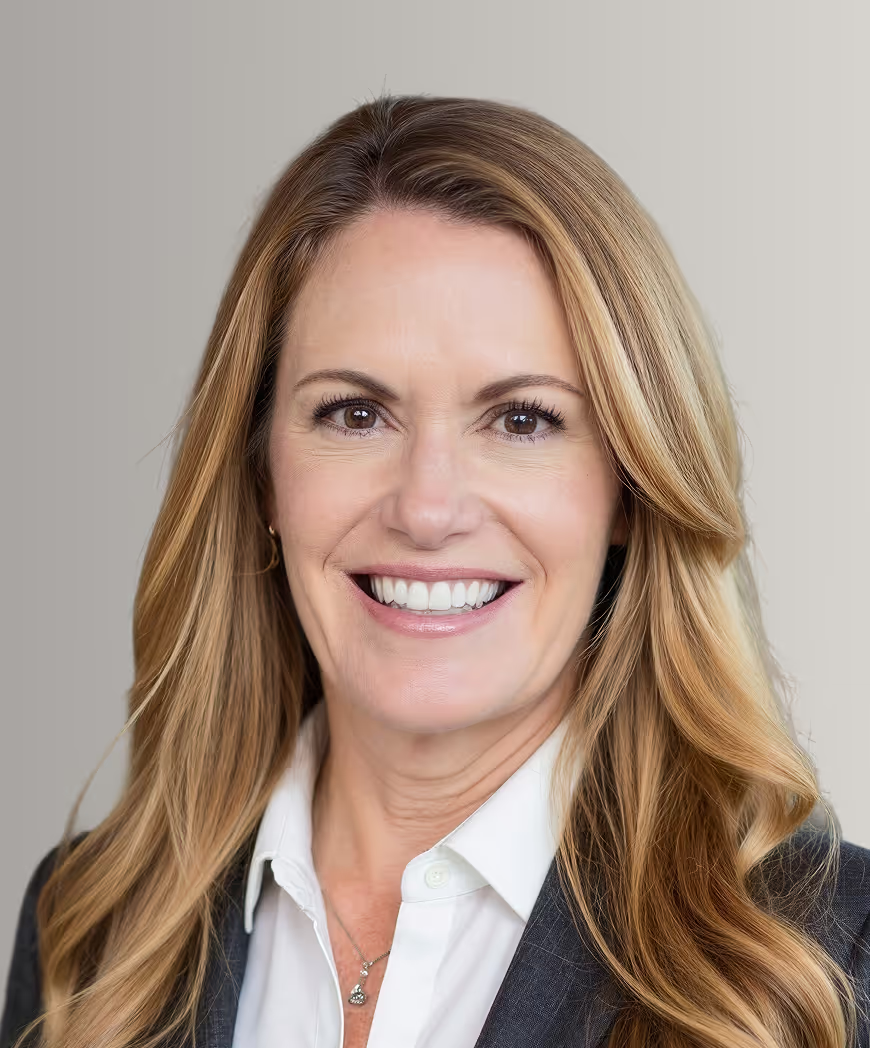
Robert Playter spent 30 years at Boston Dynamics before he stepped down as its chief executive in February 2026, starting in 1994 as an engineer and leaving as the person who had to decide, year after year, whether a given Atlas prototype was safe enough to walk on a real factory floor. His successor, named this week after an eight-month search, has never run a hardware company, never managed a manufacturing line, and never shipped a single physical unit to a paying customer at scale. Rohit Prasad spent 12 years at Amazon building Alexa and the Nova foundation-model family, and 14 years before that doing machine-learning research at Raytheon BBN. He is, by his own employer's description, an AI executive taking over a robotics company.
That is not a criticism of Prasad, whose record scaling a consumer AI product into hundreds of millions of households is real and difficult to fake. It is a description of what Hyundai, now Boston Dynamics' sole owner, just decided the company's scarcest skill is.
The decision is less about who is running Boston Dynamics than about what its owner thinks the job now requires. And on that question, the pattern is no longer a one-off. Hyundai's hire stacks on top of an industry trend that quietly started two years ago, and the trend assumes the hardest problem left in humanoid robotics is building better AI, not building more robots.
The Pattern Has a Name Now
Boston Dynamics is not the first flagship humanoid company to put a career AI-or-business executive, rather than an engineer, in the CEO chair. Agility Robotics did it first: in March 2024, the company moved its engineer co-founder, Damion Shelton, into the president's office and installed Peggy Johnson as chief executive. Johnson's resume runs 24 years at Qualcomm in sales and business development, six more running strategic partnerships for Microsoft, and a stint turning around Magic Leap, the augmented-reality headset maker. Like Prasad, she arrived with no hardware-manufacturing operating history.
Two of the industry's most closely watched humanoid platforms are now run by people whose core competency is turning a technology narrative into commercial traction, not whose core competency is getting a physical product off a line without defects. Cataloguing company leadership by hand for this platform, from Manila rather than from Boston or Shenzhen, is what makes a pattern like this visible before it has a name: the roboticist-founder-CEO, once the default across the industry, is becoming the exception at exactly the companies with the deepest manufacturing commitments to keep.
Boston Dynamics' own announcement leaned into this framing, using the term "Physical AI" nine times across a single press release announcing Prasad's appointment. That phrase did not originate inside a robotics company. It is Nvidia's branding, popularized through Jensen Huang's keynotes and defined on Nvidia's own research blog as a mix of neural graphics, synthetic data generation, and reinforcement learning. When a 34-year-old robotics pioneer's leadership announcement borrows its central vocabulary from a chipmaker's marketing deck, that tells you whose worldview now sets the terms of the conversation inside the boardroom.
What the Vocabulary Skips Over
Here is the problem with letting the AI side write the job description: none of the words "neural graphics," "synthetic data," or "reasoning" describe the thing Boston Dynamics' new owner actually needs solved first.
Hyundai completed its full buyout of Boston Dynamics in July 2026 and used this year's CES to put a number on what it expects back: 30,000 Atlas units built per year by 2028, manufactured with help from Hyundai Mobis's parts operation and Hyundai Glovis's logistics arm, destined first for parts-sequencing work at the company's Savannah, Georgia plant. That is not an AI target. It is a stamping-and-assembly target, the kind historically owned by a plant manager, not a model architect. Nothing in Prasad's 26-year career suggests he has ever been personally accountable for a number like that.
Hiring the executive who scaled a voice assistant to run a hardware line is a bet that shipping robots is now mostly a software problem. The clearest evidence against that bet sits inside a rival robot maker's own roadmap.
Kawasaki Heavy Industries, a company still run by veteran manufacturing engineers rather than imported AI talent, published its own humanoid development roadmap in March 2026. It places genuinely autonomous operation in unstructured environments, the kind of general capability outsiders assume companies like this are close to, around 2040, a full decade later than the "autonomous by 2030" framing that circulated in Japanese press coverage of the same program this month. Kawasaki has been building humanoids since 2015 and is still measuring its own hardware maturity in decades, using an internal, engineer-authored roadmap as the source. Software leadership is not what is slowing that company down.
The Counter-Example Nobody's Citing
It is worth naming the exception, because it undercuts any claim that AI-executive leadership is simply inevitable. 1X Technologies, one of the better-funded humanoid builders racing toward a home-robot product, is still run by its founder, Bernt Børnich, a Norwegian engineer with a robotics and nanoelectronics degree who has stayed in the CEO seat himself since 2014. 1X has not needed to import outside AI leadership to raise money or ship hardware. The pattern at Boston Dynamics and Agility is a choice their owners made, not a law of the industry.
What makes the choice interesting is who is making it. Hyundai and the investors behind Agility are not naive about manufacturing; Hyundai is one of the world's largest car builders. They know exactly how hard 30,000 units a year is. Putting an AI product executive in charge of hitting that number anyway suggests they believe the bottleneck has already shifted, that the parts of robotics they still consider solvable by a traditional operations hire are no longer where the value gets created, and that the next competitive edge comes from whoever can turn a model breakthrough into a shipped feature fastest, the exact skill Prasad demonstrated at Amazon.
The Tradeoff Nobody Is Pricing
That bet can still be right. Software leadership that moves fast enough can compress a manufacturing problem by changing what has to be manufactured. If Prasad's team ships a genuinely better perception or control stack, Boston Dynamics may need fewer design iterations to hit a reliability bar, which is a real way an AI executive can shorten a hardware timeline rather than ignore it.
But that is a bet on acceleration, not a substitute for the underlying work, and the industry's own recent record argues for humility about how often the acceleration shows up on schedule. A company run by career engineers just told its own customers, in its own words, that full autonomy is a 2040 problem. An AI executive inheriting a 2028 production target has less time than that, and a track record built entirely in domains where the final product was bits, not steel.
What To Watch Next
The signal worth tracking over Prasad's first year is not another product demo. It is who he hires underneath him. If Boston Dynamics' new leadership layer fills out with manufacturing and supply-chain operators, the AI-executive-as-CEO model starts to look like a sensible division of labor, strategy at the top, hardware discipline one level down. If it instead fills out with more AI product people, the 2028 number becomes the test case for whether "Physical AI" is a real capability or just the industry's newest word for optimism.
This analysis draws on Boston Dynamics' October 6, 2026 press release announcing Rohit Prasad's appointment, Agility Robotics' March 2024 CEO announcement, Kawasaki Heavy Industries' own published humanoid technology roadmap, Hyundai Motor Group's CES 2026 production announcements, and public background on 1X Technologies' leadership. It is for general information purposes only and does not constitute investment, financial, or professional advice.
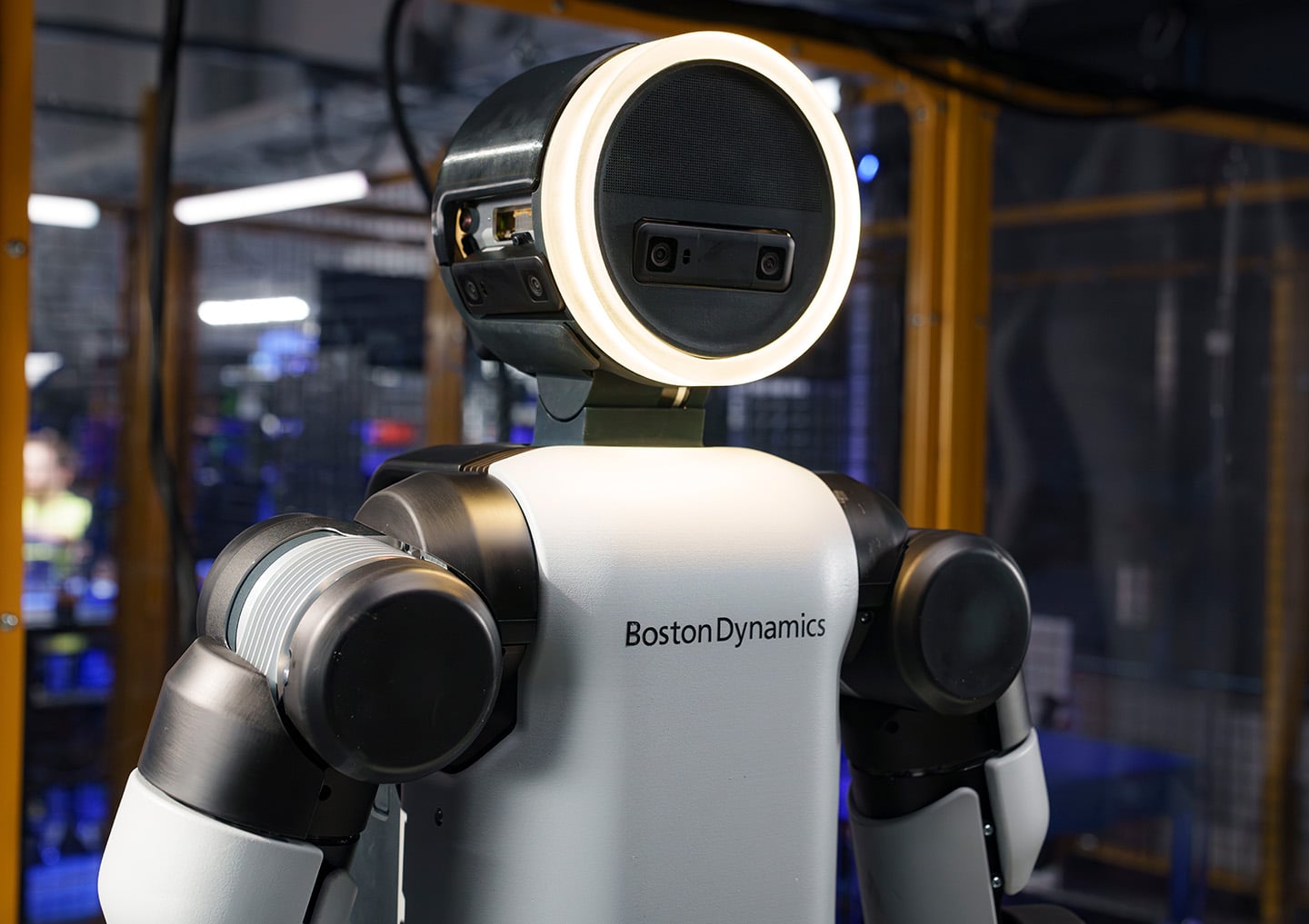
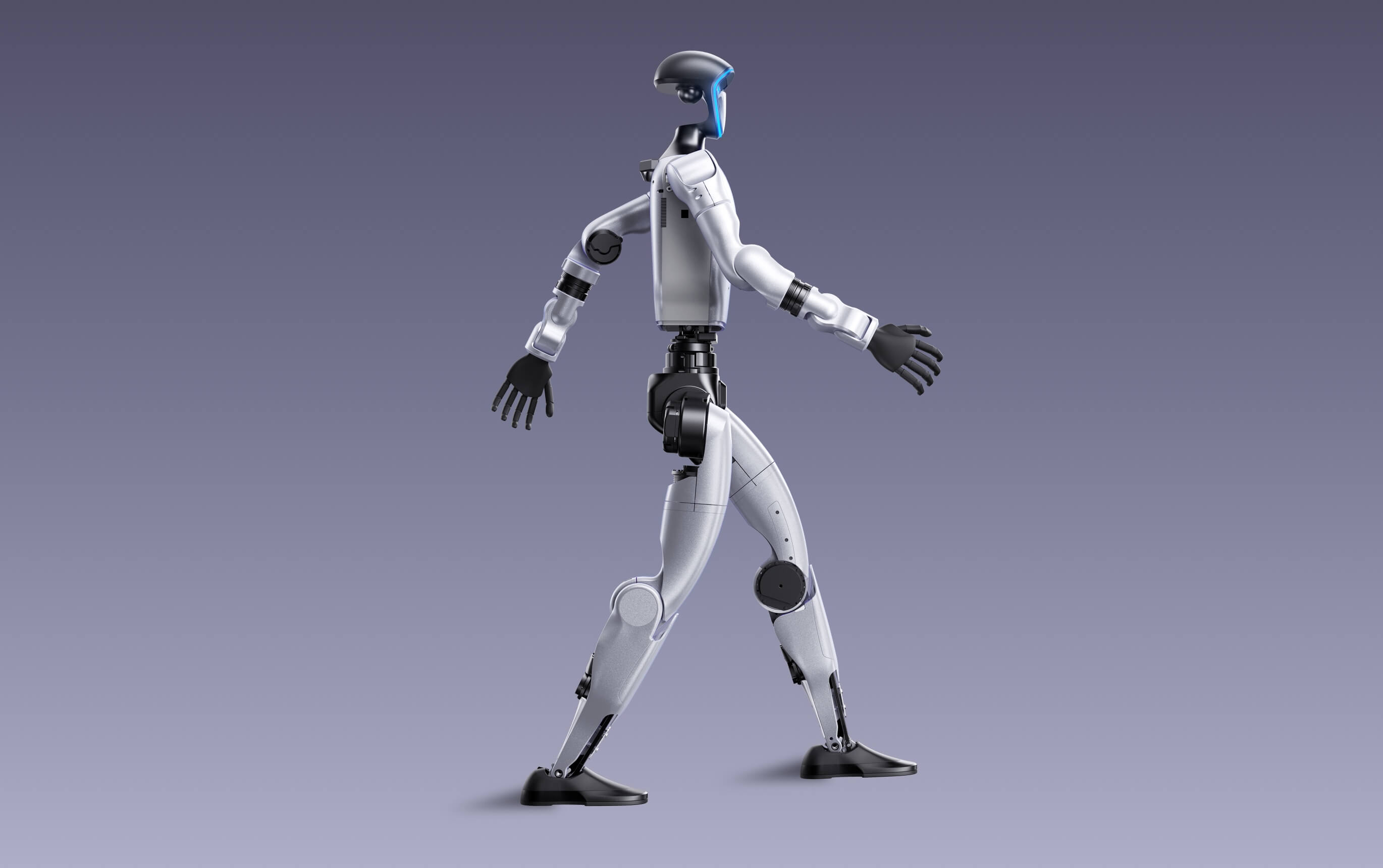
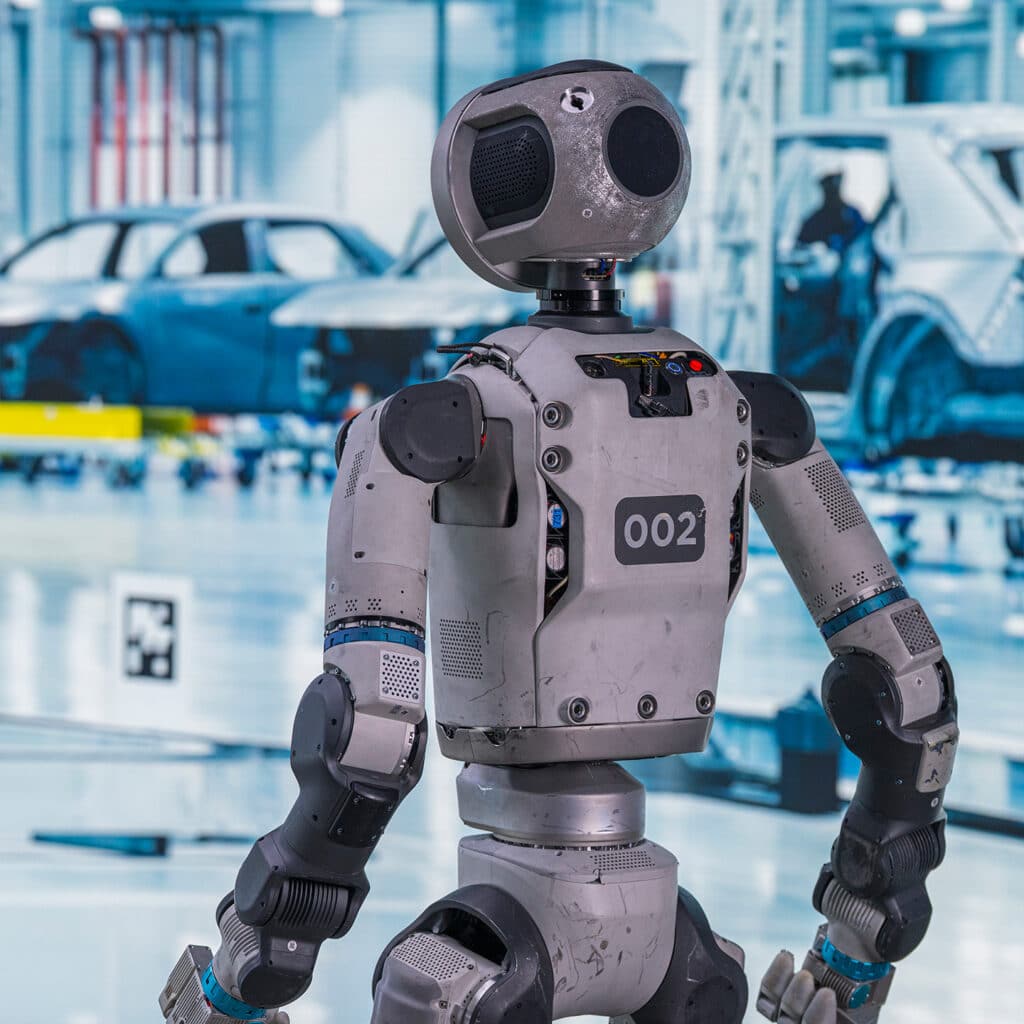
Hero image credit: Boston Dynamics, official Atlas product photography from its own newsroom.