The Humanoid Industry's Rental Pitch Has a 0.6 Percent Problem
AgiBot just extended its humanoid rental program to seven Middle Eastern countries, the latest evidence that Robot-as-a-Service has become the industry's growth story. But UBTECH's newly filed H1 2026 results, the only audited numbers a major humanoid maker has published, show services revenue at just 0.6 percent of sales. Real revenue still comes from selling hardware, and Unitree's own filings tell the same story.


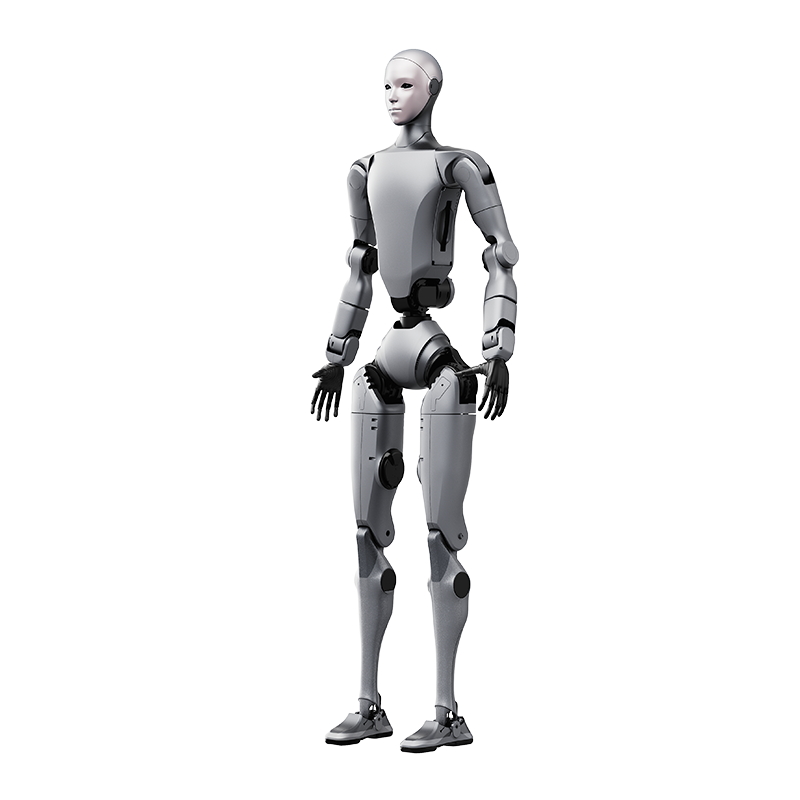
Read AgiBot's own announcement from LEAP 2026 in Riyadh this week and the humanoid robot industry looks like it has quietly solved its hardest commercial problem. The company is renting out its A, X and G Series humanoids, D1 Ultra quadrupeds and OmniHand manipulators across seven Middle Eastern countries at SAR 2,000 a day, roughly US$533, following an earlier rollout of the same rental model in Europe. No capital-expenditure approval, no six-figure purchase order. Just a daily rate a facilities manager can sign off without a board meeting. It is the third continent in two months for the same playbook, and the pattern reads like Robot-as-a-Service has become the industry's default answer to a category still short on buyer trust: lower the ask, gather deployment data, let the sales pitch write itself later.
Then read UBTECH's interim results, filed with the Hong Kong stock exchange this week for the six months to June 30. A different number shows up.
Zero point six percent.
That is the share of UBTECH's first-half 2026 revenue that came from "provision of services" rather than the outright sale of hardware: RMB 7.7 million, about US$1.1 million, against RMB 1.26 billion, about US$188 million, in goods sold. UBTECH is the one large humanoid maker whose books an outside auditor has actually signed off on, and its books say the rental economy the rest of the industry is marketing barely exists yet as revenue. RaaS is real as a go-to-market tactic. On the only audited evidence available, it is not a business model that is replacing equipment sales.
What the filing actually says
UBTECH's numbers are otherwise a genuinely strong half. Revenue of RMB 1.269 billion, about US$188.7 million, more than double the RMB 621 million booked in the same period last year. Gross margin near 44.7 percent. Net loss narrowing to RMB 311 million (about US$46.3 million) from RMB 414 million (about US$61.5 million) a year earlier. That is a company scaling hardware shipments and closing the gap to breakeven the way an industrial manufacturer does: by selling more physical units at a widening margin, not by discovering a subscription curve. UBTECH also closed its acquisition of Fenglong Electric during the half, disclosed with the flat, unfinished note that "the assessment relating to the acquired business is still in progress." That is corporate language for "we bought a supplier and have not finished figuring out what we bought," and it is its own small tell about how fast this industry is consolidating manufacturing capacity ahead of confirmed demand.
None of that revenue growth came from leasing. If UBTECH had a rental fleet generating meaningful recurring income, it would show up on this line, because a Hong Kong-listed company does not get to keep a second set of books for the story its press releases tell. It is not there.
A rental fleet that cannot be found in the financials is not a business model. It is a marketing budget with a lease agreement attached.
Why AgiBot's rental math still makes sense
None of this makes AgiBot's Gulf launch a bad decision. It is a sound one, for reasons that have nothing to do with recurring revenue. A first-time buyer in a market with no local service infrastructure and no peer reference deployment is a hard sale regardless of how capable the hardware is. Renting turns that resistance into a daily fee, keeps liability for uptime with the vendor, and produces the kind of on-site failure data, desert heat past 45 degrees Celsius, dust ingress, thermal cycling between air-conditioned interiors and open loading yards, that a demo booth at the Riyadh Exhibition and Convention Centre will never generate. MANIFORMER, the "physical AI data service platform" AgiBot bundled into the same LEAP stand, makes the actual objective explicit: the fleet exists to generate training data and market presence, and the daily rate is priced to cover fleet operations, not to be the profit center.
That is a defensible strategy for a company still building the case that its hardware survives outside a Chinese or European facility. It is a much weaker basis for the "RaaS has arrived" framing that keeps getting applied to the sector as a whole, because that framing implies buyers are choosing to rent instead of buy. The one company where I can actually check that claim shows buyers, overwhelmingly, still buying.
The selection effect in who gets to make the claim
There is a pattern worth naming plainly: the RaaS pitch is loudest from companies that do not yet have to publish an income statement. AgiBot is privately held and has never disclosed a services-revenue line for anyone outside the company to check against the marketing. Unitree, the other Chinese humanoid and quadruped maker whose numbers I can verify because its Shanghai STAR Market listing prospectus is a public document, told a similar story before its own IPO priced last month: adjusted net profit fell 53 percent to RMB 40 million, about US$5.95 million, in the first quarter of 2026. A company whose flagship revenue still comes from selling quadrupeds and humanoids outright, not subscriptions, at a valuation the market has spent the past two weeks repricing sharply downward from its debut-day peak. Two of China's most closely watched humanoid and quadruped makers, the two with any real numbers on the table, both describe a hardware-sales business with a thinning loss or a thin profit. Neither describes a services company in the making.
I read a filing like this the same way I read a spec sheet claiming a task a robot has never demonstrated on video: the marketing claim and the audited claim are answering different questions, and only one of them is checkable by someone who is not in the room.
There is a tradeoff on the other side worth stating honestly, because it cuts against my own thesis. UBTECH is a consumer-and-industrial hybrid with a services line even smaller than most humanoid-focused rivals would likely post, since its Walker product line still sells largely as a capital asset into factory-automation contracts where a maintenance retainer, not a robot lease, is the natural adjacent revenue. A humanoid maker whose fleet skews toward hospitality, retail or events, the segments where daily rental already has an established local market, might report a very different split if it were required to disclose one. The claim here is narrower than "RaaS never works." It is that the one audited data point available says it is not yet working at the scale the marketing implies, and that a single data point should discount the confidence of the industry-wide claim, not settle it.
What buyers and investors should actually watch
For a procurement team weighing a RaaS pilot, in the Gulf, in Southeast Asia, anywhere a vendor is offering a daily rate instead of a purchase order, the useful question is not whether renting is available. It is whether the rental price is being subsidized by a company buying market entry and deployment data cheaply, in which case the rate will not hold once the fleet has proven itself and the vendor starts steering you toward a direct-sale contract instead. UBTECH's numbers, and Unitree's, both point toward that read: durable revenue in this sector right now looks like more robots sold at a widening margin, not more robots leased.
That does not make RaaS a bad tool. It makes it a market-entry tool, and treating a market-entry tool as a new business model is exactly the category error a fast-growing industry makes when the loudest companies in the room are the ones with the least obligation to disclose anything. More humanoid and quadruped makers will be forced to publish real numbers as China's listing pipeline keeps pushing robotics companies toward Hong Kong and Shanghai over the next year, and each new filing will either confirm this pattern or break it. Until one does, I would watch the sales-of-goods line in the filings that exist, not the press release from the trade-show floor, for an honest read of the industry's actual business model.
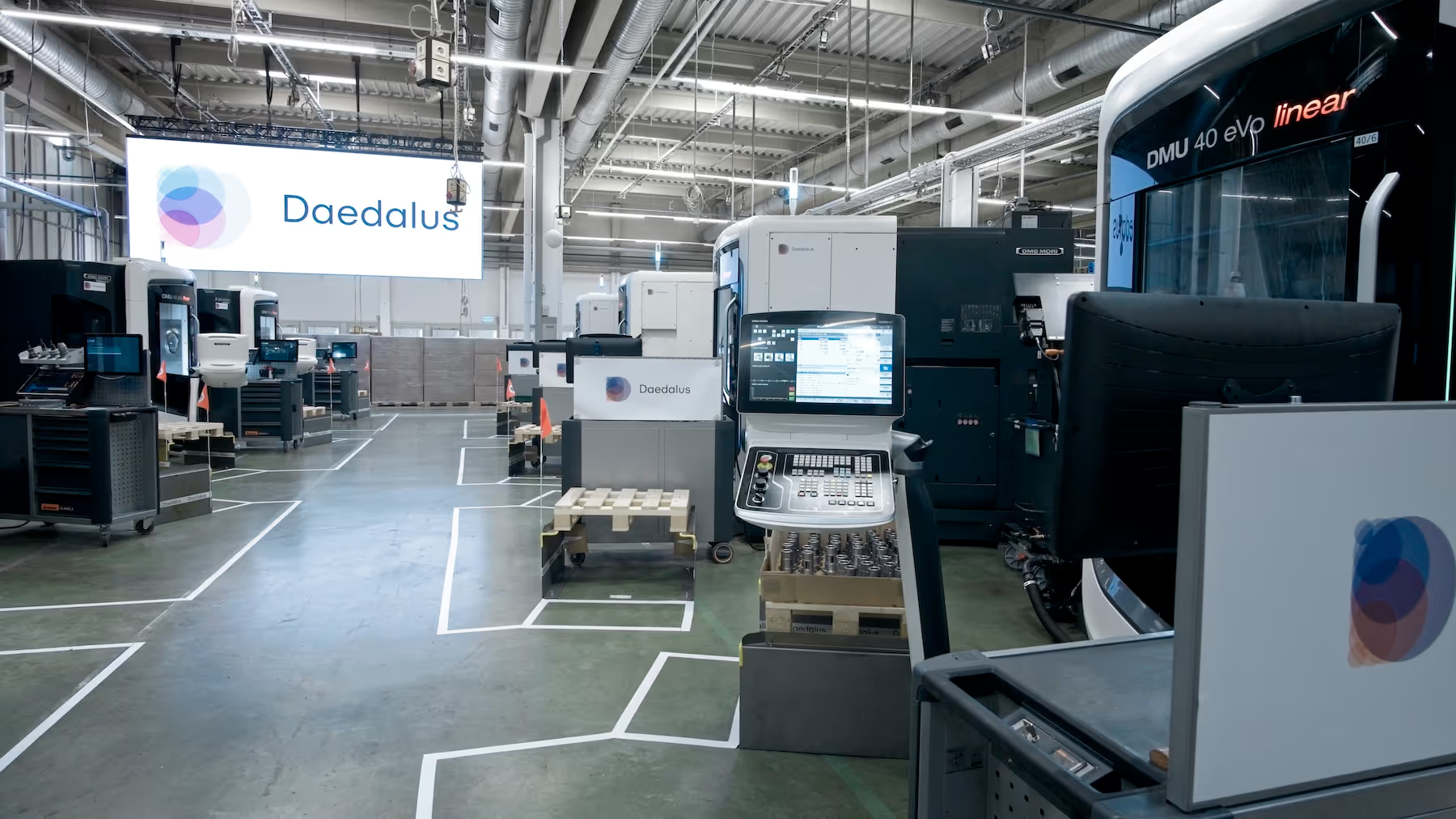
Disclaimer: This column reflects the author's own analysis and is provided for general information purposes only. It does not constitute investment, financial, or professional advice. Readers should verify details with primary sources before making business decisions. Hero image: Walker S2 humanoid robots on UBTECH's production line, official UBTECH product imagery.