The Drone War's Scarcest Resource Isn't AI. It's a 106-Year-Old Shotgun Factory.
Federal Ammunition, Mossberg, and Palladyne AI are jointly building SwarmShot, a reusable counter-drone interceptor, but the deal reveals that mass-manufacturing capacity, not autonomy software, is now the scarcest resource in robotic warfare.

On October 7, 2026, three companies announced they are jointly building SwarmShot, a reusable airborne weapon designed to intercept hostile drones. Read the names in order: Federal Ammunition, O.F. Mossberg & Sons, and Palladyne AI Corp. Two of those companies have spent over a century doing the part of this business nobody puts in a pitch deck, making the same mechanical object reliably, millions of times over. The third has spent the last three years insisting that the hard part of robotics was never the hardware.
That ordering is not a coincidence, and it is not marketing. It is the AI company telling you, in the fine print of its own partnership announcement, where the actual bottleneck in robotic warfare just moved. The autonomy software is no longer the scarce input. The scarce input is who can manufacture a cheap, reliable, mass-produced kinetic payload at the volume a real drone war requires, and that skill belongs to the gun industry, not the AI industry.
A Software Company That Had to Buy Back Its Own Factory
Palladyne AI used to be Sarcos, a hardware company founded by a University of Utah professor in 1983. In 2023, Sarcos exited manufacturing entirely to go all in on autonomy software, renaming itself Palladyne AI the following year on the theory that the pure-software business was the more valuable one to own. The autonomy software worked: Palladyne demonstrated an AI-directed drone swarm during the Army's Ivy Mass exercise, with a single operator overseeing multiple autonomous aircraft, and the company was invited into the Department of War's Northern Strike 26-2 exercise this past August.
Then, in 2025, Palladyne quietly reversed course and formed Palladyne Defense by acquiring two machining companies, Warnke Precision Machining and MKR Fabricators. A company that had just finished arguing it didn't need to make things went out and bought two shops that make things. The pivot away from hardware didn't survive two years before the same company started buying hardware capacity back. That is the clearest tell in this entire story, and it came from inside the AI company itself, not from a critic.
The Two Partners Who Never Needed to Pivot
Mossberg didn't need a pivot because it never left. The company was founded in 1919 by a Swedish immigrant gunmaker in a rented New Haven loft, and it is still run today by his great-grandson. It is commonly described as the oldest family-owned and -operated firearms manufacturer in the United States, a business whose entire 106-year value proposition is mechanical reliability at volume, the exact capability an AI-autonomy company cannot write its way into.
Federal Ammunition's path to this partnership runs through a bigger story about who actually owns American ammunition manufacturing now. Federal was Vista Outdoor's ammunition brand until The Kinetic Group, the spun-off business that also includes Remington, CCI, Speer, and the Alliant Powder gunpowder line, was acquired by the Czech industrial group CSG in a deal that closed in March 2025. CSG's own announcement of the completed purchase put the price above US$2 billion and described a business generating roughly US$1.5 billion in annual revenue across manufacturing plants in Minnesota, Arkansas, Idaho, and Oregon, employing some 3,800 people.
Put the two sides of SwarmShot next to each other and the asymmetry is almost comic. Palladyne's own management guidance for full-year 2026 tops out around US$27 million in revenue. The ammunition brand it just partnered with sits inside a business more than fifty times that size, and the AI company is the junior partner in every sense that matters except the one everyone keeps writing about.
The Autonomy Question Was Already Answered
Here is the detail that should reframe how you read every "AI defeats drones" headline this year: the autonomy part of SwarmShot isn't the open question. Palladyne's swarming software had already cleared an Army field exercise before this deal was announced. What SwarmShot actually needs solved is the thing autonomy software cannot touch, a reusable airframe paired with a purpose-built munition that can be manufactured fast enough and cheaply enough to outlast an enemy's drone supply rather than run out first.
That is a manufacturing-economics problem, not a model-architecture problem, and it belongs to whoever already knows how to stamp out the same explosive-tipped object at scale without a defect rate that gets someone killed. Mossberg and Federal have been solving exactly that problem, for a different kind of ammunition, since before either company's AI partner existed.
Two Companies, Two Answers to the Same Shortage
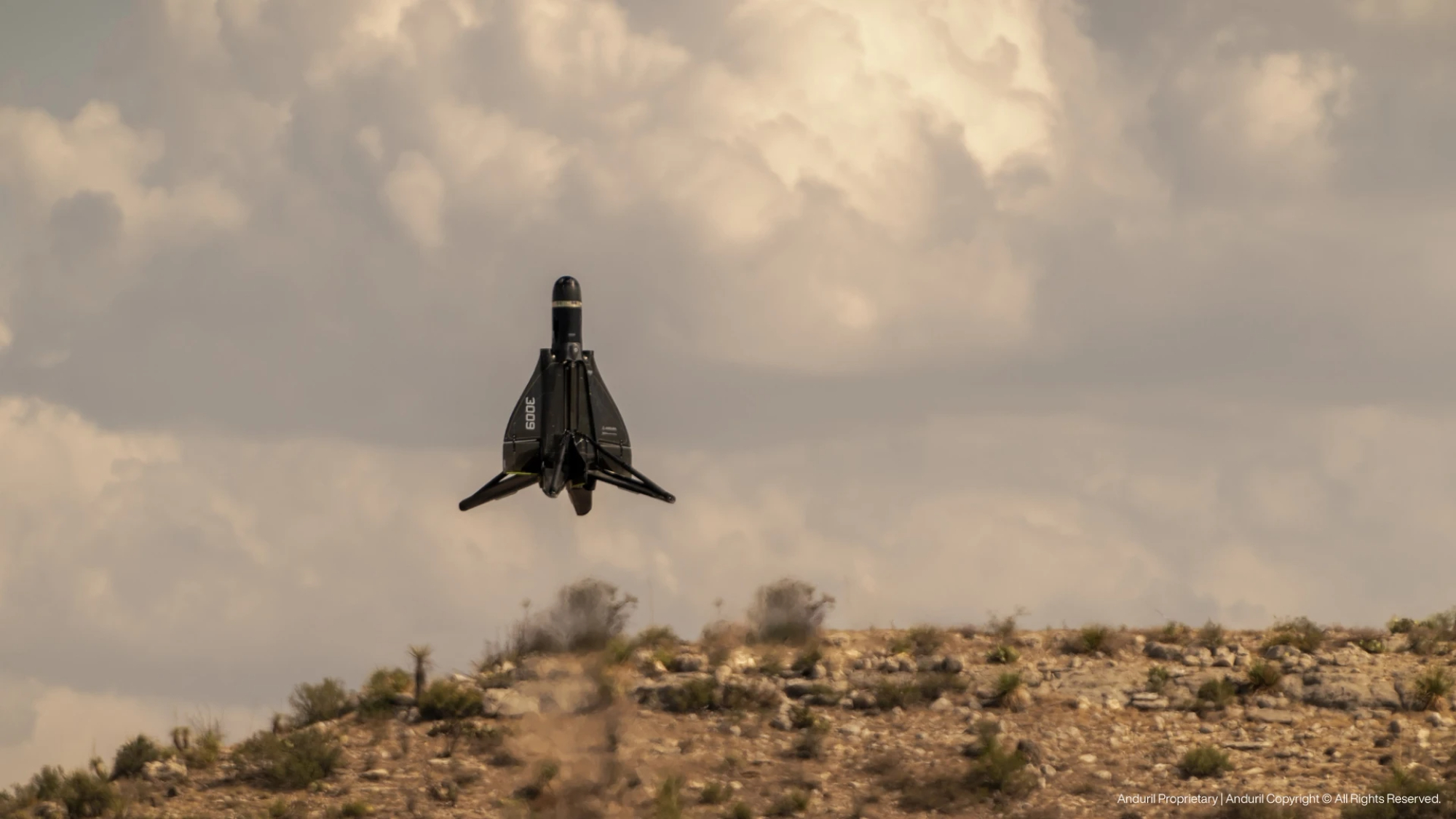
Compare SwarmShot's partnership model with Anduril's approach to the identical scarce resource. Anduril builds its reusable Roadrunner interceptor and its kinetic Anvil variant largely in-house, backed by a US Army contract awarded in October 2024 worth US$250 million, covering roughly 500 of the recoverable interceptors along with other program elements. Anduril chose to raise enough venture capital to build its own manufacturing muscle rather than borrow someone else's. Palladyne chose to rent Mossberg's and Federal's instead.
Neither path proves manufacturing capacity stopped mattering. Both prove it is the thing being fought over, just through opposite financing strategies: one side buys the factories, the other side marries into them.
What Nobody Is Pricing Yet
There is a real cost to the marriage model, and it is not a financial one. Mossberg and Federal have deep, decades-tested expertise in the mechanical safety of weapons a human being holds and fires. Neither company has a public track record in reviewing the failure modes of a weapon that decides, on its own, which flying object to destroy. Anduril and other venture-backed defense-tech firms have spent years building internal targeting-review processes specifically because they were building autonomous kill chains from day one. A three-way partnership between a small AI company, a family shotgun maker, and a subsidiary of a Czech arms conglomerate has not shown its work on who owns that review, and a program built this way should have to answer that question before a single unit reaches a customer, not after.
The demand side explains why more of these marriages are coming. The European Commission added another €130 million, roughly US$141 million, to counter-drone border funding on October 5, pushing total commitments past €500 million, over US$540 million, in under a year. Governments are buying interceptors faster than any single company, AI-native or legacy, can build them alone, which is exactly the condition that makes a software company and a gunmaker worth marrying in the first place.
What I'm Watching Next
Running a taxonomy of robotics companies by hand teaches you to distrust a press release's org chart and watch its supply chain instead. The signal worth tracking here isn't whether SwarmShot's autonomy works; Palladyne has already shown the Army that it does. It's whether Palladyne's own Warnke and MKR acquisitions actually end up machining SwarmShot's airframes, or whether that capacity quietly stays idle while Federal and Mossberg do the real manufacturing under their own roofs. The first outcome means Palladyne is building toward owning its hardware supply chain the way Anduril already does. The second means the AI company's hardware pivot was never more than a hedge, and the real production muscle in this partnership, the part worth watching for the next contract, belongs entirely to the gun industry.
This analysis draws on Palladyne AI Corp's October 7, 2026 announcement of the SwarmShot partnership, CSG's own announcement of its completed acquisition of The Kinetic Group, Mossberg's published company history, Palladyne AI's full-year 2026 revenue guidance, the US Army's October 2024 Roadrunner interceptor contract with Anduril, and the European Commission's October 5, 2026 counter-drone funding announcement. It is for general information purposes only and does not constitute investment, financial, or professional advice.
Hero image credit: Anduril Industries' Roadrunner-M reusable interceptor during a test flight, official product photography credited to Anduril Industries.