D.R. Horton Just Signed a Deal to Build 1,250 Homes With Robots. It Won't Own One of Them.
America's largest homebuilder by volume, D.R. Horton, signed a multi-year deal with Canada's Promise Robotics on October 13 to build more than 1,250 homes through a Factory-as-a-Service platform, renting robotic production capacity instead of buying robots outright. This column argues that ownership-free model, echoed in warehouse robotics deals like 1X's EQT agreement, is the real business model physical AI is converging on, and traces the construction-labor economics and platform leverage behind it.

D.R. Horton closed 84,655 homes in the twelve months ending in June, more than any other builder in the United States, on its way to a projected US$32.5-33 billion in revenue this fiscal year. On October 13, America's biggest homebuilder signed a multi-year deal to build more than 1,250 houses with robots.
It does not own a single one of them.
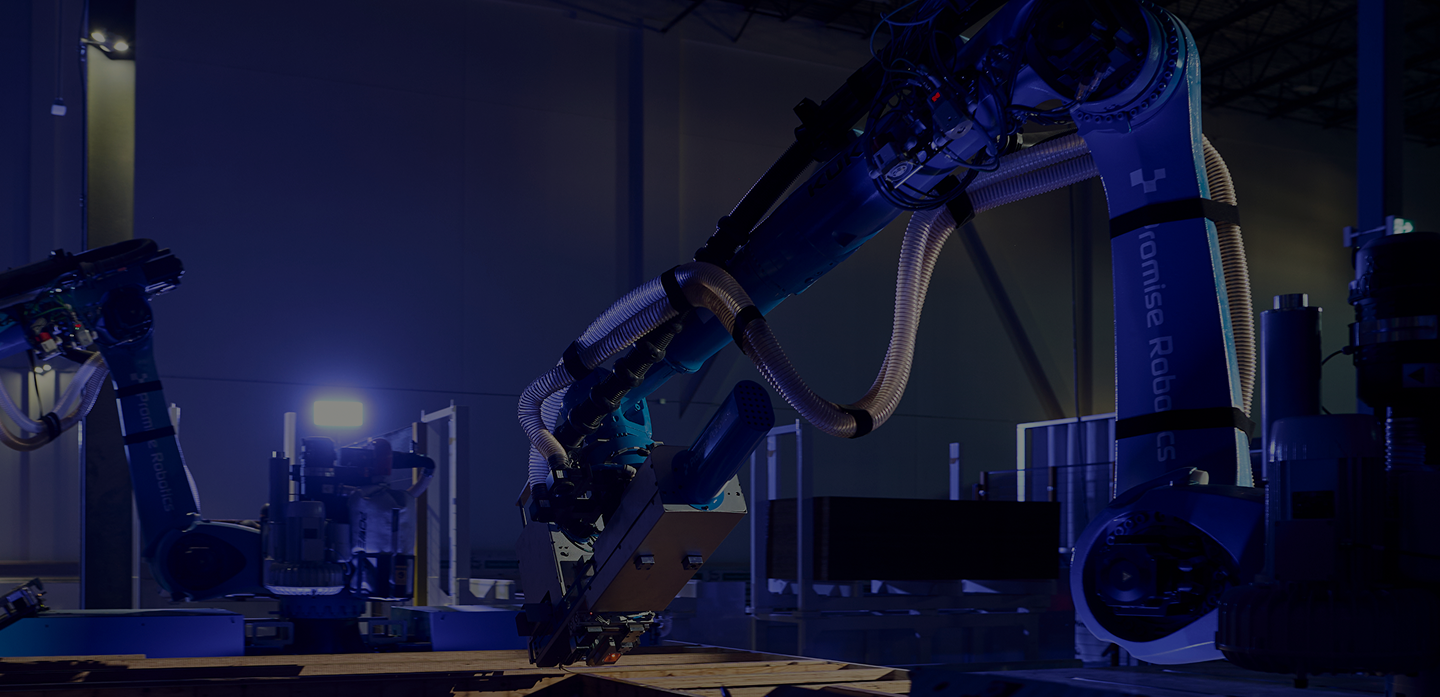
That detail is the whole story, and almost nobody writing about it this week treated it as the headline. The deal is with Promise Robotics, a Canadian company that runs what it and D.R. Horton both call a Factory-as-a-Service platform: robotic arms, AI-generated production plans, and factory floors in Calgary, Edmonton, and now Phoenix, all owned and operated by Promise. D.R. Horton sends house designs in. Framed, wired, and partially finished wall and floor assemblies come out, ready for a crew to set and close up on site. Brad Conlon, D.R. Horton's senior vice president for strategic growth and innovation, said the company is "continuously focused on improving cycle times, increasing production capacity, and bringing greater consistency and predictability to our operations." Nobody at D.R. Horton described this as buying robots, because it isn't.
That distinction is the actual physical AI story of 2026, and the humanoid industry has been telling it backwards.
Ownership Was Never the Proof It Claimed to Be
For two years, the default proof of a buyer's seriousness has been ownership. A logistics company that leases ten humanoids is a pilot customer; a logistics company that buys a hundred is a believer. Investors read fleet size as commitment and treat it as the number that validates a hundred-billion-dollar market narrative. D.R. Horton, one of the most financially disciplined homebuilders in the country, looked at that same industry and did the opposite: it signed up for robotic capacity it will never put on a balance sheet, never maintain, and never be stuck depreciating when the technology improves next year. That is not caution. It is what a buyer with real procurement leverage does when a technology is still unproven at scale. It makes someone else carry the capital risk.
The Pattern I've Watched All Year
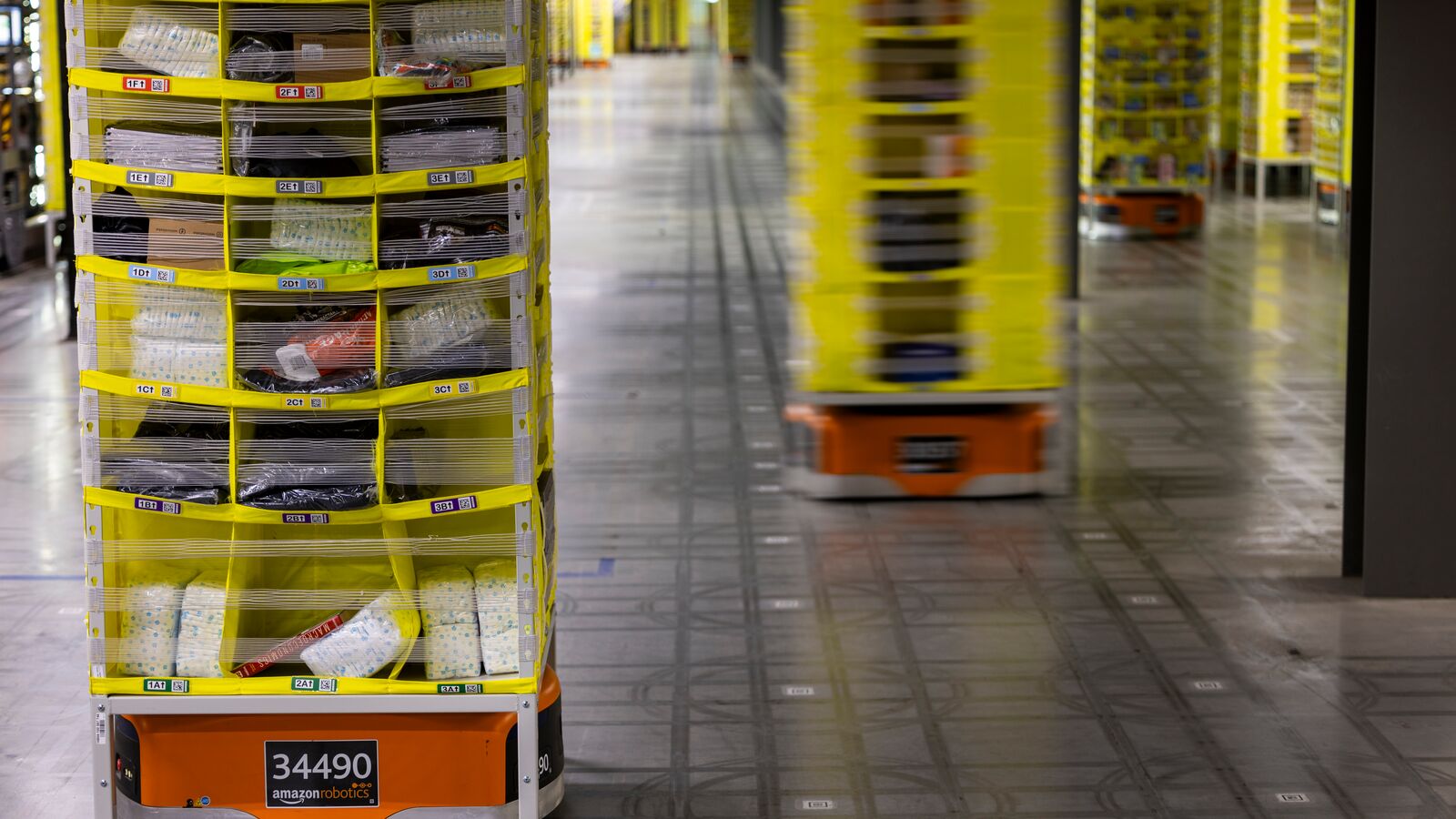
I have spent most of this year watching warehouse operators make the identical bet, and the repetition is what convinced me this is not a financing quirk. 1X Technologies' largest confirmed humanoid commitment this year, which I wrote about here in October, was not a sale to a homeowner. It was an agreement to make up to 10,000 Neo units available to the industrial portfolio companies of its own investor, EQT, structured as access to capacity rather than a straightforward equipment purchase. Robotics-as-a-service vendors in warehousing have spent three years training customers to expect this: pay per pick, per hour, per unit shipped, never per robot. Housing just got its own version, and because housing construction has resisted productivity gains for longer than almost any other major industry, it is a more interesting test case than another warehouse contract would have been.
The Labor Math, With a Catch
Here is the number that makes the deal legible, and it comes with an honest complication. The construction industry needs 349,000 net new workers in 2026 to keep supply and demand in balance, according to Associated Builders and Contractors' own economic model, published in January. That is actually down from 439,000 the year before, and ABC's chief economist, Anirban Basu, attributed most of the 2026 demand to retirements rather than growth in construction activity.
Read that twice. The labor gap driving builders toward automation is not primarily a boom-time shortage; it is a slow bleed of experienced tradespeople aging out, with too few replacements behind them. A Factory-as-a-Service deal does not need a construction boom to make sense. It needs a construction industry that is quietly losing the people who used to frame a wall, which is a more durable problem than a cyclical one, and a worse one for anyone betting robotics adoption will stall if housing starts cool off.
What Promise is actually selling D.R. Horton is not robots. It is a hedge against needing more framers than exist. The company's own marketing claims the platform saves more than US$300 per home per day, builds 60 percent faster, and roughly doubles output for the same labor. Treat those as Promise's numbers, not verified ones; neither company has published a contract value, a per-unit cost, or an independently measured productivity figure, and a vendor's own efficiency claims about its own product deserve the most skepticism, not the least. What can be verified is narrower and still meaningful: Promise now runs three production sites across two countries, D.R. Horton is its first major U.S. homebuilder client, and the homes in question are single-story, single-family houses aimed at the Phoenix market's entry-level buyers, not custom architecture or multi-story builds. This is capacity for the simplest, highest-volume part of the business, which is precisely where a still-maturing automation platform should start, and precisely where its early results will tell you the least about whether it generalizes.
Who Actually Owns the Leverage
There is a second thing happening underneath the labor story, and it is the one I find more consequential for how this industry's power actually settles. In a Factory-as-a-Service arrangement, the company that owns the production infrastructure accumulates the thing that compounds: the tooling, the process data, the relationships with every builder who signs on next. D.R. Horton owns the brand on 84,655 doors a year. Promise owns the factory floor those doors increasingly pass through.
Ownership of the robot was never where the leverage was going to sit. Ownership of the factory the robot lives in was.
Every builder that follows D.R. Horton into a Factory-as-a-Service contract, and Promise says that is the explicit plan across North America, adds to Promise's production graph without Promise ever having to convince a single homebuyer that robots belong in their neighborhood.
The Risk in Renting It
None of this guarantees the model survives contact with a downturn. Rented capacity is easy to add and just as easy to cancel, which cuts both ways: Promise carries the capital risk of building out factories, but a builder slowing production in a soft housing market can walk away from a service contract far faster than it could idle a factory it owns outright. If housing starts slow sharply, D.R. Horton's exposure is a contract line item. Promise's exposure is an underused factory in Phoenix it financed on someone else's promised volume. The company absorbing the capital risk today is the one that could be left holding empty floor space tomorrow.
The humanoid industry is still trying to sell the public on robots people will want to own. The most important physical AI contract signed this week was proof that the industry's most sophisticated buyers have already decided they would rather rent the capability and let somebody else hold the asset. Watch who else takes that deal next, not how many robots show up on anyone's balance sheet.
This analysis draws on Promise Robotics' and D.R. Horton's own October 13, 2026 announcement of their multi-year Factory-as-a-Service agreement, Promise Robotics' own published production-site and platform claims (promiserobotics.com), D.R. Horton's fiscal 2026 third-quarter earnings release, and Associated Builders and Contractors' January 2026 construction workforce model. It is for general information purposes only and does not constitute investment, financial, or professional advice.
Hero image credit: Promise Robotics, official product photography of robotic framing arms at a Promise Robotics production facility (promiserobotics.com).