Kawasaki Promised Autonomy by 2030. Its Own Roadmap Says 2040.
Kawasaki's own March roadmap puts full humanoid autonomy at 2040, yet October coverage says 2030. The same compression shows up at Tesla and Hyundai; only 1X is honest about how much of its robot is still human-operated.

Kawasaki Heavy Industries published its humanoid roadmap on its own corporate blog in March. Read it closely and 2030 means a robot doing simple transport and patrol work inside a fenced-off factory, under remote control, with a human still making every decision that matters. Full autonomy in unstructured spaces, the company's own words, is a 2040 target. Full environmental resistance to heat, water, and disaster debris is 2050. Seven months later, on October 4, a headline about the same company's roadmap said Kawasaki was targeting a fully autonomous humanoid by 2030. Nothing in the company's own document had changed. Only the number that survived the trip from engineering roadmap to headline had.
That gap is not a translation slip. It is the defining feature of how the humanoid robot industry currently talks about autonomy: a hedged, staged, multi-decade internal plan goes in one end, and a single flattering year comes out the other. I read these documents for a living, from a desk in Manila, building and maintaining the taxonomy that sits underneath a platform tracking robot makers worldwide. The pattern only becomes visible when you put the source document and the headline about it side by side, which almost nobody outside a research or procurement team ever does.
The autonomy date in a robot press release is rarely a forecast. It is usually a promise with an alibi, payable in a year when nobody currently on the call will still be answering for it.
The compression problem, in one company's own words
Kawasaki's blog post on its ninth-generation Kaleido is unusually specific about what it is not promising. It lists 2030's required technologies as remote operation, conversational interaction, voice response, and SLAM-based mobility, explicitly framed around humans retaining decision authority while the robot executes under supervision. Dexterous hand control, contact sensing, and the posture control needed for genuinely unstructured work are listed as 2040 requirements. The company frames this as deliberate, staged social implementation, not evasiveness. It is the kind of document procurement teams actually need: specific technology gates attached to specific years, written before anyone had a reason to flatter an audience.
The acceleration narrative attached to the October headline leans on Noetra, a new Japanese industrial consortium backed by the government's physical-AI push, building an NVIDIA-based compute cluster aimed at a trillion-parameter-scale robotics foundation model, with national funding reported in the hundreds of billions of yen. That is a real and significant program. It does not, on its own, revise a company's stated hand-control and posture-control timeline by a decade. A faster chip does not retire a mechanical and sensing roadmap; it changes how fast a company can work through one, which is a different and much less headline-friendly claim.
A cleaner promise, and a broken one, in the same industry
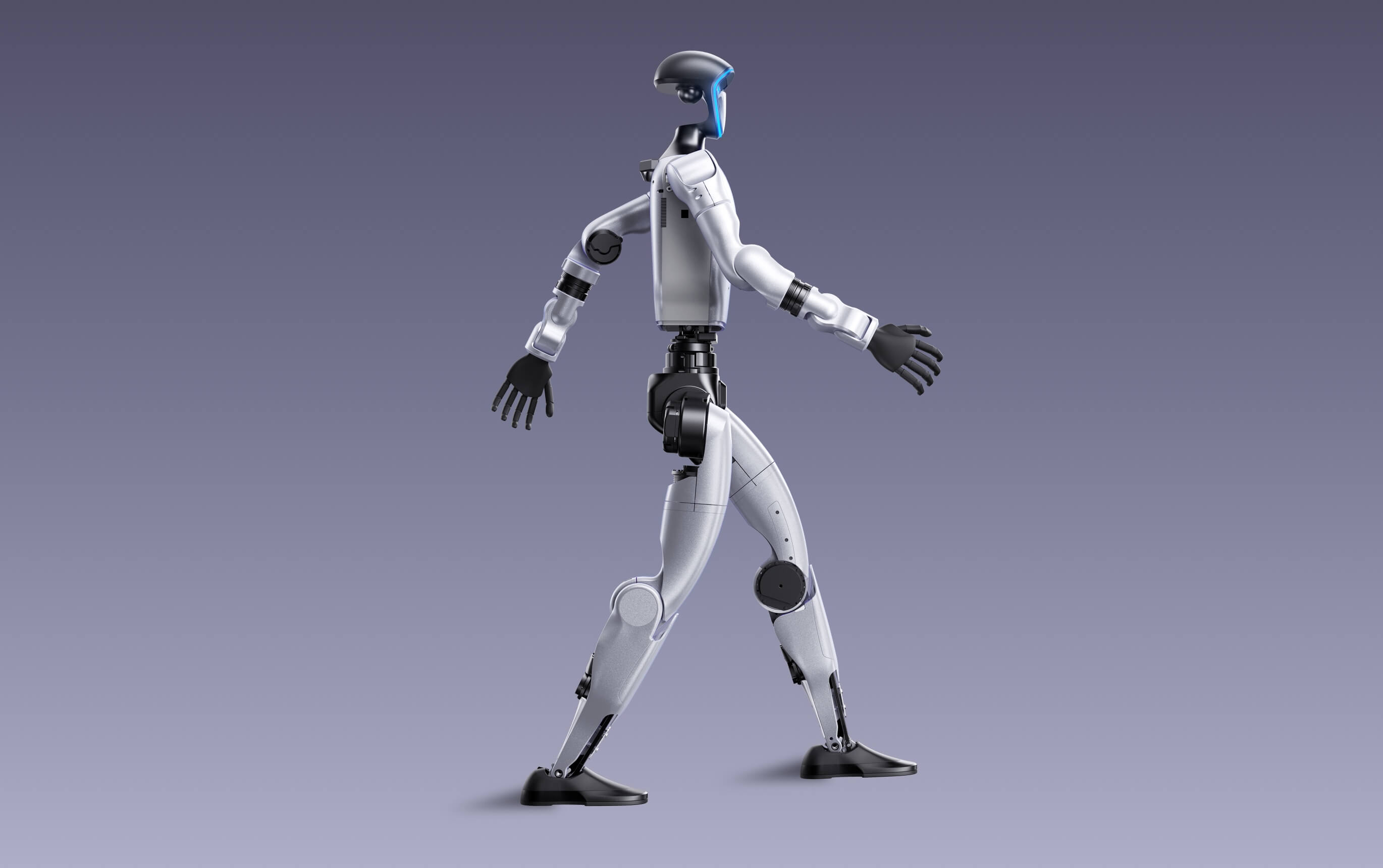
Compare two promises made four months apart. In January, at CES, Hyundai's Boston Dynamics unit said it would manufacture 30,000 Atlas humanoids a year by 2028 at its Savannah, Georgia Metaplant, with the first deployed task, parts sequencing, starting that same year and assembly work added by 2030. That is a capacity promise: a specific number of units, a specific factory, a specific first task. It can be checked by counting robots on a floor. It makes no claim about full autonomy at all; the near-term plan is openly staged around narrow, supervised tasks.
Now the broken version. On Tesla's January 2025 earnings call, Elon Musk said the company's internal plan called for roughly 10,000 Optimus units built in 2025, and that several thousand would be doing useful work in Tesla's own factories by year's end. A year later, on the January 2026 call, Musk's own description had collapsed: Optimus was "still in the R&D phase," not in factory use "in a material way," with no significant production volume expected until "probably the end of" 2026. Both statements came from the same person, a year apart, about the same robot. The first was a capability promise with no near-term number anyone could check before the claim's own deadline arrived. The second was what happened when that deadline arrived anyway.
The one vendor being honest about the gap
Then there is 1X Technologies' NEO, a US$20,000 home robot that shipped to early customers with a feature called Expert Mode: when NEO cannot complete a household task on its own, a remote human operator takes over through the same pipeline the company uses to collect training data. Independent estimates of NEO's autonomous task completion rate at launch cluster around 60 to 70 percent, meaning roughly a third of what the robot does in a customer's home still runs through a person watching a video feed. 1X's own product materials do not publish that number. But the company has not hidden the mechanism either; Expert Mode is a named, described feature, not a background process customers discover by accident.
That makes NEO, oddly, the most trustworthy autonomy story in this piece, not because its autonomy is further along, but because its gap between autonomous and assisted operation is the one a buyer can actually locate and ask about. A company that names its teleoperation feature is giving you something to verify. A company that names a 2030 or 2040 autonomy year is giving you something to wait for.
Why the distant date keeps winning anyway
The incentive here is not mysterious. A production number gets checked every quarter, on an earnings call, by analysts with the prior quarter's transcript open. An autonomy date set five or ten years out gets checked by almost nobody, because the people who wrote it down will likely have moved to different roles, different companies, or different press cycles by the time it comes due. Kawasaki's 2040 and 2050 dates are honest precisely because they are far enough away to be unfalsifiable on any timeline that matters to this quarter's story. The 2030 date is the one close enough to be interesting and far enough away to be safe, which is exactly why it is the one that gets lifted out of a longer document and put in a headline.
National industrial policy adds its own pressure toward distant round numbers. Japan's METI has attached a public target of 10 million AI-equipped robots across 18 sectors by 2040 to its physical-AI funding push. Targets like that are useful for organizing an industrial strategy and nearly useless for evaluating any single robot's actual capability today, but the two get blended in coverage because they share a press cycle.
What to actually track
None of this means every distant target is dishonest, or that staged roadmaps are inherently more truthful than aggressive ones; Kawasaki could simply be wrong about how long dexterous hand control takes, the same way Tesla was wrong about how long factory deployment would take, and good-faith uncertainty is not the same failure as rhetorical compression. The tradeoff cuts the other way for buyers, too: a vendor publishing a staged, hedged roadmap looks weaker in a pitch deck than one that says "fully autonomous by 2030" with no stages attached, which is its own kind of market pressure toward vagueness.
The practical test I use when a vendor claim crosses my desk is simple, and it is the one worth borrowing: does this promise come with a number that falls due before the people who made it have moved on? A unit count tied to a named factory and a fiscal year clears that bar. A teleoperation percentage, even an unflattering one, clears it. A decade-out autonomy date, attached to no interim checkpoint anyone has to defend in public, does not, whatever the headline above it says. As more governments fund robotics the way Japan is funding Noetra, expect more of these distant, round, unfalsifiable years to arrive bundled with real money and real compute. The money will be real. The date attached to it deserves exactly as much trust as the nearest number behind it that someone is still on the hook to explain.
This analysis reflects publicly available research and product information as of the publication date and should not be read as investment, financial, or professional advice; it is provided for general information purposes only.
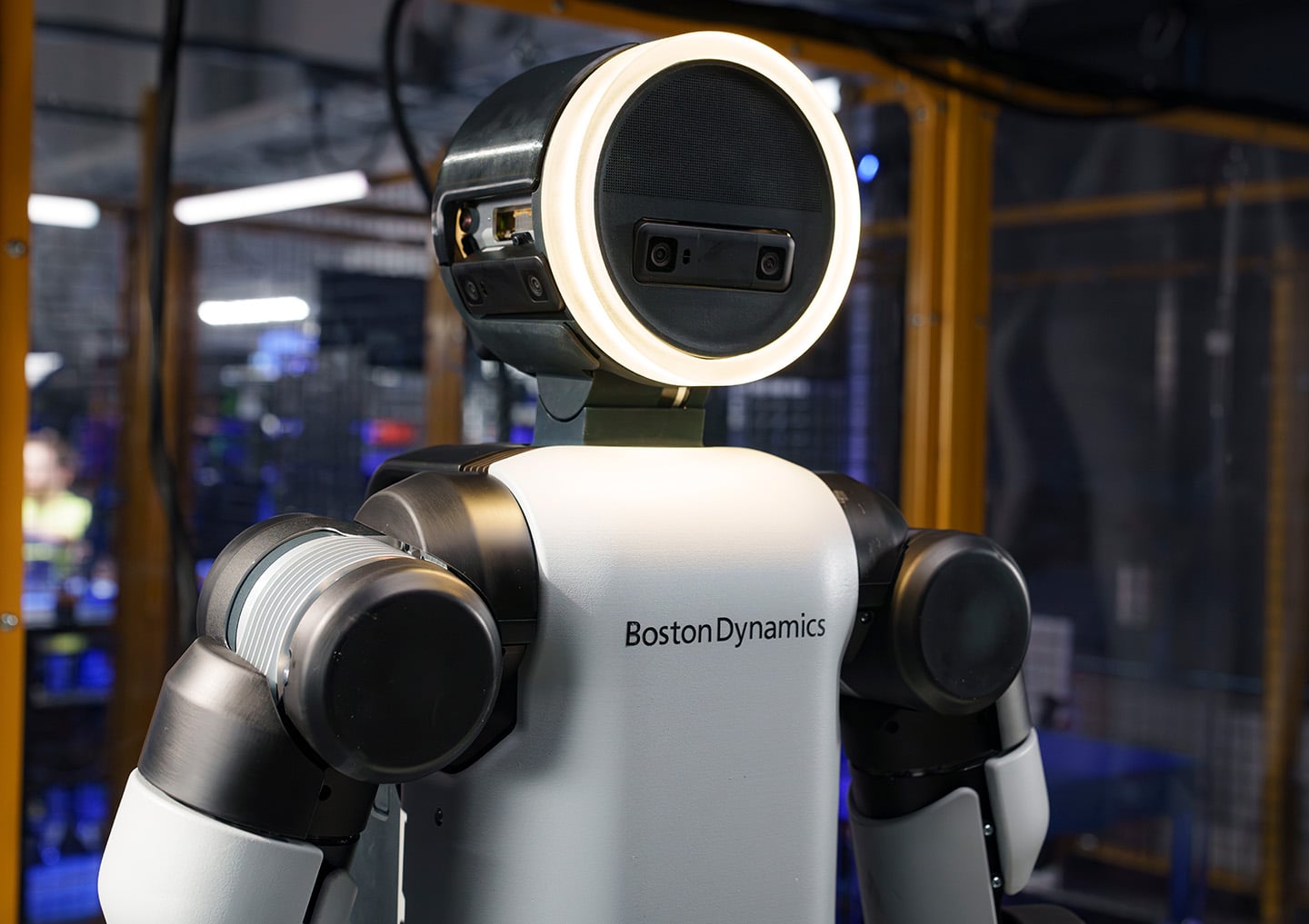
Hero image credit: Boston Dynamics, official product photography of the Atlas humanoid robot released alongside its January 2026 manufacturing announcement.