AGIBOT's Robots Got a Guinness Record. The Real One Is Still 1,372.
AGIBOT choreographed 110 production-line humanoids into a Guinness-certified dance in Jinan, but the certificate is for a brand-new record category, not a win over the existing 1,372-robot "most robots dancing" benchmark set in 2018. The gap between the two numbers is a window into how humanoid makers are using invented record categories, and "not AI-generated" video labels, to borrow credibility their own operational data has not yet earned.

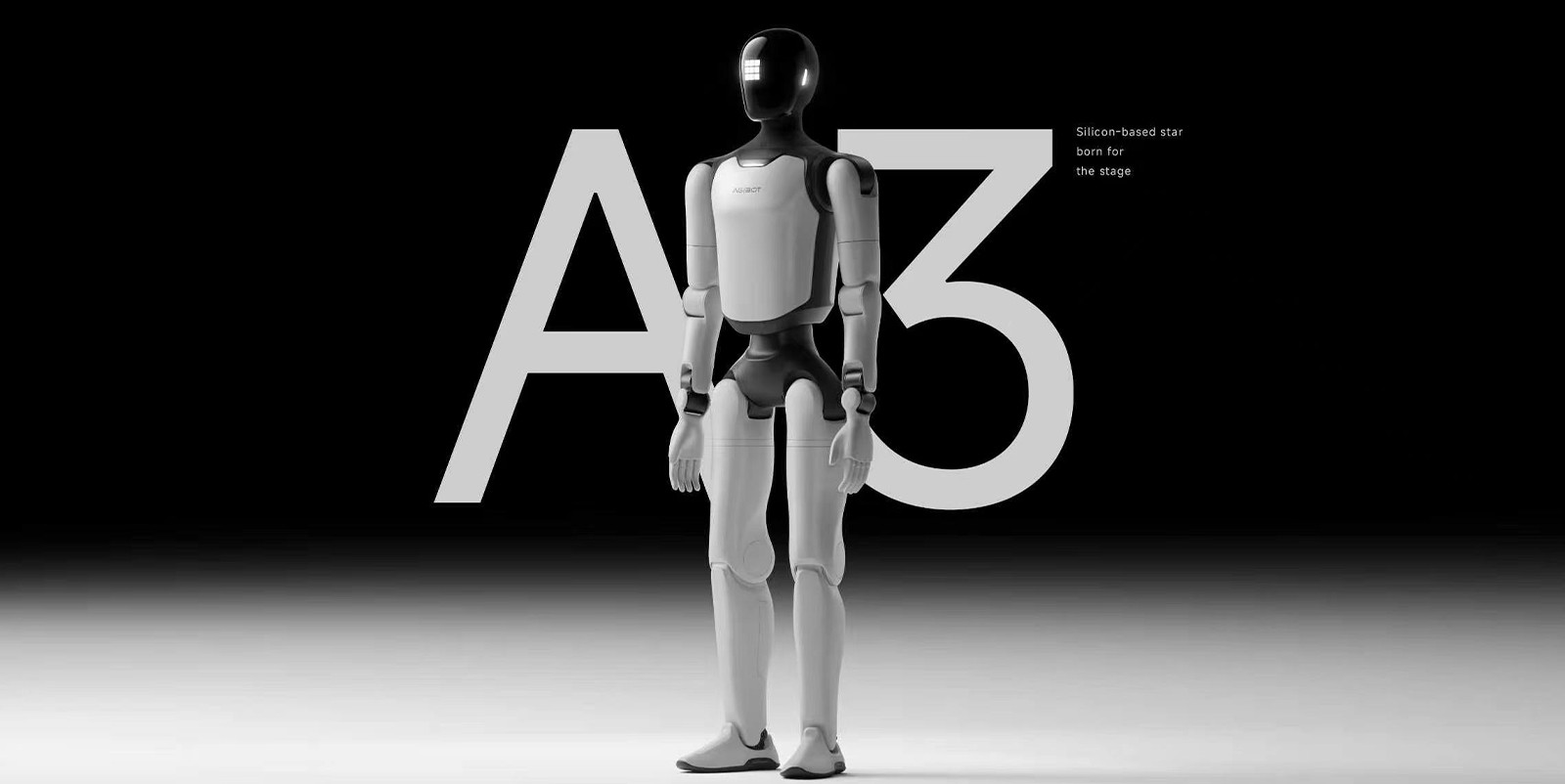
On October 24, 110 full-size humanoid robots lined up inside a convention center in Jinan, China, and danced in formation for five minutes and forty-three seconds. A Guinness World Records judge was on site. A certificate was presented. The robots, their maker says, came straight off the production line.
AGIBOT, the Shanghai-based humanoid maker also known as Zhiyuan Robotics, is calling it a world record for "most humanoid robots dancing simultaneously." That phrase is doing more work than it looks like it is.
Guinness has had a record for robots dancing since 2016. It currently stands at 1,372 machines, set in Rome in February 2018, and it has not been broken. AGIBOT's 110 units are not even a tenth of that number. The company did not beat the existing record. It filed for a new one, in a category that, as far as I can find, had never been awarded before October 24, which means the "record" is really just the first entry in a field of one.
That distinction matters more than it sounds like it should, because it is a clean window into how this industry manufactures its own superlatives, and into what the Jinan event actually proved versus what it was built to be seen proving.
The record nobody broke
Guinness's own page for "most robots dancing simultaneously" is unambiguous: 1,372 robots, Rome, TIM S.p.A., February 2018, using UBTECH's Alpha 1S, a 40-centimeter aluminum-and-plastic toy with 16 degrees of freedom. Before that, the bar moved from 540 (UBTECH, a televised gala in 2016) to 1,007 (Ever Win Company, a beer festival in 2016, all units run off a single phone) to 1,069 (WL Intelligent Technology, Guangzhou, 2017). Every one of those machines was small, cheap, and built to do one thing: wave its arms in sync with a thousand identical siblings without falling over.
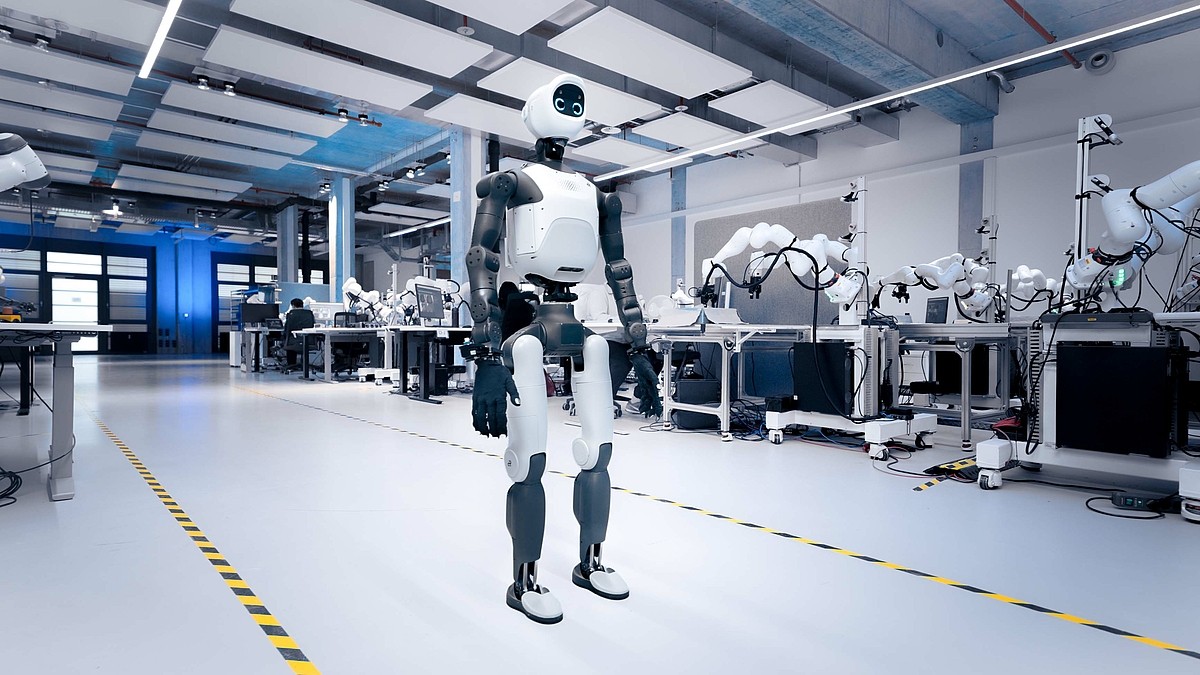
A 173-centimeter, actuator-dense, production-grade humanoid is not that machine. Coordinating 110 of them through a stage routine, over wireless fleet control, without a collision or a dropped frame, is a genuinely harder systems problem than coordinating 1,372 toys on a single Bluetooth signal. But "harder" and "bigger" are different axes, and Guinness's own database only has a number for the second one. AGIBOT's 110 does not touch it. So a new, narrower title had to exist for there to be a certificate to hand over at all.
This is the part worth sitting with: the industry isn't breaking records. It's defining ones it can win.
What was actually new
Strip away the Guinness framing and there is a real achievement underneath, worth describing on its own terms. AGIBOT ran the 110-unit Expedition A3 fleet on its LinkBots control system, using ultra-wideband positioning for centimeter-level location and millisecond-level synchronization across 5G and Wi-Fi links. That is the kind of infrastructure that, if a single unit drops connection, has to re-plan the formation around the gap in real time rather than let the whole routine fall apart. That is closer to warehouse fleet orchestration than to choreography software, and it is the part of this story that a labor-replacement thesis should actually care about.
Wang Chuang, AGIBOT's senior vice president, made the pitch explicit on site: "Today, they are a hundred dancers; tomorrow, they will be a hundred employees in real jobs." It is a good line, and vendors are supposed to say good lines. It is also, on the evidence so far, more promise than record. AGIBOT's own disclosure is that one Expedition A3 Ultra unit has logged 30 days and more than 400 hours of service at a Jinan metro station: real, if modest, operational data. The company says it delivered its 20,000th embodied robot last month, in Zhuhai, where more than 100 A3 units are already working a theme park. Those figures are the actual evidence for "tomorrow." The dance is the trailer.
A pattern, not an incident
AGIBOT is not alone in this genre. Unitree posted its own viral clip in February: fifty G1 robots in red performing synchronized martial arts in front of Beijing's Temple of Heaven, flips included. The video carried an on-screen label: "live-action, not AI-generated." Think about what that label is actually conceding. A robotics company felt it necessary to certify, in writing, on its own promotional footage, that the robots in the video were real and not rendered. That is not a confident industry reassuring skeptics. That is an industry that knows its own audience no longer trusts a robot demo on sight, and is responding by stacking proof-of-authenticity labels and third-party certificates on top of the spectacle, rather than by making the underlying capability legible on its own.
A Guinness certificate and a "not AI-generated" disclaimer are solving the same problem from two directions: both borrow credibility from an outside authority because the robot itself can no longer earn it with the audience it's performing for.
I watch this from Manila, where the humanoid pitch that actually lands with operators is never the stage routine; it's the uptime log, the shift count, the thing a facilities manager can put in a spreadsheet. Procurement conversations here ask what a robot did at 2 a.m. on a Tuesday for three weeks straight, not what it did under stage lights with a camera crew and a Guinness adjudicator present. The 400-hour metro deployment is a more honest sales pitch than the dance, and it's buried two paragraphs into the press coverage.
What the record-chasing actually signals
None of this means AGIBOT's engineering is fake. Standardized joint calibration and torque settings tight enough to run 110 production units through an identical routine without a visible stumble is a real manufacturing-consistency claim, and manufacturing consistency is the scarcest thing in this industry right now, scarcer than any single flashy demo. That claim deserved to be made on its own terms. Instead it arrived wrapped in a record category invented for the occasion, which invites exactly the skepticism I'm applying to it here.
There is a tradeoff buried in that choice. A narrow, winnable record generates a clean headline and a certificate photo op; a frank claim about production-line calibration variance generates a technical footnote nobody shares. Humanoid makers are choosing the headline, every time, and the cost is that readers, and increasingly buyers, have to do the work of unbundling the real claim from the record-category theater around it.
Expect more of this, not less, as humanoid valuations keep outrunning deployment data. Guinness World Records has quietly become a marketing vendor to the robotics industry, and there is no sign that relationship is slowing down. The companies that will actually matter in five years are the ones whose uptime logs get longer while their record claims get quieter, not the other way around. Watch the metro station, not the stage.
This analysis reflects the author's own reading of Guinness World Records' own published record pages, AGIBOT's own on-site statements and production disclosures, and public reporting and video of Unitree's Temple of Heaven performance. It is provided for general information purposes only and does not constitute investment, legal, or professional advice.
Hero image credit: AGIBOT, from the company's own Expedition A3 product photography.