ABB Posted a Record Quarter. Its Robots Had Nothing to Do With It.
ABB's record Q3 2026 earnings already exclude the robotics division it is selling to SoftBank for roughly US$5.4 billion in a deal still awaiting regulatory approval, revealing that electrification and data centers, not robots, actually drove the quarter.


On October 20, ABB told investors it had just booked its best quarter in company history: US$12,055 million in orders, up 40 percent, the largest order intake the industrial group has ever reported in a single quarter. Buried in the same release was the detail that makes the number interesting rather than merely impressive. Robotics, the division that put ABB's name on more factory floors than almost any company alive, was not in it. It has not been in ABB's reported numbers since the fourth quarter of 2025, filed instead under discontinued operations, because ABB is in the middle of selling the whole business to SoftBank.
That is the thesis worth sitting with. ABB did not need robots to post a record quarter. The growth came from electrification and from power equipment feeding data centers, where the company's own chief executive described order growth as a triple-digit percentage increase. A business built on making robots just proved, in its own earnings release, that the rest of its portfolio can carry a record quarter without them. SoftBank is still paying roughly US$5.3 billion in net cash for the part ABB apparently does not need.
A healthy business, sold anyway
Start with what is actually being sold. ABB and SoftBank signed a definitive agreement in October 2025: SoftBank acquires 100 percent of a new Zurich-based holding company carved out of ABB's robotics arm, at an enterprise value of US$5.375 billion. The deal is still not closed. It is waiting on regulators in the European Union, China, and the United States, with ABB and SoftBank both guiding to a mid-to-late 2026 close, meaning a business generating billions in annual revenue is still operating under a change-of-control cloud more than a year after the agreement was announced.
It is not a business in retreat while it waits. Weeks before the Q3 print, at China's CIIF trade show, ABB Robotics launched two new industrial robots and an AI-based vision training tool, the kind of product investment a company makes when it still expects to compete, not when it is coasting toward a handover. Robotics divisions that are being euthanized do not usually ship new SKUs two weeks before the parent reports a record quarter without them.
So why sell a unit that is shipping new products and sitting inside a record-setting company? Because ABB's own numbers answer the question nobody is asking out loud: robotics was never what made this quarter. Electrification and the data center buildout did. A global industrial conglomerate just told its shareholders, in its own earnings release, that its growth engine runs on powering someone else's compute, not on building someone else's machines.
What SoftBank actually bought
SoftBank's own language about the deal is worth reading closely rather than paraphrasing into something friendlier. "SoftBank's next frontier is Physical AI," chairman and chief executive Masayoshi Son said when the agreement was announced, framing the acquisition as a way to fuse what he called Artificial Super Intelligence with robotics. SoftBank has organized its strategy around four stated pillars: AI chips, AI robots, AI data centers, and energy, alongside its separate stakes in generative AI companies.
Notice what that list does. It puts robots in the same sentence as chips, data centers, and energy, as interchangeable pieces of one infrastructure stack rather than as a product business with its own profit-and-loss line to defend. SoftBank does not manufacture chips. It does not operate data centers at scale. It holds positions. ABB Robotics is not being bought by a company that wants to out-engineer Fanuc or Yaskawa on cycle times. It is being bought by a company assembling a portfolio of claims on the physical-AI economy, the same logic that put SoftBank into Arm and into OpenAI.
Masayoshi Son is not buying a robot company so SoftBank can build robots. He is buying a robot company so SoftBank has one.
Compare that to the other major robotics acquisition of the past two years. Hyundai completed its purchase of Boston Dynamics and has set a target of 30,000 robots a year by 2028, a number that only makes sense if Hyundai intends to be a manufacturer at scale, vertically folding robotics into a company that already knows how to run high-volume factories. Hyundai bought a robot company to make more robots. SoftBank bought a robot company to hold a card in a larger infrastructure portfolio. Both are called robotics acquisitions. They are not the same trade.
The part of the story that is not tidy
None of this should read as SoftBank getting a steal or ABB pulling off a clean pivot. ABB's own Q3 commentary flagged that its e-mobility unit, EV charging hardware, is still losing money, just losing less of it than before. A conglomerate can be disciplined about electrification and data centers while still carrying a genuinely weak bet elsewhere in the same portfolio. The story here is not that ABB suddenly got everything right. It is narrower than that: the one unit it chose to sell is the one unit that was not the problem.
There is a real risk sitting inside the SoftBank side of this too. A company that has bundled a Swiss industrial robotics business, chip design through Arm, and a stake in the leading AI lab into one strategic story has not yet shown that the bundle produces more value than the sum of separately managed parts would. SoftBank's own history, from WeWork to the more volatile stretches of the Vision Fund, is a reasonable basis for skepticism about execution, not just vision. Owning the pieces of physical AI is not the same as running them well together.
What this means for the robots nobody is renaming
I run a platform out of the Philippines that tracks who makes what in this industry, company by company, robot by robot, and the ABB entry is about to get messier before it gets cleaner: a decades-old industrial robotics brand, a new majority owner with no robotics manufacturing history of its own, and well over a year of discontinued-operations accounting in between. That is not a footnote. It is the actual shape of consolidation in this industry right now, and it rarely looks like the clean org chart a press release implies.
For a factory operator in Manila or anywhere else in ASEAN evaluating a multi-year service contract with ABB Robotics today, the practical question is not whether the robots still work. They do. It is whether the entity answering the support line in 2027 reports to Zurich or to Tokyo, and whether SoftBank's appetite for a robotics-hardware business survives contact with a quarter where chips or data centers pull harder on its capital. Nobody selling an ABB arm this year can promise that answer, because the deal itself is not finished being decided.
The compute race gets the headlines because it photographs well. The quieter signal is in which companies that actually know how to build working robots are deciding that owning the factory that makes them is no longer where they want their capital, and who is lining up to take that business off their hands instead. Watch what the industrial conglomerates choose to keep, not what the funding announcements choose to celebrate. ABB just told its shareholders exactly what it wants to keep. Robots were not on the list.
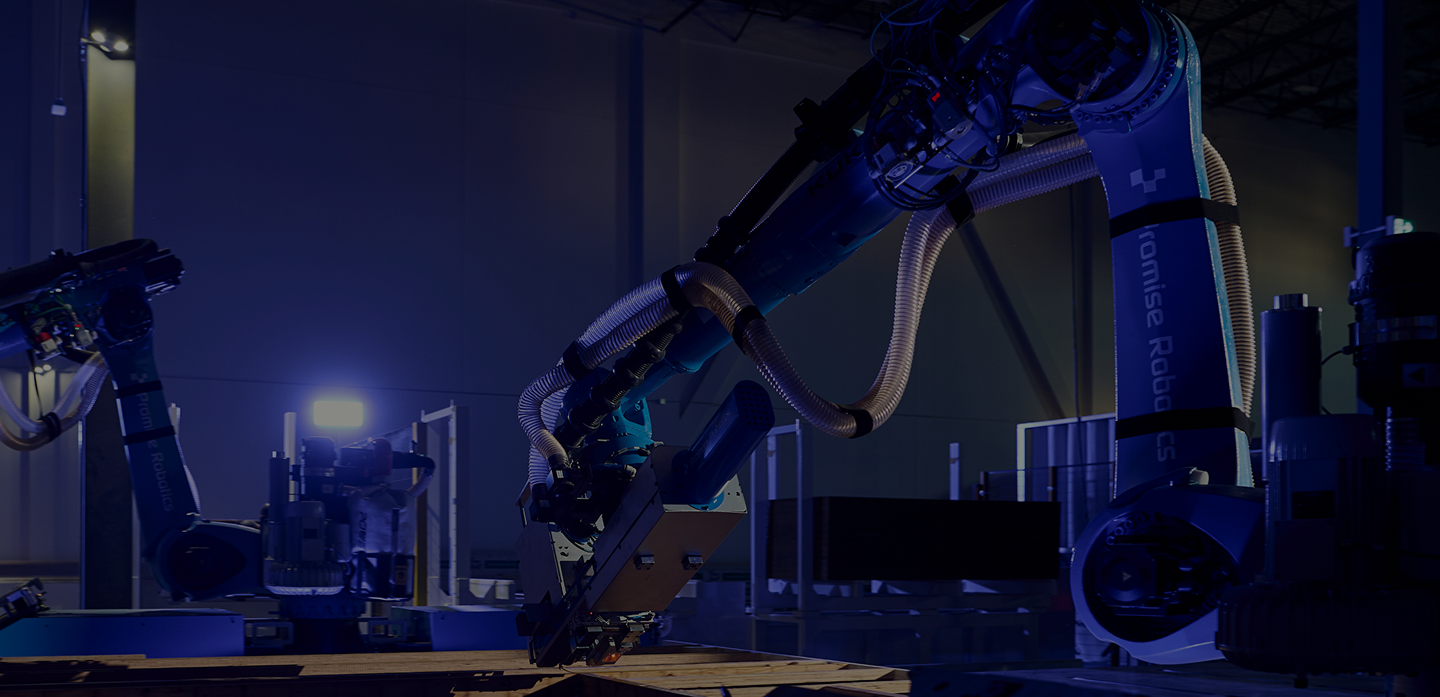
Disclaimer: This article is for general information purposes only and does not constitute investment, legal, or procurement advice. Readers should verify details with primary sources before making business decisions. Hero image: ABB, robotic arms on a factory production line, via Evertiq.