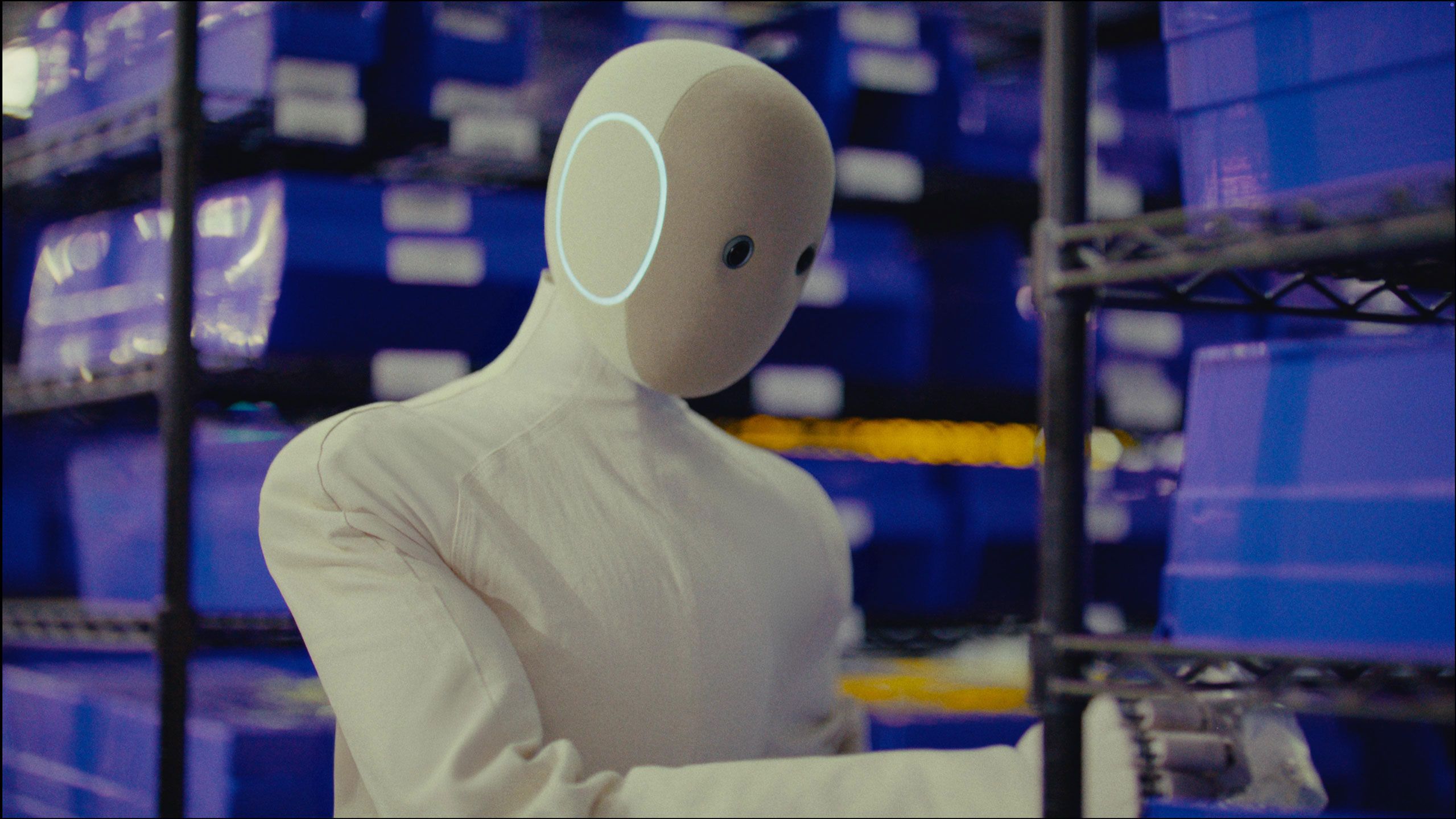
Remedy Robotics Tests Telesurgery for Stroke Patients
Remedy Robotics raised US$62 million for its N1 telesurgery catheter system, aiming to bring stroke thrombectomy to hospitals with no specialist on-site through low-latency robotic control.


A Stroke Does Not Wait for a Specialist to Drive In
Remedy Robotics, a 25-person startup building a steerable robotic catheter system for remote stroke treatment, has raised US$62 million in new funding as it moves toward clinical trials hosted by the University of California system within the next year, with fully remote procedures across the UC system or in Australia planned for late 2027. The company's N1 system lets a neurointerventionalist guide a catheter through a patient's blood vessels from a separate room, a different building, or eventually a different city, aiming to bring thrombectomy, the clot-removal procedure that treats the most severe ischemic strokes, to hospitals that currently have no specialist capable of performing it at all.
Remedy Robotics is not a company most hospital administrators or medical-device buyers would recognize yet. Its cofounders, David Bell and Jake Sganga, built the N1 system around a specific operational constraint rather than a specific technology showcase: round-trip latency between the operator's console and the catheter must stay under 150 milliseconds, and the system pauses surgical action automatically if that threshold is crossed. That design choice, more than the robotic hardware itself, is the company's actual product, because it is the difference between a telesurgery system a regulator and a hospital risk committee can approve and one they cannot.
The Access Problem This Is Actually Solving
More than five million people worldwide have an ischemic stroke each year, and thrombectomy is the standard of care for the subset where a large vessel is blocked, yet only about one in ten eligible patients actually receives it. That gap is not primarily a funding or awareness problem. It is a geography problem: roughly one in five Americans lives more than an hour from a hospital equipped to perform thrombectomy, and the mismatch can be stark even within a single state. Alaska's only two thrombectomy centers are both in Anchorage, leaving more than half the state's residents effectively out of range regardless of how fast an ambulance can drive.
The clinical stakes of that gap are counted in brain cells, not hours. Archit Bhatt, a neurologist at Providence Medical Group in Portland, Oregon, framed the urgency bluntly: "Every minute wasted or delayed, 2 million brain cells are going to die." A system that lets a specialist based in a major city operate on a patient in a rural hospital, rather than waiting for that patient to be transported to the specialist, is not a convenience upgrade. It is the difference between treatment within the window where thrombectomy still works and treatment after the damage is already done.
What the Early Data Actually Shows
Remedy's strongest evidence so far comes from a modest but carefully structured trial: ten patients in Toronto consented to nonemergency procedures performed at increasing distances from the operating specialist: six with the physician in a nearby room, two with the physician elsewhere in the same building, and two with the physician stationed at a separate hospital on the other side of the city. The procedures succeeded, and notably took nearly half the usual time, a result that cuts against the intuitive assumption that operating remotely should be slower or more error-prone than operating at the bedside. Jake Sganga, who leads Remedy's technology, said the company has "found that operators are quite resilient to latency," a claim that Remedy's own 150-millisecond cutoff exists precisely to test rather than merely assert.
That data set is small, deliberately so, and nonemergency by design. It proves the robotic and networking stack can hold together across real distance and real hospital infrastructure, not that the system is ready for the time-critical emergency cases it is built to serve. Brad Nelson, a robotics researcher at ETH Zurich with no affiliation to Remedy, offered the most useful framing for where this technology actually belongs first: "The first procedures are going to be those procedures where time is critical," meaning the emergency thrombectomy cases, rather than elective or diagnostic procedures, are the use case telesurgery has to prove itself on before it proves anything else. Remedy's own roadmap, moving from Toronto's nonemergency cases toward on-site elective UC System procedures within a year and fully remote cases roughly a year after that, is a deliberate, incremental path toward exactly that harder problem, not a detour around it.
The Rebuttal Every Telesurgery Pitch Has to Answer
The obvious worry about remote surgery is technical: what happens to a catheter mid-procedure if the network connection degrades. Remedy's answer, pausing action automatically past 150 milliseconds of round-trip latency, addresses that failure mode directly, but it does not address a different one that matters more to hospital access in practice. Mike Teodorescu, an information systems researcher at the University of Washington, pointed out that many rural communities struggle to meet the sub-100-millisecond latency threshold experts consider safe for this kind of work in the first place, calling it "an infrastructure problem" rather than a robotics problem. A telesurgery system engineered to fail safely the moment the network degrades is still only as useful as the network available at the rural hospital that needs it most, and building reliable low-latency connectivity to exactly the hospitals this technology targets is a harder, slower problem than building the robot.
There is a second counterpoint worth taking seriously, raised by Jasdeep Bahra, an emergency physician practicing in Kilifi, Kenya: telerobotics could just as easily concentrate specialist expertise in major cities rather than distribute it, if the economics end up favoring a handful of urban hub-and-spoke networks over broad rural deployment. A system that lets one specialist in Toronto or Los Angeles cover ten rural hospitals is an access improvement over the status quo, but it is also a structure where that single specialist becomes a single point of failure for all ten sites simultaneously, a risk that simple geographic redundancy in staffing does not share.
Where This Fits Against Existing Surgical Robotics
Robots already assist in roughly 22 percent of US surgeries, and more than two million procedures were performed on Intuitive Surgical's da Vinci platform in 2023 alone, so robotic assistance in an operating room is no longer a novel claim on its own. What distinguishes Remedy's pitch is that nearly all of that existing robotic-surgery volume still requires the surgeon physically present in the same building, typically the same room, as the patient. Da Vinci and comparable platforms improve precision and reduce invasiveness; they do not solve the geography problem at the center of Remedy's thrombectomy access case, because they do not remove the requirement that a specialist be physically at the hospital that owns the equipment. Remedy is making a narrower claim than "robots improve surgery," one that is actually more specific and more testable: that for this particular procedure, in this particular time-critical category, the location of the specialist can be decoupled from the location of the patient without degrading outcomes.
What the US$62 Million Is Actually Buying
A 25-person company raising US$62 million is a large sum relative to headcount, and the gap between those two numbers tells its own story about what this funding round is for. Remedy is not spending primarily on software engineers writing control code; it is spending on the far more expensive work of clinical trial infrastructure, hospital partnerships, and the regulatory pathway needed to get a telerobotic surgical system approved for procedures where a delay or a failure has irreversible consequences. Each additional site added to the UC system trial, and each additional mile of distance between operator and patient that Remedy wants to validate, adds its own layer of regulatory and clinical documentation on top of the engineering work already done. The company's roadmap, elective on-site procedures within a year, fully remote cases roughly a year after, is paced by that regulatory reality as much as by the technology's own readiness.
That pacing is also the most honest answer to anyone expecting telesurgery to arrive as a single dramatic product launch rather than a multi-year validation process. Remedy's Toronto results are a genuine proof point, not a finished product, and the company's own timeline treats them that way. A hospital system or health system evaluating this technology today is not buying a deployable remote-surgery platform. It is buying an early position in a company whose core technical bet, that latency-aware robotic control can make the operator's physical location irrelevant to surgical outcomes for a specific class of time-critical procedures, has cleared its first small test and now has to clear a much larger one.
What Determines Whether This Works at Scale
The UC system trials over the next year are the real test, not of whether Remedy's robot can function remotely, which the Toronto results already suggest it can, but of whether the regulatory and hospital-credentialing frameworks built around an in-room surgeon can be adapted to a specialist who may be states away. Hospital systems and health-policy buyers evaluating telesurgery infrastructure over the next two years should watch for the actual distance Remedy's procedures reach by late 2027, not just whether the Australia expansion happens, because the gap between an adjoining-room procedure and a genuinely remote one across an ocean is the entire commercial and clinical case this technology still has to prove.
This analysis synthesizes company statements, clinical trial disclosures, and public commentary from independent researchers and physicians in the field.
Disclaimer: This article is for general information purposes only and does not constitute professional medical, investment, or procurement advice. Readers should consult qualified medical professionals and conduct independent due diligence before making decisions related to the technologies discussed.