JD.com's Robot Timeline: Warehouses First, Home Much Later
At the Wuzhen Summit, JD.com laid out a three-to-five-year timeline for warehouse robot deployment and a five-to-ten-year-or-longer horizon for the home, revealing a strategy built around data JD already owns.


JD.com expects embodied intelligence robots to reach large-scale deployment in business-to-business settings within three to five years, while mainstream household adoption could take five to ten years or longer. Cao Peng, chair of JD Group's technology committee, laid out that split timeline Wednesday at the World Internet Conference Wuzhen Summit, naming warehouse logistics as the nearest-term fit and describing home robotics as dependent on costs falling and safety questions being resolved first, not on any single technical breakthrough.
The gap between those two timelines is the real story in JD's strategy, and it cuts against the industry's current enthusiasm for home humanoid robots as the category's biggest prize. JD, China's largest direct-sales e-commerce and logistics operator, is one of the few companies in China's embodied intelligence race with enough internal warehouse volume to be its own first customer rather than needing to find external buyers to prove a business case. That advantage shapes everything about how Cao Peng frames the company's robotics roadmap: focus capital and engineering effort first on scenarios JD already controls and understands, and treat the home, where JD has comparatively little direct operating experience, as a much longer and more uncertain bet.
Three Scenarios, Ranked by How Well-Defined the Problem Is
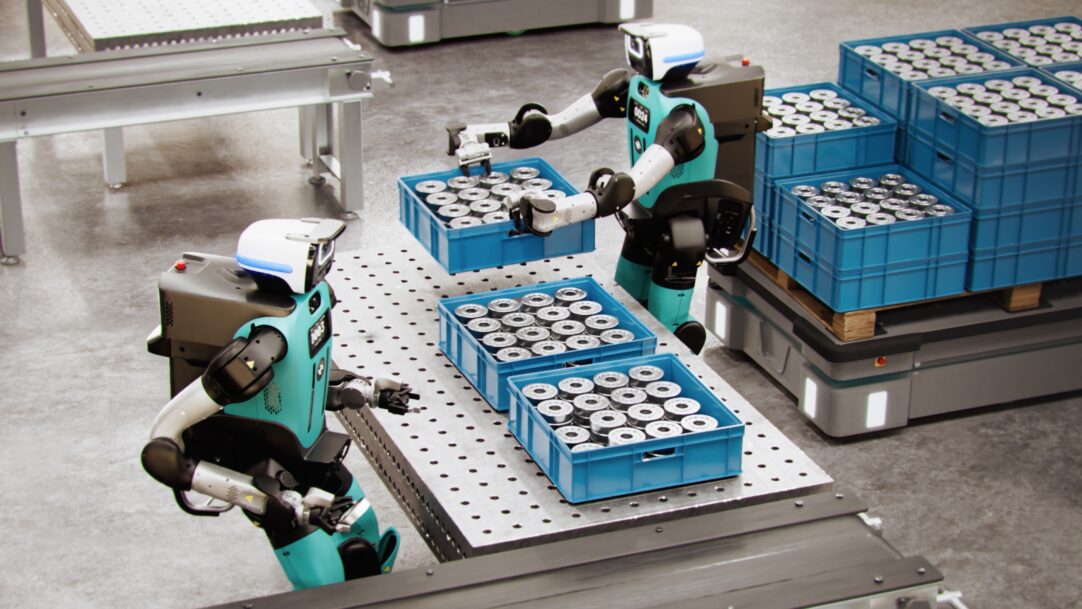
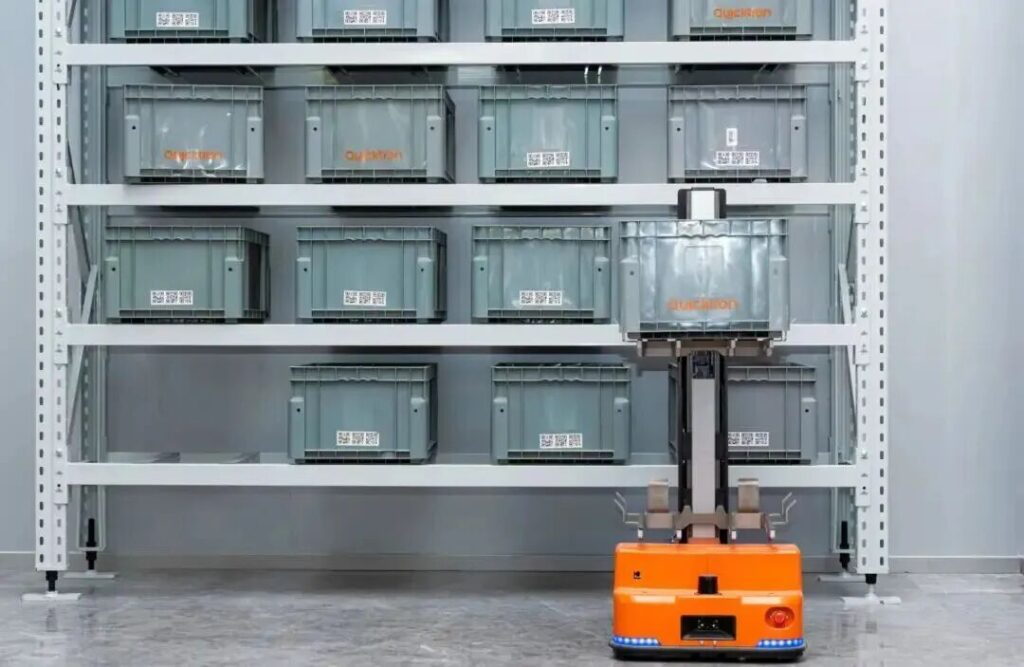
Cao Peng described JD's strategy as resting on three pillars: data collection and data infrastructure, equipment research and deployment in real-world settings, and frontier embodied large-model research. Underneath that framework sits a more concrete ranking of which physical environments are ready for robots now and which are not. Warehousing comes first, because operators can build dedicated robot workflows around fixed, well-understood facility layouts rather than retrofitting robots into spaces designed for people. Non-standard goods sorting, handling irregular items like apparel and general merchandise that traditional industrial robots handle poorly, is the specific task JD is targeting within warehouses, a deliberate choice of the exact gap where embodied, general-purpose manipulation has an advantage over older fixed-automation equipment. Closed, fixed manufacturing settings such as auto plants come next, a category JD describes as already well served by traditional industrial robots rather than requiring the embodied, generalist approach its own robotics investment is built around.
The home sits last, and Cao Peng's framing of why is unusually candid for a corporate strategy presentation. He estimated five to ten years, or longer, before robots reach the kind of mainstream household penetration major appliances have achieved, explicitly flagging that estimate as highly uncertain. The barriers he named are not primarily technical: unstructured home environments that vary widely from house to house, costs that remain too high for mass consumer adoption, and unresolved safety and ethical questions around letting an autonomous physical system operate unsupervised around children, pets, and elderly residents. He added that households are unlikely to renovate their homes to accommodate a robot's limitations, meaning home adoption depends on B2B maturity first, proven commercial use cases, and substantially lower costs, rather than consumer demand alone pulling the category forward.
The Data Numbers Reveal the Actual Bottleneck
JD's data collection progress gives a more concrete sense of where the company actually is in its roadmap than the strategic framing alone. The company's embodied data collection effort now covers more than 100 niche production and service scenarios and has captured over 100,000 real work tasks. Its stated target for the next two years is more than 10 million hours of high-quality human video captured from real scenes, plus more than 1 million hours of robot operating data. Those figures matter because they implicitly concede what much of the embodied intelligence industry has been slower to say publicly: the bottleneck in building a genuinely general-purpose warehouse or household robot is not primarily compute or model architecture, it is the sheer scarcity of high-quality, physically grounded training data that captures how real tasks actually get done in real, messy environments.
That data framing also explains why JD is building its own data infrastructure rather than relying solely on data from model partners or industry-wide benchmarks. A warehouse operator with JD's scale has a structural advantage that a pure robotics startup lacks: it can generate enormous volumes of task-specific data simply by running its existing business, logging how human workers already handle the irregular packages, apparel, and general merchandise that make up the non-standard-goods problem it is targeting. That is also precisely why the company's near-term focus is warehousing rather than retail stores or offices, environments JD does not control directly and where it would have to negotiate access to generate equivalent volumes of task data.
Cao Peng Also Named the Problem No One Talks About: Repair
Buried within the strategy presentation is a detail that deserves more attention than it is likely to get: JD is explicitly planning a robotics industry ecosystem that includes maintenance and after-sales service, with plans to expand robotics industry parks specifically to create repair and service jobs. Cao Peng framed this as similar to auto servicing, where standardized, modular robot designs lower the barrier to repair work and create demand for a new category of trained technician. That is a notably unglamorous addition to a strategy presentation otherwise focused on frontier model research and data infrastructure, and it signals that JD is thinking about embodied intelligence as an industrial deployment problem with a full lifecycle, not just a technology demonstration problem.
This detail matters commercially because robot maintenance and repair infrastructure is one of the quieter cost centers that has slowed large-scale deployment of warehouse automation in the past. A fleet of general-purpose embodied robots handling irregular goods has mechanically more moving parts, and is likely to fail in more varied ways, than the single-purpose conveyor and sortation equipment it would partially replace. A company that has not planned for a repair and service workforce before deployment typically discovers the gap only after robots are already in the field and downtime starts accumulating. JD naming this explicitly, before mass deployment rather than after, suggests the company's planning horizon extends further into the operational reality of running robots at scale than strategy announcements from competitors that lead primarily with model capability claims.
What JD's Caution About Technology Convergence Signals to the Market
Cao Peng also flagged that the technology route for embodied intelligence has not converged, and that model makers' data needs keep shifting, which he described as creating significant uncertainty for anyone building a long-term robotics strategy today. That is a notable admission from one of China's largest and best-resourced potential robotics buyers, and it carries a warning for smaller embodied intelligence startups pitching a single architectural approach, whether a particular world-model design, a specific manipulation policy framework, or a particular sensor and actuator configuration, as the settled answer. If JD, sitting on more real-world deployment data than most of its robotics suppliers, does not consider the technical approach settled, startups claiming architectural certainty should face more scrutiny from procurement teams rather than less.
That uncertainty also explains the deliberately broad, infrastructure-first shape of JD's strategy. Rather than committing early to a single robot form factor or a single foundation-model architecture, the company is building data infrastructure and real-world deployment experience that should remain valuable regardless of which specific technical approach eventually wins out across the broader embodied intelligence industry. For competitors and robotics vendors trying to read where the large e-commerce and logistics players are placing their bets, JD's approach suggests the company sees more risk in picking a technical horse too early than in spending a few additional years accumulating data and operating experience before scaling deployment more aggressively.
Why Warehousing Buyers Should Watch This Timeline, Not the Home Robot Headlines
For logistics and warehouse operators evaluating embodied intelligence vendors, JD's three-to-five-year timeline for B2B deployment is a more useful planning anchor than the more aggressive consumer timelines that have dominated headlines around home humanoid robots this year. JD has direct operational visibility into its own warehouse automation needs and a scale of real-world deployment data most competitors cannot match, which makes its internal timeline a reasonable upper bound on how fast the broader non-standard goods sorting category is likely to mature industry-wide. A vendor pitching warehouse deployment readiness well ahead of that window should be expected to explain specifically what data advantage or technical shortcut lets it move faster than a company with JD's resources and internal deployment base.
The clearer signal from Wuzhen is not a specific robot or a specific deployment number, it is the shape of JD's priorities: warehousing first because the problem is well-defined and JD already owns the data; manufacturing treated as a largely solved category already served by conventional automation; and the home treated as a genuinely separate, much longer bet gated by cost and safety rather than imminent technical breakthrough. Buyers and competitors who read this as JD simply being behind on home robotics are likely misreading a company that has chosen, deliberately, to build its embodied intelligence business on the scenario where it already has both the operational control and the data volume to actually win.
This article is for general information purposes only and does not constitute investment, financial, or procurement advice. It synthesizes public remarks made at the World Internet Conference Wuzhen Summit, without independent verification of JD's internal data collection figures.