OpenAI's GPT-6 Astra Leads New Robot-Control Benchmark, at a Price
A new third-party benchmark shows OpenAI's GPT-6 Astra and rival frontier models can now pilot a robot arm with zero task-specific training, but at roughly 100 times the cost and speed of a human, leaving purpose-built robot foundation models from Physical Intelligence, Figure, Google DeepMind, and NVIDIA as the only commercially rational buy for production deployments today.

4 min readPosted: Nov 15, 2026
# OpenAI's GPT-6 Astra Leads New Robot-Control Benchmark, at a Price
On October 14, 2026, independent AI benchmarking firm Artificial Analysis published AA-Robotics v0.1, the first public test of whether frontier language models can directly pilot a physical robot arm with zero task-specific training. OpenAI's GPT-6 Astra topped the leaderboard, completing eight tabletop tasks on a Hiwonder NexArm with a score of 69.4 out of 100.
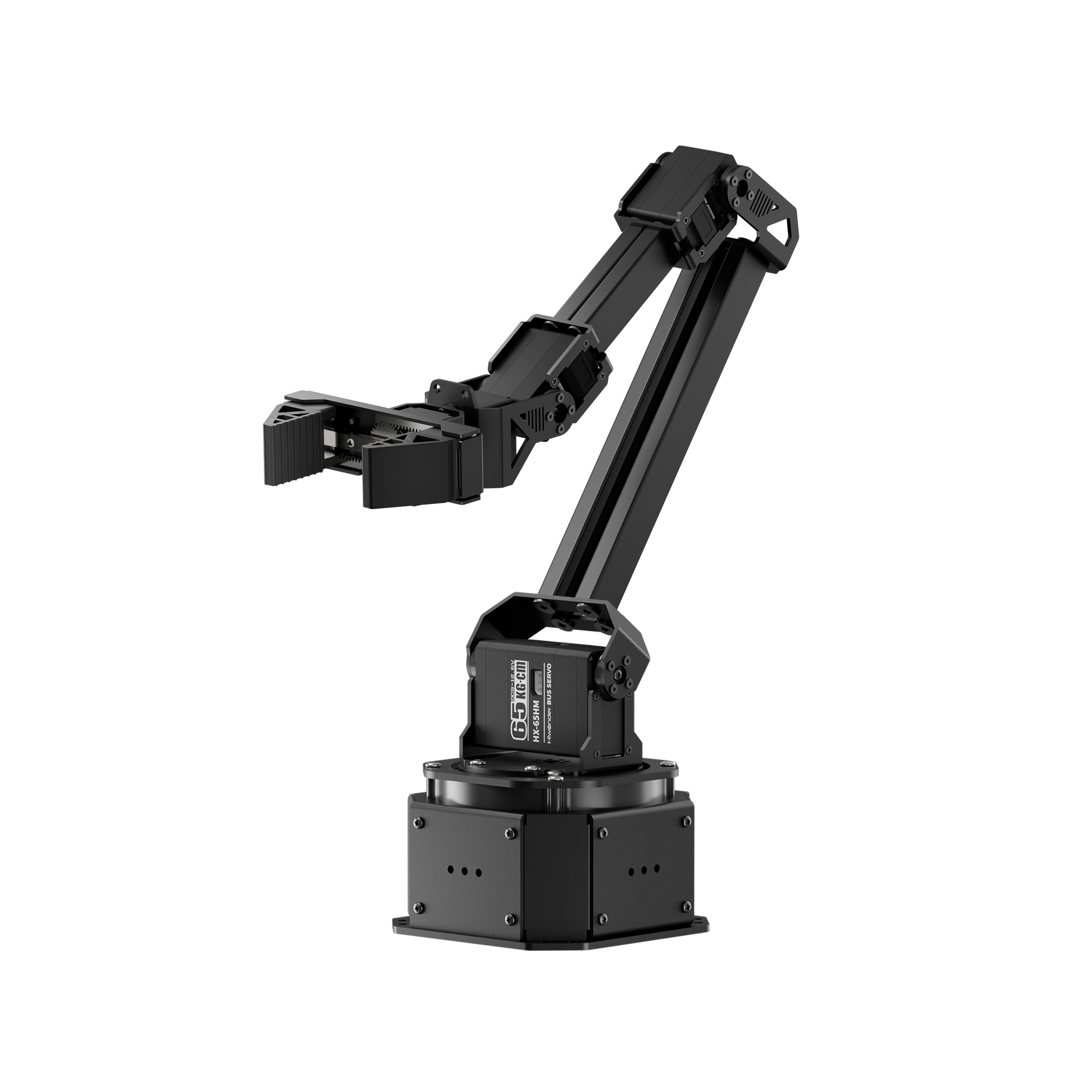
Hiwonder, a Shenzhen-based robotics hardware maker best known for low-cost educational and research robot kits, supplied the six-axis arm used in the test; the benchmark itself, not any vendor's marketing claim, is the primary record of what happened. Astra's win came at a price: US$16.36 per completed task, more than eight times the US$1.93 cost of its own stablemate, GPT-6.1 Sol, and roughly 100 times slower than a human doing the same work. For anyone currently sourcing robotics intelligence, that gap between raw capability and working economics is the whole story.
## The Zero-Shot Breakthrough Nobody Asked to Pay For
Artificial Analysis built AA-Robotics to answer a narrower question than most robotics demos attempt: can a general-purpose model, dropped into a coding-agent harness with no prior exposure to this specific arm, plan and execute a physical task from a plain-language goal alone. The test rig paired a Hiwonder NexArm, a six-axis arm with five joints and a gripper, with four cameras, three around the table and one on the arm's wrist. Each model ran inside its native agent tooling at high effort: OpenAI's two entrants inside Codex, Anthropic's Claude Opus 5.5 and Claude Fable 5.1 inside Claude Code, and Google's Gemini 4 Argon inside Antigravity. Every attempt was zero-shot. The model received an HTTP interface to the arm, a one-line objective, and nothing else; it had to write and run the code that moved the joints, and it decided for itself when a task was finished or hopeless.
Five models cleared the bar well enough to rank: GPT-6 Astra at 69.4, GPT-6.1 Sol at 64.6, Gemini 4 Argon at 55.3, Claude Opus 5.5 at 48.8, and Claude Fable 5.1 at 46.3. A human grader scored each attempt against a fixed pass criterion, awarding full marks for success and partial credit for progress. The headline finding, in Artificial Analysis's own words, is that "frontier models in coding-agent harnesses have recently become capable of directly manipulating robot arms for simple tasks." That is new. Eighteen months ago, none of these companies offered a model anyone would have pointed at a robot arm and asked to improvise.
## Eight Tasks, Five Models, One Verdict on Readiness
The task set was deliberately simple on paper: press a button, place a toy in a marked rectangle, pour a drink into a cup, tidy four blocks into a box and replace the lid, match shapes, write "hello world" inside a boundary with a marker, stack a tower from foam blocks, and measure a box to within two millimeters. Every model aced the button press and the toy placement, the two tasks closest to simple pick-and-place pattern matching. From there, the leaderboard fractures in instructive ways.
GPT-6.1 Sol, the cheapest model on the board, scored a perfect 100 on tidying the blocks and on shape matching, yet scored zero on pouring the drink and zero on building the tower, the two tasks that demand sustained, contact-rich coordination rather than a single clean motion. GPT-6 Astra inverted that profile: it poured the drink flawlessly, wrote "hello world" cleanly, and built the tallest tower of any entrant at a score of 71, but managed only 40 on tidying and 44 on shape matching. Gemini 4 Argon matched Astra on pouring but failed shape matching entirely. Every single model, Astra included, scored at or near zero on the millimeter-precision measuring task; Sol and Opus 5.5 each salvaged 17 points, the best anyone managed. No model treated "precise, repeatable measurement" as a solved problem, which is precisely the category of work a production inspection or assembly line depends on.
That pattern, strong on novel instruction-following and improvisation, weak on fine motor precision and repeatability, maps closely onto what the benchmark was designed to expose: these are language models reasoning their way through physical tasks in real time, not control systems trained on the millions of physical trials that purpose-built robot policies typically require.
## The Build-Versus-Buy Calculus Procurement Can't Ignore
The honest comparison for a buyer is not GPT-6 Astra against a human, it is GPT-6 Astra against the robot foundation models built specifically to do this job. Physical Intelligence, a San Francisco-based robotics AI startup, sells a hardware-agnostic vision-language-action model, pi-0.5, designed to generalize across more than seven different robot embodiments without retraining for each one. Figure, the humanoid robot maker, runs a split architecture called Helix in which a vision-language model handles scene understanding while a separate, purpose-trained vision-language-action model issues motor commands at 200 times per second, not once every several minutes. Google DeepMind's Gemini Robotics 2, which the company began rolling out to early-access hardware partners including humanoid maker Apptronik in mid-2026, controls a humanoid's legs, torso, arms, and five-fingered hands under one trained policy, extending what DeepMind describes as control "from feet to fingertips." NVIDIA offers its own open alternative, Isaac GR00T, as part of a broader Cosmos and Isaac Sim stack that counts Boston Dynamics, Caterpillar, Franka Robotics, and NEURA Robotics among its hardware partners.
None of those four systems is a general-purpose chatbot pressed into service. Each is trained from the ground up on robot-specific demonstration data, runs locally in milliseconds rather than minutes, and is priced for the high-volume inference a real deployment requires, not for a single, slow, cloud-billed reasoning pass. That is the gap AA-Robotics quantifies without saying so explicitly: a generalist model can now attempt a task it has never seen, which a specialist model generally cannot, but it pays for that flexibility in cost and latency terms that make zero commercial sense at scale today. Artificial Analysis was direct about this trade-off, noting that models remain "far too slow and expensive for any kind of production usage," roughly two orders of magnitude worse than a human baseline priced at the average United States private-sector wage of US$37.81 an hour.
## OpenAI Is Betting the Economics Will Flip
OpenAI's presence at the top of this leaderboard is not a coincidence of research curiosity. The company has spent 2026 rebuilding an internal robotics effort, hiring hardware, systems, and machine-learning engineers for a program that multiple reports describe as growing directly out of its earlier world-simulation research, with ambitions spanning both data-center and logistics robots and a humanoid platform. That rebuild follows a complicated history: OpenAI ran a robotic-hand project called Dactyl between 2017 and 2019, reaching the point of solving a Rubik's Cube one-handed, before disbanding its entire robotics team in 2021 to concentrate on large language models. The current effort has not been without friction. The company's hardware lead, Caitlin Kalinowski, left the robotics program in March 2026, with reporting at the time tying her departure to internal concerns over a Pentagon contract and the guardrails around autonomous systems.
Read against that backdrop, AA-Robotics is the first independent, numeric evidence that OpenAI's bet, that the same scaling curve pushing its language models forward will eventually make them competent robot controllers, has crossed a real usability threshold rather than remaining a lab demo. A model that can reason its way to pouring a drink or stacking a tower it has never seen before, with no task-specific training, is doing something a specialist robot policy is not designed to do at all: generalize to the unfamiliar. The question the benchmark leaves open is how quickly the cost of that generalization falls, and how quickly specialists close the gap on flexibility, before one approach becomes the obvious default for new deployments.
A model that costs ten times as much as a human worker and takes one hundred times as long to finish the same task is not a labor substitute. It is a laboratory result.
## The Number Procurement Teams Should Actually Watch
For a buyer evaluating robotics intelligence today, the AA-Robotics scores are not a shopping list, and Artificial Analysis never presented them as one. They are a rate of change measurement: the distance between "a general-purpose model cannot operate a robot arm at all" and "a general-purpose model can, slowly and expensively, operate one well enough to pour a drink or build a tower" closed inside roughly eighteen months. Specialist robot foundation models from Physical Intelligence, Figure, Google DeepMind, and NVIDIA remain the only commercially rational choice for anyone deploying robots in production this year, because they are faster, cheaper per inference, and built for exactly the repetitive, high-volume tasks a factory floor or warehouse actually needs. But the gap that separates a cloud-billed language model from a purpose-built robot policy is now a number, not a vibe, and numbers that start at roughly 100x tend to get the most attention from the companies with the balance sheets to close them.
This analysis synthesizes company statements, independent benchmark data, and public reporting on frontier robotics models current as of November 2026.
*Image credit: Hiwonder, official NexArm product photography.*
*This article is for general information purposes only and does not constitute investment advice.*
RoboticsPhysicalAIUSARobotFoundationModelsBenchmarkingAutomation