Understanding Collaborative Robots: A Primer for Buyers and Engineers
This primer provides a foundational understanding of collaborative robots (cobots), exploring how they work, their key components, and their role in the modern robotics ecosystem. It offers an analytical view of why cobots matter in 2026 for procurement and engineering teams facing labour shortages and high-mix production demands.
The global manufacturing landscape is undergoing a structural shift driven by persistent labour shortages and the demand for increasingly flexible production lines. Within this environment, collaborative robots have emerged from a niche technology to a central pillar of industrial automation strategy. According to the International Federation of Robotics, annual installations of collaborative robots reached over 64,500 units in 2024, achieving a 13 percent year on year growth rate and capturing nearly 12 percent of the total industrial robot market [1] [2]. This represents a significant acceleration from 2017 when just 11,000 units were installed globally [3]. For procurement managers and engineering leaders evaluating capital expenditures in 2026, understanding the mechanical realities, safety frameworks, and strategic positioning of collaborative robots is the first step toward effective deployment.
Definition
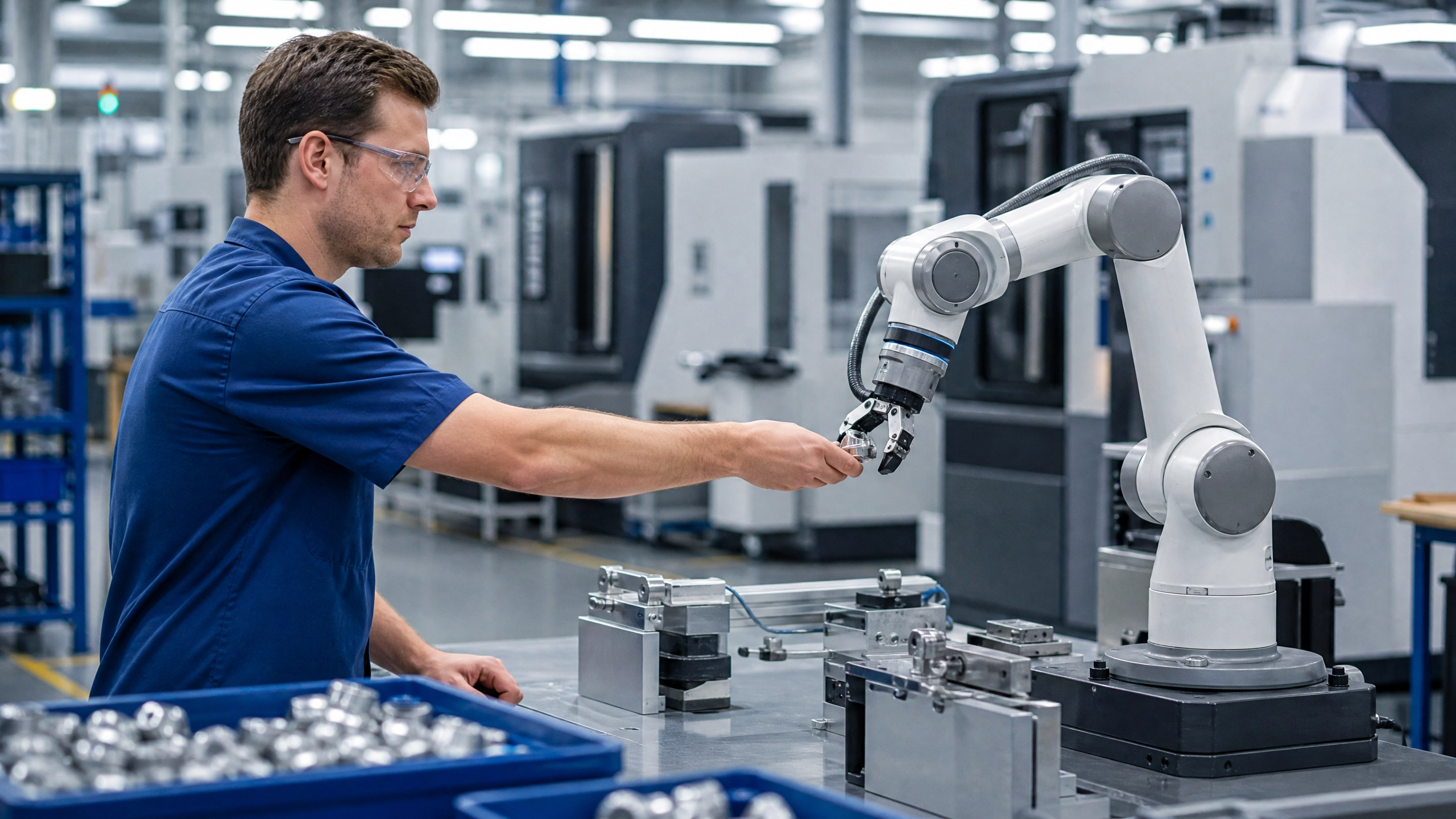
A collaborative robot, commonly referred to as a cobot, is an articulated robotic arm specifically designed with power and force limiting functions that allow it to operate safely in close proximity to human workers. Unlike traditional industrial robots that must be isolated behind physical steel fences or optical safety barriers, cobots are engineered to share a workspace with human operators. They solve a fundamental problem in manufacturing: how to automate repetitive, ergonomically difficult, or low value tasks without incurring the massive footprint and capital expense of fixed safety infrastructure.
The International Federation of Robotics classifies human and robot interaction into four distinct levels: coexistence, sequential collaboration, cooperation, and responsive collaboration [4]. Currently, the vast majority of deployed cobots operate in the coexistence or sequential modes, where the human and the machine share a physical space but complete tasks independently or in alternating steps. The core value proposition of a cobot is not necessarily true simultaneous cooperation, but rather the flexibility to deploy automation quickly into existing manual assembly lines without disrupting the factory floor layout.
How It Works
The defining characteristic of a collaborative robot is its ability to detect external forces and stop its motion before causing injury. This capability is governed by strict international safety standards, primarily ISO 10218 for inherent safe design and the ISO TS 15066 technical specification which dictates the maximum permissible force and pressure a robot can apply during an unexpected human contact [5].
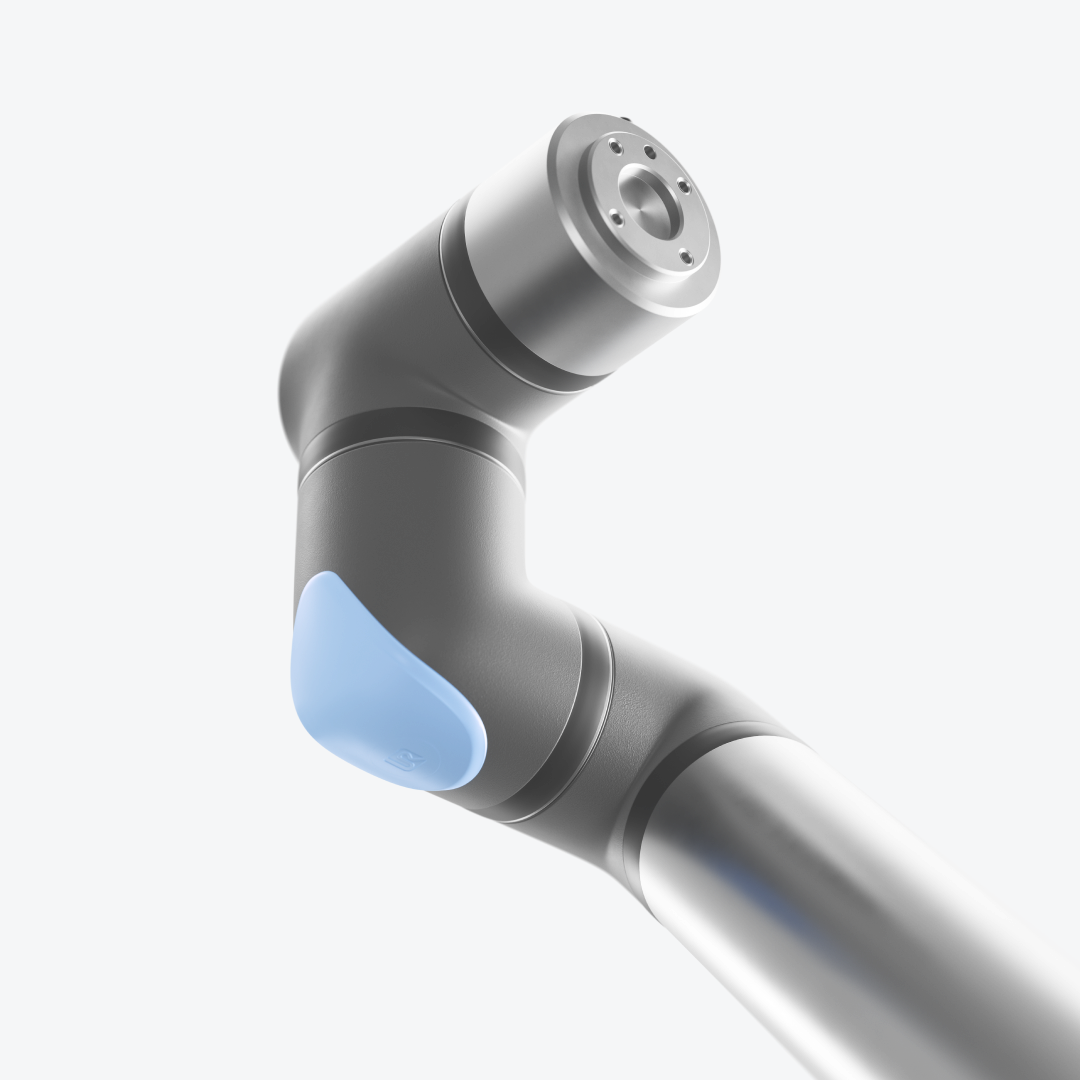
When a cobot is in motion, its control system continuously monitors the electrical current drawn by its motors or the physical torque applied to its joints. If the arm strikes an unexpected obstacle, such as a human worker or a misplaced tool, the resistance causes a spike in the monitored force. The system detects this anomaly within milliseconds and triggers an immediate protective stop. Some advanced systems also employ speed and separation monitoring, using external sensors to slow the robot down as a human approaches and stop it entirely if the human enters a predefined danger zone. Furthermore, cobots are typically designed with rounded edges and lightweight materials to minimise kinetic energy and reduce the severity of any potential impact.
Key Components
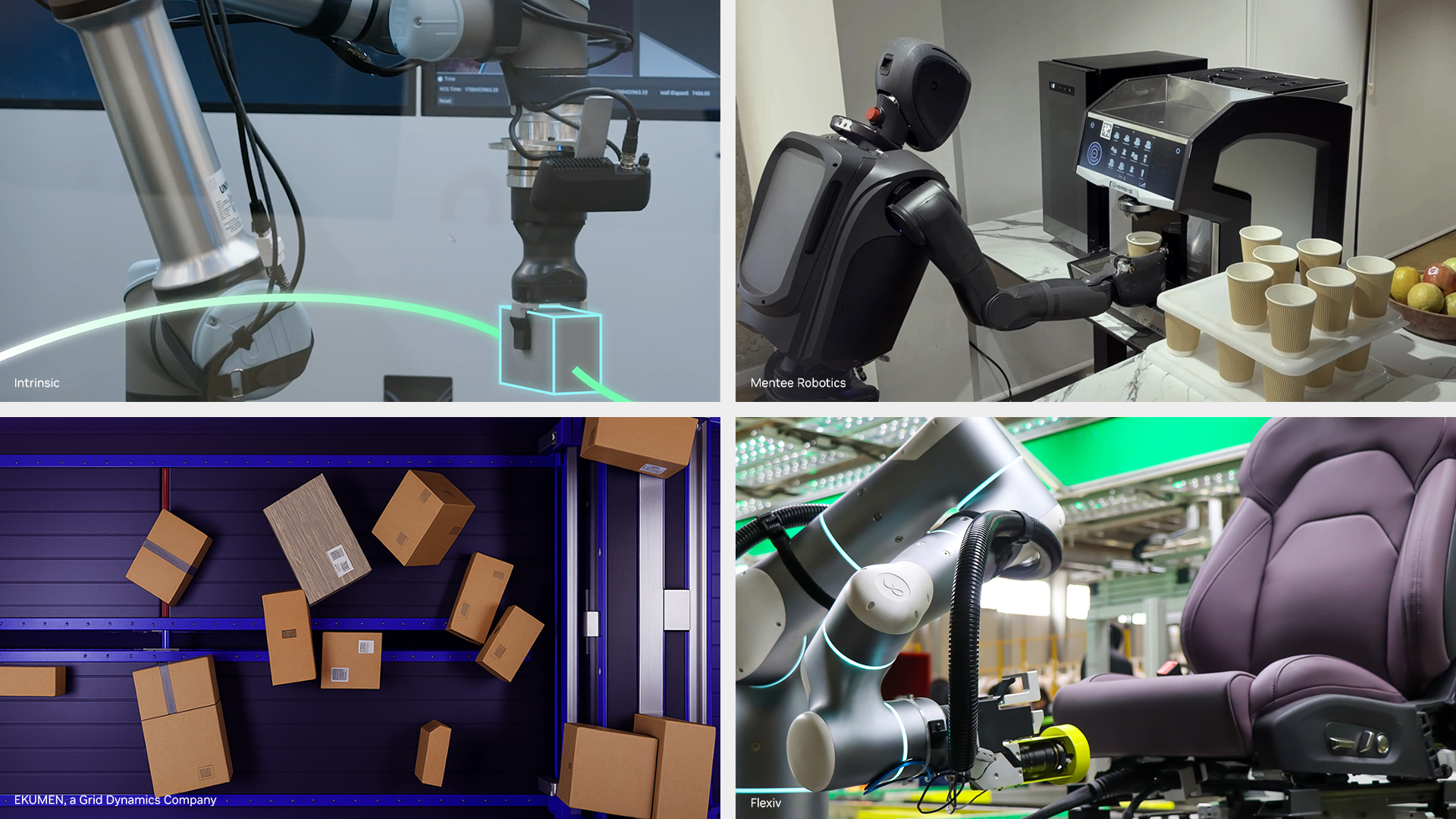
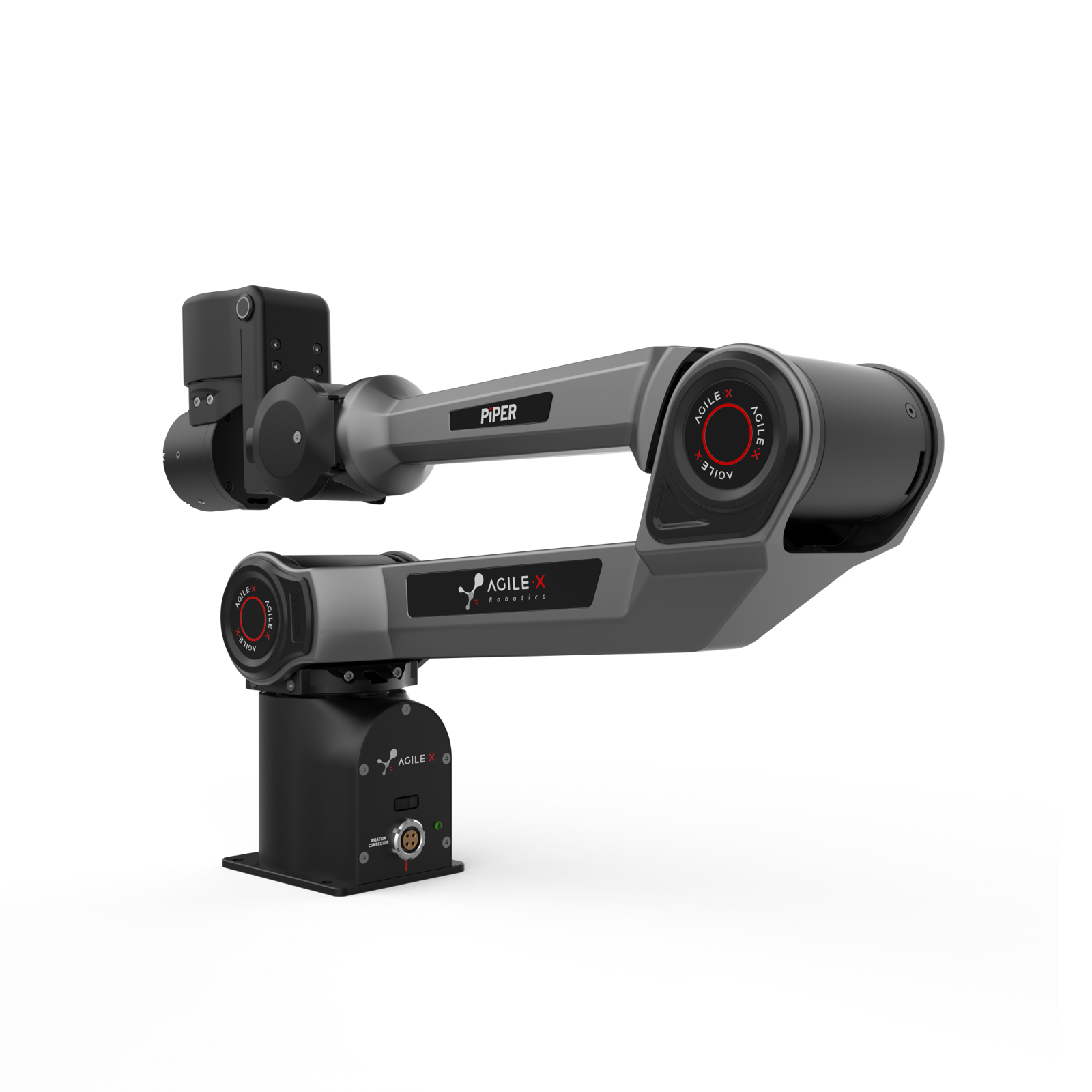
The architecture of a collaborative robot differs significantly from a traditional industrial arm, prioritising sensory feedback and ease of use over sheer speed and payload capacity. The primary components include the articulated arm itself, the joint actuators, the controller, and the teach pendant.
The joint actuators are the most critical differentiating component. In a standard cobot, each joint contains a motor, a gear reduction mechanism, an encoder for precise positioning, and crucially, a torque sensor. These torque sensors provide the high resolution feedback required for the power and force limiting safety functions. The controller acts as the brain of the system, processing the sensor data and executing the motion planning algorithms.
Another defining component is the teach pendant, which serves as the primary user interface. Modern cobot manufacturers have invested heavily in software usability, replacing complex programming languages with intuitive graphical interfaces. Many cobots also feature hand guiding capabilities, allowing an operator to physically move the arm through a desired trajectory while the controller records the waypoints. This dramatically reduces the integration time and engineering expertise required to deploy the system.
Where It Sits in the Robotics Ecosystem
To understand the strategic value of a cobot, it is helpful to contrast it with other major asset classes in the industrial automation ecosystem. Traditional six axis industrial robots remain the undisputed leaders in heavy payload, high speed, and high precision applications such as automotive chassis welding or heavy palletising. However, they are rigid, expensive to integrate, and completely inflexible once installed.
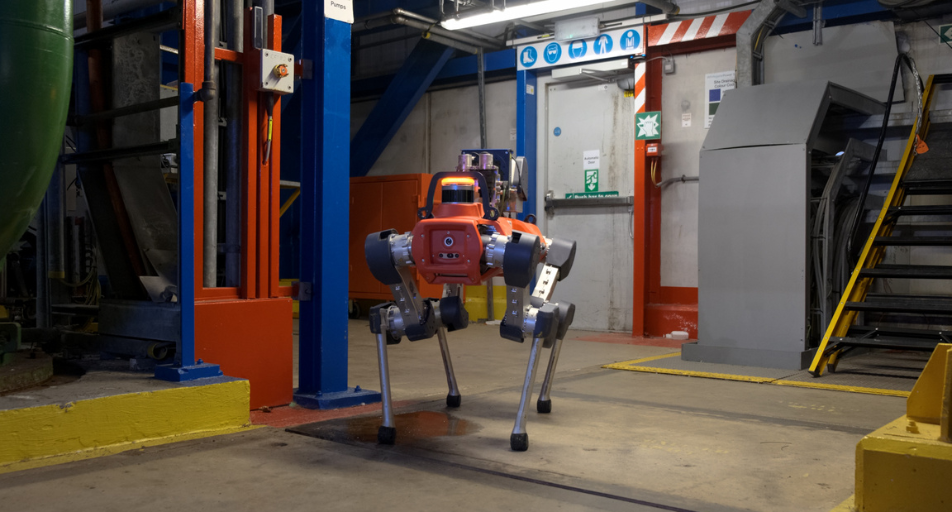
Conversely, Autonomous Mobile Robots (AMRs) and Automated Guided Vehicles (AGVs) dominate horizontal logistics, moving materials across the factory floor. The collaborative robot sits between these two extremes. It is a stationary manipulator like an industrial arm, but it offers the deployment flexibility of a mobile system. Because they do not require safety fencing, cobots can be mounted on mobile carts and wheeled between different CNC machines or assembly stations as production schedules dictate. This flexibility makes them uniquely suited for high mix, low volume manufacturing environments where a traditional industrial robot would sit idle for long periods.
When comparing a cobot directly to a traditional industrial robot, buyers must recognise the inherent trade off. The safety mechanisms that make a cobot collaborative also limit its maximum speed and payload. A traditional industrial robot will always win a pure cycle time comparison. Therefore, the decision to procure a cobot should be based on the need for flexibility, footprint reduction, and ease of programming, rather than raw throughput.
Why It Matters Now
The commercial relevance of collaborative robots in 2026 is driven by a confluence of macroeconomic pressures and technological maturation. Global manufacturing is facing acute labour shortages, particularly for skilled roles such as welding and machine tending. Companies are struggling to fill these positions, leading to production bottlenecks and delayed deliveries. Cobots offer a viable solution by automating the most repetitive and undesirable tasks, allowing human workers to be redeployed to higher value operations.
Simultaneously, geopolitical tensions and supply chain vulnerabilities have accelerated the trend of reshoring manufacturing closer to end consumers. Facilities in high wage regions require extensive automation to remain cost competitive. Collaborative robots lower the barrier to entry for automation, enabling small and medium enterprises to adopt robotics without requiring dedicated in house automation engineering teams. With over half a million industrial robots installed globally in 2024, the automation imperative is clear [1]. For procurement teams, collaborative robots represent an agile, low risk capital investment that directly addresses the defining industrial challenges of this decade.
References:
[1] International Federation of Robotics, "World Robotics 2025 report – INDUSTRIAL ROBOTS"
[2] Plastech, "Automotive leads new installs: IFR data for Europe and world 2024"
[3] International Federation of Robotics, "World Robotics 2025 Press Conference Presentation"
[4] International Federation of Robotics, "Collaborative Robots - How Robots Work alongside Humans"
[5] ISO, "ISO/TS 15066:2016 - Robots and robotic devices — Collaborative robots"