AeroVironment Sets Up Greek Production Venture for Drones and Counter-Drone Systems
AeroVironment will establish an industrial presence in Greece through AV Eagle, a majority-owned joint venture with Athens-based Eyeonix SA, after completing a shareholders agreement and securing Greek foreign-investment approval. The venture targets operations in fiscal 2027 and production of unmanned aerial systems, loitering munitions, and counter-drone systems for European defense and civil protection customers by 2028 - the latest move in US autonomy firms localizing production into Europe.

AeroVironment is putting a factory footprint inside the European Union. The US defense technology company announced on Wednesday evening, US Eastern time, that it will establish an industrial presence in Greece through AV Eagle, a joint venture with Athens-based Eyeonix SA, after completing a definitive shareholders agreement and securing Foreign Direct Investment approval from the Hellenic Republic Ministry of Foreign Affairs. The venture is expected to become operational in fiscal year 2027, with production capabilities targeted by 2028.
Eyeonix, the less familiar name in the pair, is an Athens-based defense systems integrator that has worked with AeroVironment for more than a decade, and its role in the venture is the local half of a model that is spreading across European defense procurement: proven US unmanned systems technology, manufactured and assembled inside the buyer's own borders. AeroVironment will hold the majority interest in AV Eagle and consolidate it in the company's financial statements, and the initial capital commitment was already inside previously issued guidance, which tells investors this is an execution step rather than a new spending announcement.
The Deal Buys a Border Crossing, Not Just a Building
The structure of the announcement rewards a careful read. What AeroVironment completed is a shareholders agreement and a foreign-investment approval, not a groundbreaking. The activities the company describes are conditional and staged: potentially establishing a new facility in Greece to manufacture and assemble unmanned aerial systems, loitering munition systems, and counter-unmanned aircraft systems for defense and civil protection customers in Greece and the broader European market, with employment growing as production opportunities mature.
That staging is the point. European defense customers increasingly require local content, local jobs, and sovereign supply assurances as conditions of major awards. A US supplier that ships finished systems across the Atlantic competes on product; a US supplier with an EU production entity, a local partner, and a host-government investment approval competes on industrial policy as well. AV Eagle gives AeroVironment the second position in advance of the contracts that would justify the factory, which is the order in which this game is now played.
The company frames the venture as building on Greek, European, and US defense priorities simultaneously, and the venture will work with local industry and the Hellenic Center for Defence Innovation on fielding timelines and supply chain resilience. Wahid Nawabi, AeroVironment's chairman and chief executive, described the goal as building long-term capacity with Greece and NATO allies rather than merely delivering technology, with manufacturing scaled to what he called urgent operational needs.
Why Greece, and Why Now
Greece sits at the intersection of three forces that make it an attractive industrial base for unmanned systems. It is a NATO member with an active modernization program and genuine operational demand across its island geography. It sits close to the European Union's eastern and southeastern security concerns, which its partner was explicit about: George K. Strouzakis, Eyeonix's chief executive, pointed to increasing geopolitical pressure along the EU's Eastern Flank and to the need for interoperable, scalable, and sovereign unmanned and counter-drone capability.
The third force is money. Strouzakis referred to leveraging emerging financing instruments, a phrase that in the current European context points at the bloc's new defense funding mechanisms, which favor procurement from European production. A Greek joint venture converts AeroVironment's products from imports into candidates for programs where European-made status is a scoring criterion or an outright requirement. For a company whose small unmanned aircraft and loitering munitions have become reference products in the category, the venue change may matter as much as any product update.
The demand signal behind all of this is not speculative. European interest in small unmanned systems and counter-drone defenses has climbed steadily as the technologies have proven decisive in active conflicts, and procurement agencies from the Baltics to the Mediterranean have moved these categories from experimental budgets into core acquisition plans. The operational lessons emerging from conflict deployments have compressed what used to be decade-long adoption cycles into a few years, and suppliers are now competing on how fast they can field systems at scale rather than on whether the category is real.
What the Venture Is Expected to Build
The announced product scope covers three categories. Unmanned aerial systems is AeroVironment's founding business, spanning small reconnaissance aircraft used at unit level. Loitering munition systems are the category the company's Switchblade family helped define, and demand in Europe has grown sharply as militaries restructure around precision effects at lower cost per engagement. Counter-unmanned aircraft systems address the mirror-image problem: every force that has watched cheap drones change an adversary's capability now needs layered means of detecting and defeating them, and civil protection agencies face versions of the same problem around airports, ports, and critical infrastructure.
The inclusion of civil protection customers alongside defense is worth noting for the industrial logic. Counter-drone systems for airports and public safety agencies broaden the addressable market beyond defense ministries and can smooth production loading while military programs move through their slower cycles. A facility that serves both markets is easier to keep busy, and a partner like Eyeonix, with local relationships across Greek government customers, is positioned to develop exactly that mix.
None of the production claims are near-term. Operational status for the venture is a fiscal 2027 expectation, production capability is a 2028 target, and the facility itself is still described as potential. The distance between a signed shareholders agreement and a running production line is real, and it runs through facility selection, licensing, workforce development, and above all through the order book that makes the investment rational. The announcement establishes intent and standing; the contracts will establish the factory.
The Pattern: US Autonomy Firms Are Localizing Into Europe
AV Eagle is a data point in a broader repositioning of US autonomy and robotics suppliers toward European industrial presence. The war-driven surge in European defense spending has collided with the bloc's determination to spend a growing share of it at home, and US firms have concluded that exporting from American plants will not capture the growth. The result is a wave of joint ventures, licensed production arrangements, and greenfield facilities that trade equity and technology access for market position, a pattern this publication has tracked across naval autonomy as well, where America's uncrewed vessel builders have pursued shipyard partnerships to similar effect.
For European industry, the model is a bargain with clear terms: faster access to proven systems and a share of the work, in exchange for the platform intellectual property remaining with the US partner. For US suppliers, it is insurance against a future in which European preference rules harden further. For buyers, it promises shorter delivery distances, local support, and political defensibility. Each party is optimizing against a different risk, which is usually the sign of a deal structure that will be repeated.
The competitive implication inside the category is that unmanned systems procurement in Europe is becoming a contest of industrial arrangements as much as of aircraft. Suppliers without a European production answer will find a growing set of programs effectively closed to them, and the pace at which US firms are securing local partners suggests the window for establishing those positions is understood to be finite.
What Buyers and Investors Should Watch
The venture's substance will become measurable through a short list of milestones. The first is the facility decision itself: a site, a scope, and a capital figure would convert the potential facility into a committed one. The second is the first production contract routed through AV Eagle rather than through US export channels, which would validate the premise that local status wins work imports could not. The third is workforce and supplier development in Greece, the slowest and most telling indicator of whether a durable industrial base is forming or a nameplate is being maintained.
Investors should note what the announcement deliberately did not contain: no facility investment figure, no revenue projection, and no program awards. The company placed the initial capital inside existing guidance, signaling immaterial near-term financial impact. The value case is optionality on European procurement over the second half of the decade, not earnings in the next fiscal year.
For the robotics industry beyond defense, the venture is another marker of where the money and the manufacturing are moving. Unmanned systems have become the segment of robotics where demand, policy, and capital are aligned most forcefully, and the industrial map is being redrawn around that alignment, one joint venture at a time. The companies building that map now are placing bets that the era of European autonomy procurement will reward those who arrived with factories before the contracts were let, and the pace of announcements like this one suggests the industry has already decided how that era will be scored.
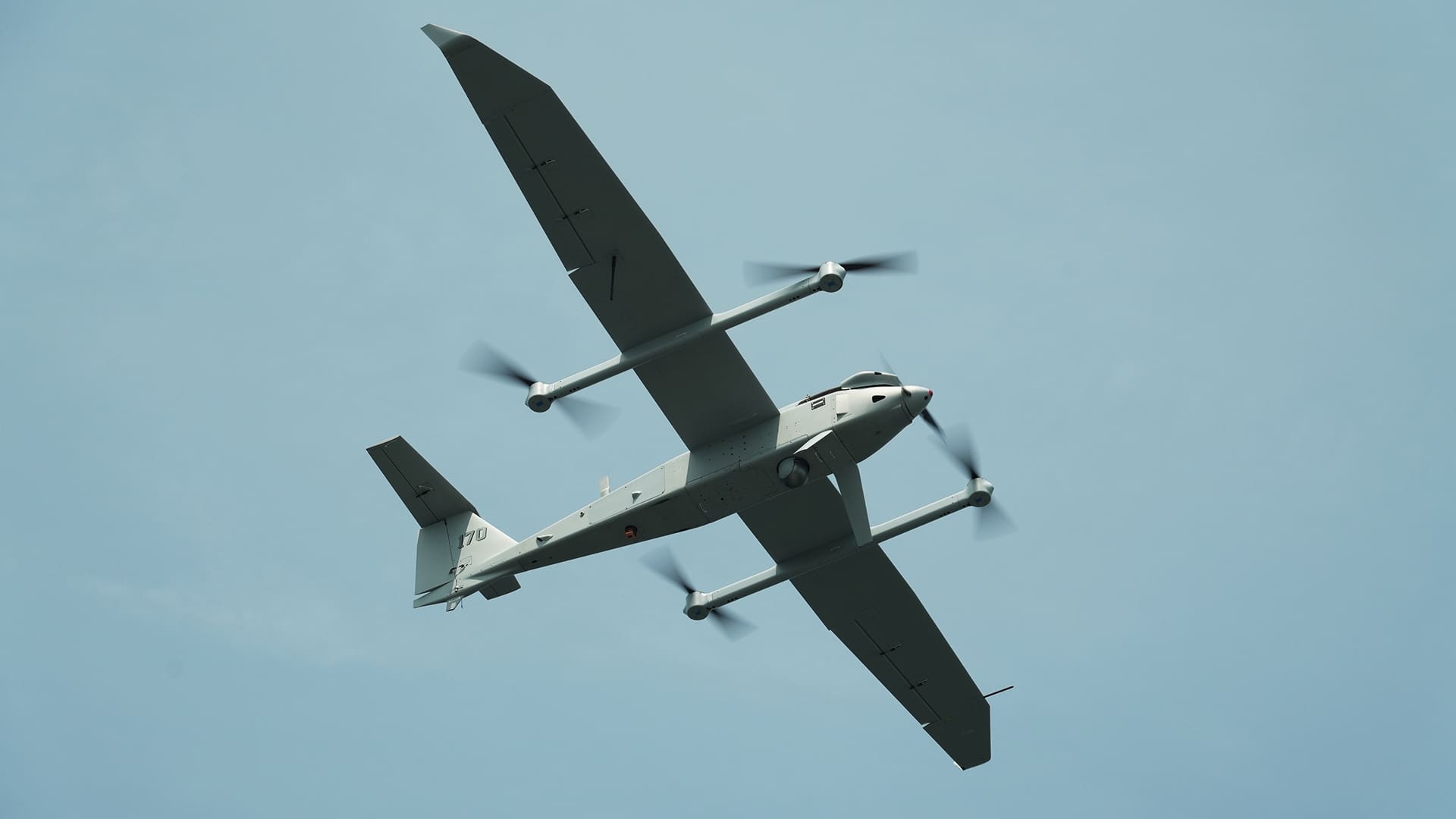
Image: AeroVironment (JUMP 20 unmanned aircraft system). This analysis synthesizes the company's announcement and public statements; details reflect disclosures available as of the information cut-off of August 21, 2026.
Disclaimer: This article is for general information purposes only and does not constitute investment, legal, or procurement advice. Readers should verify details with primary sources before making business decisions.