Doosan Robotics Names Youngmin Kwon as New CEO
Doosan Robotics appointed Youngmin Kwon, former president of Doosan Mottrol, as CEO on October 1, as Samsung, Hyundai and Hanwha all race to build out rival robotics divisions.

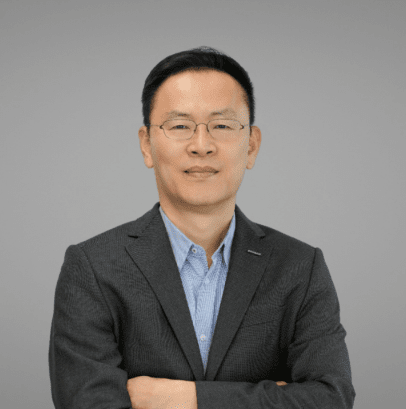
Doosan Robotics named Youngmin Kwon as its new chief executive on Wednesday, promoting the former president of sister company Doosan Mottrol to run South Korea's largest collaborative-robot maker at a moment when Samsung, Hyundai and Hanwha are all racing to build out their own robotics divisions. The announcement did not name an effective date or identify the outgoing chief executive, and it offered no detail on whether Kwon's mandate includes a strategy change or simply continuity through a period of heavy capital commitment.
Kwon joined Doosan Corporation's strategic planning division in 2000 and spent the next quarter-century moving through the conglomerate's industrial units: chief strategy officer at Doosan Bobcat from 2018 to 2020, then chief executive of Doosan Mottrol, the group's hydraulics and components arm, from 2021 until this appointment. Doosan Robotics framed the move as bringing "extensive experience spanning global business, corporate strategy, and management" to a company it said needs to "strengthen its competitiveness in the global robotics market."
A Conglomerate Betting Big on Physical AI
The leadership change lands in the middle of two major commitments Doosan Robotics made earlier in 2026, both of which the new chief executive now inherits. In April, Doosan Group struck a wide-ranging collaboration with Nvidia spanning physical AI and AI-factory infrastructure across the conglomerate's energy, robotics and electronic-materials businesses, with Doosan Robotics specifically tasked with building an agentic robot operating system on Nvidia's open software libraries. The two companies have discussed jointly developing reference robot solutions for demanding industrial tasks, and Doosan demonstrated Nvidia-assisted palletizing and depalletizing systems at CES 2026 in January.
In May, the company opened an expanded European headquarters in Frankfurt, a roughly 200-guest event meant to anchor local service, training and application-development capacity for a continent where Doosan has been trying to take cobot share away from Universal Robots, the market's long-standing leader. Both moves point toward an operator company, one that integrates AI software and leans into direct European market presence, rather than a hardware vendor content to sell collaborative arms through distributors. Whoever leads Doosan Robotics now has to show that strategy produces revenue, not just press releases.
Why a CEO Change Reads Differently in Korea's Robotics Sector
South Korea's three largest industrial conglomerates have all converged on robotics as a strategic priority within the same roughly 18-month window, and each is running a distinct playbook. Samsung Electronics created a new RX Business Office reporting directly to co-chief executive Roh Tae-moon and hired a senior robotics executive away from Hyundai Motor Group to run it, with plans to stand up research hubs across the United States, China and Japan. Samsung has also deepened its financial relationship with Rainbow Robotics, the humanoid and cobot maker that relocated its headquarters to Sejong City in March and has reported second-quarter revenue climbing 98 percent year over year, with sales tied to Samsung Electronics alone up more than a third quarter over quarter.
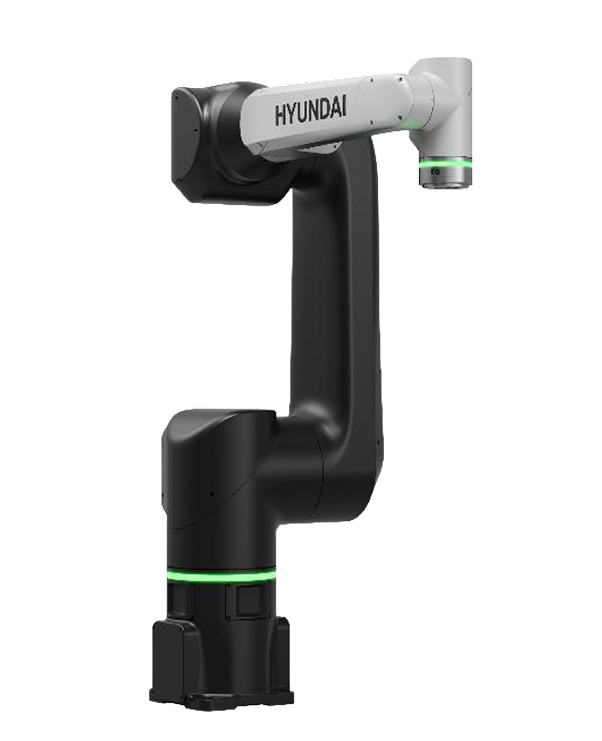
Hyundai Motor Group, meanwhile, has pushed its 2020 acquisition of Boston Dynamics toward mass production, unveiling a factory-ready electric Atlas humanoid at CES 2026 and setting a target of 30,000 robots a year in annual production capacity by 2028. HD Hyundai Robotics has separately been extending humanoid-adjacent AI into its own collaborative-robot line. Against that backdrop, Doosan Robotics is the conglomerate player without a humanoid program of its own, betting instead that software-layer intelligence bolted onto conventional cobot arms, the kind of work its Nvidia partnership is meant to produce, can hold commercial ground against rivals pouring capital into bipedal robots. A leadership change at this stage either accelerates that bet or signals the parent company wants a different one.
A Broader Product Line Than Most Buyers Realize
Doosan Robotics is not a single-product company making a single bet. Its catalog spans four distinct families, the A-Series for light assembly, the M-Series covering the widest span of payload and reach on one control platform, the H-Series rated for 20 and 25 kilograms of heavy-payload work, and an upcoming P-Series aimed squarely at the same high-payload segment where European and North American demand has been concentrated. That breadth has translated into real scale: the company has grown at roughly a 40 percent compound annual rate since 2018, holds a top-five position among global cobot manufacturers outside China, and now draws about 70 percent of its total sales from international markets rather than its home market in South Korea.
Read against that backdrop, Kwon's background looks less like a generic executive reshuffle and more like a deliberate match between a new chief executive's specialty and the product line the company is pushing hardest. Doosan Mottrol, the unit Kwon ran before this appointment, builds hydraulic components, the kind of high-force actuation technology that matters disproportionately to a 20-to-25-kilogram H-Series arm or a forthcoming heavy-payload P-Series unit, far more than it matters to a light-duty A-Series cobot doing pick-and-place work. A chief executive who spent five years running the group's hydraulics business is a plausible signal that Doosan intends to lean harder into the heavy-payload segment where it is trying to win share from Universal Robots and FANUC in Europe and North America, rather than compete primarily on the lighter-duty cobots where Chinese manufacturers have already driven prices down furthest.
What Buyers Evaluating Korean Cobots Should Watch
For a procurement team weighing Doosan Robotics against Universal Robots, Teradyne's long-time category leader, or against Chinese entrants such as Elite Robots and JAKA that have been undercutting both on price, a CEO transition is rarely decisive on its own. What matters operationally is whether service commitments, firmware roadmaps and the Frankfurt facility's support capacity stay on schedule through the handover. Doosan Robotics has not disclosed whether Kwon inherits a specific revenue or shipment target, and the company's public filings have not yet reflected any change in guidance tied to the appointment.
A useful comparison point is how Universal Robots itself has responded to the same price pressure from Chinese manufacturers: rather than matching low-end pricing directly, Teradyne Robotics, UR's parent, has leaned on patent and copyright litigation against Chinese rivals in European courts to slow their advance in its most profitable markets. Doosan has not taken that path and shows no public sign of planning to, relying instead on the Nvidia software partnership and a heavier-payload product push to differentiate on capability rather than on legal leverage. Whether that remains the right call is a question Kwon inherits along with everything else, and it will look different depending on how quickly Chinese high-payload cobots, still a smaller segment than the light-duty arms where Chinese pricing pressure has been most intense, start closing the gap Doosan is counting on to hold.
The more concrete signal to track is the Nvidia collaboration's first shipping product. Doosan said in April that it was still in the reference-design stage with Nvidia, and no commercial release date has been set. A buyer currently evaluating cobots for a 2027 deployment has reasonable grounds to ask Doosan's sales team directly whether the leadership change affects that timeline, since an unscoped answer is itself useful information about how settled the company's near-term roadmap actually is. Kwon's background in strategic planning and component manufacturing, rather than in software or AI research, suggests his mandate may lean toward operational discipline and supply-chain execution ahead of the AI platform's commercial debut, a reasonable priority if Doosan's near-term differentiation is still manufacturing quality and service density rather than novel algorithms.
A Public Company With Less Room to Hide a Transition
Doosan Robotics has operated as a publicly traded company since October 2023, when its initial public offering on the Korea Exchange's KOSPI market drew 33.1 trillion won in retail subscription demand, one of the largest such responses in recent Korean market history, and shares that doubled on their first day of trading. The parent conglomerate's stake fell to roughly 68 percent after the offering, leaving close to a third of the company in the hands of public shareholders who now receive quarterly results and will be parsing Kwon's first earnings call for signals about strategic continuity. That ownership structure matters for how closely this transition gets scrutinized: a wholly owned subsidiary of a private conglomerate can manage a CEO handover with minimal external disclosure, but a KOSPI-listed company with retail investors who paid a premium to get in on the 2023 offering faces analyst questions about succession planning, revenue guidance and capital allocation in a way a closely held rival does not.
A Market That Rewards Execution Over Announcements
Collaborative robotics has reached a stage where announcements of AI partnerships and new regional offices are cheap relative to the harder work of shipping reliable hardware at volume and supporting it across multiple continents. Doosan Robotics has made two such announcements this year without yet showing the market a product that embodies either one. Kwon's appointment does not change that calculus on its own, but it does put a specific name and a specific professional record behind the next stretch of execution, and Doosan's rivals in Seoul, Frankfurt and Hamburg will be watching just as closely as its customers to see what changes once he is actually in the chair.
This analysis synthesizes company statements and public market activity as of the publication date and should not be read as investment, financial, or professional advice; it is provided for general information purposes only.