SoftBank Robotics and Bear Robotics Launch Servi Q in Japan
SoftBank Robotics and Bear Robotics put the Servi Q delivery robot on sale in Japan, a 35-centimeter-wide, tray-carrying machine built to fit 45-centimeter aisles and drive in reverse, aimed at narrow restaurants, hotels and care facilities that standard-width robots cannot enter.

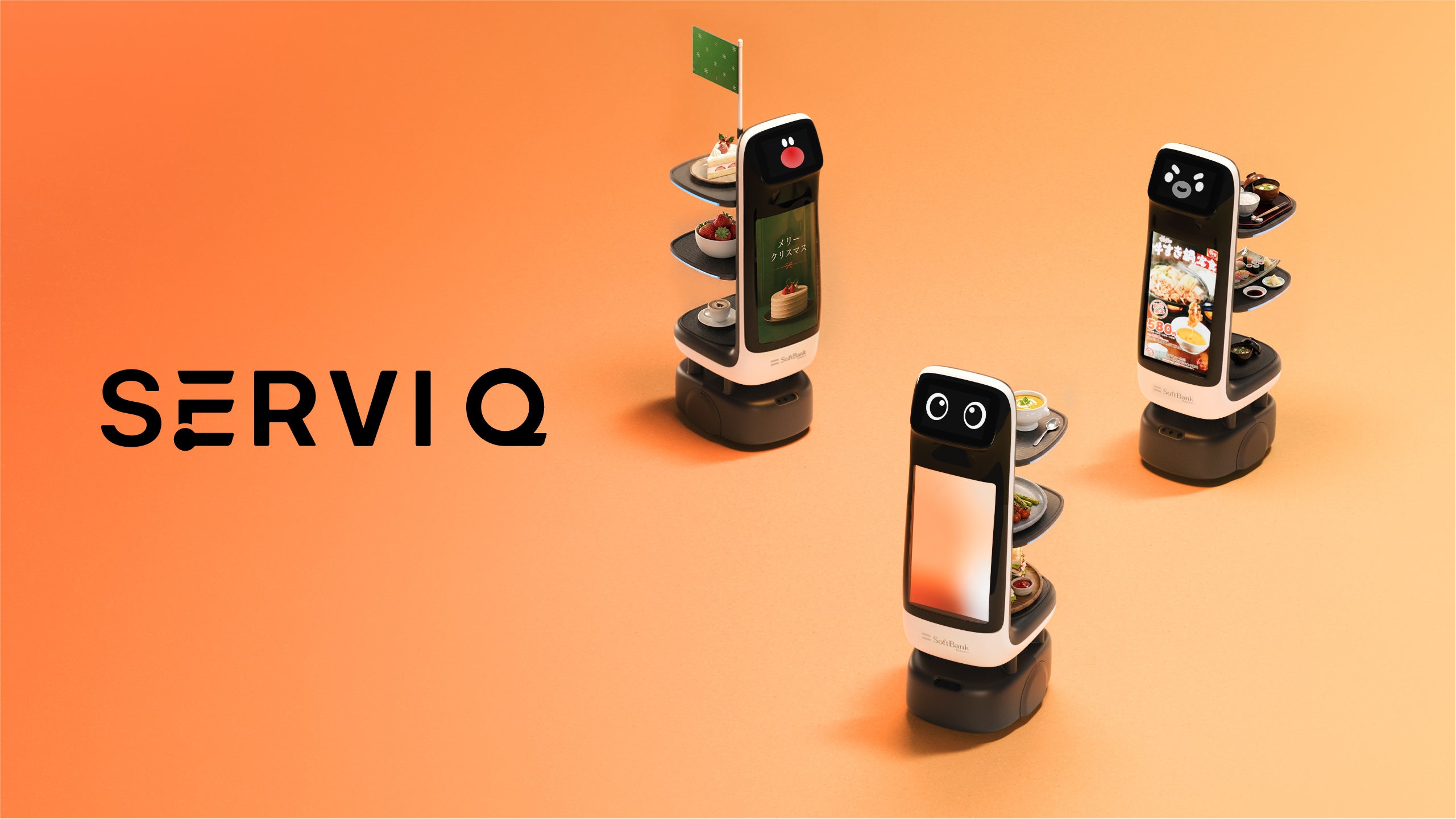
Thirty-five centimeters: that is the full body width of the Servi Q, the delivery robot SoftBank Robotics Co., Ltd. and Bear Robotics, Inc. put on sale across Japan on Monday, and it is narrow enough that the two companies claim it can pass through a 45-centimeter gap, the tightest clearance any robot in its category has managed, without a restaurant or care facility rearranging a single table.
The direct answer for hospitality and facility operators: Servi Q is a next-generation, tray-carrying autonomous delivery robot co-developed by SoftBank Robotics and Bear Robotics, a Mountain View, California-based robotics company that built its business on restaurant service robots and now supplies the underlying platform this Japan-market version runs on. It went on sale in Japan on September 28, with SoftBank Robotics handling development, marketing and distribution domestically while Bear Robotics continues to sell its own Servi line directly in the United States and South Korea. The robot carries up to 30 kilograms across one to three trays, spaced in six-centimeter increments, navigates autonomously using 360-degree lidar, and, in an industry first the companies are marketing heavily, can drive in reverse when it cannot find room to turn around.
Built for the Buildings Robots Usually Can't Enter
Every one of Servi Q's headline features points at the same constraint: most commercially available service robots are too wide, too slow to reverse, or too clumsy with liquids to work in the kind of cramped, narrow-aisle venues that make up a large share of Japan's restaurant and hospitality stock. A robot built for a spacious American chain restaurant with wide aisles does not automatically work in a small izakaya, a traditional ryokan corridor or an eldercare facility with tight hallways between rooms, and operators in those venues have historically had to choose between forgoing automation entirely or renovating a space to fit the robot rather than the other way around.
Servi Q is engineered to reverse that logic. Beyond its 35-centimeter width and 45-centimeter minimum passage clearance, the robot includes a suspension mechanism designed to reduce tray vibration while moving, a feature aimed squarely at the liquid-spill problem that has limited robot food service in venues that serve soup, drinks or anything else that sloshes at walking speed. Its wheels are built to resist debris buildup and include a cleaning mode, addressing a maintenance complaint that has dogged earlier delivery-robot generations in food-service environments where floors accumulate crumbs, spills and dropped napkins over a service shift. An 18.5-inch front display paired with a separate expression display lets the robot communicate wait times, greetings or simple status updates to customers and staff without a human attendant standing nearby to translate its intent.
A Restaurant Robot Platform Built by an American Startup, Sold by a Japanese Conglomerate
The company actually behind the tray-carrying platform, Bear Robotics, has spent roughly a decade building autonomous service robots specifically for restaurants, moving from its original Servi robot to a wider Servi family that now includes this compact Q variant developed jointly for cramped venues. Its business model already runs through exactly the kind of partnership Servi Q represents: Bear Robotics builds and continues to refine the underlying robotics platform, while a larger distribution partner, in this case SoftBank Robotics, handles country-specific manufacturing, sales and support in markets where Bear Robotics does not maintain its own commercial operation. That structure lets a relatively small robotics company reach a demanding market like Japan, with its dense small-format restaurant stock and exacting service-quality expectations, without building a Japan-specific sales and support organization from scratch.
For SoftBank Robotics, the deal extends a service-robot distribution business built originally around the Pepper humanoid and the wider Servi line the two companies have already sold together in Japan since 2021. Servi Q is explicitly pitched as the compact end of that existing lineup rather than a new product category, aimed at the segment of restaurants, hotels, commercial facilities and care facilities that the standard-width Servi robots have never been able to physically enter. SoftBank Robotics has not disclosed Servi Q's price, positioning it instead through venue fit: the company is marketing the robot directly at operators who evaluated an earlier delivery robot, concluded their floor plan could not accommodate it, and shelved automation plans as a result.
The Staffing Math Behind the Narrow-Aisle Pitch
Japan's hospitality and food-service sector has spent the past several years absorbing one of the most acute labor shortages in the country's economy, as a shrinking working-age population collides with steady demand from both domestic diners and a tourism sector that has returned to record visitor volumes. Restaurant and hotel operators facing that gap have increasingly looked to service robots to cover floor-running, bussing and simple delivery tasks that do not require the judgment or language skill a scarce human employee brings to more demanding service moments, freeing remaining staff for the interactions that actually require them.
The venues that have been slowest to adopt that automation are disproportionately the ones Servi Q is built for: older buildings, traditional-format restaurants and care facilities with narrower corridors than a purpose-built modern restaurant, precisely the properties where a standard-width delivery robot has never physically fit. If SoftBank Robotics' width and reverse-driving claims hold up in real deployments rather than controlled demonstrations, the addressable market for restaurant and facility service robots in Japan expands meaningfully beyond the newer, wider-aisle venues that have dominated robot adoption so far, since a large share of the country's food-service and care-facility floor space was built before automation was a design consideration.
Entering a Segment China's Robot Makers Already Dominate by Volume
Servi Q does not launch into an empty category. Chinese service-robot makers, led by Shenzhen-based Pudu Robotics and Keenon Robotics, have shipped tens of thousands of restaurant delivery and bussing robots globally over the past several years, undercutting Western and Japanese rivals on price while iterating quickly on form factors aimed at exactly the cramped, narrow-aisle venues SoftBank Robotics and Bear Robotics are now targeting with Servi Q. Both Chinese vendors already sell compact, narrow-body delivery robots into the Japanese market through local distributors, meaning Servi Q's width and reverse-driving claims will be judged by operators against machines already installed and running in comparable venues, not against a blank slate.
SoftBank Robotics' answer to that price pressure is not to compete on cost but on integration and support: the company has run the broader Servi line in Japan since 2021, has an existing service and maintenance network built for Japanese hospitality clients, and is positioning Servi Q as a drop-in addition to venues that may already run other SoftBank Robotics or Bear Robotics hardware rather than a first-time robot purchase. That bundling strategy, selling deeper into an installed base rather than chasing new logo customers on price, is a familiar playbook for an established distributor facing lower-cost new entrants, and it will only work if Servi Q's narrow-aisle performance is good enough that existing customers see it as an obvious upgrade path rather than a marginal improvement not worth the switching cost.
What Buyers Should Still Verify
The claims worth testing before a purchase decision are the ones that depend on real-world variability rather than a specification sheet. A 45-centimeter minimum passage width is a controlled-condition figure; operators should confirm it holds with a fully loaded tray configuration, on the specific flooring and lighting conditions of their venue, and with the foot traffic patterns a live service period actually produces rather than a quiet demonstration walkthrough. The reverse-driving capability solves a genuine problem in dead-end corridors, but its practical value depends on how reliably the robot detects that it has reached an impasse versus requiring a staff override, a distinction that matters during a busy service rush when no employee has time to babysit a stuck robot.
Pricing remains the largest open variable. Neither company has published Servi Q's cost, rental terms or the total addressable savings a venue should expect against the labor cost of the delivery and bussing tasks it replaces, figures that will determine whether operators in the narrow-aisle venues Servi Q targets can justify automation that previously priced them out. Until those terms are public, the launch should be read as a capability announcement establishing that a narrow-aisle service robot now exists and is commercially available, rather than a signal that Japan's remaining un-automated restaurant and care-facility floor space is about to convert en masse.
The venue that proves or disproves Servi Q's pitch will not be a demonstration floor at a trade show but an ordinary weeknight rush at a small izakaya or a ryokan dining room, where a robot has to find its way down a 45-centimeter aisle between a serving cart and a seated guest's chair, reverse out of a dead end without a staff member watching, and do it dozens of times in a single evening without spilling a tray of soup. SoftBank Robotics and Bear Robotics have built a robot narrow enough to attempt that test. Whether it passes, in the buildings that were never designed to accommodate a machine at all, is the question the Japanese launch has now put in front of real operators rather than engineers.
This analysis synthesizes company statements and public market activity as of the publication date and should not be read as investment, financial, or professional advice; it is provided for general information purposes only.
Hero image credit: SoftBank Robotics.