IROS 2026 Opens Its Main Program in Pittsburgh With More Than 1,900 Papers
The IEEE/RSJ robotics conference opened its main program in Pittsburgh on 28 September 2026, with more than 1,900 papers and a Monday panel on turning prototypes into products.

IROS 2026 Opens Its Main Program in Pittsburgh With More Than 1,900 Papers
The main technical program of the IEEE/RSJ International Conference on Intelligent Robots and Systems opened on Monday, 28 September 2026, at the David L. Lawrence Convention Center in Pittsburgh. The official program chair, Ross L. Hatton of Oregon State University, says the core slate contains more than 1,900 contributed papers. Each paper is scheduled as both a talk and a poster, with some authors also running live demonstrations beside the poster hall. For procurement and operations leaders, the useful signal is not the size of the crowd. It is that a buyer can now watch a method presented, inspect the poster, and in selected cases see a demonstration in the same building on the same day.
The conference week runs from 27 September through 1 October. Sunday was reserved for workshops and tutorials, including a welcome ceremony at 8:30 a.m. and a welcome reception in the evening. Monday is the first day of contributed talks, the exhibit hall, and the first plenary panel. One-day registration is limited to the main conference days of 28, 29, and 30 September. That split matters for a plant visit or a supplier meeting: a Sunday badge is not the same product as a Monday badge.
A conference is not a purchase order. It is closer to a live catalog in which the catalog entries can answer questions. A paper that survives a nine-minute talk, a poster, and a demonstration has cleared a different test from a video posted by a vendor. It has not cleared a factory acceptance test. Buyers should treat the week as a filter for questions, not as evidence that a cell is ready to ship.
What the program actually contains
Hatton's program note is the cleanest primary count available. It lists more than 1,900 contributed papers, three plenary panels, 19 keynote talks under the theme Open Problems and Perspective Shifts, more than 170 exhibitors, nine competitions, 86 workshops and tutorials, and 150 late-breaking results posters. The program guide also lists 180 numbered booths in Halls A and B. The exhibit hall is scheduled from 9 a.m. to 5 p.m. on Monday, Tuesday, and Wednesday. Those figures come from the conference's own program pages, not from a sponsor release.
Talks run in two formats. Focused sessions give nine minutes plus questions. Lightning talks give three minutes. Authors chose the format. The program site builds sessions around topics and lets a visitor search locally in the browser without an account. That design is a practical response to a schedule that no single person can attend. It also means a supplier can be judged on a three-minute slot or a nine-minute slot depending on a choice the author made, not on the importance of the work.
The homepage of the conference site still shows template counters, including an attendee figure above 1,200 and a paper-submission figure above 200. Those counters do not match the program chair's note. This article uses the program note and the program guide, and it does not treat the homepage counters as a headcount.
Monday's commercial session is a panel, not a product launch
The Monday plenary panel, Start-ups and Entrepreneurship, is set for 1:30 p.m. to 2:30 p.m. in Hall C. Lisa Chai of Interwoven Ventures is the moderator. The listed panelists are Vijay Kumar of the University of Pennsylvania, Martina Hansen of Sudo AI, Andrea Thomaz of Diligent Robotics, Ali Agha of Field AI, Sami Haddadin of Mohamed bin Zayed University of Artificial Intelligence, and Sanjiv Singh of Near Earth Autonomy. The official abstract says the panel will examine the path from research prototypes to robust products and the difficulty of building and scaling robotics companies.
That is the right question for a buyer, and it is not a product announcement. None of those names, on this page, published a price, a delivery date, or a fleet count for 28 September. A panel can still change a sourcing plan if the speakers are specific about what failed between the lab and the first paid installation. A panel that stays at the level of momentum is a networking session.
The other two plenary panels sit on later days, so they are context rather than today's news. Tuesday's space panel is moderated by Robert Ambrose of Texas A&M University, with Kim Hambuchen of NASA Johnson Space Center and Ueno Hiroshi of JAXA among the listed participants. The page still says the abstract will appear later. Wednesday's debate, Should Robots be Generalists or Specialists, is moderated by Andrea Bajcsy of Carnegie Mellon University and Ken Goldberg of the University of California, Berkeley. Specialist voices include Matt Mason, Nancy Amato, Toshi Fukuda, and Yu Sun. Generalist voices include Georgia Chalvatzaki, Huazhe Xu, Katerina Fragkiadaki, and Philipp Wu of xdof.
The generalist-specialist split is the procurement argument hiding inside the academic program. A generalist humanoid that can attempt many tasks is attractive when the job mix changes every week. A specialist cell that repeats one task at a known rate is what most factories already know how to buy, staff, and insure. The debate does not settle that choice. It does put both camps in one room, which is rare in a market that usually sells them in separate brochures.
How a buyer should use three days
A useful visit has a written list before the first session. The list should name the task, the cycle time, the part variation, and the failure that would stop the line. Against that list, a nine-minute talk is a screen. A poster is a place to ask for the data the talk omitted. A demonstration is a place to watch recovery, not the happy path. A booth is a place to ask who installs the system and who holds the spare parts.
The exhibit hall is the commercial layer. More than 170 exhibitors and 180 numbered booths are not the same claim. Some exhibitors may share a booth, and some booths may be association or university stands. The program does not publish a public price list, and this article does not invent one. What the hall does provide is a chance to compare integration claims side by side. Ask whether the demonstrated skill runs on the same controller the seller would ship. Ask whether the model was trained on the buyer's parts or on a laboratory set. Ask what happens when the sensor is occluded. Those questions cost nothing at a booth and a great deal after a purchase order.
Competitions are a separate evidence class. Nine competitions can show repeatability under a shared rule set. They rarely show uptime across a shift, and they do not show the cost of a technician on the night shift. A team that wins a manipulation contest has earned a meeting. It has not earned a line slot.
Workshops bookend the week, with 86 workshops and tutorials on Sunday 27 September and Thursday 1 October. A workshop is often where a method is taught rather than sold. For an internal robotics team, that can be the highest-value ticket. For a buyer who needs a delivered cell this quarter, a workshop title is not a lead time.
Pittsburgh is part of the product
The organizers describe Pittsburgh as a robotics hub, and the technical-tour page lists six tours to Carnegie Mellon University robotics facilities on Thursday 1 October. The city has spent two decades turning university labs into companies that sell autonomy, inspection, and manipulation. That history does not make every exhibitor a Pittsburgh company, and it does not make a local demo a local service contract. It does mean a buyer can often meet the people who would support a pilot without booking a second trip.
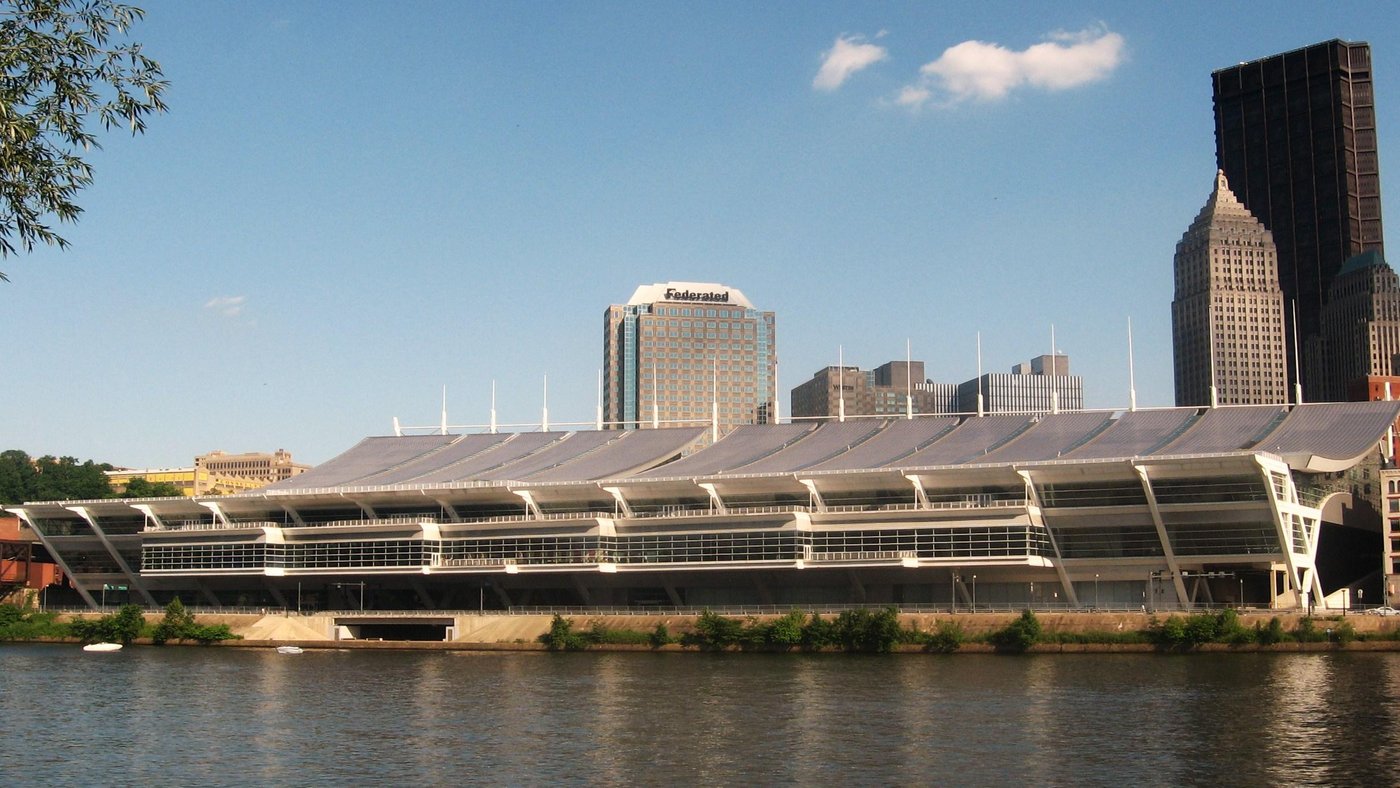
The venue itself is a known public building on Fort Duquesne Boulevard, owned by the Sports and Exhibition Authority of Pittsburgh and Allegheny County. It is a convention center, not a factory. Lighting, floor load, and network access in Halls A and B will not match a stamping line or a warehouse aisle. A demonstration that depends on a clear floor and a stable network should be labeled as such in the visit notes.
Registration is a cost signal, not a technical one. The official table lists an IEEE, RSJ, or SICE member early-bird rate of US$920, a standard rate of US$1,035, and a late rate of US$1,335. Non-member rates are US$1,150, US$1,265, and US$1,565. Student member rates are US$460, US$575, and US$875. A one-day registration is US$400 early, US$600 standard, and US$900 late. Exhibit-hall-only access is US$400 early or standard and US$700 late. Author registration closed on 16 July, early-bird registration closed on 24 July, and regular registration closed on 18 September, with online closing times stated as 23:59 Eastern for the author and early deadlines. A team that arrives without a badge is not going to negotiate its way into Hall C.
What this week does not prove
The program does not publish a verified attendance total for Monday morning. The homepage counter is not a substitute. The program does not say how many of the 1,900 papers describe a system a factory could buy, and it does not say how many demonstrations use customer parts. It does not rank exhibitors by installed base. Any article that converts those gaps into a market-share claim is guessing.
There is also a timing trap. Several robotics companies announced funding, products, or deployments in the ten days before this opening. Those announcements are not IROS news unless the company ties them to a session, a booth, or a paper this week. A buyer who collects both in one notebook should keep the dates in separate columns. A paper presented on Monday can cite a deployment from June. The deployment date is the deployment date.
Currency in this piece is in US dollars because the organizer published the registration table that way. No foreign price was converted because no foreign price is part of the verified Monday record.
A direct answer for a busy reader
IROS 2026 opened its main technical program on 28 September 2026 in Pittsburgh, with more than 1,900 papers set for both talks and posters, an exhibit hall of 180 booths, and a Monday plenary on the path from prototype to product. The event runs through 1 October at the David L. Lawrence Convention Center. It is a primary venue for seeing methods and suppliers in one place. It is not, by itself, evidence that any robot on the floor is ready for a named production task.
The comparison that matters
A buyer comparing this week with a vendor roadshow should use a short scorecard. The scorecard below uses only categories the official program supports. Where the program is silent, the cell says N/A rather than a borrowed industry average.
The scorecard is a discipline. It stops a team from treating a packed hall as a technical result. It also stops a team from dismissing a three-minute talk that names a real constraint. The constraint is often the sentence worth writing down.
Staffing the visit
Send two people if the budget allows one full registration and one day pass. One person should sit in talks with a notebook limited to claims that could change a specification. The other should work the hall with the scorecard. They should meet at the poster session, because that is where a talk can be challenged without waiting for a booth appointment. A single traveler can do both jobs and will do both badly after lunch.
Write the notes in the company's own template before leaving the building. Include the session code, the speaker, the claim, and the missing number. Do not include a verdict on the company. The verdict belongs in a review with the people who own the line, after the missing number has been requested. That delay feels slow on a conference Monday. It is cheaper than a pilot scoped from a badge conversation.
Competitors and adjacent venues
IROS is not the only place a robotics buyer will stand this year. Automatica, the China International Robot Show, and company user meetings each sell a different kind of evidence. A trade fair is built to take orders and show machines at commercial scale. A user meeting is built to defend an installed base. IROS is built to put reviewed methods next to early companies. Using it as a trade fair wastes the talks. Using a trade fair as a substitute for a paper wastes the paper. The mature sourcing plan uses both and labels the evidence.
Japan and Korea remain central to the industrial robot supply base, and their researchers and suppliers are part of an IEEE and RSJ meeting by design. RSJ is in the conference name. That does not mean a Japanese or Korean product launch occurred on Monday, and this article does not invent one. It does mean a buyer who only walks the booths of companies already on the approved-vendor list will miss the point of the opening day. The list is where current spend sits. The poster hall is where next year's constraint may be named first.
Conclusion
Monday's opening gives buyers a primary, dated record of what the robotics research community is willing to present, and a hall in which suppliers must stand next to that record. The verified facts are the date, the venue, the program chair's paper count, the talk formats, the exhibit and competition counts, the Monday panel and its participants, and the published registration table. Everything else a seller says on the floor still needs a second source. Teams that leave Pittsburgh with a scorecard and a list of unanswered numbers will get more from the week than teams that leave with a bag of brochures.
Disclaimer: This article is for general information only and does not constitute investment, legal, or procurement advice. Figures reflect sources available at publication and may change.