Boston Dynamics Puts Atlas on Wheels to Find Its Breaking Point
Boston Dynamics bolted scooter wheels onto Atlas's ankles to stress-test the humanoid's actuators with reinforcement learning, a methodology that reveals how the company validates reliability before a customer ever sees a failure.

Boston Dynamics Puts Atlas on Wheels to Find Its Breaking Point
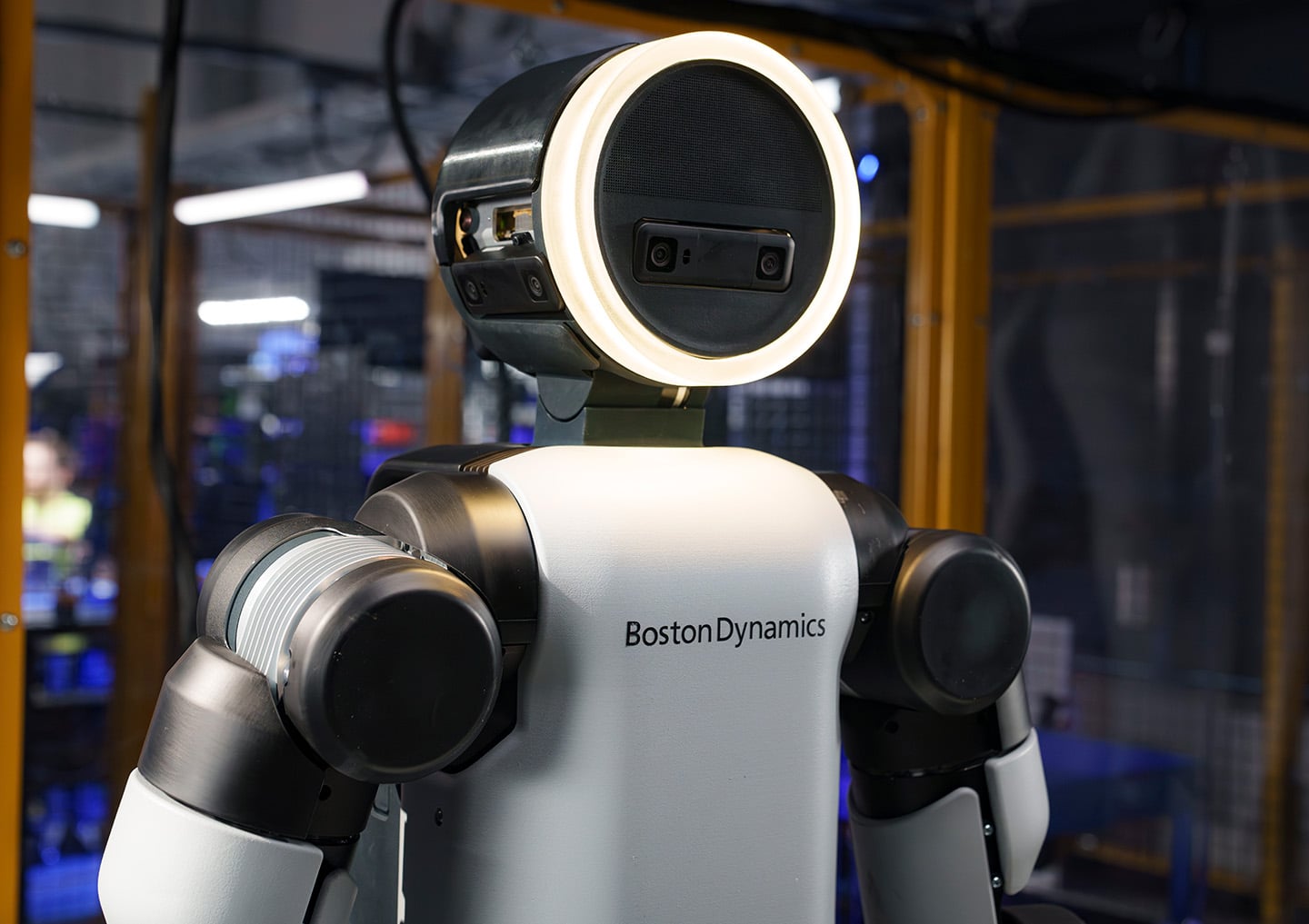
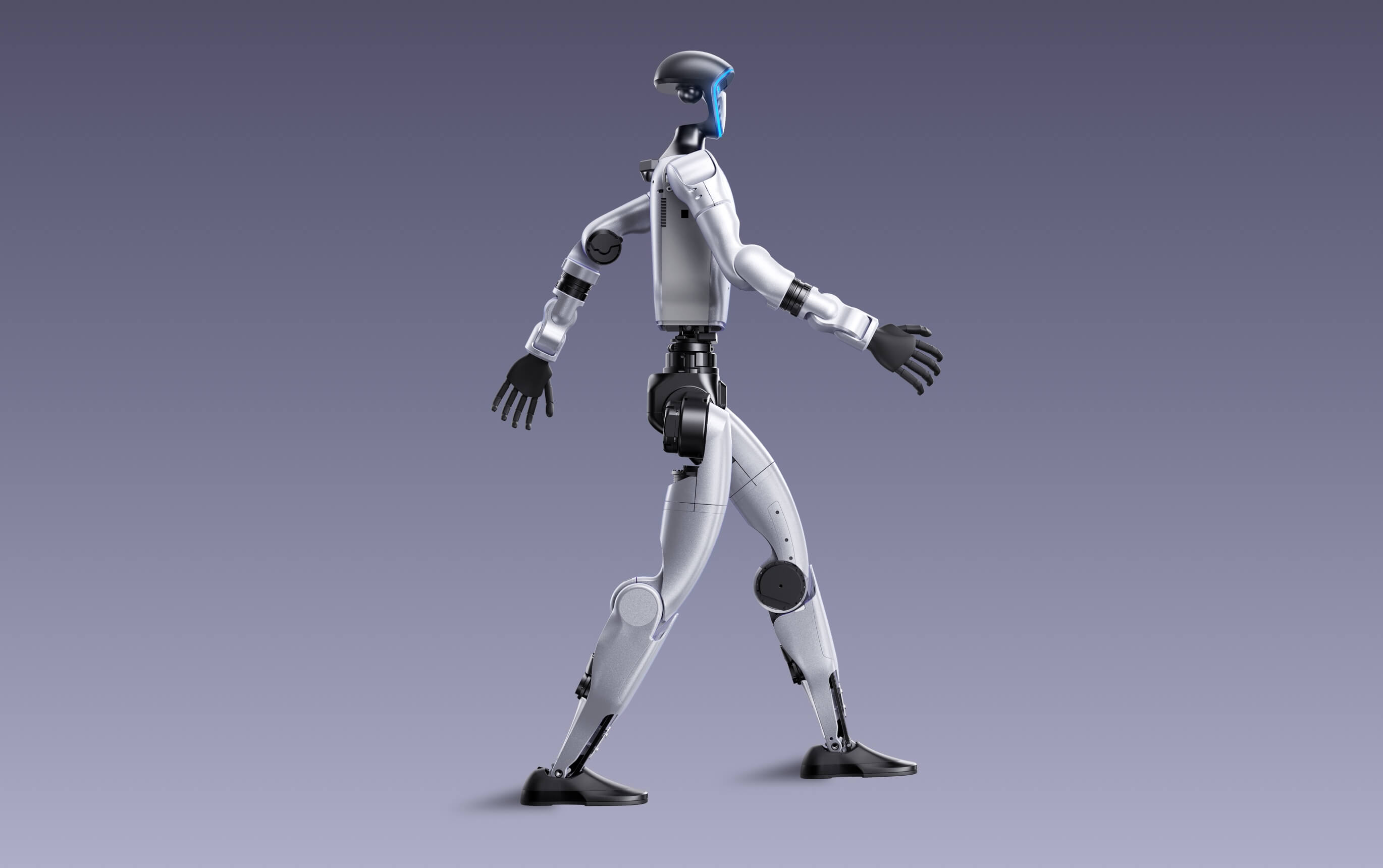
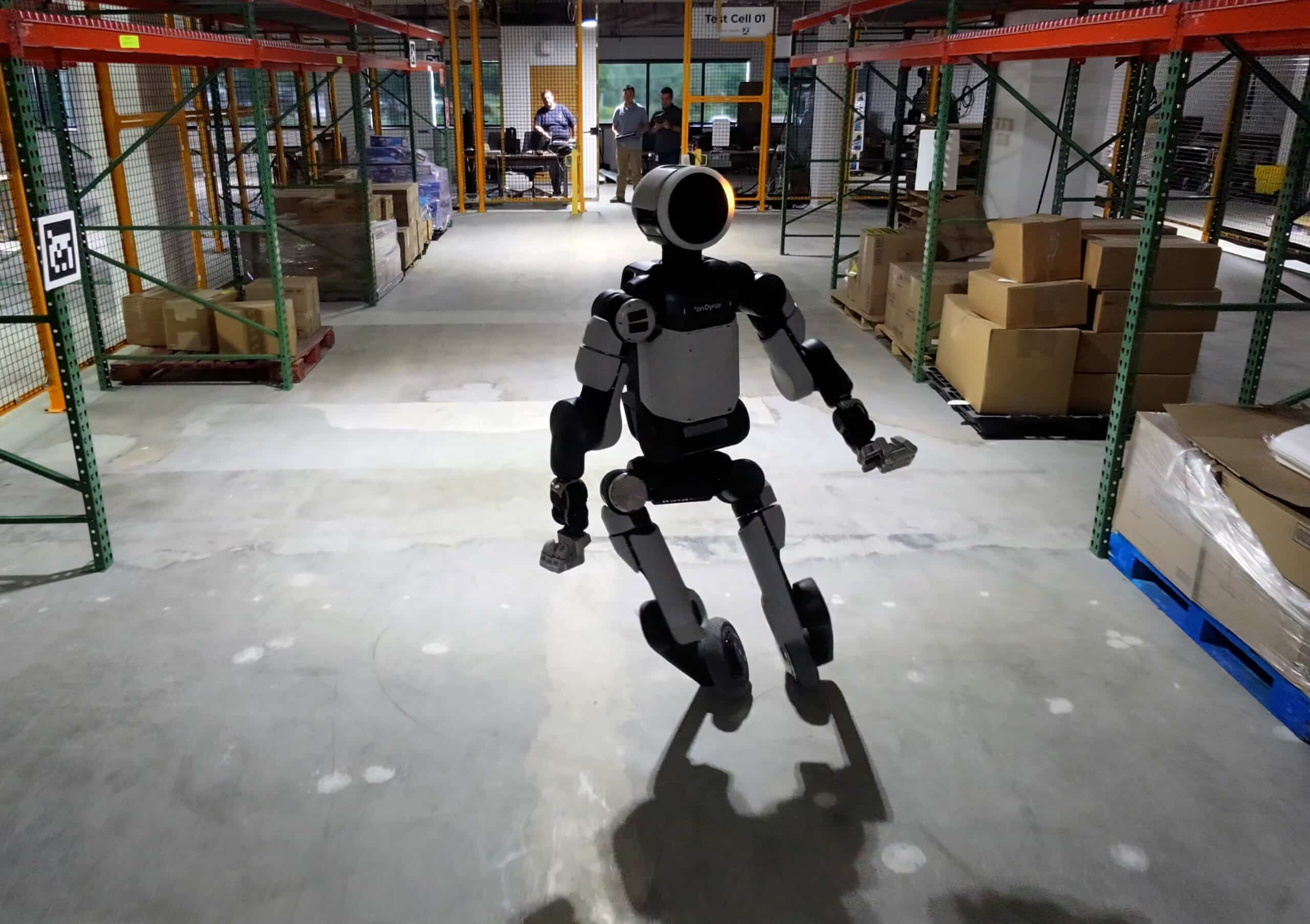
Boston Dynamics did not strap wheels onto its Atlas humanoid to make the robot faster, more efficient, or more useful on a warehouse floor. It did the opposite of what a mobility upgrade would suggest: the company bolted a pair of off-the-shelf scooter rims onto Atlas's existing ankle joints specifically to push the robot's own motors harder than walking ever would, and then published exactly how it trained a single control policy to handle the robot sliding, skating and jumping on those wheels without falling over. For anyone buying or specifying humanoid robots for factory work, the experiment matters less for the trick itself and more for what it reveals about how Boston Dynamics tests the actuators a customer's uptime will eventually depend on.
The hardware change was deliberately minimal. A custom adapter clamps a scooter wheel onto the same ankle actuator Atlas already uses to walk, with no new motors, sensors or structural parts added anywhere on the robot. That constraint was the point. Rolling on wheels, unlike walking, demands continuous high torque and high speed at the same time rather than the intermittent bursts a walking gait produces, which means the ankle motors spend the entire test running near the edge of their rated performance envelope instead of cycling through it occasionally. Boston Dynamics is using wheels as a stress-testing scenario precisely because they are an unnatural way to move a bipedal robot, which is exactly what makes them useful for finding where an actuator's real limits sit.
Closing the Gap Between a Simulated Motor and a Real One
The harder engineering problem sat in simulation, not hardware. Atlas's wheeled behaviors were trained with reinforcement learning, where a policy practices millions of attempts inside a physics simulator before ever touching a real robot, and that approach only works if the simulated version of the actuator behaves like the physical one under the same stress. Boston Dynamics' engineers ran characterization experiments on the real hardware and then tuned the simulated motor model to match those measurements, rather than relying on an idealized textbook model of how the actuator should behave. An overly forgiving simulated motor will let a trained policy learn moves the real actuator simply cannot deliver, a mismatch that only surfaces once the robot is already on a customer's floor and the behavior fails or the motor overheats.
That distinction, tuning simulation to match a specific actuator's measured limits rather than its theoretical ones, is the part of this exercise with the most direct relevance to a buyer's maintenance budget. A humanoid robot deployed on a multi-year industrial contract lives or dies commercially on actuator longevity and predictable failure behavior, not on how impressive its demo reel looks. Boston Dynamics has named Hyundai Mobis as an actuator partner for the productized, all-electric version of Atlas, with Mobis-built actuator prototypes now moving toward the hardware Boston Dynamics is validating for manufacturing roles, including reported work inside a Hyundai plant in Georgia. Every stress test the company runs against the actual torque-speed envelope of that supply chain's hardware is, in effect, a warranty-cost exercise as much as a research one.
What Changed in the Control Policy, Not the Hardware
Getting a learned policy to roll smoothly, rather than just survive on wheels, took changes on the software side rather than more hardware iteration. Boston Dynamics adjusted how the reward function scored the policy during training, widened the range of commands the policy practiced against, and retuned how the system handled posture, three relatively small levers that were apparently enough to produce stable, controllable rolling rather than a robot awkwardly dragging itself around on a pair of wheels. Some of the resulting motion came from human motion-capture data the team selected specifically because it involved heavy foot sliding, giving the policy a starting point closer to rolling than a standard walking gait would. A 360-degree jump, by contrast, came from a separate trajectory-tracking policy and reportedly worked on its first real-world attempt, while the side-dashing motion the robot displays was not explicitly programmed at all. It emerged on its own once the training process gave the policy wheels to work with.
That emergent behavior is worth taking seriously rather than treating as a novelty clip. A policy inventing its own use for a physical feature nobody told it to exploit is the same underlying capability that matters when an industrial robot encounters a floor surface, a dropped part, or a partial equipment failure nobody anticipated at training time. The gap between a robot that only executes pre-scripted recovery behaviors and one whose control policy can generalize to a situation its engineers never explicitly trained for is, in practice, the gap between a robot that needs a technician called in for every edge case and one that can keep working through minor surprises on its own.
Wheels Are Not New Here, the Purpose Is
Boston Dynamics has put wheels on a legged robot before, and the contrast with that earlier project shows how far the company's priorities have shifted. Handle, a warehouse prototype that reused Atlas's torso and arms but swapped its feet for wheels, was built around 2017 to move efficiently across flat warehouse floors while using its legs to extend its reach up and down pallet racks. Handle was a mobility product in waiting, tested with real logistics customers unloading trucks and pallets, before its design lineage was carried forward into Stretch, the box-handling robot Boston Dynamics sells commercially today. Today's wheeled Atlas experiment inverts that logic entirely. Nobody is proposing to sell a wheeled humanoid; the wheels exist only as a load-generating test fixture, a way to force the existing bipedal robot's actuators into a stress regime walking cannot replicate, then prove a single reinforcement-learning policy can keep the robot upright and controllable while absorbing that stress. The company already knows how to put useful wheels on a robot. What it is building now is a repeatable method for finding an actuator's limits before a customer does.
Why Simulated Stress-Testing Is Becoming the Industry's Answer
The traditional way to validate an actuator's reliability is physical: run the motor through a fixed test rig for millions of cycles, log the failure rate, and set a warranty window based on what breaks and when. That approach works, but it is slow, destroys expensive hardware in the process, and only tests the specific motion pattern the rig was built to replicate. Training a reinforcement-learning policy to generate novel, increasingly aggressive motions in simulation first, then validating the resulting behavior against a small number of real hardware runs, compresses that validation cycle substantially and lets an engineering team explore stress patterns a fixed rig would never think to test, like a bipedal robot skating and jumping on wheels it was never designed to have. The catch, and the reason Boston Dynamics spent real engineering effort on the sim-to-real matching described above, is that this approach only produces trustworthy results if the simulated actuator model is honest about the real one's limits. A simulation that is too forgiving does not just produce a bad research result; it produces a false sense of confidence in hardware that has not actually been proven at the limits the simulation claims to have tested.
For an industrial buyer, that distinction translates directly into contract terms. A vendor whose reliability claims rest on this kind of matched simulation-to-hardware validation, rather than marketing copy alone, is making a more defensible case for the mean-time-between-failures number behind its warranty and maintenance pricing. It is also a capability that differentiates vendors who build their own actuators and control software end to end, as Boston Dynamics does, from integrators assembling humanoids out of third-party components they cannot instrument and retune at this level of detail. That distinction is likely to matter more, not less, as more companies attempt to enter the humanoid market by sourcing actuators rather than designing the full validation pipeline around them.
The Real Test Is Still Ahead
Boston Dynamics has already flagged its next step: studying how these learned policies respond when an actuator actually fails mid-task, rather than simply performs near its limit. That is a materially harder problem than training a robot to roll on wheels, because it requires the policy to recognize degraded hardware in real time and adapt its behavior rather than continue executing a plan built for a fully functional body. For a buyer evaluating humanoid robots for a multi-shift factory role, where a single unplanned stoppage can cost more than a week of the robot's amortized value, that failure-recovery research is the capability worth tracking closely, far more than how entertaining a wheeled skating robot looks in a promotional video.
Picture the alternative Boston Dynamics is testing against: a humanoid that locks up and waits for a human technician the moment one actuator starts behaving outside its normal range, sitting idle on a production line until someone notices. A robot that has been deliberately pushed past its comfortable operating envelope in a controlled research setting, and taught to keep functioning anyway, is the version that ends up costing a factory operator less downtime over the life of the contract.
This analysis is for general information purposes only and does not constitute investment, legal, or professional advice. It synthesizes Boston Dynamics' own published account of the project and prior public reporting on Atlas's actuator supply chain and industrial deployment.