Qiyuan Hits 10,000 Personal Robots as AgiBot's Consumer Bet Scales
Qiyuan Robot, the consumer-robotics brand AgiBot built by taking control of listed materials maker Shangwei New Material, shipped its 10,000th personal robot on Sunday and disclosed a 98% monthly active usage rate, a retention data point rarer in the industry than shipment totals.

Qiyuan Hits 10,000 Personal Robots as AgiBot's Consumer Bet Scales
Qiyuan Robot's 10,000th personal robot rolled off its production line on Sunday, a milestone the company reached just 14 days after its 5,000th unit shipped on October 25. Qiyuan is the consumer-robotics brand of Shangwei New Material, a Shanghai Stock Exchange STAR Market-listed composite-materials maker that AgiBot, one of China's best-funded humanoid robot makers, took control of in a tender offer that closed in November 2025. The milestone matters less for the round number than for what the company disclosed alongside it: a monthly active usage rate above 98% across its installed base, a retention figure that is unusually specific for an industry that more often promotes shipment counts than what happens to a robot after it reaches a buyer's home.
Liu Dongfang, co-president of Shangwei New Material's Qiyuan Robot division and head of its Q-series product line, disclosed the usage figures directly: a monthly active rate above 98%, a daily online peak above 40% of the installed base, roughly three hours of average daily online time per unit, and more than 100 user interactions per robot per day. Those are engagement metrics borrowed from consumer software, not hardware, and they are the kind of data a personal-robot buyer or distributor should weigh more heavily than unit-shipment totals, since a robot that ships but sits unused in a closet tells a very different commercial story than one still being actively used months after purchase.
A Materials Company Becomes a Robot Maker Through a Takeover, Not a Lab
Qiyuan's ownership structure is the detail most coverage of the milestone skips, and it changes how the number should be read. Shangwei New Material built its original business manufacturing vinyl ester resins and composite materials, notably for wind-turbine blades, and had no robotics product line of its own. That changed when Shanghai-based Zhiyuan Hengyue, an investment vehicle controlled by AgiBot chairman and chief executive Deng Taihua, acquired 63.62% of Shangwei through a combination of a negotiated share transfer and a partial tender offer, a deal that closed in November 2025 and made Deng the listed company's controlling shareholder. AgiBot itself, known on this site for industrial and service humanoids and for a productivity-scoring dispute over self-reported metrics, builds machines aimed at factories and commercial operators. Qiyuan, launched under the Shangwei shell in December 2025 and marketed internationally as PrimeBOT, is explicitly positioned as AgiBot's consumer-facing complement: robots built for homes and individual buyers rather than warehouses and production lines.
That structure means Qiyuan inherited a public listing, a balance sheet, and an existing industrial supply chain rather than building toward an IPO the way most consumer-robotics startups do. It also means the 98% engagement figure Liu disclosed carries the same scrutiny AgiBot's other self-reported numbers have earned on this site before: a company-controlled data point, not an independently audited one, and one worth tracking for consistency against future disclosures rather than taking as a settled fact.
From Prototype to 240 Units a Day in Under a Year
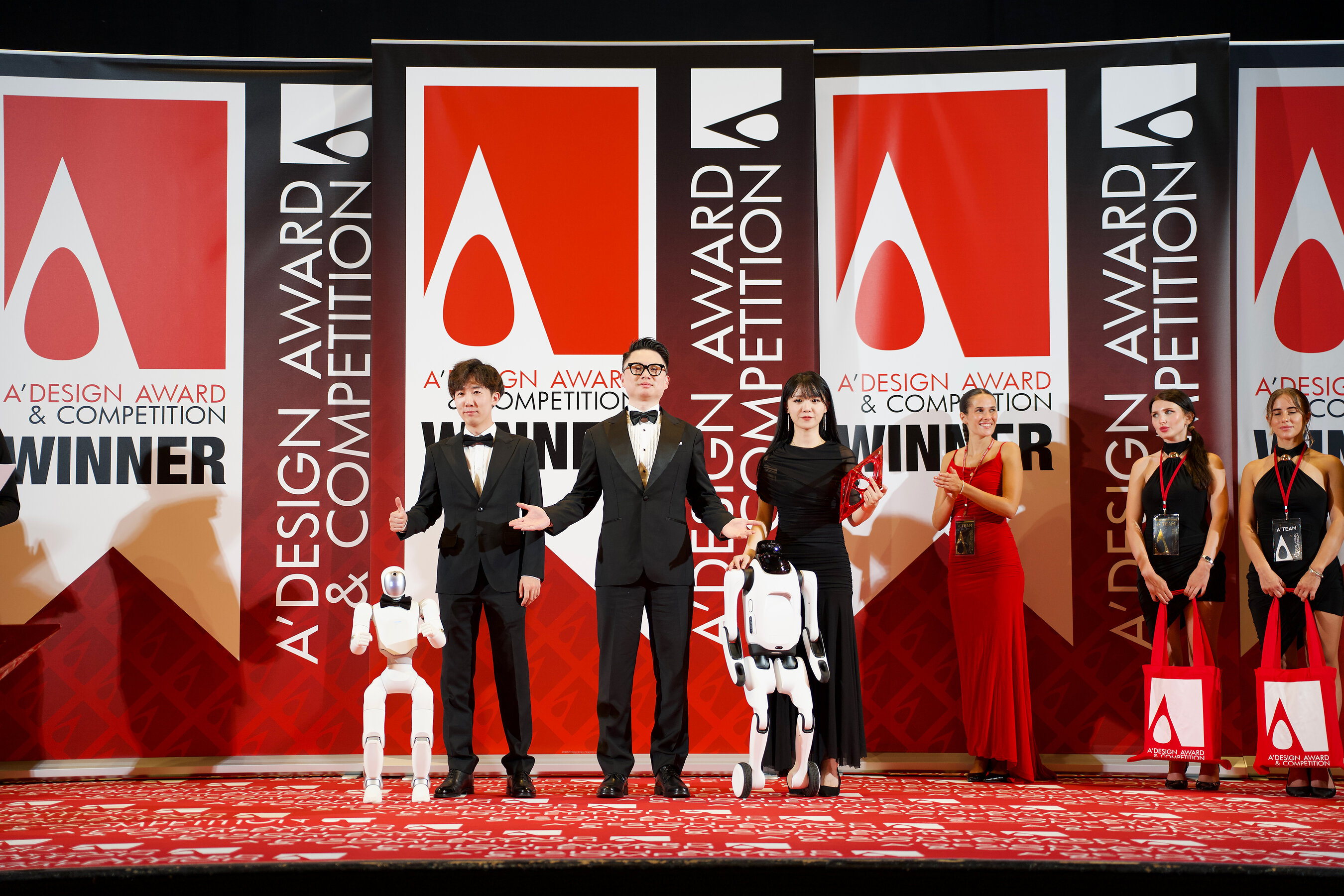
Qiyuan's two production robots, the humanoid Q1 and the wheeled-quadruped T1, launched commercially on September 20 at a Shanghai event themed "Me and My Personal Robot," with same-day shipping starting October 1. Pricing split by configuration: the base Q1 at RMB 19,999 (approximately US$2,810), a Q1 Explorer Edition with an open software and hardware development kit at RMB 26,999 (approximately US$3,790), the base T1 at RMB 19,999, and a T1 Pro variant with an added Nvidia Orin Nano compute module at RMB 29,999 (approximately US$4,210). The Q1 stands 88 centimeters tall, weighs 16 kilograms, carries 22 degrees of freedom, and runs on an eight-core processor with a 215-watt-hour battery, specifications the company has published openly alongside an open-source exterior shell design that buyers can 3D-print and customize.
Getting from a September launch to 10,000 shipped units by November required a manufacturing partner with experience at a very different scale than most robotics startups can access. In July, at the World Artificial Intelligence Conference, Shangwei signed a production agreement with Lens Technology's robotics subsidiary, Lens Intelligent Robotics, to build out an initial production line targeting ten-thousand-unit annual capacity. Lens Technology is better known as a precision-glass and casing manufacturer for smartphone makers including Apple, and its robotics unit's China president, Jiang Nan, described the collaboration as applying three decades of consumer-electronics precision manufacturing, automated cost reduction, and the quality systems built serving top global electronics customers to robot assembly. The resulting production system blends automotive-grade quality control with 3C-class precision manufacturing, a hybrid Qiyuan says now runs at a daily capacity of 240 units and let it climb from 5,000 to 10,000 cumulative units in two weeks.
What a Smartphone Supply Chain Buys a Robotics Startup
That manufacturing partnership is the more durable signal in this milestone than the usage statistics. Consumer electronics assemblers like Lens Technology have spent decades solving the specific problem Qiyuan needed solved fastest: how to hold tight, auditable quality tolerances across tens of thousands of units built from a shared parts supply chain, under a buyer's brand, without each unit requiring custom engineering attention. A startup building that capability from scratch typically burns a year or more and a meaningful share of its funding before reaching anything close to a ten-thousand-unit annual run rate. Qiyuan instead borrowed it, trading equity in a production-line agreement for a manufacturing partner that already runs that exact kind of operation for other brands' hardware. For a competitor evaluating how fast a well-capitalized rival can scale consumer-robot production once a product is ready to ship, Qiyuan's timeline from a September launch event to a five-figure cumulative unit count by November is the number to study, not the retention statistic.
An Open Developer Platform Is Doing Real Work, Not Just Marketing
Three days before the 10,000-unit milestone, Qiyuan shipped its first over-the-air update since launch, covering roughly fifty feature changes across both models. The Q1 gained six official AI companion personas, including a storytelling character and a science-focused one, plus upgraded English-conversation practice and a children's learning module; the T1 gained automatic terrain recognition with posture-following behavior and remote video viewing and movement control from a phone. Qiyuan says more than 1,000 third-party developers are already building on its PrimeHub creation platform and PrimeStore skill marketplace, and company examples cited in Chinese state media coverage include a Hangzhou parent using the robot to encourage a child away from screens and toward outdoor time, and a developer who built a custom AI companion persona and deployed it onto a Q1 unit as a physically embodied character rather than a screen-based one.
That developer activity is the piece of evidence that most directly supports Liu's retention numbers rather than simply restating them. A robot platform with an inactive developer ecosystem and no post-launch software cadence would struggle to sustain three hours of daily use and 100-plus daily interactions per unit for long, since the appeal of a fixed feature set tends to wear off within weeks for most consumer hardware categories. An active OTA pipeline delivering new characters, skills, and use cases on a roughly monthly cadence is one of the few mechanisms that can plausibly keep engagement that high past the novelty period, which makes the OTA update three days before the milestone a more load-bearing fact than its timing-adjacent appearance in the announcement suggests.
The Real Test Is Whether 10,000 Becomes 100,000
Qiyuan's own framing of the milestone treats it as a beginning rather than an achievement: Liu described the ten-thousand-unit mark as the commercialization inflection point that proves manufacturing, cost, data, and ecosystem can function together at volume, and said the company is now aiming at the next order of magnitude. Shangwei has committed roughly RMB 500 million (approximately US$70 million) to robotics research and development for 2026 and a further RMB 1 billion (approximately US$140 million) over five years to ecosystem development, alongside joint laboratories announced with Peking University, Shanghai Jiao Tong University, and Zhejiang University aimed at building the talent pipeline a scaled consumer-robotics business will need.
Whether that capital converts into a hundred-thousand-unit run rate depends on a harder problem than the one Qiyuan has solved so far: 10,000 units proves a listed company with a borrowed supply chain can build and ship a humanoid consumer product at meaningful scale. A hundred thousand units proves ordinary households, not early adopters, developers, and gift-givers drawn to a roughly RMB 20,000 (approximately US$2,810) novelty, will keep paying for a personal robot once the launch-event coverage fades. Qiyuan's own usage numbers, if they hold up as the installed base grows past its current early-adopter cohort, are the clearest evidence available that the second test is already underway rather than still theoretical.
This analysis is for general information purposes only and does not constitute investment, legal, or professional advice. It synthesizes Qiyuan Robot's own published disclosures, Shangwei New Material's public filings and manufacturing-partnership announcements, and prior public reporting on AgiBot's acquisition of Shangwei New Material.