UniX AI Raises US$69 Million, Adds a Property Developer as Investor
UniX AI closed a RMB 500 million (US$69 million) Pre-A round led by repeat backers, with property developer Greenland Group joining as a strategic investor to deploy the Suzhou startup's security, hotel and elder-care robots across its own buildings.


UniX AI Raises US$69 Million, Adds a Property Developer as Investor
China's embodied-intelligence funding has spent most of 2026 concentrating into a handful of humanoid makers already valued past the billion-dollar mark, which is what makes it notable that backers are still writing fresh checks for a two-year-old startup most procurement teams outside China have never heard of. UniX AI, a Suzhou-based maker of wheeled, dual-arm humanoid robots, announced on Tuesday that it closed a RMB 500 million (approximately US$69 million) Pre-A funding round, with existing investors increasing their stakes and six new backers joining the cap table.
The round's most telling detail is not the size, which is modest next to the nine- and ten-figure rounds flagship Chinese humanoid makers have posted this year, but who wrote one of the checks. Greenland Group, a Shanghai-headquartered property developer with holdings across residential, commercial and hospitality real estate, joined as a strategic investor rather than a passive one, and the two companies say they will jointly build out robot deployments across security, hotel and elder-care scenarios inside Greenland's own property portfolio. UniX AI was founded in 2024 by Yang Fengyu, who goes by Fred Yang, a direct-track computer science PhD candidate at Yale who built his academic reputation on tactile large models before returning to China to commercialize the work; the company's chief scientist, Wang Hesheng, is a Shanghai Jiao Tong University professor who chaired the IROS 2025 conference.
A Landlord Becomes a Launch Customer
Greenland Group's entry matters because of what kind of investor it is, not how much it put in. Real estate conglomerates in China sit on exactly the physical footprint a service-robot maker needs to prove deployment at scale: office towers that need security patrols, hotel properties that need housekeeping and concierge labor, and the elder-care facilities many Chinese developers have been building out as a growth line as residential sales slow. A venture fund writing a Pre-A check buys equity and waits for an exit. A property developer writing the same check buys a pipeline of buildings to put robots into immediately, which converts UniX AI's sales problem into an internal procurement decision inside its own investor's balance sheet. The other five new investors in the round skew the same direction: Keli Sensing, a listed force-sensor manufacturer, brings a hardware supply relationship rather than pure capital, while a South China University of Technology-linked venture fund and a Hong Kong University of Science and Technology-backed fund called Hongniao Qihang bring university research pipelines UniX AI can recruit from. Two existing investors, Xienuo Capital and Yonghua Capital, both increased their positions above their pro-rata allocation, the kind of over-allotment that signals a fund's own diligence found more conviction the second time around than the first.
Yang frames the round as validation of a deployment-first strategy rather than a research breakthrough. "The real question is not how many impressive demos you can produce, but whether customers keep using the robots in daily work," he said of the company's approach since its 2024 founding. That framing matters for how a buyer should read this round: UniX AI is not pitching a lab result or a single viral demonstration video, the pattern that has defined several Chinese humanoid fundraising announcements this year, but a company asking investors to underwrite a sales and operations function that is already running at commercial scale, with a strategic investor's own real estate holdings as the next expansion surface rather than an unproven new market.
Shipment Counts Replace Competition Medals as the Real Scoreboard
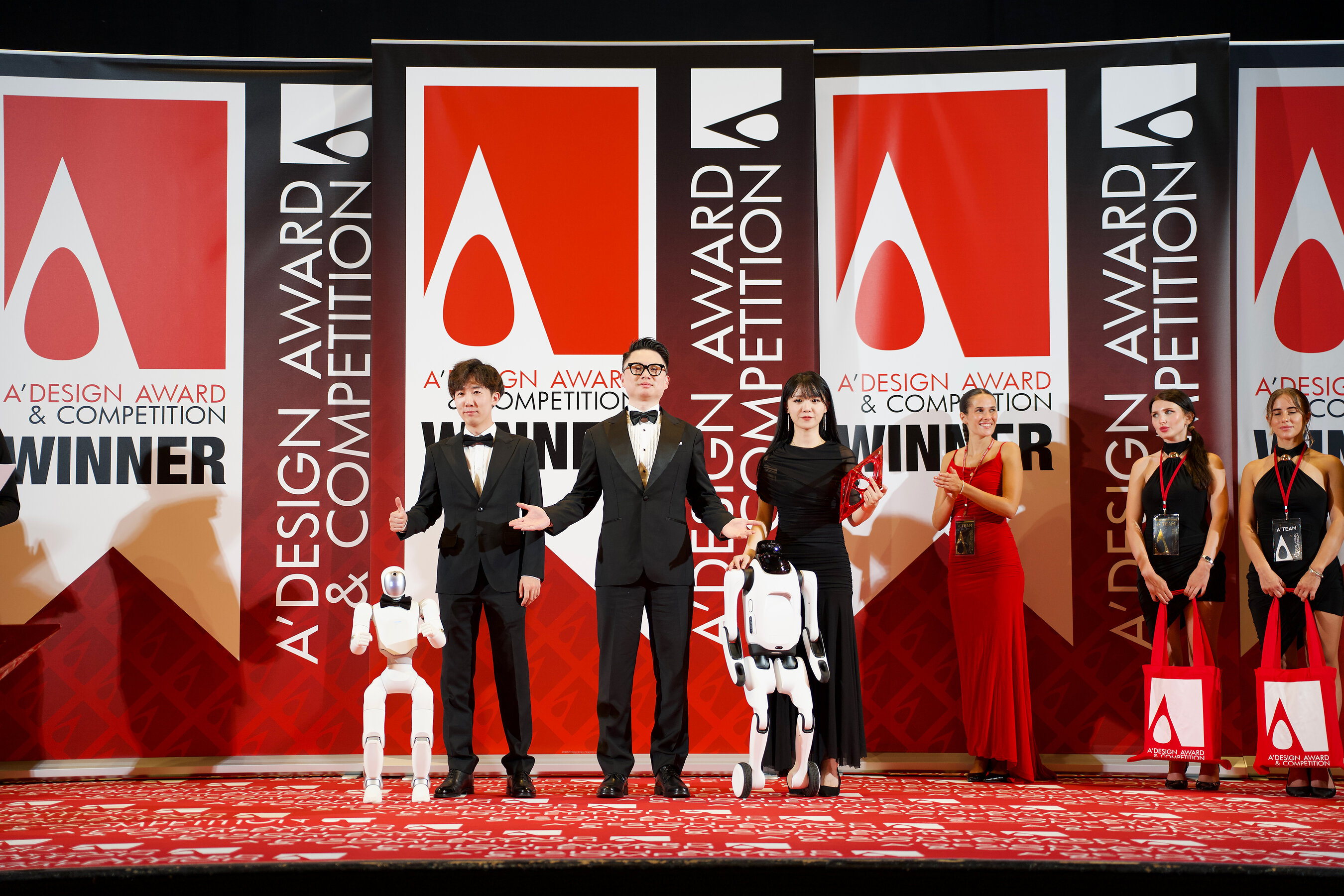
UniX AI's pitch to this syndicate rests on commercial numbers that are unusually concrete for a company at this funding stage. The company says it has shipped more than 100 robots a month on a stable basis since late 2025, with monthly output peaking above 300 units, and that its gross margin and customer collections have held up through that scale-up rather than deteriorating the way many hardware startups' unit economics do when they move from pilot to production. Those shipments are not sitting in warehouses waiting for a use case: UniX AI's robots are in normal, ongoing operation inside Hilton, Ji Hotel and Home Inn hotel properties, handling housekeeping and guest-facing tasks, and the company has landed bulk orders of more than a hundred units apiece from several unnamed property groups and from listed security contractors including Singapore's Certis and China's Inspur. In a retail deployment at a JD-operated 7Fresh coffee counter, one of the company's robots ran continuously for 24 hours and completed 2,156 cups of coffee without an error, a result independently certified as a Guinness World Record. At August's World Humanoid Robot Games, UniX AI's entries took one gold, one silver and one bronze medal, including back-to-back wins in the hotel-service category and a medal in the firefighting-scenario event, giving the company competition credentials to go with its deployment data. All of these figures, the shipment counts, the margin trend and the client list, are the company's own disclosures rather than numbers an outside auditor has independently verified, which is the standard caveat that applies to every funding announcement in this sector; the Guinness-certified coffee run is the one data point here with outside adjudication attached to it, which is part of why UniX AI foregrounded it in its own release.
Three Models Built to Share One Pipeline
The technical case UniX AI is making to investors is that its hardware and software are built as one feedback loop rather than as separate engineering tracks. The company runs three named models in production: UniFlex, an imitation-learning framework that lets a robot pick up new manipulation skills from demonstration rather than from scratch-built programming; UniTouch, a visual-tactile fusion model aimed at fine-grained object perception and handling; and UniCortex, which handles long-horizon task planning so a robot can sequence multi-step jobs rather than execute single actions in isolation. A related piece of research, a unified multimodal tactile model called UniTac developed with outside universities and research institutes, was accepted to the ECCV 2026 conference, giving the company's tactile-sensing claims independent academic review rather than only marketing-deck validation. On the hardware side, UniX AI builds two robot platforms, Wanda and the newer Panther, around self-developed joint modules, bionic robotic arms and swappable end-effectors including grippers and dexterous hands; Panther, which began global deliveries in April 2026, uses an 8-degree-of-freedom bionic arm design the company describes as among the first to reach mass production anywhere, and extends the same wheeled, dual-arm architecture from commercial settings into households, with the company pitching it for elder care, education and entertainment roles alongside its original security and hospitality base.
The wheeled-base design choice, rather than a fully bipedal legged humanoid, is itself a commercial argument as much as an engineering one. A wheeled platform is mechanically simpler, cheaper to manufacture at the volumes UniX AI says it is already shipping, and easier to keep upright and reliable in the flat-floor environments, hotel corridors, office lobbies, retail counters, that make up most of its current customer base, at the cost of being unable to climb stairs or cross the rough terrain a legged design handles. For a buyer comparing vendors, that tradeoff is the practical question to ask of any humanoid supplier before the hardware spec sheet: whether the robot's mobility architecture actually matches the floors it will operate on, rather than whichever form factor photographs better in a product launch video. UniX AI's bet is that a wheeled dual-arm robot covers the overwhelming majority of indoor service work that actually generates revenue today, and that shipping thousands of units into that market now is worth more than waiting years for a bipedal design to reach the same reliability at the same price.
Why a Pre-A Round Still Makes Sense in a Market That Already Picked Its Winners
The broader signal here is about where capital still finds room to move in a Chinese humanoid sector that looks, from the outside, like it has already crowned its flagship names. Companies like Unitree, UBTECH and AgiBot absorb the bulk of headline-grabbing funding and press coverage, and a buyer assembling a vendor shortlist could reasonably assume the field has narrowed to those few names plus whatever Silicon Valley counterpart gets mentioned alongside them. UniX AI's round argues otherwise: capital is still backing vertically focused operators that can show real shipment volume, real gross margin, and a real industry partner willing to put equity behind a deployment commitment, even at a modest Pre-A check size. A funding round where fresh money comes from a property developer acting as a future customer, rather than from a venture fund waiting for an exit, is itself a signal that deployment economics, not demo footage, are what closed this particular deal. For a procurement team evaluating humanoid or service-robot vendors beyond the three or four names that dominate industry conferences, UniX AI's shipment and deployment data, 24-hour public reliability test included, is closer to the kind of operational evidence a buyer should actually be asking every vendor to produce.
The company says the new capital will go toward deepening its embodied-intelligence algorithm work, expanding its engineering and delivery organization, and scaling existing deployments in property management, hospitality and retail rather than opening entirely new verticals. The more interesting test is not the funding round itself but what happens next: whether Greenland Group actually places UniX AI's robots across a meaningful slice of its own property portfolio within the next two quarters, which would turn this financing from a capital-raising story into the first real evidence that a property conglomerate can function as a robot distribution channel rather than just a line item on a cap table.
This analysis is for general information purposes only and does not constitute investment, legal, or professional advice. It synthesizes UniX AI's own funding announcement and prior public reporting on the company's product lineup, deployments and leadership.