SiMa.ai Raises US$150 Million for Physical AI Chips
SiMa.ai raised US$150 million at a stated US$1.45 billion valuation to scale its physical-AI software and develop next-generation edge silicon for 2028.


SAN JOSE, California, September 28, 2026: SiMa.ai has raised US$150 million at a company-stated US$1.45 billion valuation to scale physical-artificial-intelligence software and fund new silicon targeted for 2028. The capital is available now, but the hardware that carries the largest performance promise is still on a roadmap, making migration proof more important to robotics buyers than the valuation headline.
The direct answer for robot builders is that SiMa.ai's Series C funds an alternative edge-compute stack for humanoids, drones, vehicles and industrial machines, not a finished 1,000-TOPS product. SiMa.ai, a private San Jose semiconductor and software company, combines its Palette development environment with Modalix machine-learning systems on chip and development hardware. Fidelity Management & Research Company and Amplify co-led the round, which SiMa.ai says brings total funding to US$500 million.
The Round Buys Time to Build the Next Compute Layer
SiMa.ai says the new capital will scale Palette Neat, its software environment for physical-AI applications, and fund machine-learning intellectual property, chiplets and systems on chip designed to deliver 1,000 dense tera operations per second. The company places those products in the first half of 2028 and targets medium- to high-end drones, humanoid robots, advanced driver-assistance systems, vehicle cockpits and other power-constrained edge machines.
That timeline matters because robotics procurement begins well before a processor ships. Hardware teams choose thermal envelopes, board dimensions, sensor interfaces and power budgets early. Software teams validate model support, quantization, scheduling, toolchains and failure behavior. A 2028 processor can influence designs being scoped now, but buyers cannot treat a target throughput number as measured performance until silicon, software and independent benchmarks exist.
The Series C therefore finances two jobs at once. SiMa.ai has to expand the current Modalix platform enough to win near-term programs, while building a successor architecture that keeps those customers from facing another expensive rewrite. Capital can add engineers, software coverage, support capacity and manufacturing preparation. It cannot remove the execution risk between a disclosed target and a production-qualified component.
Physical AI Changes the Meaning of Useful Compute
Robots need more than headline arithmetic throughput. They must process camera, radar, lidar, audio, force and position data within strict power and latency limits, often without a reliable cloud connection. A warehouse robot that draws too much power loses operating time. A drone that adds cooling hardware loses payload. A humanoid that waits for a remote inference service may miss the moment when balance or contact control requires a local response.
That is why SiMa.ai's positioning matters even though it does not build complete robots. The company argues that purpose-built silicon and software can move models from development into edge devices faster and with lower power than repurposed data-center hardware. Its development kits give engineering teams a way to test the present platform, while the 2028 roadmap offers a path toward heavier multimodal models. The buyer question is whether the same software work can survive that transition.
The broader market already treats the compute layer as a strategic bottleneck. D-Robotics raised US$400 million to scale embodied-AI chips, while major robot builders continue to standardize around established graphics-processing and automotive platforms. SiMa.ai is entering that contest with a narrower claim: a software-centric stack built specifically for physical systems where watts, latency and deployment effort matter as much as peak throughput.
Software Portability Is the Financing's Commercial Test
SiMa.ai says customers using its current products will be able to migrate applications to the next-generation architecture. That promise is commercially important because the largest hidden cost in a processor change is rarely the board alone. Teams must port models, revalidate operators, rebuild safety cases, reproduce performance, retrain staff and maintain parallel versions while old and new products coexist.
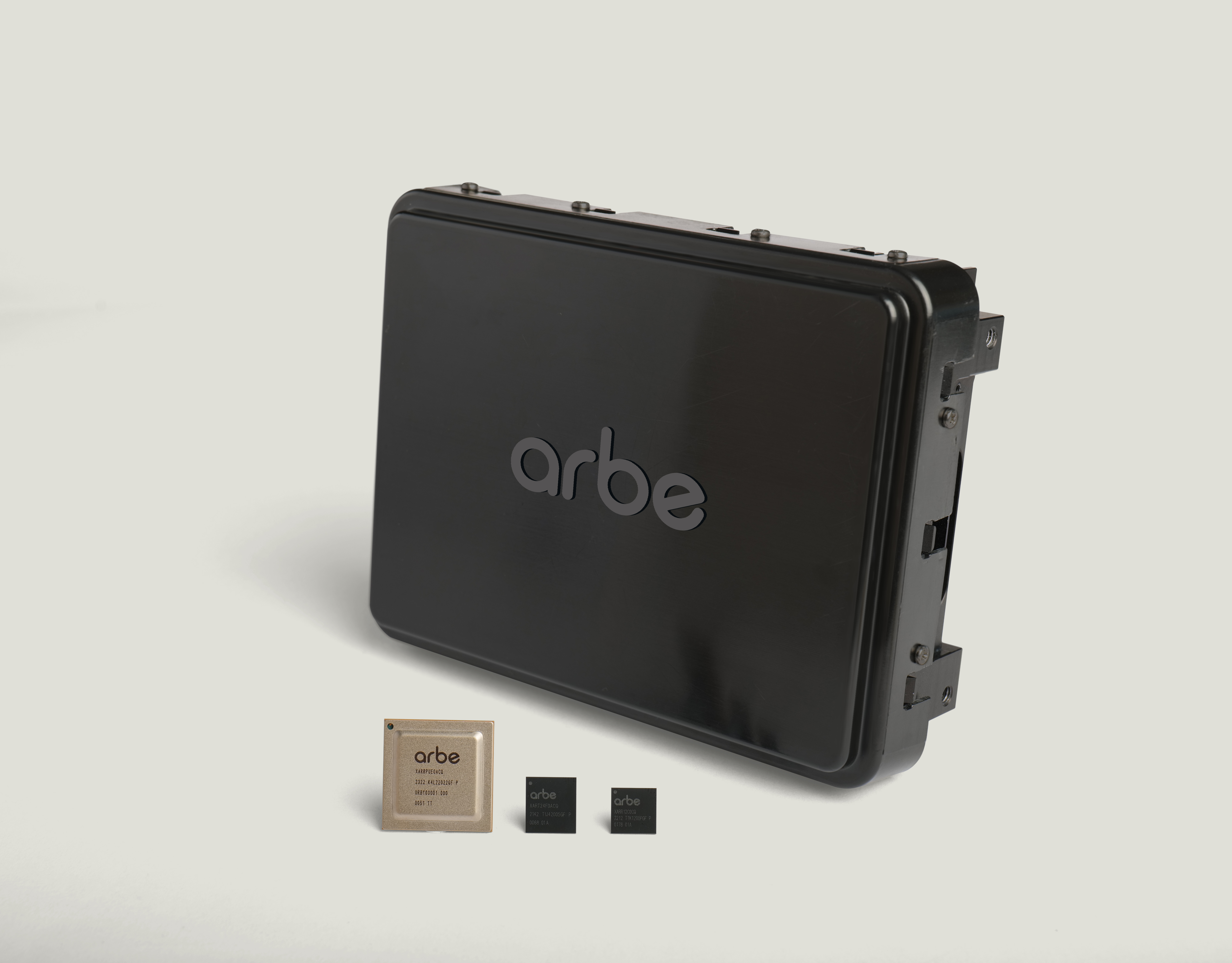
Palette Neat is meant to reduce that friction by giving developers a common environment for model preparation and deployment. The funding can deepen model support, debugging, profiling, documentation and application engineering, the parts of a platform that determine whether a robotics team can move from a demonstration to a maintained fleet. SiMa.ai's hardware photograph may show a compact development box, but the durable product is the software and support system around it.
This is also where competition extends beyond silicon. NVIDIA's Isaac ROS 5.0 release connected agent-ready skills to fourteen robotics partners, demonstrating how a broad developer and integration ecosystem can make compute easier to adopt. SiMa.ai must show that its more specialized platform can support the models, sensors, frameworks and deployment tools buyers already use without forcing them to trade power efficiency for a smaller software universe.
A Strong Investor List Does Not Replace Customer Economics
The financing was co-led by Fidelity Management & Research Company and Amplify. Existing participants include Dell Technologies Capital, Maverick Capital, +ND Capital, Point72 and StepStone Group. The company identifies four first-time backers: the State of Michigan, J.P. Morgan, Baron Capital and AllianceBernstein. SiMa.ai calls the round oversubscribed and reports a US$1.45 billion valuation.
Those names validate investor interest, but the announcement does not disclose the ownership sold, whether the valuation is pre-money or post-money, the amount of cash previously available, burn, margins, backlog or revenue. SiMa.ai says revenue quadrupled year over year from 2024 to 2025 and that 2026 momentum remains positive. Without an absolute revenue number, that growth rate cannot establish commercial scale or compare cleanly with the US$500 million the company says it has raised.
The named customer and partner list is similarly useful but limited. It spans electronics, industrial automation, machine vision, automotive and robotics businesses, which suggests that the platform is being evaluated across multiple physical-AI markets. The release does not break out production customers, paid pilots, design wins, unit volumes or the revenue tied to humanoids specifically. Robot buyers should treat the list as evidence of ecosystem access, not proof that the 2028 architecture is already designed into deployed fleets.
Robotics Buyers Need Benchmarks That Match the Machine
The 1,000 dense TOPS target will mean little without workload detail. Buyers need to know which data types, model sizes, sparsity assumptions and power limits sit behind the number. They also need measured latency across perception and control pipelines, memory bandwidth, thermal behavior, sensor-input support, functional-safety options, security features and expected availability over a robot's service life.
Development economics matter just as much. A useful evaluation should measure the staff time required to bring an existing model onto Modalix, the percentage of operators that run without custom work, the performance penalty from unsupported layers, the quality of profiling tools and the cost of maintaining code across present and future generations. A platform that saves watts but adds months of software integration may be a poor choice for a small robotics company with limited engineering capacity.
Open interfaces are another procurement checkpoint. Robotics teams increasingly expect hardware to coexist with Robot Operating System software, common model formats and vendor-neutral tooling. Robotiq's move to open-source part of its physical-AI stack shows why buyers value the option to inspect, adapt and maintain critical integration layers. SiMa.ai does not have to open every component, but it must make portability credible enough that a buyer is not trapped by one compiler, one board or one generation.
The China Desk Question Is Where the Stack Can Win
For Asian robotics manufacturers, the financing creates an additional compute supplier to evaluate at a time when export controls, supply concentration and power efficiency all affect product design. SiMa.ai's opportunity is not to displace every incumbent. It is to win programs where local inference, tight energy budgets and fast software deployment justify a purpose-built alternative.
That opportunity will vary by segment. Drones may value weight and power savings more than broad model flexibility. Industrial machines may prioritize long support cycles, deterministic latency and established fieldbus integration. Humanoids may demand high multimodal throughput but also require mature debugging and a rapid pace of model updates. Automotive customers will add qualification, safety and supply guarantees that can take years to complete.
The Series C gives SiMa.ai resources to pursue those markets in parallel, but buyers should expect the company to prove where it has an operating advantage rather than accept one physical-AI category as a single market. A chip that performs well in a camera-heavy industrial system may not automatically meet the control, memory or safety requirements of a humanoid or vehicle.
The Next Proof Point Comes Before 2028
The most useful milestones will arrive before the planned silicon. SiMa.ai can publish workload-specific benchmarks, disclose production design wins, expand independent software support, demonstrate migration from current hardware and name customers that move from evaluation to volume programs. Each would reduce a different risk in the roadmap.
The financing is consequential because US$150 million can fund those proof points and extend the company's ability to support buyers through long robotics development cycles. It does not guarantee that the 1,000 dense TOPS target ships on time, that customer applications migrate easily or that current investor enthusiasm becomes durable product demand.
The next development to watch is not another valuation update. It is the first independent evidence that a current Modalix workload can move onto the 2028 architecture with measured gains in power, latency and engineering time, because that result would connect today's capital to the operating economics robot builders actually buy.
This analysis synthesizes company statements and public market activity as of the publication date and should not be read as investment, financial, or professional advice; it is provided for general information purposes only.
Hero image credit: SiMa.ai.