China Tourist Robot Arms Expose a Safety Blind Spot
A fresh investigation found industrial robot arms being repurposed for passenger rides, performances and photography at Chinese attractions, exposing a safety and regulatory-classification gap.

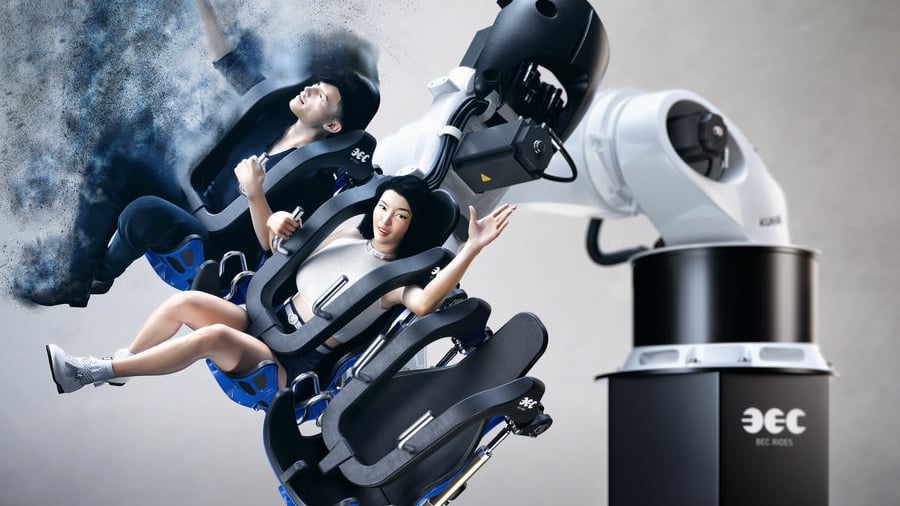
BEIJING, September 28, 2026: A visitor is strapped into a seat where an industrial robot would normally hold a gripper, then swung over water by the same kind of six-axis arm factories usually keep behind a fence. China’s newest tourism robot trend has exposed a basic safety mismatch: a machine designed to move parts inside a controlled cell does not become a passenger ride simply because its end effector has been replaced with a chair.
The direct answer for attraction operators is equally simple. Any robot arm that carries, films or performs beside members of the public needs a safety case based on its deployed function, not on the industrial pedigree of the donor machine. That means passenger-load calculations, human-tolerance limits, obstacle detection, independent inspection, trained operators, emergency procedures and a clear regulatory classification before the first ticket is sold.
A fresh investigation in China documented three versions of the problem. One attraction had converted an industrial arm into a passenger ride by mounting a seat at the wrist. Another used a fast-moving camera arm for automated tourist photography without a physical barrier separating the machine from visitors. Elsewhere, performers in loose costumes stood on or hung from robot arms while following programmed motions in the air. The report did not name the attractions or robot manufacturers, and it did not identify a completed accident or enforcement action. Its significance is the deployment pattern itself: machines built for fenced production cells are being moved into unpredictable public spaces faster than the applicable safety category is being clarified.
The Factory Safety Case Ends at the Fence
An industrial arm is not unsafe merely because it is powerful. It is safe when the installation controls the hazards its power creates. In a factory, that normally means a defined work envelope, physical guarding or monitored access, a known payload, validated tooling, fixed trajectories, emergency stops and trained personnel. The machine’s risk assessment assumes that people will not wander through its motion path without detection or protection.
That assumption breaks the moment an attraction puts a child in the seat, places an actor on the wrist or asks visitors to pose beside a high-speed camera move. A passenger changes the payload from a manufactured part into a human body with limits on acceleration, inversion, restraint geometry and evacuation. A performer introduces loose clothing, timing variation and the possibility that the person’s motion will not match the programmed path. An unguarded camera arm introduces crowds, distracted visitors and children who may enter the work envelope without understanding where the machine will move next.
The technical risks documented in the investigation follow directly from those changes. A passenger ride can expose people to structural failure, excessive acceleration or a posture outside normal physiological tolerance. A performance can become dangerous if a program runs out of sequence, the trajectory deviates or the performer fails to move in step with the machine. A camera arm without dynamic obstacle detection may not recognize a visitor who unexpectedly steps into its path, leaving speed reduction and stopping dependent on measures the original factory application may never have required.
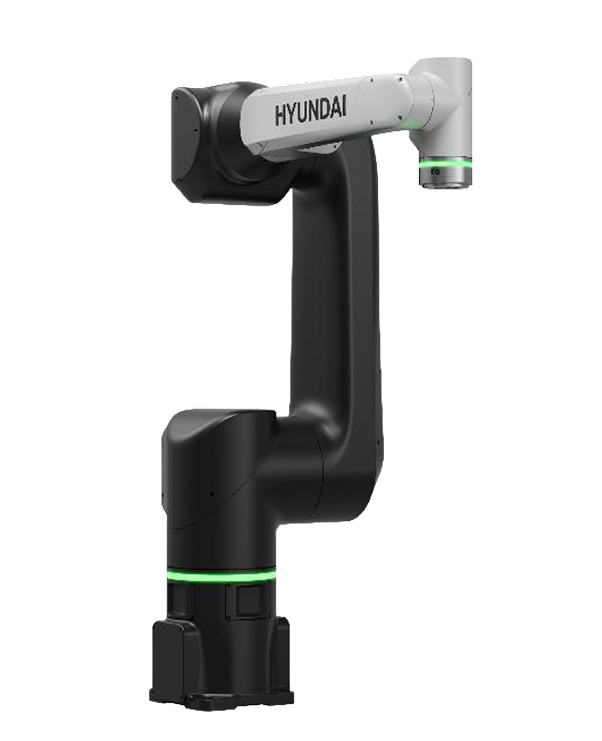
This is why an industrial six-axis arm procurement process cannot be copied unchanged into a tourism project. Reach, payload, repeatability and cycle time remain relevant, but they are no longer the governing requirements. The buyer must define the human interaction first, then specify the robot, restraint, control system, supervision and inspection regime around that use.
The Regulatory Boundary Is Functional, Not Cosmetic
China’s large-amusement-device rules already provide a functional threshold for passenger-carrying equipment used commercially. A ride falls within the large-amusement-device regime when its designed maximum line speed is at least 2 meters per second or its operating height above ground is at least 2 meters. Equipment inside that regime is subject to registration, inspection, operating procedures, maintenance records, warning notices, qualified personnel and emergency planning.
The difficulty is not that passenger safety has no legal home. It is that the special-equipment catalogue does not contain a standalone category called “robot arm.” A passenger-carrying arm that crosses the speed or height threshold may be classified by function and motion form alongside observation-wheel or gyroscopic equipment. An arm below those thresholds may instead be treated as a cultural-tourism experience device. A robot supporting an actor may fall under stage-equipment oversight, while a camera arm raises product-quality and public-space operating questions rather than passenger-ride rules.
Those distinctions change who must inspect the equipment and what evidence an operator must retain. Market-regulation authorities supervise large amusement devices and product quality. Cultural-tourism authorities oversee attraction operators and performance activity. Emergency-management authorities have a role in hazard reviews and accident investigation. A project that crosses those boundaries cannot rely on a single supplier’s declaration that the robot itself is a qualified industrial product.
The practical implication is a shared compliance file. The attraction, integrator, robot manufacturer, seat or tool supplier and control-system provider should document who owns the system-level risk assessment, who verifies modifications, who approves motion programs, who performs daily checks and who has authority to stop the attraction. Without that ownership map, each participant can truthfully say its component met specification while the assembled public experience still lacks a defensible safety case.
A Purpose-Built Passenger Robot Shows the Missing Work
Robot arms can carry people safely when they are engineered and certified for that task. German industrial-robot maker KUKA markets passenger robots developed specifically for amusement rides, certified to EN 13814 and subject to TÜV factory acceptance. Its product is a useful contrast because the passenger seat, robot, controller, programmed motion and acceptance process are treated as one ride system rather than as unrelated components assembled after purchase.
KUKA is not identified as a supplier to any Chinese attraction discussed in the investigation. Its relevance is the engineering boundary. The photograph used with this article shows a purpose-built passenger system with dedicated seats and restraints, not one of the anonymous installations under scrutiny. That distinction matters because a familiar robot brand or a factory safety certificate does not automatically validate a new passenger application.
The same distinction appears across robotics markets. A machine can perform the task and still be undeployable until the application has the right certification, operating controls and accountable owner. That gap between demonstrated capability and approved use is why a safety certificate often matters more than an impressive demonstration. Tourism adds a harder variable than most factories face: the people inside the work envelope are customers, not trained employees.
The Buyer Must Procure an Operating System, Not an Arm
Attractions considering robot-based rides should begin with the motion envelope and passenger profile, including minimum age, body size, medical exclusions, restraint design, maximum acceleration and evacuation method. They should require evidence that the complete system has been assessed in the configuration that will actually operate. A certificate for the unmodified arm, controller or seat is not evidence for the combined installation.
Camera and performance applications need the same discipline even when no passenger is attached. The procurement specification should define physical separation, safety-rated sensing, speed and separation monitoring, safe stopping distance, restart authorization, costume or prop restrictions and crowd-control responsibilities. If a visitor can enter the arm’s path, the project must explain how the system detects that person, how quickly it stops and what happens after a sensor or network fault.
Operators also need measurable operating data. Near misses, emergency stops, manual interventions, sensor faults, program changes and restraint inspections should be logged and reviewed. A robot that completes thousands of cycles in a factory may still behave poorly in a tourist environment if crowds cause frequent protective stops or staff routinely override safeguards to keep queues moving. Availability without safety discipline is not operational maturity.
The contrast with the recent 300-robot AGIBOT deployment at Chimelong is instructive. That project disclosed dedicated connectivity, centralized multi-robot coordination and operational safeguards across named service scenarios. It did not turn conventional industrial arms into passenger rides. The comparison shows why “robots in tourism” is too broad a category for procurement or regulation: a guide robot, a hotel service robot, a camera arm and a passenger-carrying ride create different hazards and require different controls.
The Decision Gate Before the Next Ticket Is Sold
An attraction should not open a robot experience until it can answer five questions in writing. What function is the system performing under Chinese rules? Which authority and inspection path apply? Who validated the complete modified installation rather than the donor arm alone? What independent safeguards protect a visitor when software, sensing, power or human behavior departs from plan? Who can stop operations without commercial pressure to keep the queue moving?
If those answers are missing, the procurement is incomplete regardless of how smoothly the robot moves during a demonstration. The safest policy is not to ban industrial arms from tourism. It is to prevent a factory machine’s existing compliance file from being mistaken for approval of a new public use. China’s tourism operators can use robotics to create genuinely new experiences, but the safety case has to travel with the function. A passenger seat is not an accessory. It changes the machine.
This analysis synthesizes company statements and public market activity as of the publication date and should not be read as investment, financial, or professional advice; it is provided for general information purposes only.
Hero image credit: KUKA Group.