The Real Border in Robotics Isn't AI. It's a Safety Certificate.
Explosion-proof robots from ANYbotics, Boston Dynamics and China's XTRONROBOT are already earning their keep in oil, gas and nuclear facilities, but the real dividing line between them isn't AI capability. It's which national safety certification each robot was built to clear.

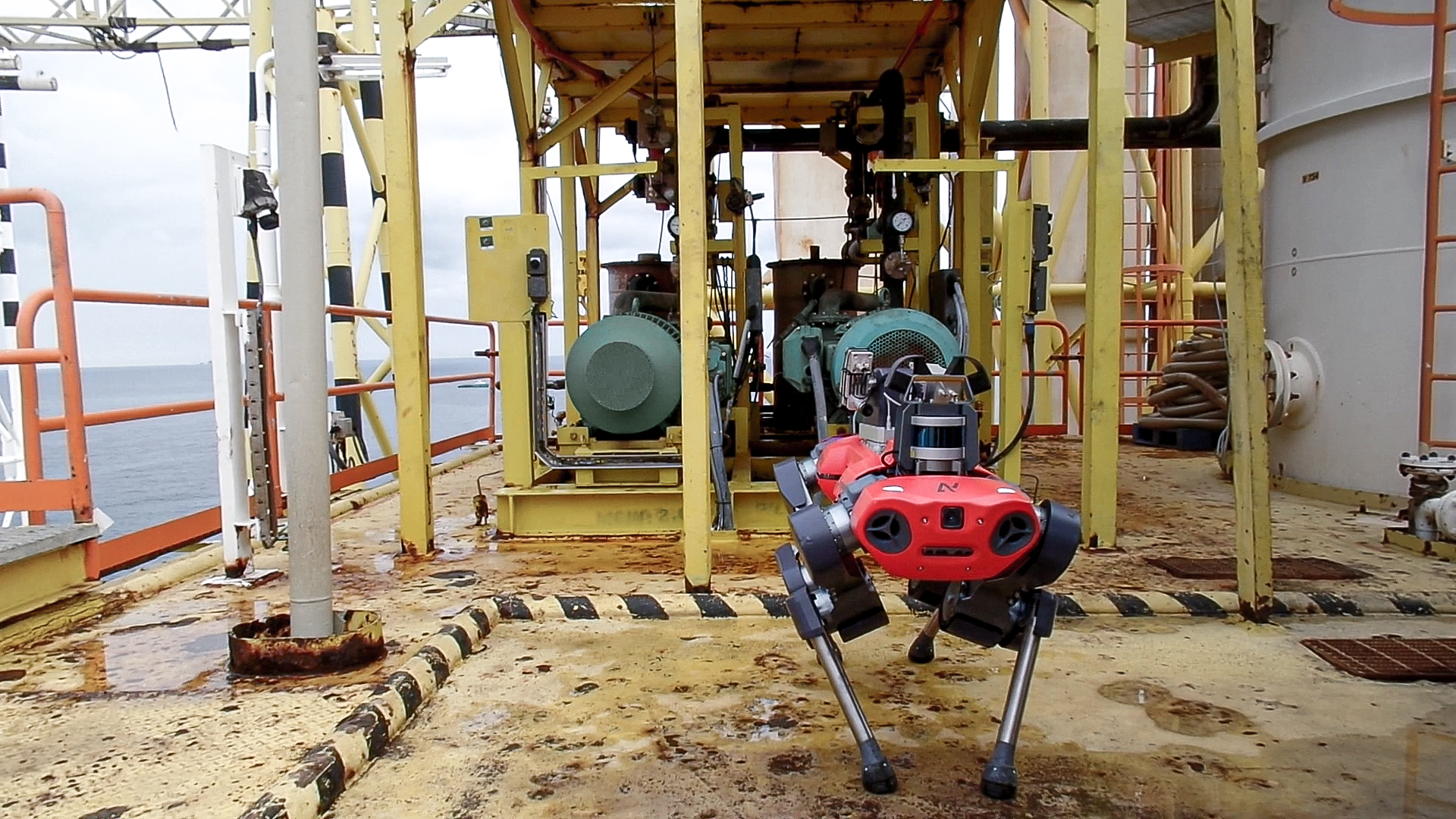
Two robots can do almost the same job inside an oil and gas facility this year, and only one of them will ever be sent past the fence line into the parts of the plant that actually catch fire. Not because it isn't smart enough. Not because it can't climb a stairwell, read a gauge, or steady itself in a strong wind. Because it hasn't cleared a specific, decades-old bureaucratic process that has nothing to do with artificial intelligence.
That process is explosion-proof certification, and this year it is doing more to decide who wins hazardous-industry robotics contracts than any language model, any humanoid demo reel, or any argument about which country manufactures at greater scale.
The industry keeps fighting over who has the smartest robot. In the one corner of robotics where the machines are already earning a real return, the fight that actually decides who gets the order is over who holds the right paperwork.
Where the paperwork already worked
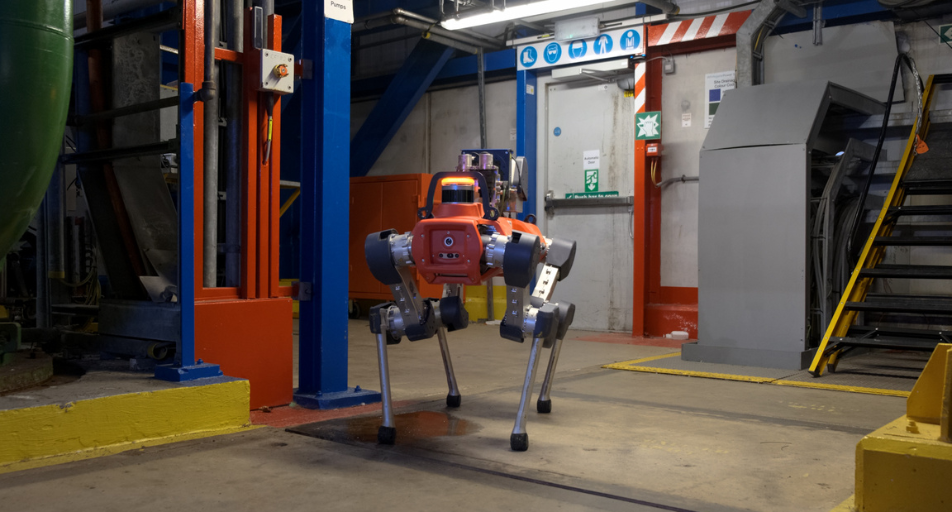
Start with the deployments that exist, not the ones promised on a roadmap. PETRONAS, Malaysia's national energy company and one of the largest industrial employers in my part of the world, ran a multi-week trial of ANYbotics' ANYmal C quadruped on its offshore Dulang B platform in 2020, then signed a long-term partnership to develop a version certified for Zone 1 explosive atmospheres, the classification for areas where a flammable gas mixture is likely to occur periodically during normal operation. Aker BP has gone further at its Valhall platform in the North Sea, running ANYmal X on autonomous inspection missions inside Ex-rated zones and feeding the data into a Cognite digital twin, with an explicit target of unmanned platforms by 2027 to 2029. Woodside Energy's Pluto LNG site in Western Australia runs a Boston Dynamics Spot unit nicknamed Spector on standing inspection rounds, and the detail that matters most is not the walking gait: it is a custom payload that electrically isolates the robot's own battery the moment it detects gas, an engineering feature built for one purpose, satisfying the legal requirement for equipment operating in a classified hazardous location.
None of that is an AI story. It is a compliance story with a robot attached.
The other track
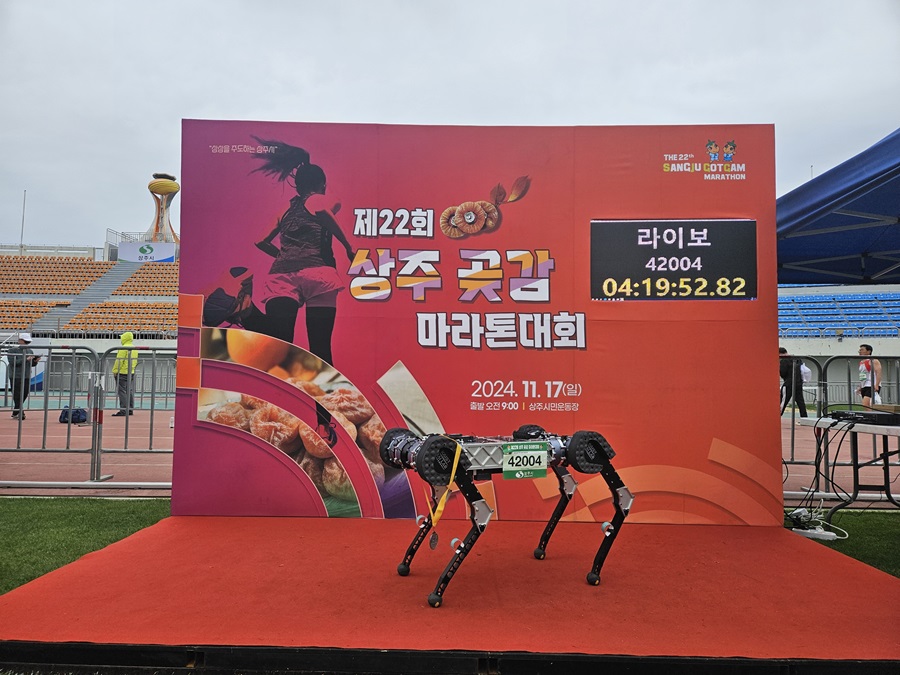
China is running the same experiment on a separate rail. XTRONROBOT, a Shenzhen company building wheeled, tracked and rail-mounted inspection robots, disclosed this week that it has delivered the first batch of a contract for more than one hundred explosion-proof units to PetroChina's Xinjiang oilfield division, with four distinct hardware configurations each carrying its own separate certification requirement. That certification runs through China's own GB 3836 standard and the CCC-Ex scheme administered by NEPSI, China's national inspection body for explosion protection.
Here is the detail almost nobody outside the certification trade discusses: GB 3836 is not a rival technical standard built to lock out foreign equipment. Since a 2022 revision, it has been drawn even closer into line with the IEC 60079 series that underpins the international IECEx scheme and Europe's ATEX directive. NEPSI, the Chinese body that administers CCC-Ex, will check an existing IECEx test report and, for a fee, credit it toward China's own certificate rather than demand a full retest from scratch. What does not happen automatically is a robot skipping the Chinese process entirely on the strength of a Western one, or the reverse. A robot cleared under IECEx or ATEX is not simply assumed compliant in China, and equipment carrying only a CCC-Ex mark is not simply assumed compliant in Europe or the Gulf, even when the underlying engineering would pass either test. The physics of explosion protection converged years ago. The paperwork did not.
That gap is not a technicality. It is the reason PETRONAS, Aker BP and Woodside are buying from European and American robot makers while PetroChina buys from a three-year-old Shenzhen start-up, and it will keep being the reason regardless of which company's underlying hardware or software is objectively better in a lab test.
Why the certificate outranks the chip
A useful way to see this is to ask what actually gets engineered for a hazardous-duty robot, versus what gets marketed. Spot's gas-triggered battery isolation is not a perception breakthrough. XTRONROBOT's dual-arm unit, built to physically turn a valve inside a live hazardous zone rather than just photograph it, is a harder engineering problem than any of its wheeled siblings specifically because a robot arm operating live equipment in an explosive atmosphere carries a materially higher certification bar than a camera on a cart. In both cases, the frontier the engineers are actually pushing against is a compliance threshold, not a capability ceiling.
Nobody buys a hazardous-zone robot for its intelligence. They buy it for its permit.
That is a strange sentence to have to write in 2026, in the middle of a robotics news cycle dominated by foundation models and general-purpose humanoids, but it is the honest read of where the money in this segment is actually going. A procurement officer at a chemical plant is not comparing benchmark scores. They are comparing which vendor's paperwork their own safety regulator will accept without a fight, because a single incorrectly rated device in a Zone 1 area is not a bug report, it is a fire.
A moat governments can turn on and off
This matters beyond one industry vertical because certification recognition, unlike a software API or a training dataset, sits inside the direct control of national regulators rather than corporate engineering teams. A government that wants to protect a domestic hazardous-robotics industry does not need an export ban or a tariff. It only needs its inspection body to become slower, stricter or less willing to recognize a foreign test report, and a competitor's robot effectively cannot enter the market regardless of how well it performs. That lever already exists in explosion-proof equipment generally, well before any robot was involved, and robotics has simply inherited it.
I would not overstate how deliberate this is today. NEPSI accepting IECEx test reports toward CCC-Ex, and the 2022 alignment of GB 3836 with IEC 60079, both point toward convergence rather than a widening split. But the direction of travel in almost every other layer of the robotics stack right now, chips, foundation models, standards for how an AI agent talks to hardware, is toward exactly this kind of bloc formation. It would be a mistake to assume the one layer that is currently converging, hazardous-zone certification, is somehow immune to the same pressure once a government decides its domestic robotics champions need the protection.
What buyers in this region should actually track
For an operator in Southeast Asia weighing a fleet purchase, the practical question is not which robot walks better. It is which certification ecosystem a given vendor is actually built inside, because that choice quietly commits a buyer to that vendor's regulatory lineage for the life of the equipment, long after any AI feature has been superseded by a newer model. PETRONAS's decision to co-develop rather than simply buy off the shelf looks less like caution in hindsight and more like a hedge against exactly this kind of lock-in.
The next real fight over robotics standards will not happen on a keynote stage. It will happen inside a technical committee deciding what counts as an acceptable test report, and almost nobody covering this industry is watching that room.
Disclaimer: This article is for general information purposes only and does not constitute investment, legal, or procurement advice. Readers should verify details with primary sources before making business decisions. Hero image: ANYbotics, from its PETRONAS offshore-inspection deployment.