Arbe Prices US$15 Million Offering Heavy on Pre-Funded Warrants
Arbe Robotics priced a US$15 million offering dominated by pre-funded warrants, adding potential runway while exposing shareholders to material dilution before commercial programmes reach scale.

Arbe Robotics has priced a US$15 million equity offering to fund its radar expansion, but the structure matters as much as the headline amount. Pre-funded warrants represent 96.7% of the 25 million share-equivalent units, making this a test of whether fresh commercial options can justify substantial potential dilution before the financing closes.
Arbe is a Tel Aviv-based public supplier of ultra-high-resolution radar chips, systems and perception software for passenger vehicles, robotaxis, heavy machinery, defence and counter-drone applications. Its ordinary shares trade on Nasdaq and the Tel Aviv Stock Exchange under ARBE, and the company operates offices in the United States, Germany and China. That China presence gives the financing relevance beyond a small-cap stock event: Arbe is trying to turn long automotive qualification cycles, including work through Chinese Tier 1 supplier HiRain, into production while building shorter-cycle markets outside passenger cars.
Most of the New Capital Comes Through Warrants
Arbe said on September 25, 2026 that it priced 833,334 ordinary shares at US$0.60 each and pre-funded warrants covering another 24,166,666 ordinary shares at US$0.5999 each. The warrants carry an additional exercise price of US$0.0001 per share, are immediately exercisable and do not expire until exercised in full. Together, the two instruments represent 25 million share-equivalent units.
The split is not cosmetic. Only 3.3% of the offered units are ordinary shares at issuance, while 96.7% are pre-funded warrants. Investors buying those warrants pay almost the full economic price upfront, with only the nominal exercise amount left to pay. That gives eligible buyers an instrument that can delay the point at which shares are formally issued, including where ownership limits matter, while giving Arbe almost all of the purchase price at closing.
For a non-specialist, the easiest way to read the structure is this: the warrants are not a second US$15 million financing waiting in reserve. They are the main route through which this single offering is being sold. If all 24,166,666 pre-funded warrants are exercised, the remaining exercise cash would be only US$2,416.67. The financing economics are therefore substantially prepaid, even though the warrant-covered shares do not become outstanding until exercise.
The company puts the deal's gross proceeds near US$15 million. Underwriting discounts, commissions and other expenses will reduce what reaches the balance sheet. Gross proceeds are not net cash, and pricing is not closing. The company expects the transaction to close on or about September 28, subject to customary conditions, with Canaccord Genuity acting as sole bookrunner. Until that closing occurs, the money is not available to fund operations.
US$15 Million Changes the Runway, Not the Business Model
The timing creates the central tension in the deal. At June 30, Arbe reported a combined US$41.9 million across cash, cash-equivalent holdings and short-term bank deposits. It also said Q2 revenue was US$0.7 million, backlog was US$1 million, operating loss was US$9.8 million and net loss was US$9.1 million. Net cash used in operating activities reached US$11.9 million in the quarter.
Against that dated liquidity base, the offering's US$15 million gross figure equals 35.8% of the June balance. It would also equal just over two quarters of Arbe's stated goal of reducing cash burn below US$7 million per quarter, before fees and only if management reaches that target. Neither comparison is a forecast. The first uses a three-month-old balance-sheet date, and the second compares gross proceeds with a future burn objective rather than actual net proceeds and realized cash use.
That distinction is the hard truth in a capital raise framed around growth. New money can buy time to pursue customers, but it cannot make an automotive design cycle shorter or turn a programme selection into production revenue. Arbe's August outlook called for full-year 2026 revenue of US$4 million to US$6 million and an adjusted earnings before interest, taxes, depreciation and amortization loss of US$28 million to US$31 million. Those were management projections as of August 6, not booked results.
The company said it intends to use the new net proceeds for working capital and general corporate purposes, scaling commercial opportunities, supporting a recently announced Level 3 passenger-vehicle programme, expanding into defence and counter-drone markets, and considering possible strategic acquisitions. Each item describes intended capital allocation. None confirms an acquisition, a defence order, a production launch or recognized automotive revenue.
The Price Turns Commercial Ambition Into a Dilution Test
The US$0.60 issue price puts the shareholder question in plain sight. Arbe's 2025 annual filing reported 122.65 million ordinary shares outstanding on March 1, 2026, while its Q2 accounts used a weighted-average basic share count of 128.64 million for the quarter. The 25 million units in the new deal are large beside either historical reference, but neither number is a current September 25 share count. A precise current dilution percentage would therefore claim more certainty than the public evidence supports.
What can be said cleanly is that the offered share-equivalent count is material, and that existing shareholders exchange a larger potential denominator for additional operating time. This is the public-market version of a decision private robotics companies usually postpone until their next venture round. As RobotAIGeek's analysis of Hong Kong's robotics IPO rush argued, access to listed capital does not remove funding discipline. It makes the price of that access visible.
Arbe also filed a separate warrant amendment on September 25. It reduced the exercise price on 8,131,866 existing Tranche A warrants to US$1.10 and on another 8,131,866 existing Tranche B warrants to US$1.00, while extending their termination dates to November 4, 2030 and November 4, 2029. Those legacy instruments were issued in 2024. They are not the pre-funded warrants in the new offering, and the amendment does not mean they were exercised or produced cash on September 25.
Keeping the two warrant populations separate is important for procurement readers as well as investors. Suppliers entering vehicle programmes may rely on several layers of financing, each with different timing and dilution effects. A buyer assessing long-term component support should ask not only whether a radar meets a technical specification, but whether the vendor has enough funded runway to support validation, automotive-quality obligations and production over the life of the programme.
Automotive Delays Explain the Defence Pivot
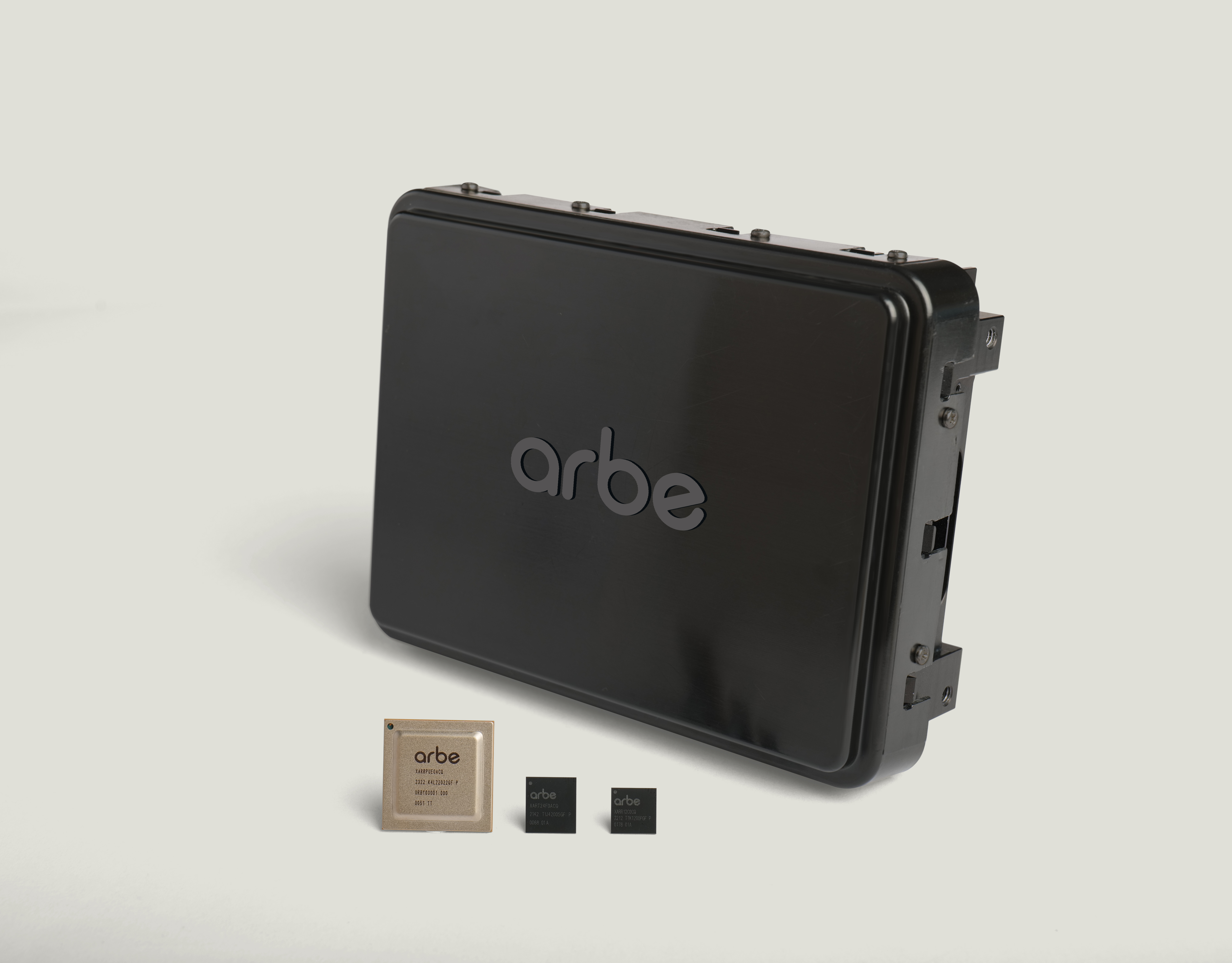
Arbe's commercial case still begins with automotive radar. The company sells a stack that includes radio-frequency transmitter and receiver chips, a processing chip, the Phoenix radar system and algorithms that convert returns into perception-ready data. It says HiRain is progressing toward production planned for early 2027 for a previously announced Level 4 original-equipment-manufacturer customer, while robotaxi vehicles using Arbe systems have begun road trials.
Those milestones show technical progress, but they also expose why an equity raise can arrive even after a company reports tens of millions of dollars in liquidity. Automotive customers qualify components slowly, production dates depend on the original-equipment manufacturer, and early programme wins can consume engineering and support cash long before volume revenue appears. A radar vendor does not control the vehicle launch calendar.
Arbe's move toward defence, homeland security and counter-drone systems is an attempt to add markets with more immediate demand and shorter sales cycles. That approach sits beside the broader sensor diversification visible in Seyond's robotics-specific LiDAR push: perception suppliers built around passenger vehicles are looking for industrial and security applications that can absorb the same core sensing capabilities on different buying timelines.
The counter-drone opportunity is commercially credible, but it still requires proof at the order and delivery level. Arbe says its Alerion radar targets difficult drone threats and that its systems have entered defence and homeland-security programmes. The company also says it has begun some radar-system deliveries from its production line. That is more concrete than a laboratory demonstration, yet it does not establish the scale, margins or repeatability of the business the new capital is intended to support.
The relevant benchmark is not whether defence robotics attracts spending. It clearly does, as suppliers such as AeroVironment have pursued dedicated counter-drone production capacity. The question is whether Arbe can convert radar evaluations and framework arrangements into funded orders quickly enough to reduce its dependence on repeat equity issuance while automotive programmes mature.
The Offering Must Close Before It Can Fund Anything
Three checkpoints will determine whether the September 25 transaction changes Arbe's operating position. The first is a confirmed closing and disclosure of net proceeds after fees. The second is evidence that management's targeted quarterly burn reduction appears in reported cash flow. The third is customer-side confirmation that the Level 3 automotive programme, HiRain's planned 2027 production and defence work are advancing from selection or evaluation into orders, deliveries and recurring revenue.
Possible acquisitions belong behind those checkpoints, not ahead of them. A small radar supplier using newly issued equity to buy another asset could expand its technology or market access, but it would also introduce integration costs before the core business has reached broad volume production. Unless a specific transaction is announced with terms and strategic logic, the acquisition language should be read as optionality rather than a plan.
The verdict is straightforward: Arbe has priced enough share-equivalent securities to add meaningful runway, but the offering does not validate its commercial forecasts. It gives the company more time to prove that automotive radar selections and defence demand can become repeatable revenue. At US$0.60 per unit, that time comes with a visible cost for existing shareholders.
This analysis synthesizes Arbe Robotics' public statements, regulatory filings and public market activity relating to the September 25, 2026 offering. It is for general information purposes only and does not constitute investment, financial, or legal advice.
Hero image credit: Arbe Robotics Ltd.