HD Hyundai Robotics Pushes Humanoid AI Into Its Cobot Line
HD Hyundai Robotics' CTO says physical AI developed for its prototype humanoid will be re-engineered into its HDC collaborative robots, as the company targets over half of Korea's high-payload cobot market by 2030.
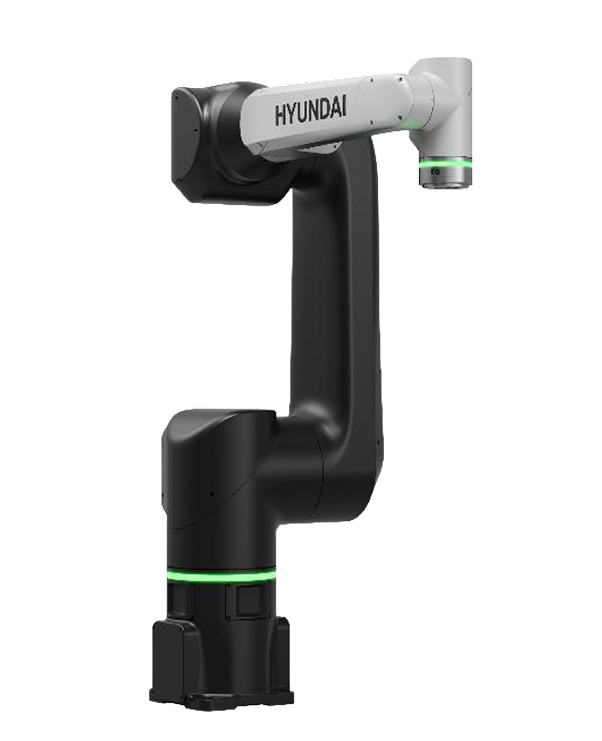
HD Hyundai Robotics, the industrial-automation arm of South Korea's HD Hyundai group and a company distinct from the country's better-known Hyundai Motor Group, said its humanoid robot program exists to feed technology back into the collaborative and industrial robots it already sells. In a written interview published Sunday, chief technology officer and head of research Ahn Sung-hwan said the company's prototype-stage humanoid is less a standalone product than a proving ground for physical AI that will be re-engineered into its HDC cobot lineup and its heavier industrial arms.
That framing matters for buyers evaluating South Korean collaborative robots against a wave of lower-priced Chinese alternatives. Ahn's argument is that a humanoid program justifies its research and development cost by generating five specific capabilities, task recognition, environmental perception, precision manipulation, force and tactile control, and task planning, that transfer directly onto machines factories are already buying today, rather than staying locked inside a robot that will not ship at scale for years.
The Humanoid Becomes a Parts Supplier for the Cobot Line
HD Hyundai Robotics traces its lineage to Hyundai Heavy Industries' decades-old industrial robot division and was spun out as a standalone company in 2020, headquartered in Dalseong County near Daegu, South Korea. Its commercial base is squarely industrial: welding and material-handling arms for shipyards, automotive plants and heavy manufacturing, a business that has historically competed on payload capacity and reliability rather than software sophistication.
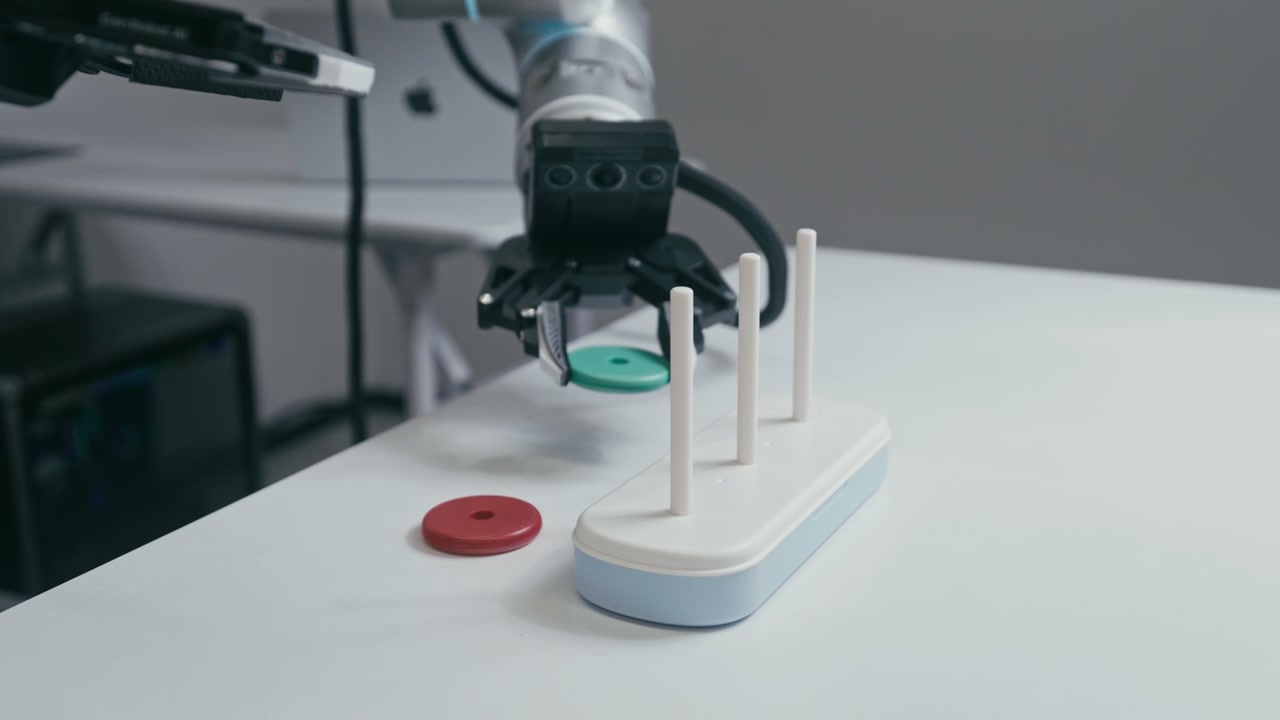
The company's newer HDC collaborative robot series, launched in the second half of 2026, is where Ahn says the humanoid work shows up first. The line's top model, the HDC50-17, carries a 50-kilogram payload with a 1,700-millimeter reach, aimed at the heaviest workpieces a cobot is asked to handle without full safety fencing. It runs on SafeSpace 2.0, HD Hyundai Robotics' built-in radar-based safety software, which lets the arm slow or stop when a worker enters its zone instead of requiring a caged cell. Ahn described the humanoid's precision-manipulation and force-and-tactile-control research as the source of the next generation of that safety behavior, not a separate research track that happens to share a corporate parent.
The company is also building what it calls a Robot-Defined autonomous Factory platform, intended to run industrial arms, cobots and humanoids from a single software layer rather than treating each robot class as its own island of automation. A companion data-flywheel system is meant to turn manufacturing-floor data collected from the industrial and cobot fleet into training data for the humanoid, and eventually feed capability improvements back the other way. Whether that closed loop performs as described will depend on data volume HD Hyundai Robotics has not yet disclosed, but the architecture itself signals a company trying to avoid maintaining three separate control stacks for three robot categories.
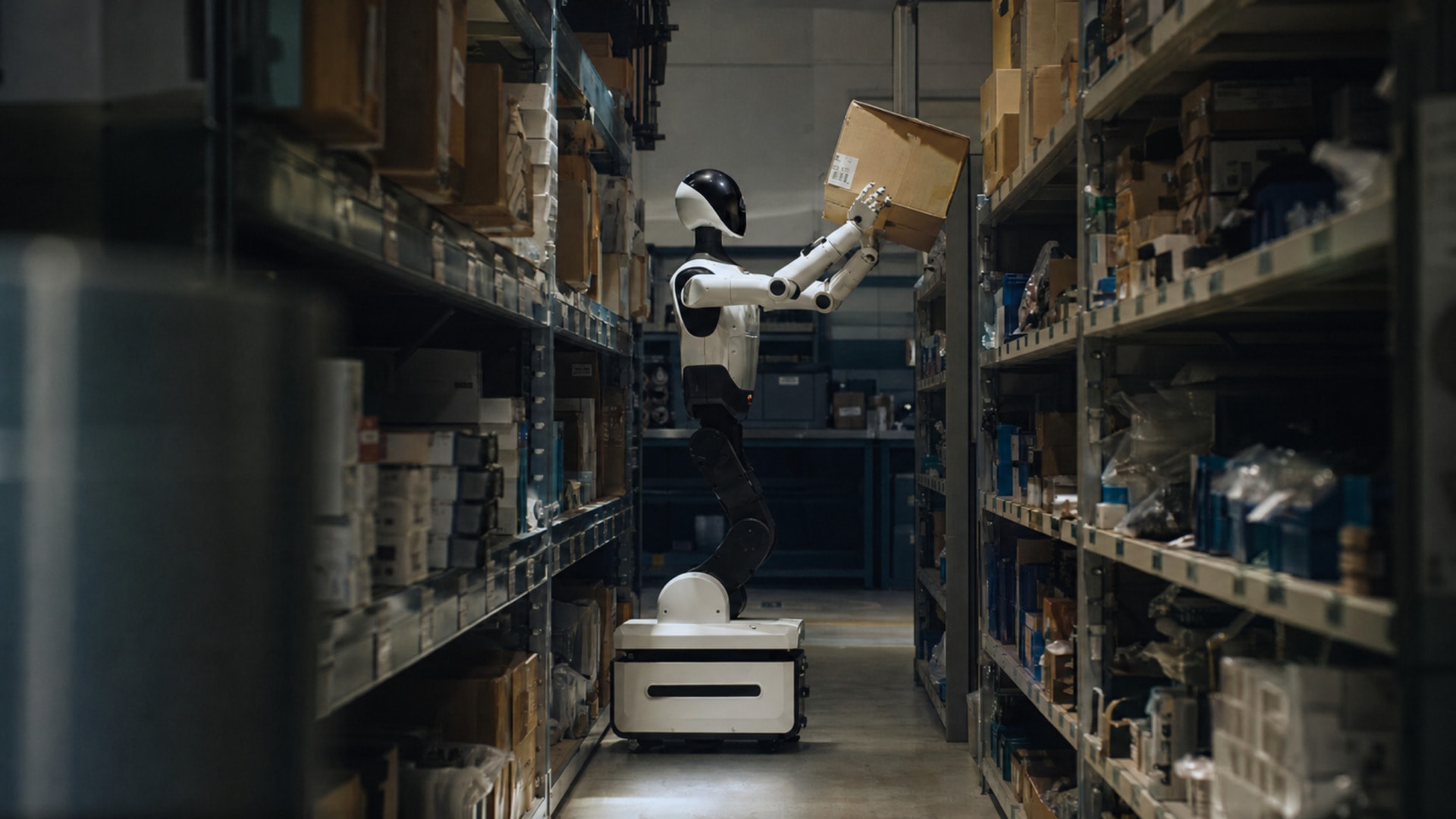
The humanoid program Ahn referenced is not a speculative side project. HD Hyundai Robotics and its sister company HD Korea Shipbuilding & Offshore Engineering signed an agreement with humanoid developer Persona AI and integration firm Vazil Company to build welding humanoids for shipyard work, with prototypes targeted by the end of 2026 and field testing and commercial deployment planned for 2027. In that arrangement, Persona AI builds the humanoid hardware and control software while HD Hyundai Robotics supplies welding-path AI training data and performance validation, the same kind of task-specific manipulation and force-control data Ahn says will migrate into the HDC cobot line. A shipyard is a useful proving ground precisely because welding requires the precision manipulation and force feedback that industrial cobots handle poorly today, which is why the company frames the humanoid as a data-generation asset for its existing product line rather than a product it expects to sell on its own in the near term.
Three Korean Conglomerates, Three Different Cobot Bets
HD Hyundai Robotics is not fighting for cobot share on a single front. South Korea's three largest industrial conglomerates have each entered the collaborative robot market with a different strategy, a rivalry domestic trade press has taken to calling a three-way cobot battle. Hanwha Robotics is competing on operational flexibility across a broad model range. Doosan Robotics, which already holds the number one market share in Korea's domestic collaborative robot segment, is repositioning itself as an AI-driven robotics solutions provider rather than a hardware vendor alone. HD Hyundai Robotics, by contrast, is the incumbent leader in Korea's industrial robot market overall but a later entrant to cobots specifically, and has chosen to specialize in the high-payload end of the range the HDC50-17 occupies rather than compete across every weight class.
That specialization strategy is now backed by fresh capital. HD Hyundai Robotics raised US$144.3 million earlier this year specifically to fund AI-powered robot development, capital that Ahn's interview suggests is funding both the humanoid program and the physical AI upgrades planned for the HDC line simultaneously. For a buyer, the three-way domestic rivalry is a useful signal independent of any single company's marketing: when three well-capitalized conglomerates converge on the same product category within roughly the same eighteen-month window, it usually means the underlying manufacturing-automation demand is real, not that any single vendor has invented a market that does not otherwise exist.
A Market Share Target Aimed Squarely at Price Competition From China
The commercial stakes behind the technology-sharing pitch are concrete. HD Hyundai Robotics told its interviewer it is in supply discussions with more than 30 potential customers for the HDC series and is targeting annual supply of more than 100 units by 2027, with a longer-term goal of holding more than half of South Korea's domestic high-payload collaborative robot market by 2030. The company frames that high-payload segment as growing more than 20 percent a year, driven by factories that want a single arm capable of both delicate assembly work and heavier material handling rather than buying separate machines for each task.
Ahn was explicit that the company does not expect to win that share on price. He positioned safety performance, precision and service responsiveness as HD Hyundai Robotics' differentiators against what he called low-cost Chinese rivals, arguing that total cost of ownership, not the sticker price on the robot itself, is what an industrial buyer should evaluate. That is a familiar argument from established robot makers facing Chinese price competition across categories, from automotive-grade arms to humanoids, and it puts HD Hyundai Robotics in the same defensive posture Japanese and European incumbents have adopted over the past two years. The company's own figures give the argument some substance: it cites a 30 to 40 percent reduction in required factory floor space when a fenceless HDC cobot replaces a caged industrial arm doing the same job, a savings that compounds over a facility's lease term in a way an upfront price comparison does not capture.
Buyers weighing that argument should note it is unverified against independent benchmarking. HD Hyundai Robotics has not published third-party test data comparing SafeSpace 2.0's radar-based detection against the safety systems Chinese cobot vendors ship, and the 100-unit 2027 supply target is a company projection rather than a confirmed order book beyond the 30-plus customers already in discussion. Procurement teams evaluating either the HDC50-17 or a Chinese-made alternative on a like-for-like basis will still need their own safety certification testing and a total-cost model that reflects their specific facility layout, since floor-space savings scale very differently in a greenfield plant than in a retrofit.
One Software Stack, Every Robot Class
The Robot-Defined autonomous Factory platform is the part of HD Hyundai Robotics' strategy that extends furthest beyond the immediate cobot upgrade cycle. If a single control and data layer can genuinely operate industrial arms, cobots and humanoids interchangeably, the company is betting that manufacturers will consolidate robot purchasing around whichever vendor offers that interoperability rather than buying the best point solution in each category. That is the same bet Boston Dynamics, Figure and several Chinese humanoid makers are placing with their own factory software layers, and HD Hyundai Robotics enters that contest with an installed industrial-robot base that most humanoid-first startups lack.
The near-term test of the strategy will not be the humanoid itself, which Ahn described as still in prototype form with no announced shipping date. It will be whether the safety, precision and data-sharing improvements he attributes to the humanoid program actually show up as measurable upgrades in the HDC line over the next one to two product cycles, and whether the more than 30 customers currently in supply talks convert into signed orders that get the company meaningfully closer to its 100-unit 2027 target. A physical AI research program that never reaches the products a company already ships is a cost center; one that visibly improves those products on a predictable cadence is the argument HD Hyundai Robotics is asking the market to accept on faith for now.
This analysis synthesizes company statements and public market activity as of the publication date and should not be read as investment, financial, or professional advice; it is provided for general information purposes only.
Hero image credit: HD Hyundai Robotics.