Agility and FORT Robotics Deepen Digit 5 Safety Partnership
Agility Robotics and FORT Robotics signed an October 1 memorandum of understanding to extend Digit 5's three-part safety architecture ahead of its warehouse and factory deployment.

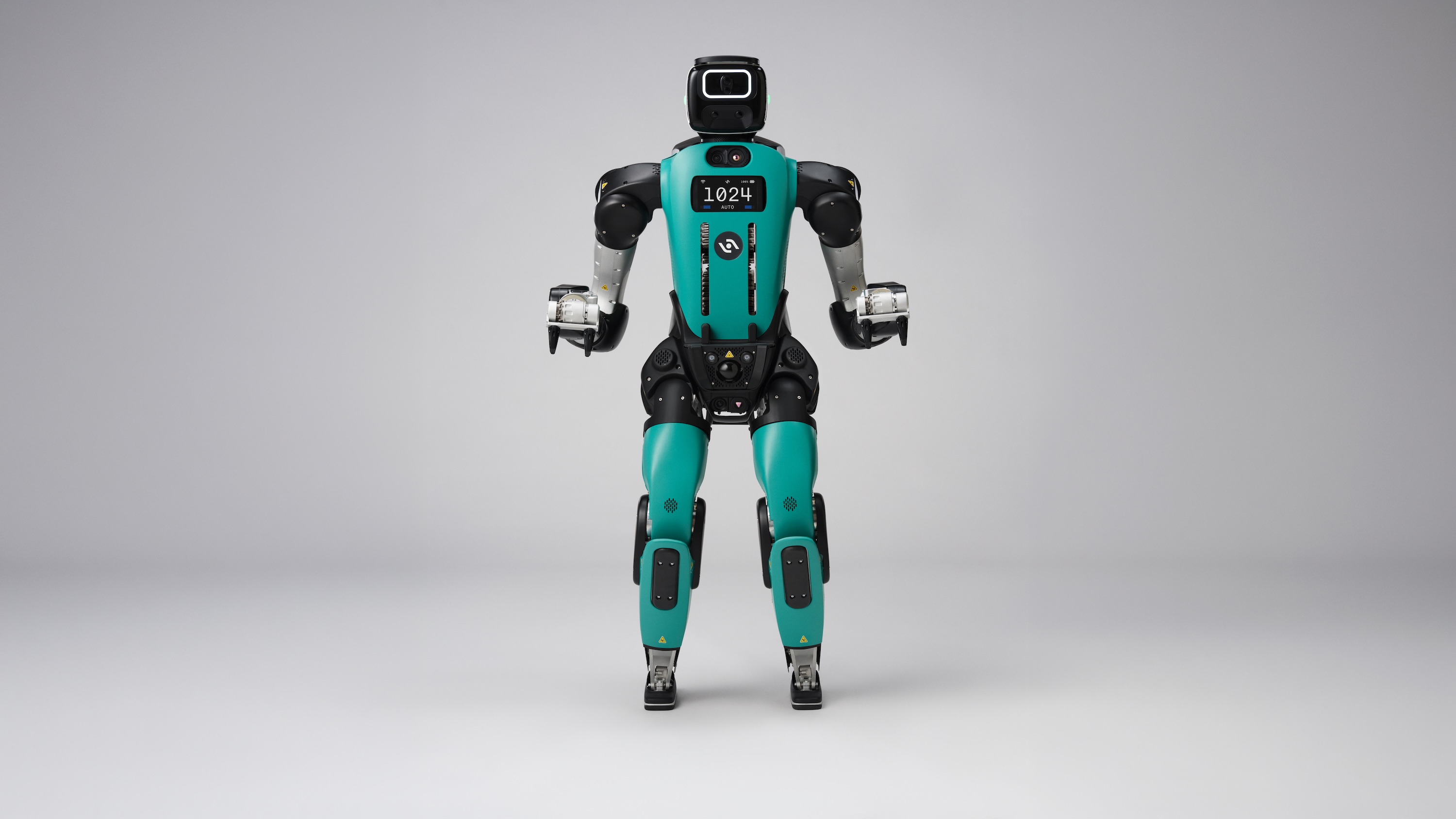
Agility Robotics and FORT Robotics signed a memorandum of understanding on Thursday to deepen a multi-year safety partnership ahead of Digit 5's commercial rollout, formalizing a three-part architecture, a safety pendant, on-robot communications and an off-robot interface, that together connect the humanoid's internal safety system to a facility's existing emergency-stop and access-control infrastructure. The companies said the relationship began with a single custom hardware component and has grown into the integrated system Digit 5 will ship with, now extended by a jointly developed off-robot interface designed to carry that cooperative-safety approach beyond the robot's own chassis.
FORT Robotics, based in Philadelphia, builds what it calls the Trust Layer for physical AI, a safety-certification platform that lets autonomous machines interface with the industrial safety systems, fencing, light curtains and emergency stops, that factories and warehouses already rely on for human-robot coexistence. Agility Robotics, based in Salem, Oregon, is the humanoid maker behind Digit, which has logged more than 65,000 hours of operation across nine customer facilities including Schaeffler and GXO warehouses. The MOU signed Thursday does not disclose a dollar figure or contract term, a gap buyers should note before treating this as a binding supply commitment rather than a declared intent to keep building together.
A Safety Stack Built From Three Specific Components
The architecture the two companies described has three concrete parts. The safety pendant, originally a custom tablet holder with an emergency-stop trigger, gives a human supervisor a physical, hard-wired way to halt the robot regardless of what its software is doing. On-robot communications carry safety-critical signals between Digit's internal systems using protocols designed to fail safe rather than silently. The off-robot interface, the newest piece and the one this MOU centers on, is what lets a warehouse's existing safety infrastructure, a perimeter light curtain or an area scanner it already owns, talk directly to Digit without requiring the facility to rebuild its safety systems around one robot vendor.
That last piece matters more to a buyer's deployment math than it might first appear. A facility bringing in a single new robot can tolerate a bespoke safety integration. A facility planning to run dozens of humanoids alongside conventional AMRs, conveyors and human pickers needs a safety layer that behaves the same way across all of it, which is the interoperability problem FORT has been building toward independent of any single robot maker. Agility's CTO, Pras Velagapudi, put the distinction in resilience terms, saying the FORT partnership has made Digit's safety system "more resilient, not just more redundant" over time, a description that lines up with the off-robot interface's actual function: it is not a second emergency stop bolted on for show, it is a second communication path into infrastructure the facility already trusts.
Why Safety Certification Is Becoming the Real Product
Digit 5, unveiled publicly in mid-September, already carries more than US$300 million in multi-year orders from Schaeffler, GXO, Toyota Motor Manufacturing Canada and Mercado Libre, bookings that predate Thursday's announcement and are not being re-reported here as new. What is new is the specific safety plumbing that has to be in place before any of those orders can actually be installed at scale. A humanoid robot with impressive manipulation specifications is not deployable in a live warehouse until a safety engineer can certify that its failure modes are understood, documented and compatible with whatever functional-safety standard the facility's insurer requires. That certification work, unglamorous relative to a robot's grip strength or walking speed, is increasingly the gating factor on how fast a humanoid order book turns into installed units.
FORT's broader strategy reflects that same bet on safety as infrastructure rather than as a feature of any one robot. At Automate 2026 in Chicago, FORT extended its Trust Layer into Nvidia's Halos for Robotics ecosystem, pairing its safety platform with Nvidia's Outside-In Safety Blueprint so that external infrastructure sensors and vision models, not just a robot's own onboard cameras, can contribute to a certifiable safety case. Running on Nvidia's IGX Thor compute and Holoscan Sensor Bridge, that combination is designed to work across multiple robot brands, not exclusively Agility's. A buyer qualifying Digit 5 today is, by extension, qualifying a safety vendor whose certification work could carry over to other autonomous equipment on the same floor, which lowers the switching and integration cost of a multi-vendor robotics fleet in a way a single-purpose, robot-specific safety system cannot.
An Industry Still Writing Its Own Rulebook
No single published safety standard currently governs humanoid robots the way established codes govern industrial robot arms or forklifts, which leaves every humanoid maker assembling its own patchwork of certifications and in-house programs rather than checking boxes against one accepted benchmark. Figure AI has taken a visible, public-facing route, standing up an internal Center for the Advancement of Humanoid Safety under a former Amazon Robotics safety engineer and inviting outside scrutiny of its stability, human-detection and behavioral testing. Apptronik has leaned on third-party functional-safety certification from TÜV SÜD, the German testing body, applying it to specific hardware components and control methodologies rather than the whole robot as a system. Agility and FORT's approach, an architecture built around a specialist safety-infrastructure vendor rather than an in-house safety division or a single component certification, is a third distinct model, and none of the three has yet become the industry default.
That lack of a common standard is exactly why the interoperability argument for FORT's platform matters as much as it does. A buyer running Digit 5 next to a Figure or Apptronik unit on the same floor within the next two years, which is a realistic scenario for any large logistics operator diversifying suppliers, will be stitching together whatever safety documentation each vendor provides into one coherent facility-wide safety case, a job made considerably easier if at least one of those vendors' safety layers is designed from the start to interface with existing infrastructure rather than operate as a sealed, proprietary system.
What a Procurement Team Should Actually Verify
Before signing a Digit 5 deployment contract, a buyer's safety and facilities team should ask three things this MOU does not answer on its own. First, which specific functional-safety standard, and at what certification level, the combined Agility-FORT architecture has been evaluated against, since "safety architecture" is not itself a certification. Second, whether the off-robot interface is compatible with the buyer's existing safety PLC and sensor vendors out of the box or requires facility-specific integration work, and who bears that integration cost. Third, what happens contractually if FORT's role in the stack changes, given that Thursday's announcement is a memorandum of understanding rather than a signed long-term supply agreement, and MOUs can lapse without public disclosure.
There is also a liability dimension procurement teams tend to underweight until an incident forces the issue. A facility's general-liability and workers-compensation insurer will want evidence of a certifiable safety architecture before underwriting a floor where humanoid robots work directly alongside people, and an uncertified or loosely documented safety stack can translate directly into higher premiums or coverage exclusions regardless of how well the robot actually performs in practice. A safety architecture built around a named, externally auditable vendor like FORT, rather than an opaque in-house system a robot maker declines to detail, is generally easier for an insurer's own engineers to evaluate, which can matter as much to the economics of a deployment as the robot's purchase price.
None of those questions should be read as a reason to doubt the announcement's substance. A hardware maker choosing to formalize, in public, a safety partnership with a specialist vendor rather than building every layer in-house is generally a more trustworthy signal than a company claiming its safety system is entirely proprietary and therefore unauditable by outside engineers. FORT's chief executive, Samuel Reeves, framed the stakes plainly, saying: "Physical AI only earns trust when the safety layer around it is as capable and as accountable as the robot itself." That is a reasonable standard to hold both companies to as Digit 5 moves from a signed order book toward robots actually walking factory floors next to people who did not choose to work alongside one.
The Number That Will Actually Prove the Architecture Works
Sixty-five thousand hours of prior Digit operation is the figure Agility can point to today, accumulated across earlier hardware generations and a smaller safety architecture than the one this MOU describes. The number worth tracking over the next year is how that hour count grows once Digit 5 units carrying the full three-part FORT architecture start shipping against the US$300 million order book, and whether the rate of safety-related incidents, stoppages or near-misses per thousand hours holds steady or improves as the fleet scales. An architecture diagram is a promise. An operating-hours count with a clean incident record is the only evidence that actually settles whether the promise was kept.
This analysis synthesizes company statements and public market activity as of the publication date and should not be read as investment, financial, or professional advice; it is provided for general information purposes only.