Ocado and Brightpick Settle Global Patent Dispute
Ocado Group and Brightpick have settled patent litigation in Germany and the US, with Brightpick exiting above-storage picking robots and Ocado standing down against Brightpick's mobile-robot line.

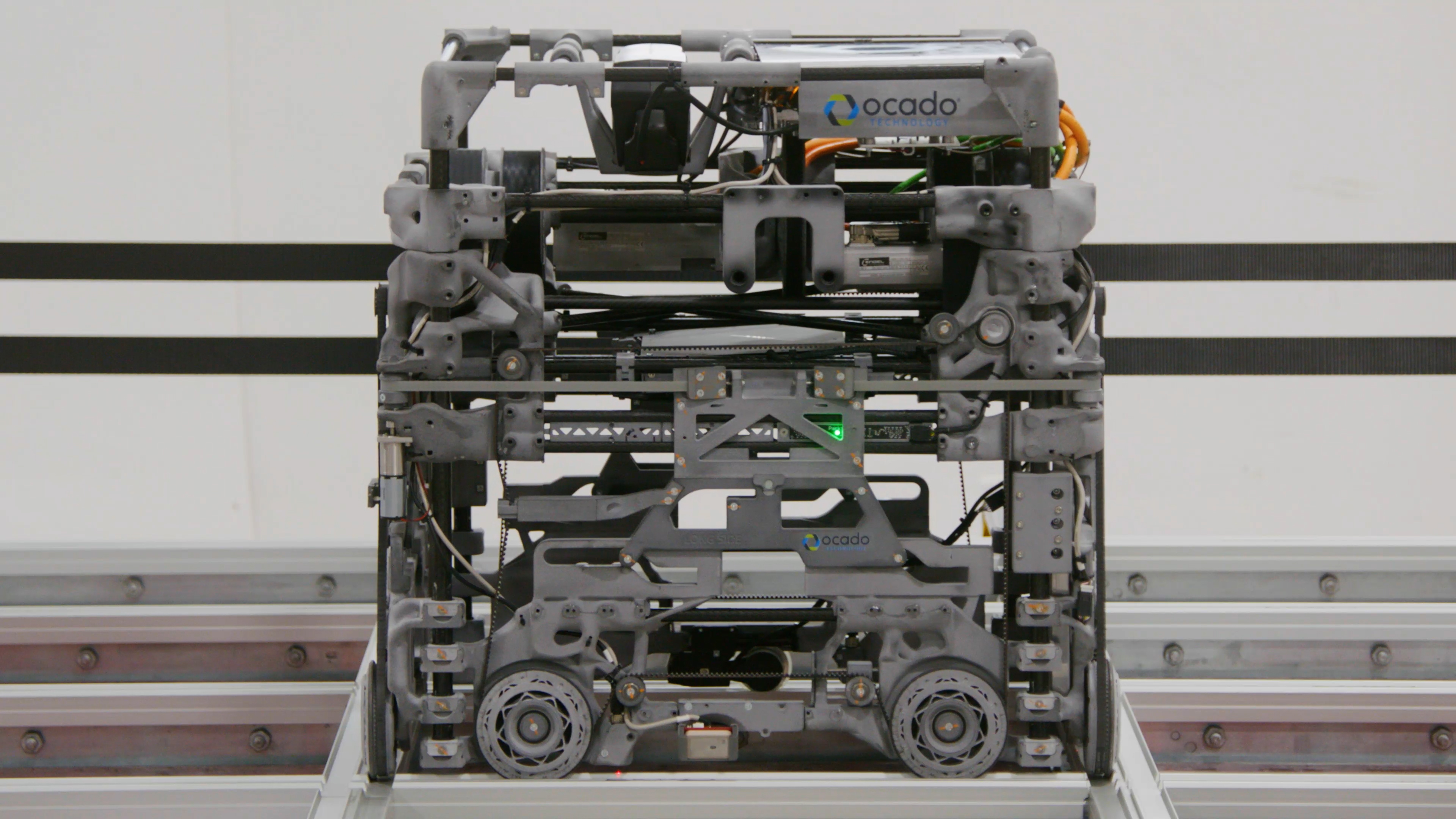
Two Warehouse Robot Makers Draw a Line Neither Will Cross
Ocado Group and Brightpick have settled patent litigation that was running in parallel courts in Germany and the United States, agreeing to a global split that bars Brightpick from building robotic picking systems that work above automated storage racks and bars Ocado from using the same patents against Brightpick's existing Autopicker system. Brightpick will also discontinue its Gridpicker product entirely, both companies will drop every pending claim, and neither side admitted wrongdoing or paid the other any money.
Brightpick is the less familiar name in that sentence, and worth placing. The Czech-founded warehouse robotics company builds autonomous mobile robots that pick, sort and pack orders without the fixed grid infrastructure Ocado is known for, selling into the same mid-sized e-commerce and third-party logistics accounts that are increasingly choosing between a capital-heavy grid system and a more flexible mobile-robot fleet. Ocado Group, the UK grocery and automation company whose robotic fulfilment centres run its own supermarket business and license technology to retailers worldwide including Kroger in the United States, is the party with the patent portfolio and the market position actually at stake here. This settlement is a boundary drawn between a large incumbent's core intellectual property and a smaller challenger's product line, not a dispute between equals.
What Brightpick Actually Gave Up
The commercially significant term is the one that applies globally and indefinitely: Brightpick may not offer, sell or develop any robotic picking system that functions above an automated storage structure, which is precisely the category Ocado's grid-and-bot architecture occupies. That is a broader restriction than simply killing one product. Gridpicker, the specific Brightpick system discontinued under the settlement, was built to operate in that above-storage category, so its removal from the market is the direct, visible consequence of the clause. But the clause itself reaches further than Gridpicker, foreclosing an entire design path for Brightpick's future product roadmap, not just its current catalog.
In exchange, Ocado conceded something narrower but still real: a commitment not to assert the patent families at issue against Brightpick's Autopicker system, its Intuition software, or systems not materially different from them, anywhere in the world. Autopicker is Brightpick's mobile robotic arm product, built to pick individual items rather than operate inside a storage grid, and it is the system the company has been selling and expanding around. Ocado walking away from asserting its patents against that specific product line removes the legal risk that was presumably the point of filing suit in the first place, which suggests Ocado's actual commercial objective was narrower than ending Brightpick's business altogether: stop the above-storage design, leave the mobile-arm business alone.
Why a Settlement With No Money Changing Hands Still Matters
The absence of a payment in either direction is the detail a market report would flag as making this a non-event, and that reading misses what procurement teams actually need from this outcome. A patent settlement with no damages is not evidence that the underlying intellectual property claims were weak; it is evidence that both companies concluded a negotiated boundary was cheaper than years of parallel litigation in two jurisdictions, with an uncertain outcome in either. For a buyer currently evaluating warehouse robotics vendors, what matters is not who paid whom. It is that the boundary between "grid-based automated storage and retrieval" and "mobile robotic picking that operates independently of a storage grid" has just been tested in court and now has an actual settled definition, agreed to by the two companies most likely to litigate it again.
That is the quotable fact worth carrying out of this dispute: warehouse robotics patent litigation rarely produces a clean line between product categories, because most systems blend elements of both approaches to compete on cost and flexibility. This settlement produced exactly that line, and every vendor selling into the above-storage picking category now has a public data point on where Ocado's patent portfolio will and will not be enforced.
The Part of This Story That Is Not About Brightpick
The structural shift behind this settlement is bigger than one Czech startup losing a product line. Ocado has spent years building its grid-and-bot fulfilment architecture into licensing revenue from supermarket and retail partners, and that revenue model depends on the patent portfolio behind it being both broad and enforced. A rival demonstrating that a different robotic architecture, mobile robots working the same above-grid space, could approximate similar outcomes without infringing would have been a direct threat to that licensing business, independent of whether Brightpick itself ever became a major competitor on volume. Settling on these terms lets Ocado keep the above-storage category defined narrowly around its own approach while conceding nothing on the mobile-robot segment it does not compete in anyway. It is a patent settlement shaped like a market-segmentation agreement.
It would be a mistake, however, to read this as proof that Ocado's patent position is now unassailable across the warehouse robotics sector. The settlement is scoped specifically to Brightpick's two named systems and the patent families actually in dispute; it says nothing about how Ocado's portfolio would hold up against a differently architected competitor, and nothing about jurisdictions outside Germany and the United States where the original claims were filed. Rivals building above-storage picking systems with a materially different mechanical approach, rather than Brightpick's specific design, have not been tested against this portfolio at all. Competitors should read this settlement as a data point about one specific boundary, not as a verdict on the strength of Ocado's intellectual property in general.
Why Ocado Was Defending This Particular Line
Ocado's own above-storage picking product, On-Grid Robotic Pick, is a robotic arm installed directly on its storage grid that picks individual items without a human reaching into the structure, and the company has been rolling it out across fourteen of its customer fulfilment centres and multiple international licensing partners. That rollout is the commercial context the patent dispute sits inside. Every additional above-storage picking system on the market, regardless of whether it ever threatens Ocado on unit volume, is a potential point of comparison a retail partner can raise when negotiating licensing terms for Ocado's own platform. Brightpick's Gridpicker, built to operate in that same above-storage category, was a direct technical comparison point sitting inside the exact licensing conversations Ocado depends on for revenue. Removing it from the market removes that comparison, independent of how many units Gridpicker had actually sold.
This is also why the settlement reads as narrowly scoped rather than punitive. Ocado did not attempt to shut Brightpick down entirely, and the company's mobile robotic arm business, built around Autopicker and the Intuition software that directs it, continues operating under an explicit commitment that Ocado will not revisit these patent claims against it. A buyer comparing the two companies' remaining product lines side by side will now find Ocado competing on grid-based storage with on-grid picking, and Brightpick competing on standalone mobile robots that work independently of any fixed storage structure. Those are no longer overlapping categories in the way they were before Gridpicker existed, which is precisely the market segmentation this settlement achieves without either company calling it that.
How This Compares to the Rest of the Above-Storage Field
Ocado is not the only company with intellectual property riding on how "above-storage picking" gets defined. Competing architectures from vendors such as Exotec, with its shuttle-and-pod Skypod system, and Attabotics, with its three-dimensional storage structure, occupy adjacent but mechanically distinct positions in the same broad warehouse-automation category, and neither was a party to this dispute. Procurement teams should not extend this settlement's terms to any vendor beyond Ocado and Brightpick by name. What it does establish is a precedent for how this kind of dispute gets resolved: a defined technical boundary, a discontinued product, and a carve-out for the parts of each company's business that were not actually in conflict. Any future above-storage patent dispute involving Ocado is now more likely to follow that same shape than to end in a drawn-out jury verdict or an outright product ban.
What Buyers Should Watch Next
Brightpick's near-term product roadmap is now the thing to track. A company that just lost an entire product category to a patent settlement has to either double down on the mobile-robot business the settlement explicitly protects, or find a materially different technical approach to re-enter above-storage picking without retreading the same patents. Procurement teams with an active Brightpick evaluation underway should ask directly which side of that line any new product announcement falls on before assuming continuity with what they originally scoped.
This analysis synthesizes company statements and public market activity around warehouse automation patent litigation.
Disclaimer: This article is for informational purposes only and does not constitute legal, investment, or procurement advice. Readers should conduct independent due diligence before making purchasing or investment decisions related to the companies or technologies discussed.